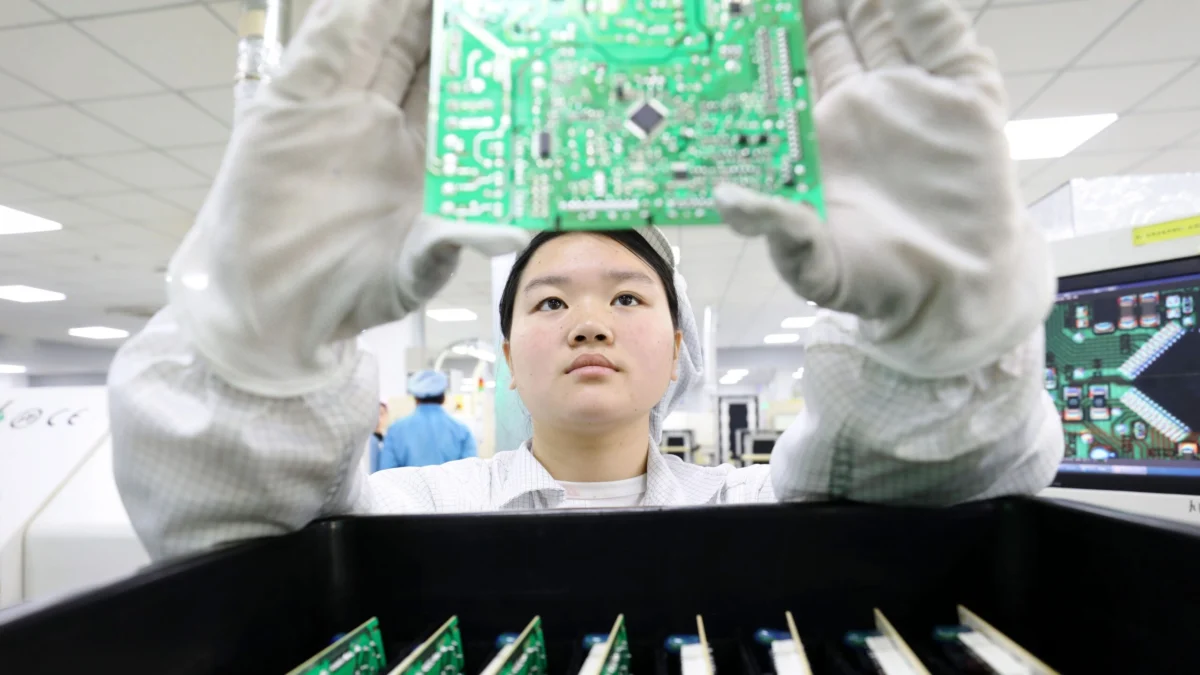
In an era defined by the rapid convergence of cloud computing, generative AI, and digital infrastructure, Meta Platforms—the parent company of Facebook, Instagram, and WhatsApp—is positioning itself as the undisputed titan of artificial intelligence. Under the leadership of Mark Zuckerberg, the tech giant has embarked on an unprecedented capital expenditure cycle, committing at least $135 billion to the development of robust AI infrastructure. This colossal investment, fueled by a remarkably resilient advertising engine, signals a strategic pivot that aims to transition Meta from a social media powerhouse into a foundational architect of the next generation of intelligence.
The Financial Magnitude: A Capital-Intensive Vision
The recent disclosure of Meta’s quarterly figures has sent shockwaves through the technology sector. The company has once again revised its spending forecast upward, adding $5 billion to its projected capital expenditure for the current year. At the high end of their internal guidance, total investments in data centers, high-end GPU clusters, and energy infrastructure are expected to reach a staggering $145 billion.
To the casual observer, such figures might seem reckless. However, analysts note that these numbers represent a deliberate "arms race" against industry heavyweights such as OpenAI, Google’s DeepMind, and Microsoft. Zuckerberg’s strategy is clear: he believes that the future of the internet—and Meta’s continued relevance within it—depends on the company’s ability to own and operate the most sophisticated AI models on the planet.
Chronology of the Pivot: From Social Media to the "Metaverse" and Beyond
The road to this $135 billion investment cycle was not linear. Meta’s transformation has been marked by several distinct phases:
- 2021: The Metaverse Era: Initially, Mark Zuckerberg signaled a pivot toward the "Metaverse," pouring billions into Reality Labs and virtual reality hardware. While this remains a component of the company’s vision, the focus shifted rapidly following the public launch of ChatGPT in late 2022.
- 2023: The Year of Efficiency: Recognizing that the market was wary of unbridled spending, Zuckerberg declared 2023 the "Year of Efficiency," implementing massive workforce reductions and streamlining corporate operations to shore up the balance sheet.
- 2024: The AI Super-Cycle: With a leaner cost structure and a re-invigorated advertising revenue stream, Meta began redirecting the vast majority of its free cash flow into the "Compute" layer. This includes the massive procurement of NVIDIA H100 chips, the development of the Llama (Large Language Meta AI) open-weights models, and the construction of massive, power-hungry data centers.
Supporting Data: Advertising as the Engine of Innovation
The primary engine sustaining this massive capital outlay is Meta’s advertising business. Despite concerns regarding privacy regulations and market saturation, the company’s core platforms remain an indispensable utility for advertisers globally.
In the most recent quarter, Meta reported a 26 percent year-over-year revenue increase, reaching $64.6 billion. This growth is not merely a result of more users; it is a direct consequence of the company’s existing AI integration. Algorithms that optimize ad placement, personalize user feeds, and predict consumer behavior have become more precise, leading to higher engagement and better returns on investment for advertisers.
Profitability has followed suit. The company posted a quarterly profit of $9.86 billion, a significant jump from the $2.7 billion recorded in the same period a year prior. This financial health provides the "war chest" required to maintain its aggressive expansion while simultaneously funding the expensive research and development required to stay at the cutting edge of Large Language Model (LLM) technology.
User Growth and Platform Ecosystems
While the financial headlines focus on dollars, the user statistics remain equally impressive. Meta’s family of apps—Facebook, Instagram, WhatsApp, and the rapidly growing Threads—now reach 3.64 billion users. This represents an increase from the 3.6 billion reported just three months prior.
The expansion of the "Threads" platform is particularly noteworthy. Designed as a direct competitor to X (formerly Twitter), Threads has leveraged the massive existing user base of Instagram to build a community that has proven surprisingly resilient. By integrating AI-driven recommendation engines, Meta is ensuring that these 3.64 billion users spend more time within its ecosystem, thereby generating the proprietary data required to train even more powerful models.
Official Stances: The Zuckerberg Doctrine
During earnings calls and developer conferences, Mark Zuckerberg has been steadfast in his defense of these high capital expenditures. His rhetoric centers on a "build or be left behind" philosophy.
"We are currently in a cycle where the cost of being too conservative outweighs the cost of being too ambitious," Zuckerberg recently stated. He argues that the compute infrastructure being built today will not only power the next generation of social apps but will also serve as the backbone for future computing platforms, including smart glasses and augmented reality interfaces.
Meta’s leadership also emphasizes the "Open Weights" strategy. By releasing versions of their Llama models to the developer community, Meta is effectively setting the industry standard. This approach serves a dual purpose: it creates a massive ecosystem of developers who are intimately familiar with Meta’s technology, and it complicates the business models of competitors who rely on closed-source, proprietary APIs.

Implications: The Long-Term Landscape
The implications of this $135 billion gamble are profound, both for Meta and for the global tech economy.
1. The Energy Bottleneck
One of the most significant, yet often overlooked, implications is the energy demand. Training massive models requires vast quantities of electricity. Meta is increasingly looking toward nuclear energy and renewable energy partnerships to power its future data centers. This move has placed the company at the center of the global debate regarding the climate impact of AI.
2. Market Consolidation
Meta’s ability to spend $135 billion on infrastructure creates a high barrier to entry. Startups and smaller tech firms simply cannot compete with the sheer compute capacity that Meta can deploy. This could lead to a market environment where only a handful of "Hyper-scalers" (Meta, Google, Microsoft, Amazon) control the foundational models upon which the rest of the digital economy is built.

3. The Future of Human-Computer Interaction
Beyond advertising, Meta’s investment is aimed at a fundamental shift in how humans interact with machines. Through its work in AI agents, personalized assistants, and multimodal models (AI that can "see" and "hear"), Meta is attempting to make itself the primary interface for digital life. Whether this involves a chatbot on WhatsApp that helps you plan a trip or an AI agent that manages your professional schedule, the objective is ubiquity.
4. Regulatory Scrutiny
Such massive investments and the centralization of intelligence in the hands of a single corporation have not gone unnoticed by regulators. In both the European Union and the United States, there is growing concern regarding the "AI divide." Policy makers are increasingly questioning whether a company with such control over the digital landscape should also be allowed to dictate the trajectory of AI development.
Conclusion
Meta is currently placing one of the largest bets in the history of the technology industry. By leveraging the immense profitability of its advertising business to build a near-bottomless pool of AI compute, the company is attempting to secure its future for the next several decades.

Whether this $135 billion investment will yield the transformative results that Zuckerberg envisions—or whether it will prove to be an example of extreme capital inefficiency—remains the central question of the current tech cycle. What is certain, however, is that the trajectory of artificial intelligence will be inextricably linked to the decisions made in Menlo Park. As the company continues to refine its models and scale its infrastructure, the rest of the world will be watching to see if Meta’s massive bet on the future of intelligence will redefine the digital era or lead to a new set of challenges that even the most advanced AI cannot solve.