In an era defined by the rapid ascent of generative artificial intelligence, few companies are betting as aggressively—or as expensively—as Meta Platforms. Under the leadership of CEO Mark Zuckerberg, the tech giant behind Facebook, Instagram, and WhatsApp is undergoing a fundamental transformation, pouring a staggering $135 billion into the foundational infrastructure required to dominate the next generation of computing.
This capital expenditure is not merely a line item; it is a declaration of intent. As Meta competes directly with industry titans like OpenAI, Microsoft, and Google, it has positioned its massive, high-margin advertising business as the engine driving its ambitious AI roadmap.
The Financial Scale of the AI Ambition
The sheer magnitude of Meta’s investment in artificial intelligence is difficult to overstate. According to recent financial disclosures, the company is projected to spend at least $135 billion on AI-related infrastructure in the current year alone. This figure represents an upward revision of $5 billion from previous estimates, signaling that Zuckerberg is not tapping the brakes despite the immense pressure to maintain shareholder value.
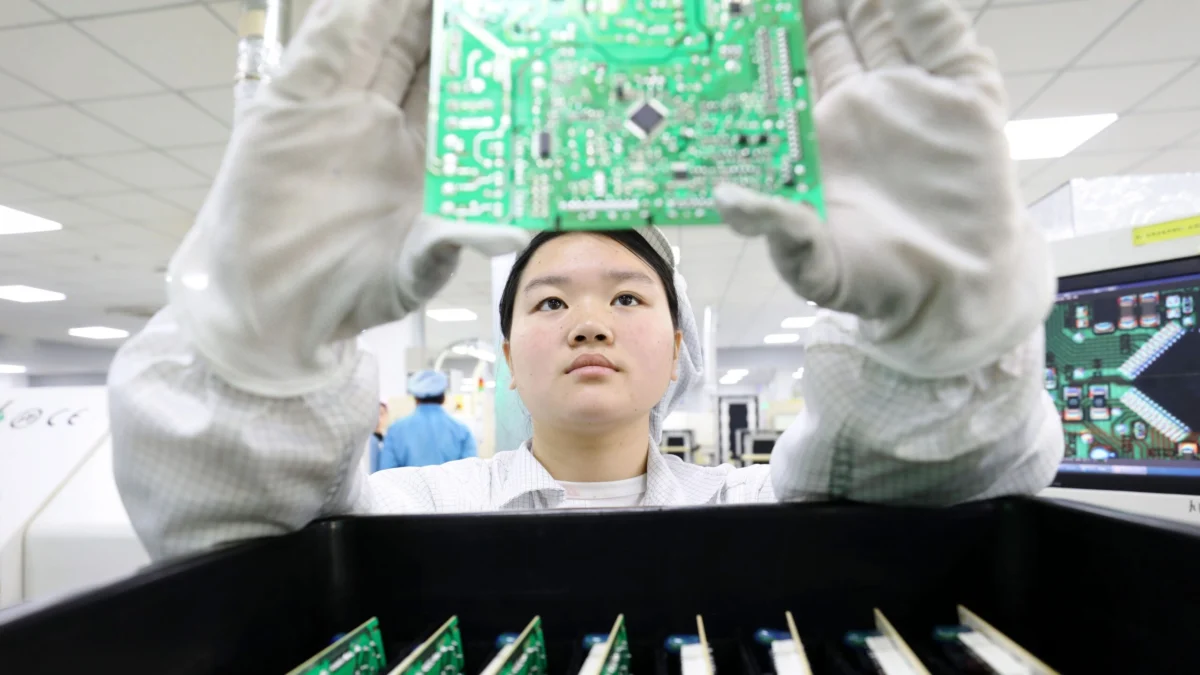
At the upper end of the company’s internal projections, capital expenditures could reach as high as $145 billion. These funds are primarily earmarked for the massive build-out of custom data centers and the acquisition of thousands of high-performance graphics processing units (GPUs)—specifically Nvidia’s H100 and Blackwell chips—which are essential for training the large language models (LLMs) like Llama that serve as the backbone of Meta’s future services.
Chronology of the Pivot: From Social to Synthetic
To understand Meta’s current trajectory, one must look back at the company’s evolution over the last several years:
- 2021: The Metaverse Era: Meta made waves by rebranding from Facebook to Meta, signaling a pivot toward the virtual and augmented reality spaces.
- 2022: The AI Correction: As the hype cycle shifted from the Metaverse to Generative AI, Meta began quietly pivoting its internal research focus. The release of the first Llama model marked a turning point in the company’s commitment to open-source AI development.
- 2023: The Year of Efficiency: Following massive layoffs, Zuckerberg implemented a rigorous strategy to streamline operations, creating a leaner organization capable of supporting the massive R&D costs required for AI.
- 2024: The Infrastructure Build-out: The current phase is defined by massive capital deployment. Meta has effectively transitioned its entire technical architecture to prioritize the massive training runs required for Llama 3 and its successors.
Supporting Data: Advertising as the Engine
The ability of Meta to sustain these multi-billion-dollar investments is rooted in the resilience of its core business: digital advertising. Despite macroeconomic headwinds and shifting regulatory landscapes, the company’s ad business remains remarkably robust.
In the most recent quarter, Meta reported a 26% year-over-year increase in revenue, reaching $64.6 billion. This growth trajectory has allowed the company to generate the cash flow necessary to fuel its hardware-heavy AI strategy. Profitability has also surged; the company posted a net profit of $9.86 billion, a significant jump from the $2.7 billion recorded in the same period a year ago.
This financial performance confirms a vital trend: Meta is not just using AI to improve its products; it is using its products to fund the creation of AI. By integrating AI-driven ad targeting and content recommendation algorithms into Instagram and Facebook, Meta is increasing the efficiency of its advertising platform, thereby creating a self-reinforcing cycle of revenue and investment.
User Base and Platform Ecosystem
The scale of Meta’s reach provides the necessary training data and testing ground for its AI models. Recent metrics indicate that at least 3.64 billion people interact with at least one Meta app every month—up from 3.6 billion just three months prior. This massive, engaged audience acts as a laboratory for the company’s AI agents, recommendation engines, and generative tools.
The ecosystem now includes:
- Facebook: The bedrock of the social network, increasingly powered by AI-driven content feeds.
- Instagram: The primary driver for visual media and influencer marketing, where generative AI is being used to create and edit content.
- WhatsApp: A critical communication layer that is currently being integrated with AI chatbots for customer service and business engagement.
- Threads: Positioned as a direct competitor to X (formerly Twitter), Threads serves as a real-time data source for training language models on current events and human conversation.
Official Stance and Strategic Vision
Mark Zuckerberg has been vocal about his vision for the company. He views artificial intelligence as the most important development in the history of computing. His strategy is twofold: building the most advanced closed-source models for enterprise application while simultaneously championing an open-source approach to ensure Meta sets the industry standard for developer tools.
During recent investor calls, management emphasized that these investments are "multi-year" projects. The message to the market is clear: the short-term impact on margins is a deliberate, calculated trade-off for long-term technological supremacy. The company maintains that the ROI of these data centers will materialize as AI becomes embedded in every aspect of the digital experience—from the way businesses acquire customers to how consumers interact with their devices.

The Implications: A New Era of Competition
Meta’s massive investment has profound implications for the broader technology sector:
1. The GPU Arms Race
By committing over $100 billion to infrastructure, Meta has become one of the world’s largest consumers of high-end semiconductors. This has created a symbiotic relationship with hardware manufacturers like Nvidia, while simultaneously creating a barrier to entry for smaller startups that cannot afford the compute power required to train models at scale.
2. The Open-Source vs. Closed-Source Debate
Meta’s commitment to releasing its Llama models to the public has disrupted the strategies of companies like OpenAI and Google. By making powerful models accessible to developers, Meta is effectively building a "walled garden" that relies on the community to improve its core technology, potentially making Meta the "Android of AI."

3. Regulatory Scrutiny
Such vast spending and the resulting power over the AI landscape have not gone unnoticed by regulators in the EU and the United States. As Meta integrates AI deeper into its social platforms, concerns regarding data privacy, algorithmic bias, and the potential for misinformation are likely to increase.
4. The Future of Human-Computer Interaction
Beyond advertising, Meta’s investment is aimed at hardware integration—smart glasses and wearable devices that use AI to provide real-time assistance. This is the "Post-Mobile" vision: a world where AI is not just in a phone, but in the environment, mediated by Meta’s software layer.
Conclusion
Meta is currently in the middle of one of the most daring pivots in corporate history. By leveraging the massive cash reserves of its social media empire, the company is attempting to secure a monopoly on the foundational infrastructure of the AI era. Whether this $135 billion gamble pays off depends on the company’s ability to monetize these models beyond traditional advertising and its capacity to maintain the delicate balance between rapid innovation and ethical responsibility.

For now, the markets remain cautiously optimistic, buoyed by the consistent growth of the advertising business. However, as the infrastructure costs continue to mount, the pressure on Meta to deliver a "killer app" that justifies this historic capital expenditure will only intensify. Mark Zuckerberg has placed his biggest bet yet; the digital world is watching to see if the social media giant can successfully transform into an AI powerhouse.