Hebron, Occupied West Bank – October 24, 2026 – In a significant escalation of tensions in the region, the Israeli military has launched a wide-ranging offensive across the occupied West Bank, specifically targeting what it describes as "terrorist infrastructure" in the volatile Hebron area. The operation comes in direct response to a deadly attack by armed Palestinians that claimed the lives of two Israeli soldiers earlier this week.
A joint statement released by the Israeli Army and the Shin Bet internal intelligence service confirmed the initiation of "numerous anti-terror operations," signaling a robust and potentially prolonged military campaign. The offensive underscores the deepening security crisis gripping the West Bank, a territory already fraught with a complex interplay of occupation, settlement expansion, and escalating violence.
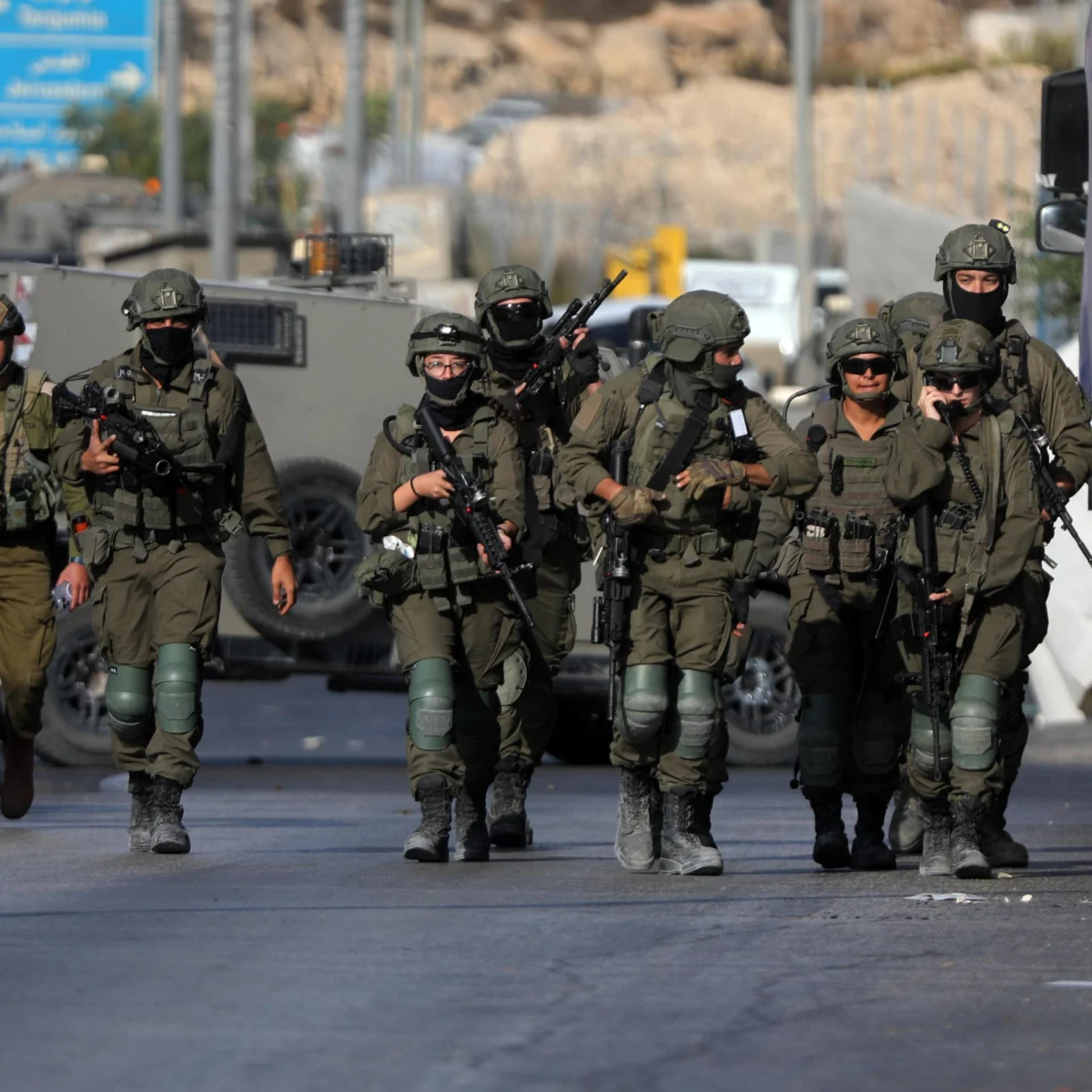
The deployment of Israeli forces, including infantry, special units, and armored vehicles, was particularly concentrated in and around Hebron, a city uniquely divided under the terms of past agreements and a frequent flashpoint for clashes. Military officials indicated that the operation is expected to span several days, with a clear objective of restoring security and dismantling militant capabilities following the recent loss of life.
The political backdrop to this military action is equally charged, with Israel on the cusp of parliamentary elections scheduled for Tuesday. The ongoing conflict with Palestinians has predictably emerged as a central and highly contentious issue in the election campaign, with security concerns often dominating public discourse and influencing voter sentiment. The offensive, therefore, carries not only immediate security implications but also significant domestic political weight.
Main Facts: A Decisive Response to a Deadly Attack
The Israeli military operation, reportedly codenamed "Operation Iron Sentinel" by some media outlets (though not officially confirmed by the IDF), was triggered by a grave security incident on October 23, 2026. Two Israeli soldiers, identified as Sergeant First Class (res.) Aviad Nir and Sergeant Major (res.) Lior Azoulay, were tragically killed when their patrol came under fire from armed Palestinians near the settlement of Beit Hagai, south of Hebron. The assailants reportedly opened fire from a passing vehicle before fleeing the scene, prompting an immediate manhunt.
In a swift and resolute response, the Israeli Security Cabinet convened an emergency session, approving a robust military operation aimed at apprehending the perpetrators and degrading the operational capabilities of militant groups in the area. The ensuing offensive, launched in the early hours of October 24, marked a significant intensification of Israeli military activity in the West Bank.
The core objective, as articulated by the IDF Spokesperson, is to "root out the terrorist cells responsible for the attack and prevent future acts of violence against Israeli citizens and security forces." This involves widespread search-and-arrest raids, intelligence-gathering missions, and the potential demolition of structures identified as belonging to or supporting militant networks. While the immediate focus is on the Hebron district, the broad language of the joint statement suggests the possibility of operations extending to other parts of the West Bank where militant activity is suspected.
Hebron itself is a city of immense historical and religious significance, but also one deeply scarred by decades of conflict. It is home to a substantial Palestinian population and a small, highly fortified community of Jewish settlers, whose presence is often a catalyst for friction and violence. The city’s division into H1 (Palestinian-controlled) and H2 (Israeli-controlled) zones, established under the 1997 Hebron Protocol, epitomizes the complex and often volatile nature of the occupation, making any large-scale military operation inherently sensitive and prone to wider implications.
Chronology: A Trajectory of Escalation
The current offensive is not an isolated event but rather the latest chapter in a protracted and increasingly violent period in the West Bank. The year 2026 has witnessed a consistent uptick in fatalities and injuries on both sides, making it one of the deadliest periods in over a decade.
Leading Up to the Offensive (Months Preceding October 2026):
The West Bank has been simmering with unrest throughout the year. Daily Israeli military raids into Palestinian towns and refugee camps, often described as "counter-terrorism" operations, have become a routine feature of life, frequently leading to clashes and fatalities. Concurrently, settler violence against Palestinians, particularly targeting farmers during the olive harvest season, has seen a marked increase, exacerbating tensions and often going unpunished. This cycle of violence has fueled a sense of despair among Palestinians and a growing determination to resist the occupation. Palestinian militant groups, including factions of Hamas, Islamic Jihad, and newly emerging local armed groups, have responded with a surge in shooting attacks, stabbings, and ramming incidents against Israeli soldiers and settlers.
October 23, 2026 – The Deadly Attack:
The catalyst for the current offensive occurred when the two Israeli reservist soldiers were ambushed and killed near Beit Hagai. Initial reports indicated that the attack was carried out by at least two armed individuals who fled the scene in a vehicle, sparking a massive search operation by Israeli security forces. The attack quickly drew condemnation from Israeli officials and pledges of a forceful response. No specific Palestinian group immediately claimed responsibility, though Israeli intelligence services quickly launched an intensive investigation to identify the perpetrators.
October 24, 2026 – Launch of "Operation Iron Sentinel":
Following the security cabinet meeting and extensive intelligence gathering, the Israeli military formally commenced its offensive in the early hours of Friday, October 24. Large numbers of troops were observed entering various towns and villages in the Hebron Governorate, establishing checkpoints, conducting house-to-house searches, and engaging in targeted arrests. Military bulldozers were reportedly seen in some areas, suggesting potential demolition activities. The IDF confirmed that the operation was designed to be multi-faceted, involving ground incursions, aerial surveillance, and intelligence-driven raids aimed at dismantling the infrastructure that supports militant activity. The declared duration of "several days" indicates a sustained effort rather than a quick in-and-out raid.
Ongoing Operations (Expected Future Actions):
As the operation unfolds, further reports are anticipated regarding arrests, confiscations of weapons, potential clashes with Palestinian militants, and the impact on civilian populations. The military’s stated goal of "locating and dismantling terrorist infrastructure" implies a broad scope that could include uncovering weapons caches, destroying training facilities, and targeting individuals suspected of involvement in planning or executing attacks. The expectation of a multi-day operation also raises concerns about potential for civilian casualties, disruptions to daily life, and further radicalization.
Supporting Data: The Deepening Crisis in the West Bank
The current military offensive takes place against a backdrop of deeply entrenched conflict and a dramatically deteriorating security and humanitarian situation in the West Bank. Understanding the context requires examining the demographic, legal, and historical realities of the territory.
The Geopolitical Landscape of the West Bank:
The West Bank, occupied by Israel since the 1967 Six-Day War, is home to approximately three million Palestinians. Alongside them live over 500,000 Israeli settlers in more than 130 recognized settlements and numerous outposts, most of which are considered illegal under international law, particularly the Fourth Geneva Convention, which prohibits an occupying power from transferring its own population into occupied territory. These settlements fragment Palestinian land, restrict Palestinian movement, and are widely viewed as a major impediment to a two-state solution.
The Oslo Accords of the 1990s divided the West Bank into three administrative areas:
- Area A: Nominally under full Palestinian Authority (PA) security and civil control (though Israel frequently conducts raids).
- Area B: Palestinian civil control and joint Israeli-Palestinian security control.
- Area C: Under full Israeli civil and security control, encompassing about 60% of the West Bank, including all Israeli settlements, military bases, and major roads. This division severely limits Palestinian development and contiguity.
Hebron: A Microcosm of Conflict:
Hebron is perhaps the most vivid illustration of the complexities and tensions of the occupation. It is the only Palestinian city with a significant Israeli settler presence in its heart, concentrated around the Cave of the Patriarchs/Ibrahimi Mosque, a site revered by both Muslims and Jews. The presence of these settlers, numbering a few hundred, necessitates a heavy Israeli military presence to protect them, leading to severe restrictions on the movement and daily lives of the city’s hundreds of thousands of Palestinian residents. Checkpoints, closed streets, and frequent friction between settlers, soldiers, and Palestinians are a daily reality. The division of Hebron into H1 and H2 further entrenches this segregated reality, contributing to its status as a constant flashpoint.
Escalating Violence: Statistical Overview:
The year 2026 has been characterized by a sharp rise in violence. According to various human rights organizations and UN reports, the number of Palestinians killed by Israeli forces and settlers in the West Bank has reached unprecedented levels in recent years, often exceeding figures from the Second Intifada. Conversely, attacks by Palestinians against Israelis have also increased, resulting in a growing number of Israeli casualties.
- Palestinian Fatalities: Hundreds of Palestinians have been killed by Israeli forces and settlers in the West Bank and East Jerusalem since early 2025, many during military raids or clashes, but also a significant number by settlers.
- Israeli Casualties: Over two dozen Israelis, both civilians and soldiers, have been killed in attacks by Palestinians in the same period, predominantly in the West Bank.
- Settler Violence: Reports indicate a surge in settler violence, including attacks on olive groves, arson, physical assaults, and property damage, with a significant portion resulting in injuries and destruction of livelihoods. The olive harvest season, in particular, often sees a dramatic increase in such incidents.
- Military Raids: The frequency of Israeli military raids into Palestinian cities and refugee camps has escalated, with operations often involving heavy firepower and leading to widespread destruction and arrests.
Palestinian Factions and Resistance:
The West Bank hosts a variety of Palestinian armed groups. While Hamas and Islamic Jihad maintain a presence and influence, particularly in certain refugee camps, the past few years have seen the emergence of new, localized armed groups, often composed of younger, disillusioned Palestinians. These groups, sometimes loosely affiliated with traditional factions like Fatah’s Al-Aqsa Martyrs’ Brigades, operate with a degree of autonomy and are often driven by immediate grievances related to the occupation, settlement expansion, and Israeli military incursions. Their decentralized nature makes them challenging for Israeli intelligence to track and dismantle.
Israeli Security Doctrine and Justification:
Israel views its military operations in the West Bank as essential for national security, aimed at preventing "terrorism" and protecting its citizens. Its security doctrine often involves pre-emptive strikes and sustained pressure on militant groups, a strategy sometimes referred to as "mowing the lawn" – periodic large-scale operations to degrade capabilities and restore deterrence. From Israel’s perspective, the presence of armed groups and the continued threat of attacks necessitate these actions, regardless of international criticism regarding the occupation.
Official Responses: A Chorus of Condemnation and Justification
The launch of the Israeli offensive has elicited a predictable array of responses from the involved parties and the international community, each reflecting their distinct perspectives and interests in the conflict.
Israeli Government and Military:
Israeli Prime Minister Benjamin Netanyahu, in a televised address following the initial attack, vowed a "strong and decisive response" to those who seek to harm Israeli citizens. He reiterated Israel’s "right to self-defense" and emphasized that the operation would continue "for as long as necessary" to achieve its security objectives. Defense Minister Yoav Gallant echoed these sentiments, stating that Israel would "reach every terrorist, wherever they may be." The IDF Spokesperson clarified that the operation is "surgical and intelligence-driven," aimed at minimizing harm to non-combatants, a claim often disputed by human rights organizations and Palestinian officials. The unified message from Israeli leadership is one of unwavering commitment to security and a refusal to tolerate attacks on its forces or civilians. The timing of the election likely reinforces the government’s need to project an image of strength and resolve.
Palestinian Authority (PA):
The Palestinian Authority, headquartered in Ramallah, swiftly condemned the Israeli offensive as a "blatant act of aggression" and a "collective punishment" against the Palestinian people. PA President Mahmoud Abbas issued a statement calling for immediate international intervention to halt the "escalating Israeli crimes" and provide protection for Palestinian civilians. PA officials argued that the Israeli operation further undermines the PA’s authority and ability to govern, while simultaneously fueling resentment and instability. They consistently highlight the ongoing occupation, illegal settlement expansion, and daily incursions as the root causes of the violence, emphasizing that lasting peace cannot be achieved without addressing these fundamental issues. The PA’s ability to act is often constrained by its security coordination agreements with Israel, which become particularly fraught during such large-scale operations.
International Community:
- United Nations: The UN Secretary-General António Guterres expressed deep concern over the escalating violence in the West Bank, calling on all parties to de-escalate and exercise maximum restraint. A statement from the UN Special Coordinator for the Middle East Peace Process urged adherence to international law, including the protection of civilians, and reiterated the UN’s call for a credible political path towards a two-state solution.
- United States: The U.S. State Department issued a statement acknowledging Israel’s right to self-defense while simultaneously expressing concern about the humanitarian impact on Palestinian civilians. It called on both Israelis and Palestinians to take steps to reduce tensions and restore calm, reiterating its long-standing support for a two-state solution. However, the U.S. response often faces criticism for perceived bias towards Israel.
- European Union: The EU High Representative for Foreign Affairs and Security Policy condemned the loss of life on both sides and called for an immediate cessation of violence. The EU emphasized that all actions must be in line with international humanitarian law and reiterated its strong opposition to Israel’s settlement policy, which it considers illegal and an obstacle to peace.
- Regional Actors: Egypt and Jordan, key regional mediators, issued separate statements calling for an immediate halt to the Israeli military operation and for a return to calm. Both countries expressed concern about the potential for regional destabilization and offered to facilitate de-escalation efforts. Saudi Arabia and other Arab League members also voiced strong condemnations of the Israeli offensive, aligning with the Palestinian narrative.
Implications: A Precarious Future
The current Israeli offensive carries significant and far-reaching implications across security, political, and humanitarian dimensions, further cementing the West Bank’s status as a dangerously volatile flashpoint.
Security Implications:
The immediate security implication is the potential for a dangerous cycle of retaliation. While Israel aims to degrade militant capabilities, such operations often fuel resentment and can inspire further attacks, leading to a tit-for-tat escalation. The offensive could lead to wider clashes, not only in Hebron but potentially spilling over into other West Bank cities and refugee camps. There is also a perennial concern that severe West Bank escalations could trigger a response from militant groups in the Gaza Strip, reigniting conflict there and creating a multi-front security challenge for Israel. The long-term security outlook for both Israelis and Palestinians remains precarious, with no clear path to lasting stability as long as the underlying issues of occupation and unresolved conflict persist. The effectiveness of the Palestinian Authority’s security forces is also continually undermined by such Israeli operations, weakening their legitimacy among their own population.
Political Implications:
- Israeli Elections: The offensive is undeniably intertwined with the upcoming Israeli parliamentary elections. For hawkish political parties, the operation allows them to project an image of strength and unwavering commitment to security, potentially galvanizing their base and swaying undecided voters concerned about the rising violence. Conversely, more moderate parties may struggle to articulate an alternative security vision during a period of active military engagement. The outcome of the election could significantly shape future Israeli policy towards the West Bank, potentially leading to even more hardline approaches or, less likely, a renewed focus on de-escalation.
- Palestinian Authority’s Diminishing Authority: The PA’s already fragile legitimacy among its own people is further eroded when Israeli forces operate freely within areas nominally under PA control. This demonstrates the PA’s limited sovereignty and inability to protect its population, potentially fueling support for more radical groups and increasing internal dissent against President Abbas’s leadership.
- Two-State Solution: The continued cycle of violence, settlement expansion, and large-scale military operations further pushes the prospect of a viable two-state solution further out of reach. Each escalation deepens mistrust, hardens positions, and makes the physical and political fragmentation of the West Bank more irreversible.
- International Relations: The offensive places strain on Israel’s relations with key international partners, who often express concern over human rights and international law. While the U.S. typically defends Israel’s right to self-defense, the increasing intensity of the conflict could lead to greater international pressure for accountability and a renewed push for diplomatic engagement, though concrete action often remains elusive.
Humanitarian Implications:
For the Palestinian population in Hebron and other affected areas, the offensive carries severe humanitarian consequences.
- Movement Restrictions: Curfews, closures of checkpoints, and blocked roads severely restrict freedom of movement, impacting access to work, education, healthcare, and essential services.
- Livelihoods: The disruption to daily life, particularly for farmers, laborers, and small business owners, can have devastating economic impacts. The original article’s mention of settler attacks on olive farmers highlights the vulnerability of agricultural communities, which are now further impacted by military operations.
- Psychological Trauma: Exposure to military incursions, violence, and the constant threat of arrest or injury takes a significant psychological toll on individuals and communities, particularly children.
- Property Damage: House raids, searches, and potential demolitions can lead to significant property damage, adding to the financial burden and distress of affected families.
Economic Implications:
The ongoing instability and military operations severely hamper economic development in the West Bank. Investment is deterred, trade is disrupted, and tourism, a vital sector, suffers. The cycle of violence creates a perpetually challenging environment for Palestinians to build a stable and prosperous future, further entrenching their reliance on international aid and reinforcing the economic disparities inherent in the occupation.
In conclusion, the Israeli offensive in the West Bank, launched in response to a deadly attack, represents a critical juncture in the ongoing Israeli-Palestinian conflict. While framed by Israel as a necessary "anti-terror" operation, it is a move fraught with complex security, political, and humanitarian ramifications that are likely to reverberate throughout the region and beyond, especially with Israeli elections looming just days away. The precarious balance in the West Bank appears to have tipped further towards confrontation, making the prospects for peace and stability more distant than ever.