As of: October 10, 2026, 09:15 UTC
PENSACOLA, Florida – The United States Gulf Coast is reeling today after Hurricane Isaias, the first major hurricane of the Atlantic season, made landfall late Friday night, bringing with it destructive winds, torrential rainfall, and widespread flooding. The Category 2 storm, packing sustained winds of up to 165 kilometers per hour (103 mph), plunged hundreds of thousands of homes and businesses into darkness across Florida and Alabama, prompting multiple states to declare a state of emergency and triggering urgent evacuation orders.
The powerful cyclone, initially strengthening over the warm waters of the Gulf of Mexico before slightly weakening prior to landfall, has left a trail of significant damage. Emergency services are now beginning the arduous task of assessment and recovery, with officials urging residents to exercise extreme caution as floodwaters remain high and power infrastructure is severely compromised.
Main Facts: A Coast Under Siege
Hurricane Isaias officially made landfall near Destin, Florida, on Friday evening, marking a dramatic and impactful start to the current hurricane season. The storm’s arrival was heralded by the National Hurricane Center (NHC) with stark warnings of a "life-threatening storm," emphasizing the imminent dangers of extreme rainfall, severe wind gusts, and potentially catastrophic storm surge.
Upon impact, Isaias rapidly unleashed its fury. Communities along the Florida Panhandle and extending westward into Alabama bore the brunt of its initial assault. Reports from Pensacola, approximately 80 kilometers west of Destin, painted a grim picture: residential roofs were peeled back, ancient trees were uprooted or snapped, and power lines lay strewn across roads, sparking concerns about both immediate hazards and prolonged disruptions.
The immediate aftermath has been characterized by extensive power outages, with utility companies scrambling to assess the damage to the grid. Over 300,000 households in Florida and an additional 200,000 in Alabama were instantly cut off from electricity, according to poweroutage.us, affecting essential services and plunging vast areas into darkness. This figure is expected to fluctuate as damage assessments continue and restoration efforts commence. Beyond the immediate destruction, the storm has brought the region’s infrastructure to a standstill, with critical transportation routes becoming impassable due to flooding and debris, and vital community services like schools and businesses forced to close their doors.
Chronology of a Developing Threat
The journey of Hurricane Isaias from a nascent tropical disturbance to a formidable Category 2 hurricane has been closely monitored by meteorological agencies and anxiously watched by Gulf Coast residents.
Formation and Initial Warnings: The storm system that would become Isaias began as a tropical depression several days prior in the Caribbean, gradually organizing as it tracked northwestward. Early forecasts from the NHC quickly escalated warnings as atmospheric conditions proved conducive to rapid intensification. Initial advisories highlighted the potential for significant rainfall and wind impacts across the eastern Gulf of Mexico.
Intensification Over the Gulf: As Isaias traversed the warm, nutrient-rich waters of the Gulf, it underwent a period of rapid intensification. Forecasters noted a concerning strengthening trend, elevating it to hurricane status and eventually to a powerful Category 3 storm on the Saffir-Simpson Hurricane Wind Scale. During this phase, its wind speeds reached their peak, with sustained gusts threatening to exceed 185 km/h (115 mph). This intensification triggered a cascade of emergency preparations, including the declaration of states of emergency in Florida, Alabama, and Mississippi, and mandatory evacuation orders for vulnerable coastal communities, particularly those in low-lying areas prone to storm surge.
Pre-Landfall Weakening and Landfall: In the hours leading up to landfall, Isaias encountered slightly less favorable atmospheric conditions, leading to a marginal weakening. By the time it struck the Florida coast near Destin late Friday night, it had been downgraded to a strong Category 2 hurricane, with sustained winds of up to 165 km/h. While this reduction in intensity offered a small reprieve, the storm’s expansive wind field and immense moisture content still ensured a devastating impact. The landfall occurred under the cover of darkness, amplifying the danger and complexity for residents caught in its path.
Post-Landfall Trajectory and Continued Threat: After making landfall, Isaias began its slow, destructive trek inland. While the frictional forces of land quickly led to further weakening, transitioning it into a tropical storm within hours, its capacity for destruction remained. The primary threat shifted from extreme winds to prolonged torrential rainfall, raising severe concerns about inland flooding. Flash flood warnings were issued for numerous counties stretching hundreds of miles inland, as the storm system continued to dump several inches of rain across already saturated areas. Its projected path indicates it will continue to move northeastward, impacting Georgia, the Carolinas, and potentially extending its reach up the Eastern Seaboard as a post-tropical cyclone, still capable of producing significant rainfall and gusty winds.
Supporting Data: The Scale of Disruption
The impact of Hurricane Isaias is multifaceted, extending beyond the immediate physical damage to significant infrastructural and economic disruptions.
Wind and Rainfall Totals: The 165 km/h sustained winds at landfall tore through coastal communities, with gusts reported significantly higher in localized areas. Damage assessments are ongoing, but preliminary reports indicate structural damage to homes and businesses, particularly to roofs and siding. The accompanying rainfall has been equally, if not more, destructive. While precise totals are still being compiled, early gauges show areas along the Florida Panhandle and southern Alabama received between 150 to 300 millimeters (6 to 12 inches) of rain within a 24-hour period. Certain localized areas, particularly those experiencing training bands (successive rain bands over the same area), may have seen even higher accumulations, leading to rapid and dangerous flash flooding. Roads became rivers, and many low-lying areas were submerged, rendering them impassable.
Power Grid Paralysis: The power outages are among the most immediate and widespread consequences. Over half a million customers across Florida and Alabama were without electricity shortly after the storm’s passage. Utility companies are deploying thousands of crews, but the sheer scale of downed lines, broken poles, and damaged substations suggests that full restoration could take days, if not weeks, in the hardest-hit areas. The lack of power impacts everything from refrigeration and air conditioning in the warm climate to critical communication networks, further complicating recovery efforts.
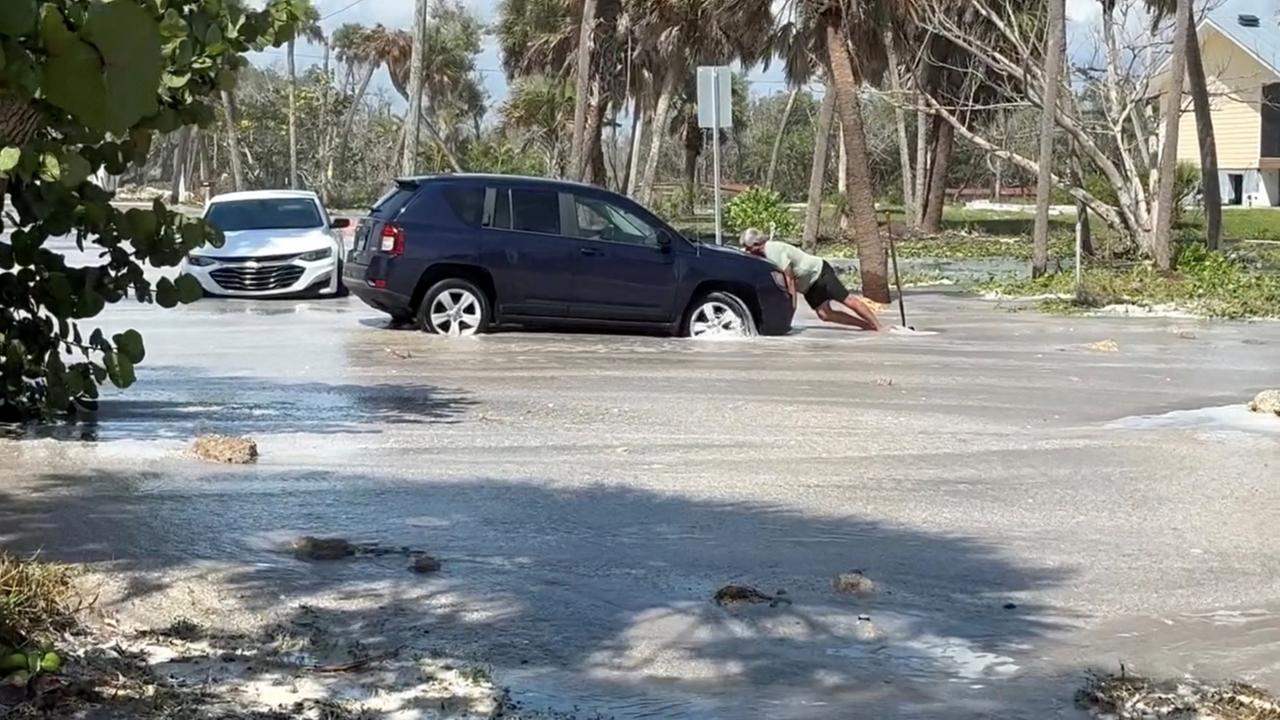
Transportation and Commerce Halted: The storm brought regional transportation to a standstill. The Alabama Disaster Preparedness Agency confirmed that major roadways in Houston County and surrounding areas remained closed until conditions were deemed safe. Flights from regional airports, including Pensacola International Airport and Mobile Regional Airport, were canceled or severely delayed, disrupting travel for thousands. Businesses and schools across the affected regions closed their doors preemptively or due to storm damage, leading to significant economic losses in an already sensitive period. In Mobile, Alabama, authorities enforced a nightly curfew, not only to ensure public safety and prevent looting but also to facilitate emergency response efforts on cleared roadways.
Environmental Impact: Beyond the urban and residential damage, Isaias has also left its mark on the natural environment. Coastal erosion is a significant concern, with beaches potentially losing substantial amounts of sand. Marine life may also be affected by sudden changes in water salinity and debris washed into nearshore waters. The potential for hazardous material spills from damaged infrastructure or submerged vehicles is also a concern for environmental agencies.
Official Responses: Coordinated Efforts Amidst Chaos
The response to Hurricane Isaias has been a multi-agency effort, with federal, state, and local authorities mobilizing resources to mitigate the storm’s impact and aid in recovery.
State Declarations and Evacuations: Prior to Isaias’s arrival, the governors of Florida, Alabama, and Mississippi preemptively declared states of emergency. These declarations activated state National Guard units, streamlined the deployment of emergency resources, and allowed for faster federal assistance requests. Mandatory evacuation orders were issued for barrier islands and low-lying coastal zones, particularly in areas like Okaloosa and Escambia counties in Florida, and parts of Baldwin County in Alabama. These proactive measures were crucial in minimizing potential casualties, though some residents inevitably chose to shelter in place.
Governor DeSantis’s Appeal and Promises: Florida Governor Ron DeSantis was a visible presence throughout the pre-storm preparations and immediate aftermath. He urged residents to heed all warnings, seek safe shelter, and prepare for potential isolation by stocking at least 72 hours’ worth of supplies, including water, non-perishable food, and medical necessities. In post-landfall statements, DeSantis acknowledged the significant challenges but assured the public of swift action. He emphasized that rescue and emergency crews were poised to begin clearance operations and power restoration efforts as soon as conditions permitted, even in the dead of night where safe to do so. "Our priority is the safety of our citizens and the rapid restoration of essential services," DeSantis stated, promising a robust state response.
Federal Assistance and FEMA: The Federal Emergency Management Agency (FEMA) has been actively coordinating with state emergency management divisions. President has approved emergency declarations for the affected states, unlocking federal funding and resources for disaster relief. FEMA teams are on the ground, or preparing to deploy, to assist with damage assessment, provide humanitarian aid, and support local recovery initiatives. This includes setting up distribution points for essential supplies and offering guidance on applying for federal assistance.
Local Emergency Services: At the local level, police, fire, and emergency medical services have been working tirelessly, often under dangerous conditions. Search and rescue operations have been initiated in areas cut off by floodwaters or debris. Local authorities have also been instrumental in enforcing curfews and managing traffic flow, ensuring that emergency vehicles can navigate the disrupted infrastructure effectively. Community shelters, set up in advance, provided refuge for those who evacuated or whose homes were rendered uninhabitable.
Implications: A Glimpse into the Future of Hurricane Seasons
The arrival of Hurricane Isaias as the first named hurricane of the 2026 Atlantic season carries significant implications, both for the immediate future of the region and for broader climate trends.
Unusually Late Start to Hurricane Season: The fact that Isaias is the first hurricane of the season, making landfall in October, is notable. The official Atlantic hurricane season runs from June 1 to November 30. Typically, by October, several hurricanes would have already formed and potentially made landfall. This late start is partially attributed to the natural climate phenomenon known as El Niño.
El Niño’s Influence: El Niño, characterized by the warming of surface waters in the eastern and central Pacific Ocean near the equator, significantly impacts global weather patterns. In the Atlantic basin, El Niño conditions often lead to increased wind shear – differences in wind speed and direction with height – which can inhibit the formation and strengthening of tropical cyclones. This year’s pronounced El Niño effect is believed to have suppressed hurricane activity during the earlier parts of the season, leading to a quieter period before Isaias’s sudden emergence. However, even with El Niño, conditions can still become favorable for storm development, as evidenced by Isaias.
Climate Change Context: While El Niño plays a role in yearly variability, the broader context of a warming climate continues to loom large. Scientists widely agree that while climate change may not directly increase the number of tropical storms, it is contributing to an increase in their intensity and the amount of rainfall they produce. Warmer ocean waters provide more fuel for hurricanes, leading to more rapid intensification and allowing them to hold more moisture. The heavy rainfall and swift strengthening observed with Isaias align with these climate change projections, raising concerns about the increasing destructive potential of future storms.
Long-Term Recovery and Resilience: The recovery from Isaias will be a long and arduous process for the affected communities. Beyond the immediate cleanup, there will be significant challenges in rebuilding damaged infrastructure, supporting displaced residents, and revitalizing local economies. The recurring nature of such events also underscores the critical need for enhanced resilience measures. This includes investing in stronger building codes, improving drainage systems, hardening the power grid, and developing more robust evacuation and shelter plans.
Economic Repercussions: The economic fallout from Isaias will be substantial. For Florida and Alabama, states heavily reliant on tourism and coastal industries, the disruption could be significant. Property damage will translate into insurance claims, and business closures will lead to lost revenue. The cost of recovery, including federal and state aid, will run into hundreds of millions, if not billions, of dollars, placing a considerable strain on public finances.
As the Gulf Coast begins to pick up the pieces, Hurricane Isaias serves as a stark reminder of the immense power of nature and the ongoing vulnerability of coastal regions to extreme weather events, a reality increasingly shaped by both natural cycles and a changing climate. The lessons learned from this storm will undoubtedly inform future preparedness and mitigation strategies as communities brace for what remains of the Atlantic hurricane season.