Berlin, Germany – The political landscape in Germany is experiencing a tremor, with the Christian Democratic Union (CDU) grappling with a persistent identity crisis and leadership challenges. At the heart of the latest turbulence is an unexpected move by Bundestag President Bärbel Bas, whose recent "withdrawal" from a proposed cross-party consensus on parliamentary reform has sent ripples through the German political establishment. While seemingly procedural, Bas’s decision, coming from a figure traditionally seen as above partisan fray, has been interpreted by many as a calculated blow, further exacerbating the CDU’s internal struggles and placing renewed pressure on party leader Friedrich Merz.
The CDU, once the dominant force in German politics, has struggled to redefine itself in the post-Merkel era, facing declining poll numbers, fierce competition from the far-right Alternative for Germany (AfD), and the inherent challenges of opposition to the ruling "traffic light" coalition. Merz, who ascended to the party leadership with promises of renewal and a clear conservative profile, now finds his authority tested as the party grapples with an internal tug-of-war between centrist pragmatism and a more outspoken conservative stance. Bas’s recent action, which effectively stalled a CDU-championed initiative aimed at modernizing parliamentary debate rules and enhancing oversight, has been framed by critics within the CDU as a deliberate undermining of the party’s efforts to project constructive opposition and legislative competence. This incident, minor as it might appear on the surface, underscores the intricate and often volatile dynamics of German coalition politics, where even subtle parliamentary maneuvers can have profound strategic implications.
Main Facts: A Crisis of Direction and a Procedural Standoff
The CDU finds itself in a precarious position, navigating a complex web of internal dissent, an erosion of traditional voter bases, and a struggle to articulate a coherent vision for Germany’s future. Friedrich Merz, a seasoned politician and former corporate lawyer, took the helm of the party with the explicit mandate to restore its conservative identity and electoral strength after Angela Merkel’s long tenure. However, his leadership has been marked by a series of missteps, gaffes, and an inability to fully unite the party’s diverse factions.
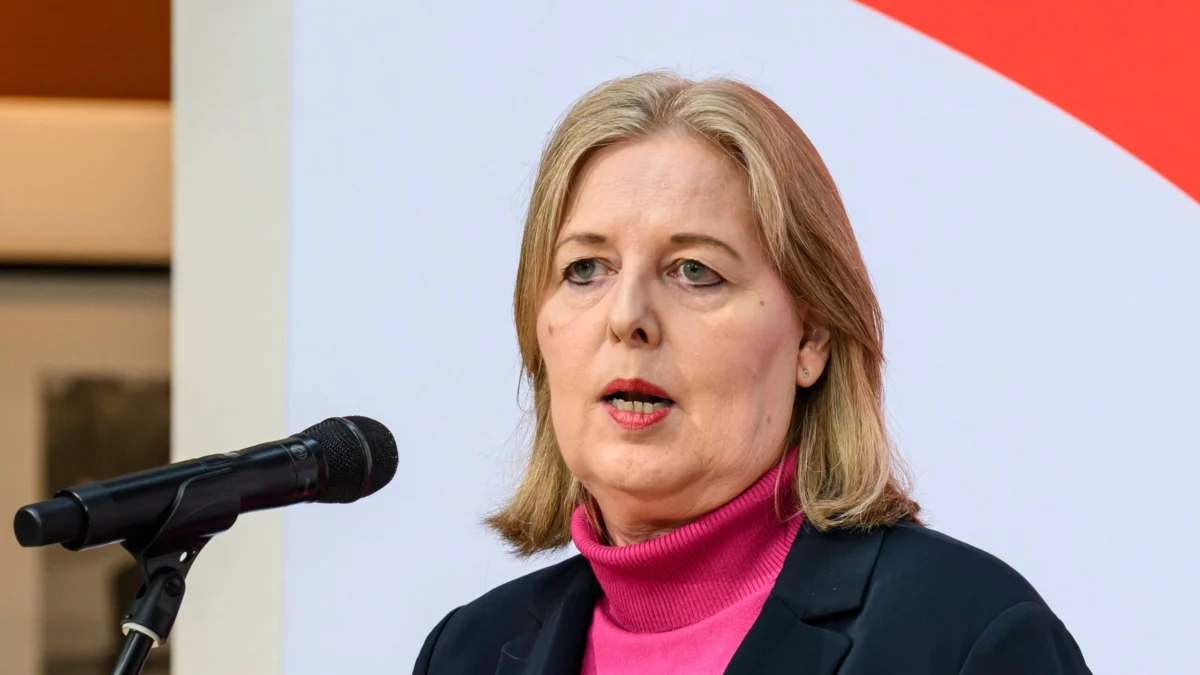
The immediate flashpoint for the current discussion revolves around Bärbel Bas, the Social Democratic Party (SPD) politician who holds the esteemed position of President of the Bundestag. Her role demands impartiality and stewardship of parliamentary procedures. However, in a recent development, Bas effectively put a stop to a long-debated cross-party working group focused on significant parliamentary reforms. This group, initiated primarily by the CDU, aimed to streamline legislative processes, introduce stricter ethical guidelines for MPs, and enhance the Bundestag’s oversight functions, particularly concerning classified information and executive actions. The CDU had heavily invested political capital in these reforms, seeing them as an opportunity to demonstrate their commitment to good governance and to offer a stark contrast to perceived inefficiencies of the current government.
Bas’s "withdrawal" came in the form of a public statement citing "insufficient consensus" and "lingering partisan divisions" as reasons to indefinitely postpone the working group’s mandate. While presented as a neutral, procedural decision, many within the CDU interpret it as a political blockage. The argument is that Bas, despite her neutral role, wielded her institutional power to prevent a CDU-led initiative from gaining traction, thereby denying Merz a potential political victory and further exposing the CDU’s perceived lack of influence. This incident, though procedural in nature, has become a symbol of the broader challenges facing Merz and the CDU, highlighting their struggle to exert influence even on issues that ostensibly enjoy broad support. It has fueled accusations that the "traffic light" coalition is using its parliamentary majority and institutional leverage to sideline the opposition, and that Merz’s strategy of constructive engagement is failing to yield results. The core of the crisis for the CDU is not just about policy or popularity, but about its fundamental ability to shape the political agenda and project an image of strength and relevance.
Chronology: A Trajectory of Discontent and Missed Opportunities
The current predicament of the CDU and the challenge to Friedrich Merz’s leadership are not isolated events but rather the culmination of a series of developments stretching back several years.
September 2021 Federal Election: The CDU/CSU alliance suffered its worst federal election result since 1949, securing only 24.1% of the vote. This marked the end of Angela Merkel’s 16-year chancellorship and thrust the party into opposition, a role it had not occupied for most of the 21st century. The defeat triggered an intense leadership contest and a painful soul-searching process.
January 2022: Friedrich Merz Ascends: After two previous unsuccessful attempts, Friedrich Merz was elected party leader, largely on a platform promising a return to core conservative values, a clearer demarcation from the SPD and Greens, and a more robust opposition stance. His election was seen by many as a decisive shift away from the Merkel-era centrism.
2022-2023: Early Leadership Challenges: Merz’s initial tenure was marked by efforts to consolidate power and redefine the party’s ideological direction. He faced criticism for perceived gaffes, particularly comments regarding Ukrainian refugees and the AfD. Internal tensions simmered as different factions within the party debated the optimal strategy for opposition – whether to be more confrontational or seek areas of cooperation with the government. State elections during this period yielded mixed results, offering neither a clear mandate nor a catastrophic setback, maintaining a state of uneasy equilibrium within the party.
Early 2024: Focus on Parliamentary Reform: Recognizing the need to project a constructive image, the CDU, under Merz’s direction, began pushing hard for a comprehensive package of parliamentary reforms. These reforms included proposals for more robust committee oversight, accelerated legislative review for critical infrastructure projects, and enhanced transparency measures. The CDU leadership saw this as an opportunity to demonstrate its commitment to good governance and to differentiate itself from the government, which they often accused of procedural opacity and legislative haste. The party actively sought cross-party buy-in, particularly from the SPD, hoping to secure a broad consensus that would lend legitimacy to the reforms and reflect positively on the CDU’s ability to forge unity.
Mid-2024: The Bas Intervention: Following months of preliminary discussions and the establishment of a cross-party working group, the initiative hit a wall. Bundestag President Bärbel Bas, who had initially expressed openness to the reform discussions in her capacity as guardian of parliamentary procedure, made a pivotal announcement. Citing "persistent disagreements on fundamental aspects of legislative oversight and the scope of ethical reforms," Bas declared that the working group’s mandate would be "indefinitely suspended" due to a lack of "sufficient foundational consensus." While her statement emphasized the need for true cross-party agreement for such sensitive reforms, the timing and decisive nature of her intervention were widely interpreted as a direct blow to the CDU’s efforts. The CDU had been particularly keen on proposals that would allow for more rigorous scrutiny of government spending and classified security matters, areas where the ruling coalition had shown resistance to increased opposition access. Bas’s decision effectively killed these specific ambitions, at least for the foreseeable future.
Immediate Aftermath: The CDU leadership reacted with a mixture of frustration and muted public criticism. Internally, the decision ignited further debate about Merz’s strategy. Some argued that his approach was too conciliatory and failed to secure concessions, while others maintained that the "traffic light" coalition was simply unwilling to cede ground to the opposition on any issue that might empower it. The incident served as a stark reminder of the CDU’s diminished power in opposition and the formidable institutional hurdles it faces.
Supporting Data: A Party in Flux and a Shifting Electorate
The "crisis" in the CDU is not merely anecdotal; it is substantiated by a range of data points reflecting a party struggling to adapt to a rapidly changing political landscape.
Electoral Performance and Polls: Since the 2021 federal election, the CDU’s national poll numbers have remained largely stagnant, hovering around 26-29%. While this makes them the largest opposition party, it is significantly below their historical averages and falls short of a clear path to forming a government. Recent state elections, while not uniformly disastrous, have failed to provide the clear momentum Merz needs. For instance, in regional elections where the AfD has gained significant ground, the CDU has often been squeezed, unable to effectively counter the far-right’s appeal while simultaneously maintaining its traditional moderate conservative base. The party’s vote share among younger demographics (18-30) remains particularly low, signaling a long-term challenge in attracting new voters.
Internal Factionalism: The CDU has historically been a broad-tent party, but the post-Merkel era has seen its internal divisions become more pronounced. There is a palpable tension between the more centrist "Merkelists" who advocate for a moderate, pragmatic approach, and the more conservative wing, championed by Merz, who seek a sharper ideological profile. Regional party bosses, who often hold significant sway, sometimes pursue agendas that conflict with the national leadership. This lack of ideological cohesion makes it difficult for the party to speak with one voice and present a united front, a weakness that opposition parties and the ruling coalition are quick to exploit. The parliamentary reform initiative, for example, saw different levels of enthusiasm and priority from various CDU state associations, reflecting these internal divides.
Rise of the AfD: Perhaps the most significant external pressure on the CDU comes from the Alternative for Germany (AfD). The far-right party has surged in popularity, particularly in eastern Germany, often siphoning off disillusioned conservative voters who feel the CDU has become too liberal. The AfD’s hardline stance on immigration, national identity, and criticism of EU policies directly challenges the CDU’s traditional conservative narrative, forcing Merz to walk a tightrope between appealing to his base and avoiding legitimizing the far-right. The fear of losing more voters to the AfD often dictates CDU’s rhetorical strategy, sometimes leading to perceived inconsistencies.
Public Perception of Merz: While Merz initially enjoyed a honeymoon period, his public approval ratings have remained modest. He struggles to connect with a broader electorate beyond his core supporters, and his image as an "old-school" conservative businessman has not universally resonated. Critics often point to his communication style, which can be perceived as aloof or confrontational, as a barrier to broader appeal. The incident with Bärbel Bas, particularly how Merz chose to respond, will likely be scrutinized by the public as a test of his leadership and political acumen. Data from independent think tanks suggest that public trust in political institutions, including parliament, is a growing concern, making the issue of parliamentary reform a potentially impactful one for voters.
Government’s Position: The "traffic light" coalition (SPD, Greens, FDP) currently holds a comfortable majority in the Bundestag. While facing its own challenges and internal squabbles, the coalition has largely presented a united front against CDU opposition. They often frame CDU criticisms as obstructionist and resist proposals that might empower the opposition disproportionately, especially those that touch on sensitive areas of executive power or budget oversight. Bas’s decision, while framed as procedural, aligns with the coalition’s broader interest in maintaining legislative control and minimizing avenues for opposition disruption.
Official Responses: Calculated Silence and Veiled Critiques
The immediate aftermath of Bärbel Bas’s decision saw a flurry of internal discussions within the CDU, followed by a carefully orchestrated set of public responses designed to manage the narrative without escalating the conflict unnecessarily.
Friedrich Merz, CDU Leader: Merz’s initial public comments were notably restrained. He expressed "disappointment" at the indefinite suspension of the parliamentary reform working group, emphasizing the CDU’s commitment to "enhancing the transparency and efficiency of parliamentary processes." He stated, "We believe that the modernization of our Bundestag is a crucial task that should transcend partisan lines. It is regrettable that such a consensus could not be found at this juncture." Merz avoided direct criticism of Bas, instead framing the issue as a failure of broader political will. This measured response was likely an attempt to avoid a direct confrontation with the Bundestag President, a move that could be perceived as disrespectful to the institution. However, within party circles, sources close to Merz indicated deep frustration, viewing Bas’s move as a politically motivated obstruction.
Bärbel Bas, Bundestag President (SPD): Bas maintained a steadfastly neutral and procedural stance. In her public statement, she reiterated that her decision was based purely on the "lack of a fundamental, shared understanding" necessary for such significant parliamentary reforms. "The office of the Bundestag President demands that reforms impacting the core functions of parliament be built on broad, stable agreement," Bas declared. "Where such agreement is absent, it is my duty to ensure that partisan interests do not undermine the integrity of our legislative body. The door for future discussions remains open, should a genuine cross-party consensus emerge." Her statement carefully avoided any mention of the CDU or Friedrich Merz directly, focusing solely on the procedural requirements of her office.
Thorsten Frei, CDU Parliamentary Group First Secretary: Frei, a key figure in the CDU’s parliamentary strategy, was more direct in his criticism, albeit still within journalistic norms. "The CDU brought forward concrete, constructive proposals for a more robust and transparent parliament," Frei asserted. "To suggest that there is no consensus is to ignore the dedicated work of many colleagues. One must question whether the ruling coalition has a genuine interest in stronger parliamentary oversight, especially when it comes to areas like government spending and intelligence services." Frei’s comments hinted at the suspicion that the "withdrawal" was less about consensus and more about protecting the government’s prerogatives.
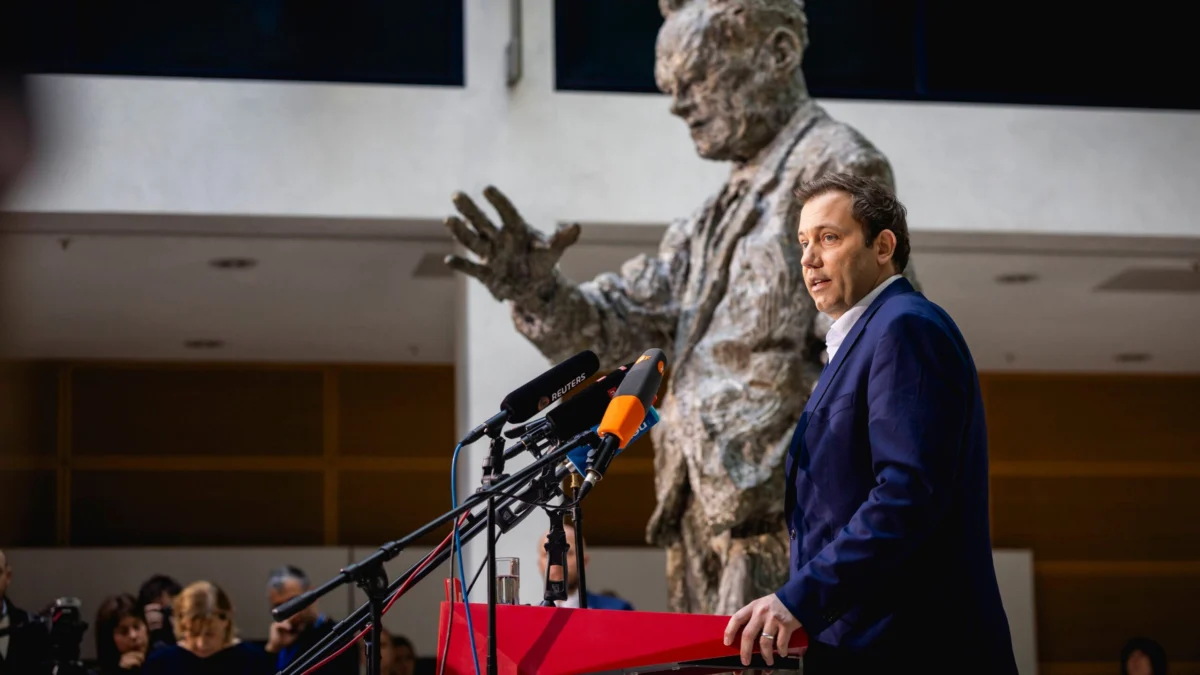
Lars Klingbeil, SPD Co-Leader: Klingbeil offered a terse endorsement of Bas’s decision. "The Bundestag President has acted responsibly in safeguarding the integrity of our parliament," he stated. "Significant reforms require significant consensus, not just the proposals of one party. The SPD remains open to constructive dialogue, but not at the expense of parliamentary stability." His response effectively backed Bas while implicitly suggesting the CDU’s proposals were not sufficiently unifying.
Political Analysts: Reactions from political commentators have been varied. Many saw Bas’s move as a subtle but powerful assertion of parliamentary authority, potentially influenced by her party affiliation. Dr. Anna Schmidt, a political scientist at the Free University of Berlin, commented, "While the President of the Bundestag must remain neutral, their political background inevitably shapes their perspective. Bas’s decision, while framed procedurally, clearly benefits the government by removing a CDU-led initiative that could have put them under increased scrutiny. It’s a deft political maneuver under the guise of institutional protection." Others viewed it as a legitimate call for broader consensus, arguing that fundamental reforms should indeed not be pushed through by a single opposition party.
Implications: A Deeper Crisis for the CDU and Merz’s Leadership Test
The fallout from Bärbel Bas’s intervention is multifaceted, casting a long shadow over the CDU’s immediate future and posing significant challenges for Friedrich Merz’s leadership. The incident, while seemingly minor in the grand scheme of national politics, has become a potent symbol of the CDU’s current predicament.
For the CDU:
- Reinforced Perception of Ineffectiveness: The most immediate implication is a reinforcement of the perception that the CDU, despite being the largest opposition party, struggles to effectively influence the legislative agenda. Their flagship initiative for parliamentary reform, meant to showcase their constructive approach, has been stalled by a procedural decision. This undermines their narrative as a credible alternative government and fuels doubts about their ability to translate proposals into action.
- Exacerbated Internal Divisions: The incident is likely to further inflame internal debates within the CDU. The more conservative wing might argue that Merz’s strategy of seeking cross-party consensus is naive and that the party needs a more confrontational approach. Conversely, centrists might lament the inability to forge broader alliances, blaming internal inflexibility. This deepening of existing factionalism makes it harder for the party to present a united front and develop a cohesive strategy for the upcoming federal election cycle.
- Loss of a Key Narrative: The parliamentary reform agenda was a significant part of the CDU’s efforts to project an image of good governance, transparency, and a commitment to strengthening democratic institutions. With this initiative stalled, the party loses a valuable talking point and a concrete example of its constructive opposition work, making it harder to distinguish itself from other parties and articulate a clear purpose.
For Friedrich Merz’s Leadership:
- Authority Test: Merz’s leadership is once again under scrutiny. His ability to navigate this setback, respond effectively to Bas’s move, and re-galvanize his party will be a crucial test. Critics might point to his inability to secure even a procedural victory on a seemingly non-partisan issue as evidence of a lack of political leverage or strategic foresight.
- Strategic Reassessment: The incident forces Merz to reassess his strategy for opposition. Should he continue to pursue areas of potential consensus, risking further setbacks, or adopt a more aggressive, confrontational stance against the government? Either path carries significant risks, potentially alienating parts of his own party or further isolating the CDU from moderate voters.
- Public Image: Merz’s public image as a strong, decisive leader could be dented if the party is perceived as repeatedly outmaneuvered. His response to this specific incident will be closely watched by both party members and the wider electorate as an indicator of his resilience and strategic depth. A perception of weakness could lead to renewed calls for leadership change, especially if poll numbers remain stagnant.
For German Politics as a Whole:
- Increased Partisan Tensions: The incident risks further polarizing the political discourse, with the opposition feeling increasingly marginalized and the government coalition potentially emboldened to use its majority more assertively. This could lead to a less collaborative legislative environment, making it harder to address critical national challenges that require broad political support.
- Role of Bundestag President: The incident also highlights the delicate balance of the Bundestag President’s role. While traditionally neutral, the individual’s political background and judgment can have significant political ramifications. Bas’s decision, regardless of its intent, has become a point of contention, underscoring the power inherent in the office.
- Ahead of Federal Elections: With the next federal elections looming, the CDU’s internal struggles and Merz’s leadership challenges are particularly acute. The party needs to present a strong, united front and a compelling vision to reclaim its position as Germany’s leading political force. Bas’s ‘withdrawal’ has merely added another layer of complexity to an already challenging path. The ability of the CDU to overcome this crisis of direction and demonstrate effective opposition will be a defining factor in its electoral fortunes and the future trajectory of German politics.