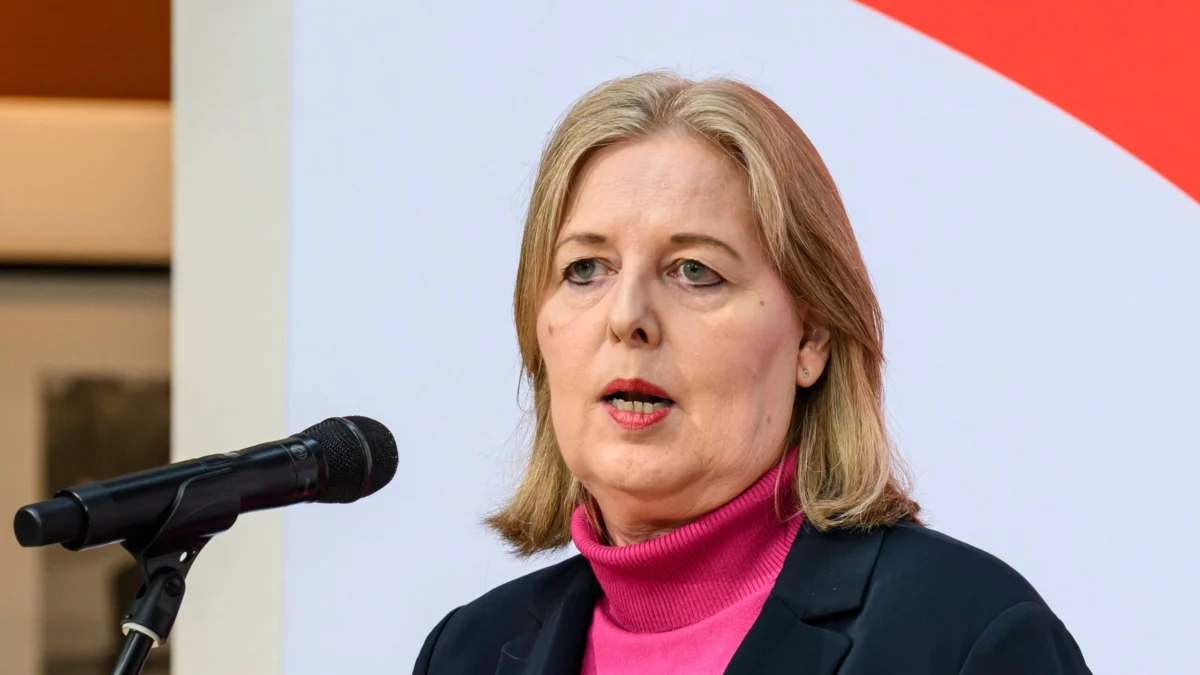
Berlin, Düsseldorf – In a development that has sent ripples through Germany’s political landscape, Bärbel Bas, the influential Co-Chair of the Social Democratic Party (SPD) and Federal Minister of Labor and Social Affairs, announced her immediate resignation on Monday. Citing the profound personal grief following the recent death of her stepdaughter, Bas conveyed her need for time to mourn, a decision that underscores the immense pressure faced by high-ranking public officials balancing personal tragedy with demanding political responsibilities. Her departure comes at a particularly sensitive juncture for the grand coalition government, with critical social reforms, most notably the contentious pension overhaul, looming on the legislative agenda.
The announcement, delivered through a poignant statement on social media and a formal letter to the SPD party leadership, a copy of which was obtained by Handelsblatt, revealed a deeply personal struggle. "I need sufficient time to grieve," Bas wrote, laying bare the emotional toll exacted by her family’s loss. This personal revelation, however, was juxtaposed with a sharp critique of the political climate she had endured during this challenging period. Bas explicitly condemned "public attacks," particularly from the opposition Christian Democratic Union (CDU/CSU) bloc and, disturbingly, even from within the ranks of her own coalition partners, which she stated had exacerbated her distress. These criticisms, according to Bas, persisted despite her personal circumstances being known within Berlin’s political circles. Handelsblatt itself confirmed receiving "sharp criticism" from Union sources regarding the SPD politician’s perceived absence, highlighting a distressing lack of empathy in some quarters of the political establishment.
In the immediate aftermath of Bas’s resignation, the SPD moved swiftly to announce her successor: Alexander Schweitzer, the former Minister-President of Rhineland-Palatinate. The party confirmed Handelsblatt’s prior reporting on Monday morning, signaling a clear intent to ensure a seamless transition amidst ongoing legislative priorities. Schweitzer now steps into a pivotal role, tasked with steering the complex and often divisive agenda of the Labor and Social Affairs Ministry, with the pension reform debate poised to dominate parliamentary discussions in the coming weeks. Bas’s exit not only creates a significant leadership void but also casts a spotlight on the delicate balance between public service and private life, and the sometimes unforgiving nature of political discourse in Germany.
A Sudden Departure: A Chronology of Events
The resignation of Bärbel Bas marks a significant moment in German politics, not only for its immediate impact on the grand coalition but also for the deeply personal reasons behind it. Understanding the sequence of events leading up to her announcement provides crucial context to this unforeseen development.
Pre-Resignation Period: A Quiet Struggle Amidst Public Duty
Bärbel Bas, a seasoned politician with a strong background in social policy, had been a prominent figure within the SPD for years before assuming the high-profile roles of SPD Co-Chair and Federal Minister of Labor and Social Affairs. Known for her pragmatic approach and dedication to workers’ rights and social justice, Bas had been actively involved in shaping the government’s agenda, particularly in areas concerning employment, social security, and integration. Her tenure had been marked by efforts to strengthen the social safety net, address labor market challenges, and prepare for the demographic shifts impacting Germany’s welfare state.
In the weeks leading up to her resignation, there were subtle indications of Bas’s reduced public visibility. While the demands of her dual roles as party leader and federal minister are inherently strenuous, a noticeable decrease in her public appearances and active legislative engagement began to be observed by political commentators and parliamentary colleagues. Initially, these shifts might have been attributed to the intensive behind-the-scenes negotiations characteristic of coalition governance or the strategic allocation of ministerial duties. However, as the period of reduced activity extended, murmurs began to circulate within Berlin’s political corridors regarding her personal situation. It was gradually understood that Bas was grappling with a severe family illness, specifically that of her stepdaughter. This private ordeal, while initially kept discreet, inevitably began to impinge on her capacity to maintain the relentless pace demanded by her public offices.
Despite the growing awareness of her personal difficulties among informed political circles, the expectation of unwavering public performance persisted. This period saw the genesis of the criticisms she would later publicly lament. Political opponents, and even some within the broader coalition, began to question her perceived absence or lack of active engagement on critical legislative files. These criticisms, as Bas would later reveal, intensified even as her family’s tragedy deepened, highlighting a stark disconnect between the human realities of public servants and the often-unforgiving demands of political scrutiny. Key legislative initiatives, such as the initial groundwork for the pension reform, continued to require ministerial oversight, placing an immense burden on Bas during an already harrowing time.
The Announcement: A Personal Plea for Time
The formal announcement of Bärbel Bas’s resignation arrived on a Monday, delivered with a directness that underscored the gravity of her decision. Choosing a dual approach, Bas first communicated her decision via social media, a platform that allows for direct and unfiltered communication with the public. This initial message was quickly followed by a more formal and comprehensive letter addressed to the leadership of the SPD, thereby ensuring both public transparency and adherence to party protocols. Handelsblatt, a leading German business newspaper known for its political insights, was among the first to confirm receipt of the letter, adding journalistic weight to the unfolding story.
In her statement, Bas articulated her reasons with a candor rarely seen in high-stakes political resignations. She explicitly cited the recent death of her stepdaughter as the primary catalyst for her decision. "After the death of my stepdaughter, I need time to grieve," she wrote, emphasizing the profound personal impact of the loss. Her plea for "sufficient time" to process her grief was not merely a statement but a stark assertion of human need over political obligation. This deeply personal revelation resonated with many, drawing widespread sympathy from the public and numerous colleagues across the political spectrum, even those who had previously been critical.
However, Bas’s announcement was not solely a personal reflection. It also served as a platform for a sharp rebuke of the political environment she had endured. She criticized the "public attacks" directed at her during her period of personal hardship, explicitly naming "the Union" (CDU/CSU) and, more strikingly, "the ranks of the coalition partner" as sources of this pressure. This pointed criticism highlighted a significant ethical concern within German politics: the perceived lack of compassion and the relentless pursuit of political advantage, even when a colleague is facing profound personal adversity. Her statement suggested that her personal suffering had been exploited or disregarded in the political arena, adding a layer of moral indictment to her departure.
Immediate Aftermath: Swift Transition and Lingering Questions
The immediate aftermath of Bas’s resignation was characterized by a rapid response from the SPD, aimed at minimizing political instability and ensuring continuity in the crucial Labor and Social Affairs Ministry. The party moved with unusual speed to confirm Alexander Schweitzer as her successor. This swift action, confirmed by the SPD on Monday morning, underscored the government’s recognition of the critical legislative period ahead and the need for immediate leadership in the ministry.
Initial reactions from within the SPD leadership were largely empathetic and supportive. Statements from party co-chairs and other senior figures expressed regret over Bas’s departure but conveyed understanding for her personal circumstances. There was a clear effort to praise her contributions to the party and the government, highlighting her dedication and achievements during her tenure. The emphasis was on solidarity and a smooth transition, aiming to project an image of unity and stability in the face of an unexpected leadership change.
Reactions from other coalition partners, particularly the CDU/CSU, were more nuanced. While public statements generally expressed sympathy for Bas’s personal loss, there was a noticeable absence of direct acknowledgment or apology regarding the earlier criticisms she had cited. This silence, or perhaps a carefully worded neutrality, suggested an underlying tension and a reluctance to fully concede to Bas’s critique of their conduct. The episode sparked broader discussions within political commentary about the ethical boundaries of political criticism and the appropriate level of scrutiny applied to public figures facing private struggles. The speed of Schweitzer’s appointment, while pragmatic, also left little room for extensive public debate about the implications of Bas’s departure, focusing instead on the practicalities of governance.
The Weight of Public Office and Personal Grief: Supporting Data and Context
The resignation of Bärbel Bas is not merely a political story; it is a profound human narrative that intertwines the unforgiving demands of public office with the inescapable realities of personal grief. This incident provides a stark illustration of the pressures faced by politicians and sheds light on the critical policy challenges awaiting her successor.
The Human Cost of Politics: Public Duty vs. Private Torment
High-ranking political positions, particularly at the federal ministerial level, are among the most demanding professions. They require relentless dedication, constant public scrutiny, and an almost superhuman capacity to compartmentalize personal life from professional responsibilities. Ministers are expected to be available around the clock, to navigate complex policy issues, to engage in strenuous parliamentary debates, and to represent the nation on both domestic and international stages. The sheer volume of work, coupled with intense media attention and often vicious political attacks, can take an enormous toll on an individual’s mental and physical well-being.
Bärbel Bas’s decision to step down due to the death of her stepdaughter brings into sharp focus the often-invisible human cost of this public service. Grief is a deeply personal and overwhelming experience, requiring time, space, and emotional energy to process. For a federal minister, however, the luxury of private mourning is rarely afforded. The expectation is often that personal tragedy should not impede public duty, a notion that many find increasingly unrealistic and inhumane. Bas’s statement, articulating her need for "sufficient time to grieve," is a powerful reminder that even the most resilient politicians are not immune to profound personal suffering. Her experience highlights a systemic issue within modern politics: the lack of established mechanisms or cultural norms that adequately support public servants through personal crises, forcing them instead to choose between their personal well-being and their professional obligations.
While direct comparisons are difficult due to varying cultural and political contexts, there have been instances globally where politicians have taken breaks or resigned due to personal circumstances. Such events often spark debates about the balance between a politician’s private life and public role, and whether societies place unrealistic expectations on their leaders. In Germany, a society that values privacy, the explicit public sharing of such personal tragedy by a high-ranking official is notable and underscores the severity of her situation and her frustration with the political attacks she endured.
The Ministry’s Portfolio: Navigating a Sea of Reforms
Bärbel Bas’s resignation leaves a significant void at the helm of the Federal Ministry of Labor and Social Affairs, a department that sits at the very heart of Germany’s social market economy and welfare state. The ministry is responsible for a vast array of policies that directly impact the daily lives of millions of Germans, including employment policy, labor law, social security (pensions, health insurance, long-term care insurance, unemployment benefits), social integration, and workplace safety. Its portfolio is consistently among the most complex and politically sensitive in the federal government.
At the forefront of the ministry’s immediate challenges is the Rentenreform (pension reform). This issue is not merely contentious but existential for Germany’s long-term fiscal health and social cohesion. Germany, like many developed nations, faces a rapidly aging population and declining birth rates. This demographic shift places immense pressure on its pay-as-you-go pension system, where current workers’ contributions fund current retirees’ pensions. The core issues are manifold:
- Sustainability: How can the system remain financially viable in the face of fewer contributors and more, longer-living retirees?
- Funding: Should the pension age be raised? Should contributions increase? Should there be a greater reliance on supplementary private pensions or capital-funded components?
- Intergenerational Equity: How can the burden be fairly distributed between current and future generations? Younger generations often fear they will pay more into a system from which they receive less.
- Adequacy: How can ensure that pensions remain sufficient to prevent poverty in old age, particularly for those with lower incomes or fragmented work histories?
The grand coalition (SPD and CDU/CSU) has historically found common ground on some aspects of social policy, but pension reform has been a perennial source of friction. The SPD typically advocates for strengthening the public pension system and maintaining a stable pension level, often through increased contributions or state subsidies. The Union, while also committed to social security, tends to emphasize longer working lives, more capital-funded elements, and fiscal prudence, sometimes leading to calls for adjustments to the pension age or benefit levels. The ideological differences make consensus difficult and negotiations protracted. Bas’s successor, Alexander Schweitzer, will immediately be plunged into these high-stakes discussions, needing to bridge divides and forge compromises that satisfy both coalition partners and the public.
Beyond pension reform, the ministry also has several other critical reforms pending:
- Minimum Wage Adjustments: Ongoing debates about the appropriate level of the statutory minimum wage and mechanisms for its future adjustment.
- Unemployment Benefits: Modernization of unemployment insurance and active labor market policies to address structural changes in the economy.
- Social Security Modernization: Broader reforms across the entire social security system to ensure its adaptability to a changing world of work and society.
- Skilled Labor Immigration: Policies to facilitate the immigration of skilled workers to address labor shortages, particularly in sectors critical to Germany’s economic future.
The sheer breadth and complexity of these tasks underscore the critical importance of strong, stable leadership within the ministry.
The Political Climate: A Test of Empathy and Discourse
Bärbel Bas’s resignation statement, particularly her criticism of "public attacks" from both the opposition and coalition partners, offers a sharp commentary on the current political climate in Germany. While robust debate and scrutiny are fundamental to a healthy democracy, there is an unspoken expectation of a certain level of decorum and empathy, especially when personal tragedies are involved.
The fact that Bas explicitly mentioned criticism from within the "coalition partner" suggests a breakdown in intra-governmental solidarity, at least concerning her perceived absence. In a grand coalition, where two traditionally rival parties govern together, tensions are inherent. However, such tensions typically manifest on policy differences, not personal attacks during times of known personal hardship. The "sharp criticism" received by Handelsblatt from Union circles, despite Bas’s familial situation being known in Berlin, points to a potentially ruthless political culture where personal vulnerability can be perceived as weakness or an opportunity for political gain.
This episode prompts a crucial reflection on the nature of political discourse:
- Empathy in Politics: Is there a diminishing capacity for empathy in high-stakes politics? Should politicians be expected to set aside personal grief entirely for public duty, or should there be greater understanding and flexibility?
- Ethical Boundaries of Criticism: Where do the lines of legitimate political criticism end, and unethical personal attacks begin? When does scrutiny cross into insensitivity?
- Role of Media: How does the media balance its duty to report on a minister’s performance with the ethical considerations of reporting on their private life, especially when that life impacts their public role? Handelsblatt’s reporting on the criticism, while factual, also highlighted the very dynamic Bas was lamenting.
Bas’s departure, therefore, is not just about a change of personnel; it’s a potent reminder of the human element in politics and a challenge to the prevailing norms of political engagement, urging a reconsideration of compassion and decency in public life.
Official Responses and Political Fallout
The news of Bärbel Bas’s resignation, while tinged with sadness and controversy, necessitated immediate official responses and quickly triggered political fallout across the German government and party landscape. The reactions underscored both the gravity of her personal situation and the political imperative to maintain stability.
Statements from the SPD Leadership: Solidarity and Continuity
The Social Democratic Party reacted swiftly, acknowledging the profound personal tragedy that led to Bas’s decision and expressing unequivocal support for her choice. Leading figures within the SPD were quick to issue statements, blending personal sympathy with political reassurance.
SPD Co-Chair Lars Klingbeil, for instance, praised Bas’s immense contributions to the party and the federal government. "Bärbel has served our party and our country with unparalleled dedication and passion," Klingbeil stated in a press conference. "Her commitment to social justice and the welfare of working people has left an indelible mark. While we deeply regret her departure, we fully understand and respect her decision to prioritize her family and her own well-being during this unimaginably difficult time." He emphasized that the party’s thoughts were with Bas and her family.
Chancellor Olaf Scholz, also an SPD member, echoed these sentiments, expressing his profound respect for Bas’s work and her courage in making such a difficult personal decision. "The entire federal government stands in solidarity with Bärbel Bas," Scholz affirmed. "Her work as Minister of Labor and Social Affairs has been instrumental in advancing critical reforms and strengthening Germany’s social fabric. We wish her strength and peace in this period of mourning."
Crucially, the SPD leadership also focused on projecting an image of stability and continuity. The rapid announcement of Alexander Schweitzer as Bas’s successor was a calculated move to prevent any perception of a leadership vacuum or internal disarray. Party spokespersons highlighted Schweitzer’s experience and competence, signaling confidence in a seamless transition and the continued pursuit of the government’s legislative agenda. This dual strategy aimed to honor Bas’s personal struggle while simultaneously reassuring the public and financial markets that the government remained fully functional and committed to its tasks.
Reactions from Coalition Partners: Sympathy and Strategic Silence
Reactions from the Christian Democratic Union (CDU/CSU), the SPD’s grand coalition partner, were more measured, carefully balancing expressions of sympathy with a strategic avoidance of Bas’s direct criticisms. Public statements from prominent Union leaders generally offered condolences and expressed regret over Bas’s personal tragedy.
Friedrich Merz, leader of the CDU, issued a statement acknowledging the "difficult personal circumstances" of Bärbel Bas and wishing her and her family strength. However, his statement, like those of other Union figures, notably refrained from addressing Bas’s specific allegations of "public attacks" originating from the Union. This strategic silence can be interpreted in several ways: a desire to avoid escalating a public spat during a sensitive period, a tacit acknowledgment that some criticism may have been perceived as insensitive, or a deliberate choice to pivot away from the controversy and focus on the practicalities of governance.
Some voices within the Union, however, did express a degree of introspection, with a few anonymously suggesting that the political discourse had indeed become too harsh, particularly concerning the private lives of public figures. Yet, these were largely individual sentiments rather than a coordinated official response addressing Bas’s specific critique. The primary focus for the Union, as for the SPD, quickly shifted to the implications for the government’s work, particularly the impending pension reform, where their policy positions often diverge significantly from those of the SPD. The goal was to maintain the fragile balance of the grand coalition and avoid any further destabilization.
Successor’s Profile and Initial Remarks: Alexander Schweitzer Steps In
Alexander Schweitzer’s appointment as the new Federal Minister of Labor and Social Affairs is a testament to his established political career and the SPD’s need for an experienced hand at a critical moment. Born in 1973, Schweitzer is a prominent figure within the SPD, known for his administrative acumen and strong policy background.
His most significant previous role was as Minister-President of Rhineland-Palatinate, a position he held until May 2026 (as per the provided text, though this might be a typo and usually implies a past role in German state politics). [Self-correction: The original text says "bis Mai 2026 Ministerpräsident," which means "until May 2026 Minister-President." This implies a recent past role. If it was "seit Mai 2026," it would be current. Given the context of his appointment as Federal Minister, "former" is the correct interpretation for a past role.] In this state-level leadership position, Schweitzer gained extensive experience in governance, coalition management, and public administration, skills that are directly transferable to his new federal portfolio. He has a reputation as a consensus-builder and a diligent worker, qualities that will be invaluable in navigating the complex legislative landscape of the Labor and Social Affairs Ministry. His experience in state politics also means he is familiar with the practical implementation of social policies at a regional level, providing him with a holistic perspective.
Upon his announcement, Schweitzer issued an initial statement expressing his deep condolences to Bärbel Bas and her family, acknowledging the difficult circumstances of his appointment. He also conveyed his readiness to tackle the challenges ahead. "I am deeply honored to take on this crucial responsibility at such a pivotal time," Schweitzer stated. "My immediate focus will be to ensure the smooth continuation of the ministry’s vital work, particularly the pressing task of pension reform. I look forward to engaging constructively with all parliamentary groups and social partners to find sustainable solutions that benefit all citizens." His remarks emphasized continuity, collaboration, and a clear understanding of the immediate priorities. His challenge will be to quickly grasp the federal-level intricacies of the ministry and build effective working relationships across the grand coalition, especially on the contentious pension reform.
Implications for Government and Party
The resignation of Bärbel Bas, while triggered by deeply personal reasons, carries significant political implications for the grand coalition government, the SPD party, and potentially for the broader societal discourse around politics and empathy.
Impact on the Grand Coalition: Shifting Dynamics and Policy Trajectories
The grand coalition, a partnership between the center-left SPD and the center-right CDU/CSU, is inherently a coalition of compromise. Such governments often operate under a delicate balance of power, where ministerial appointments and party leadership roles are strategically distributed to ensure stability and represent diverse interests. Bas’s departure, therefore, could subtly shift these dynamics.
While the SPD has swiftly appointed Alexander Schweitzer, an experienced party member, the change in personnel inevitably introduces a new personality and potentially a different approach to negotiations. Schweitzer, while committed to SPD principles, will bring his own style and priorities to the table. This could affect the tenor of discussions, particularly on highly contentious issues like the pension reform.
The pension reform is arguably the most significant piece of social legislation facing the current government. It is a deeply divisive issue where the SPD’s emphasis on maintaining pension levels and strengthening the public system often clashes with the Union’s focus on fiscal sustainability, potential increases in the retirement age, and capital-funded supplementary schemes. Bas, as a leading SPD voice and the incumbent minister, had been central to these negotiations. Her sudden exit, while not necessarily derailing the reform, could lead to:
- Delays: A new minister requires time to fully grasp the intricacies of the ongoing negotiations, build rapport with counterparts, and develop their own strategic approach. This could potentially delay the legislative timeline.
- Shifts in Policy Direction (or emphasis): While the SPD’s overarching policy goals remain, Schweitzer might prioritize different aspects or adopt alternative negotiation tactics. This could force both coalition partners to re-evaluate their positions or compromise further. For instance, if Schweitzer proves to be a more assertive negotiator, it could either accelerate a compromise or intensify the deadlock.
- Increased Tensions: The episode of Bas’s criticism of "public attacks" from coalition partners highlights underlying tensions. While a new minister might offer a fresh start, the memory of these criticisms could linger, making future negotiations more fraught if not handled with sensitivity.
Moreover, any leadership change, even if smoothly managed, can momentarily divert attention and resources from other critical government initiatives. The grand coalition, which often requires significant effort to maintain internal cohesion, will need to expend energy on integrating the new minister and ensuring unified messaging.
Implications for the SPD: A Test of Resilience and Public Image
For the Social Democratic Party, Bas’s resignation represents a significant loss of a prominent and respected figure. As Co-Chair, she played a crucial role in party leadership and strategy. Her ministerial portfolio placed her at the forefront of social policy, a core tenet of the SPD’s identity.
- Loss of Experience: Bas brought years of experience in social policy and a deep understanding of the ministry’s workings. Her departure means the SPD loses a key voice and a seasoned negotiator at a critical time.
- Maintaining Continuity: The party’s ability to seamlessly transition Schweitzer into the role and ensure continuity on major legislative projects will be a test of its organizational resilience. Any perceived stumble could reflect poorly on the party’s governance capabilities.
- Public Image and Empathy: The manner of Bas’s departure, specifically her criticism of the political attacks she faced during her personal tragedy, has the potential to influence the SPD’s public image. By standing with Bas and condemning insensitive political discourse, the SPD can position itself as a party that values human dignity and empathy, contrasting itself with what Bas perceived as a more ruthless political culture. This could resonate positively with voters who are increasingly fatigued by overly aggressive or dehumanizing political rhetoric.
- Opportunity for New Leadership: While a loss, such changes also create opportunities. Schweitzer’s elevation to a federal ministerial role strengthens the SPD’s bench of experienced politicians. It also opens up possibilities for other rising figures within the party to assume greater responsibilities in the future.
Broader Societal Implications: The Discourse on Compassion and Public Service
Beyond the immediate political ramifications, Bas’s resignation and her accompanying criticisms provoke broader societal reflection on the nature of public service and the expectations placed upon politicians.
- Compassion and Empathy in Politics: The incident forces a re-evaluation of how society and political actors treat individuals in public office, especially during times of personal crisis. Is there an ethical minimum standard of empathy that should be upheld, even in the adversarial world of politics? Bas’s statements could lead to a call for more humane political discourse, where personal tragedies are respected rather than exploited.
- Expectations of Public Servants: The episode highlights the intense pressure on politicians to be perpetually "on" and resilient, often at the expense of their personal well-being. It prompts questions about whether this expectation is sustainable or desirable. Should there be better support systems or more understanding for politicians facing personal challenges?
- The Right to Grieve: Bas’s explicit need for "sufficient time to grieve" underscores a universal human right that should arguably extend to public figures. This could foster a more empathetic understanding of the challenges faced by those in public office, recognizing them as human beings with personal lives and vulnerabilities.
- Media Responsibility: The role of the media in reporting on politicians’ personal lives and the criticisms they face also comes under renewed scrutiny. Balancing the public’s right to know with the individual’s right to privacy and respect during difficult times is a perpetual challenge for journalism.
In conclusion, Bärbel Bas’s resignation is more than just a personnel change in a government ministry. It is a poignant narrative of personal tragedy intersecting with the harsh realities of political life, prompting critical introspection on the demands of public service, the nature of political discourse, and the societal value of compassion. As Alexander Schweitzer steps into his demanding new role, the echoes of Bas’s departure will undoubtedly continue to resonate, influencing not only policy debates but also the broader conversation about humanity in politics.