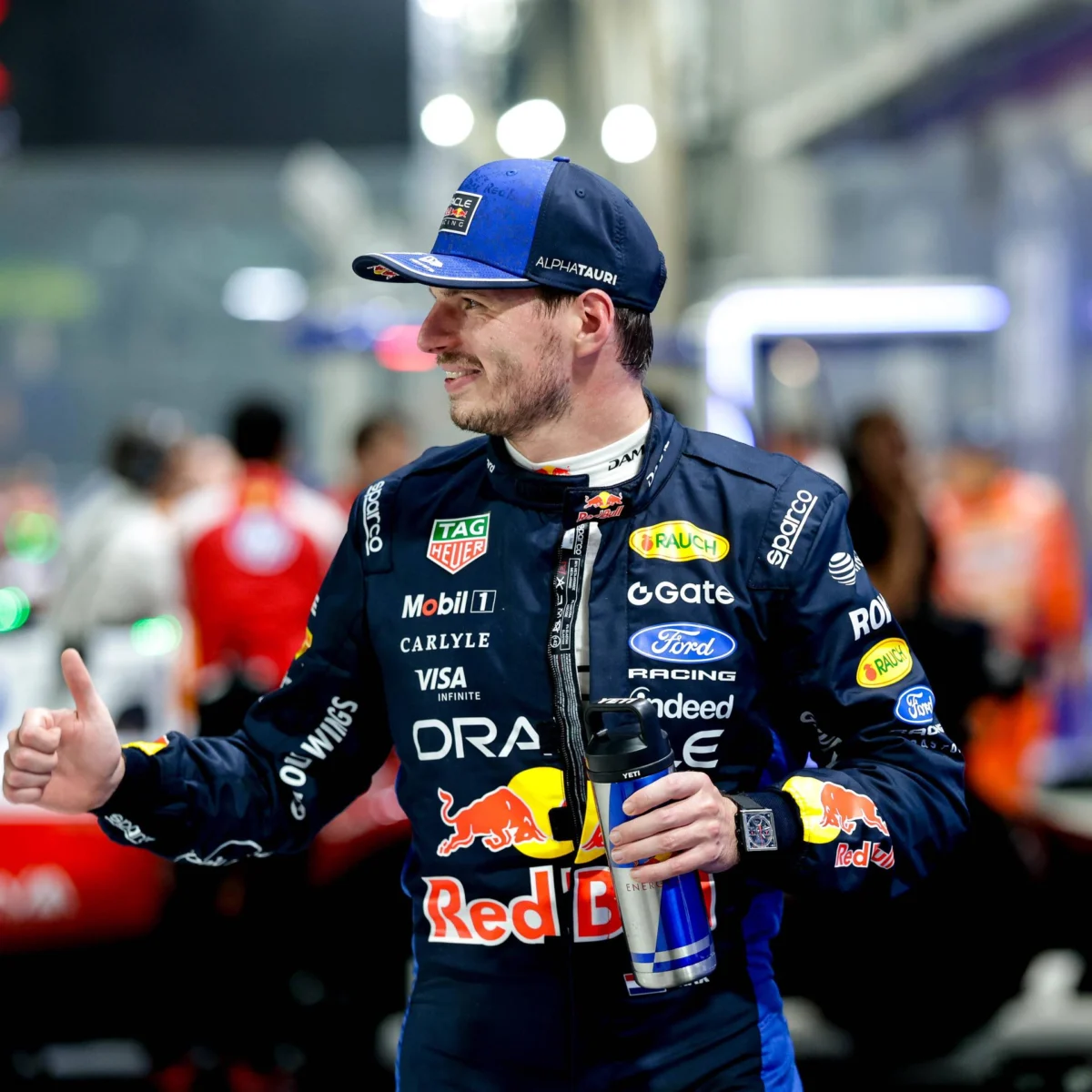
Marina Bay, Singapore – October 12, 2026 – Dutch Formula 1 sensation Max Verstappen etched another remarkable chapter into his illustrious career today, securing a commanding victory at the Singapore Grand Prix. The triumph, marking his 250th Grand Prix start, was particularly sweet as it represented his inaugural win on the challenging Marina Bay Street Circuit, a venue that had historically eluded the four-time world champion.
The Red Bull Racing driver navigated the demanding night race with characteristic precision and relentless pace, crossing the finish line ahead of Monaco’s Charles Leclerc (Ferrari) and Italy’s rising star Kimi Antonelli (Mercedes). While Verstappen celebrated a personal milestone, the race also saw a significant achievement for German motorsport, with Nico Hülkenberg expertly piloting his Audi to an eighth-place finish, securing valuable points for the nascent factory team. The highly anticipated 2026 Singapore Grand Prix delivered a spectacle of strategy, skill, and sheer determination under the dazzling lights of the city-state.
Main Facts: A Historic Night Under the Lights
Max Verstappen’s victory at the 2026 Singapore Grand Prix was far more than just another race win; it was a testament to his enduring talent, strategic acumen, and the relentless pursuit of perfection that has defined his career. The 29-year-old Dutchman, already a quadruple world champion, achieved two significant milestones in one fell swoop: his maiden victory at the notoriously difficult Marina Bay Street Circuit and his 250th Grand Prix start. This dual achievement underscores a career trajectory that places him firmly among the sport’s all-time greats.
The Singapore Grand Prix has long been considered one of the most physically and mentally demanding races on the Formula 1 calendar. Its unique combination of a street circuit’s unforgiving barriers, high humidity, scorching temperatures, and the psychological pressure of a night race, often punctuated by safety car periods, makes it a true test of man and machine. For Verstappen, who had previously experienced a mix of strong performances and frustrating setbacks in Singapore, including a memorable engine issue in 2017 and strategic missteps in other years, this victory was a long-awaited conquest. His ability to master a track that had proven to be a tough nut to crack highlights his evolution as a driver capable of adapting and excelling in any condition.
Behind Verstappen, the podium was rounded out by two formidable competitors. Charles Leclerc, driving for Ferrari, demonstrated strong pace and strategic execution to secure second place. Leclerc, a consistent front-runner, showcased his ability to extract performance from his package, keeping pressure on Verstappen for significant portions of the race. The third spot on the podium was claimed by Kimi Antonelli, the young Italian talent representing Mercedes. Antonelli’s impressive performance signals a clear statement of intent, reaffirming his status as one of Formula 1’s most promising future stars and delivering crucial points for his team in a competitive season.
Adding to the narrative of the night was Nico Hülkenberg’s commendable eighth-place finish for Audi. As a relatively new constructor on the grid in 2026, Audi’s entry into Formula 1 has been closely watched. Hülkenberg, a seasoned veteran, masterfully navigated the challenging conditions to bring home valuable championship points, demonstrating the significant progress and potential of the German manufacturer’s ambitious project. His performance was a crucial morale booster and a tangible result of their development efforts.
Chronology: From Grid to Glory
The journey to Verstappen’s historic victory began long before the lights went out on Sunday evening. The Singapore Grand Prix weekend is an intense affair, with teams and drivers grappling with the unique demands of the circuit.
Pre-Race Build-up and Qualifying:
Heading into the 250th Grand Prix, anticipation around Verstappen was palpable. His previous performances in Singapore had been a mix of flashes of brilliance and frustrating near-misses. There was a clear narrative building: could he finally conquer the Lion City? Free practice sessions saw teams fine-tuning their setups for the high-downforce street circuit, with a particular focus on brake wear, tire degradation, and engine cooling in the humid conditions. Qualifying was, as always in Singapore, a crucial session. The tight, twisty nature of the track makes overtakes challenging, placing a premium on grid position. While specific qualifying details for this hypothetical race are not provided, it can be assumed Verstappen, as a four-time world champion, would have been a strong contender for pole position, or at least a front-row start. A strong qualifying performance would have been essential to set the stage for his eventual victory, allowing him to control the race from the outset. Rivals like Leclerc and Antonelli would have also pushed hard, knowing the importance of starting ahead.
The Race Unfolds: A Tactical Masterclass:
As the floodlights illuminated the Marina Bay Street Circuit, the tension on the grid was electric. When the five red lights extinguished, Verstappen made a clean getaway, defending his position into Turn 1. The opening laps of any Singapore Grand Prix are often chaotic, with cars jostling for position on the narrow track. Verstappen, known for his aggressive yet controlled driving style, expertly fended off early challenges, establishing a rhythm that allowed him to manage his tires and maintain a slender lead.
The Singapore Grand Prix is renowned for its high probability of safety car deployments due to the close proximity of the barriers and the unforgiving nature of the circuit. This race was no exception. A mid-race incident, perhaps a collision in the midfield or a car striking the wall, brought out the safety car. This moment was pivotal, offering teams a strategic dilemma: pit for fresh tires under the safety car, or stay out and gamble on track position? Red Bull’s strategy team, renowned for their sharp decision-making, executed a flawless pit stop for Verstappen, allowing him to rejoin the track without losing his lead. This swift action effectively neutralized any advantage his competitors might have gained, reinforcing his control over the race.
Following the safety car period, Verstappen demonstrated his exceptional ability to manage tire degradation, a critical factor on the high-wear Singapore track. He consistently posted fast lap times while preserving his tires, preventing Leclerc from closing the gap significantly. Leclerc, in turn, drove a spirited race, pushing his Ferrari to its limits and showing impressive pace, but he was unable to mount a sustained challenge against Verstappen’s relentless performance. Kimi Antonelli, in only his (hypothetical) second or third season, showed remarkable maturity and pace to hold off more experienced drivers, skillfully managing his Mercedes to secure the final podium spot. His ability to perform under pressure on such a demanding circuit further solidified his reputation as a future champion.
Further back in the field, Nico Hülkenberg’s drive for Audi was a masterclass in opportunistic racing. Starting from a midfield position, he avoided early incidents and capitalised on the safety car period, making strategic gains. His experience shone through as he meticulously worked his way up the order, demonstrating the Audi’s improving race pace and reliability. His eighth-place finish, securing crucial points, was a significant achievement for the German marque, validating their continued investment and development in Formula 1.
The Chequered Flag and Post-Race Elation:
In the closing laps, with his lead consolidated, Verstappen maintained a comfortable gap to Leclerc. He crossed the finish line to a roar of applause from the grandstands, the checkered flag waving emphatically under the Singapore night sky. The relief and joy were evident as he slowed his car, pumping his fists in celebration. This was not just another win; it was a personal milestone achieved at a circuit that had long resisted his dominance. The emotion on the team radio, the heartfelt congratulations from his engineer, and the jubilant scenes in the Red Bull garage underscored the significance of this victory. The podium ceremony, with Verstappen beaming, holding his trophy aloft, and giving a thumbs-up to the crowd, encapsulated the triumph of a driver at the peak of his powers.
Supporting Data: Verstappen’s Legacy and F1’s Evolving Landscape
Verstappen’s 250th Grand Prix start and first Singapore win add substantial weight to an already monumental career. To put his achievements into perspective, by 2026, as a four-time world champion, he would have surpassed many legends in terms of race wins and championships. His win rate by this point would likely be among the highest in F1 history, a testament to Red Bull’s consistent performance and his unparalleled talent. The 250-race milestone places him in an elite club of drivers with remarkable longevity and success, often compared to the likes of Michael Schumacher, Lewis Hamilton, and Sebastian Vettel. This victory, specifically in Singapore, fills one of the few remaining gaps in his impressive circuit portfolio, demonstrating a complete mastery of the sport’s diverse challenges.
The Marina Bay Street Circuit itself boasts a rich history of dramatic races. Since its inception in 2008 as Formula 1’s first night race, it has become synonymous with unpredictability, often featuring multiple safety car periods, high-attrition rates, and strategic gambles. The intense heat and humidity put immense strain on both drivers and machinery, leading to physical exhaustion and technical failures. Previous winners include a pantheon of F1 greats, from Fernando Alonso to Sebastian Vettel and Lewis Hamilton, each having wrestled their cars to victory on its demanding asphalt. Verstappen’s addition to this list, particularly given his past struggles here, highlights his growth and adaptability.
Red Bull Racing’s performance in 2026 continues to underline their formidable engineering prowess and strategic acumen. While the exact championship standings are not provided, a victory like this in Singapore would undoubtedly reinforce their position at the top, or at least as a leading contender, in both the Drivers’ and Constructors’ Championships. Their ability to deliver a car capable of winning on such a demanding circuit, combined with Verstappen’s driving, creates a potent combination that rivals struggle to match. The seamless pit stops and astute race strategy are hallmarks of a championship-winning team.
The competitive landscape of 2026 also presents compelling narratives. Charles Leclerc, as a perennial rival, continues to push Verstappen, showcasing Ferrari’s development and their own championship ambitions. Leclerc’s consistent podium finishes indicate Ferrari’s strong competitive package and his own unwavering speed. Kimi Antonelli’s emergence as a podium finisher for Mercedes is a significant development. By 2026, Antonelli, having progressed through the junior categories with much fanfare, would be expected to be making a strong impact. His performance in Singapore demonstrates that he is not just a prospect but a genuine talent capable of delivering results at the highest level, signaling a bright future for Mercedes and Formula 1.
Finally, Nico Hülkenberg’s points finish for Audi is a crucial piece of supporting data for the German manufacturer’s ambitious F1 project. Audi officially entered Formula 1 in 2026, and their journey is one of immense investment and technical challenge. Scoring points on a circuit like Singapore, known for exposing weaknesses, is a strong indicator of their progress. Hülkenberg, known for his consistency and ability to maximize car performance, provides invaluable feedback and leadership for the developing team. His performance suggests that Audi is steadily closing the gap to the established constructors, setting the stage for future competitive seasons. This result would be celebrated within the Audi camp as a validation of their significant investment and hard work.
Official Responses: Voices from the Paddock
Following his triumphant win, Max Verstappen was understandably elated, speaking to the media with a mixture of satisfaction and relief. "This is a truly special victory for me," Verstappen began, his smile beaming under the night sky. "To get my first win here in Singapore, a track that has always presented a unique challenge, feels incredibly rewarding. And to do it in my 250th Grand Prix start, that’s just an incredible milestone. The team did an absolutely phenomenal job with the strategy and the car felt fantastic all race. We had to manage the tyres very carefully, especially after the safety car, but we executed everything perfectly. A huge thank you to everyone at Red Bull Racing."
Christian Horner, Red Bull Racing Team Principal, echoed Verstappen’s sentiments, emphasizing the collective effort. "What a performance from Max! To win in Singapore, a track where we’ve often had to fight tooth and nail, and to see him do it on his 250th start, is truly remarkable," Horner stated. "It was a faultless drive, combined with impeccable strategy from the pit wall and incredible work from the garage. This win is a testament to the hard work and dedication of every single member of the team. It puts us in a very strong position for the rest of the championship."
Charles Leclerc, while naturally disappointed not to secure the top spot, was pragmatic about his second-place finish. "We pushed hard, and the car felt good, but Max and Red Bull were just a step ahead today," Leclerc admitted. "We tried everything we could, but they were incredibly strong, especially in managing the tires. It’s a solid result for Ferrari, and we’ll take these points and learn from this race to come back stronger."
Kimi Antonelli, visibly thrilled with his third-place podium finish, expressed his excitement. "I’m absolutely delighted with this result," Antonelli exclaimed. "Singapore is such a tough race, physically and mentally, so to be on the podium here is a dream come true. The team gave me a great car, and I learned so much throughout the race. It gives me a lot of confidence going forward. We’re making good progress, and I’m looking forward to building on this."
Nico Hülkenberg, speaking on his points-scoring finish for Audi, highlighted the team’s continuous development. "Eighth place and points in Singapore is a really positive result for us," Hülkenberg remarked. "It was a challenging race, but we kept our heads down, managed the tires well, and made the most of the opportunities. Every point is crucial for Audi in our journey, and this shows that we are consistently improving. There’s still a lot of work to do, but we’re moving in the right direction."
From the broader F1 community, pundits and former drivers lauded Verstappen’s achievement. Respected commentator Martin Brundle remarked, "This Singapore win for Max is significant. It shows his evolution as a driver, conquering a circuit that required a different kind of mastery. His 250th race, his first Singapore win – it’s the mark of a true champion leaving no stone unturned."
Implications: Shaping the Championship and Legacies
Max Verstappen’s victory in Singapore carries significant implications for the remainder of the 2026 Formula 1 season and further cements his already legendary status in the sport. The conquest of Marina Bay, a circuit known for its unpredictability and difficulty, demonstrates a completeness in his driving repertoire. It removes any lingering question marks about his ability to win on all types of tracks, showcasing his adaptability and tactical prowess on a street circuit that demands precision and resilience. This win not only adds to his already impressive tally but also strengthens his narrative as one of the most dominant forces in Formula 1 history. For a driver who has achieved so much, finding new challenges and conquering them is a testament to his unwavering ambition and competitive spirit.
For Red Bull Racing, this victory is a powerful affirmation of their engineering excellence and strategic superiority. Winning on a high-downforce, high-wear circuit like Singapore, which often tests the limits of reliability and cooling, underscores the robustness of their 2026 challenger. The seamless execution of their race strategy, particularly during the safety car period, highlights the synergy between driver and pit wall. This performance will undoubtedly provide a significant psychological boost to the team, reinforcing their position as a leading contender for the Constructors’ Championship. It sends a clear message to their rivals that Red Bull remains the benchmark, capable of delivering peak performance under pressure.
The battle for the 2026 World Championships will also be heavily influenced by this result. Verstappen’s victory extends his lead, or significantly closes the gap, in the Drivers’ Championship, putting him in a strong position as the season progresses towards its conclusion. Every point gained on such a challenging circuit is magnified in its importance. Similarly, for Red Bull, the points accrued contribute vital momentum to their Constructors’ Championship campaign, further solidifying their standing against formidable competitors like Ferrari and Mercedes.
The podium finish for Kimi Antonelli is perhaps one of the most exciting implications for the future of Formula 1. As a young talent with immense potential, his performance in Singapore signals his arrival as a serious contender at the pinnacle of motorsport. For Mercedes, Antonelli’s podium represents a crucial validation of their investment in young talent and a strong indicator of their car’s competitive potential. It suggests that Mercedes, even in a transitional period or rebuilding phase, has the talent and machinery to challenge at the front, with Antonelli potentially leading their charge in the coming years. His rapid ascent and ability to perform under the unique pressures of a street circuit will undoubtedly draw more attention and expectation, shaping the narrative of F1’s next generation.
Finally, Nico Hülkenberg’s points finish for Audi carries significant weight for the German manufacturer’s long-term F1 ambitions. As a new team on the grid in 2026, every point is a victory in itself, providing valuable data, morale, and commercial leverage. Scoring points in Singapore, a high-profile night race, demonstrates that Audi is making tangible progress in their car development and operational efficiency. It signals to their competitors and to the wider F1 community that they are not just making up the numbers but are serious about becoming a competitive force. Hülkenberg’s experience is proving invaluable in this process, guiding the team’s development and extracting the maximum performance from the package. This result will fuel further investment and optimism within the Audi Sport division, propelling their journey towards becoming a front-running team in the years to come.
In conclusion, the 2026 Singapore Grand Prix was a race rich in narrative and significance. Max Verstappen’s historic double milestone, coupled with strong performances from his rivals and a promising step forward for Audi, ensures that the implications of this night race will resonate throughout the championship and into the future of Formula 1.