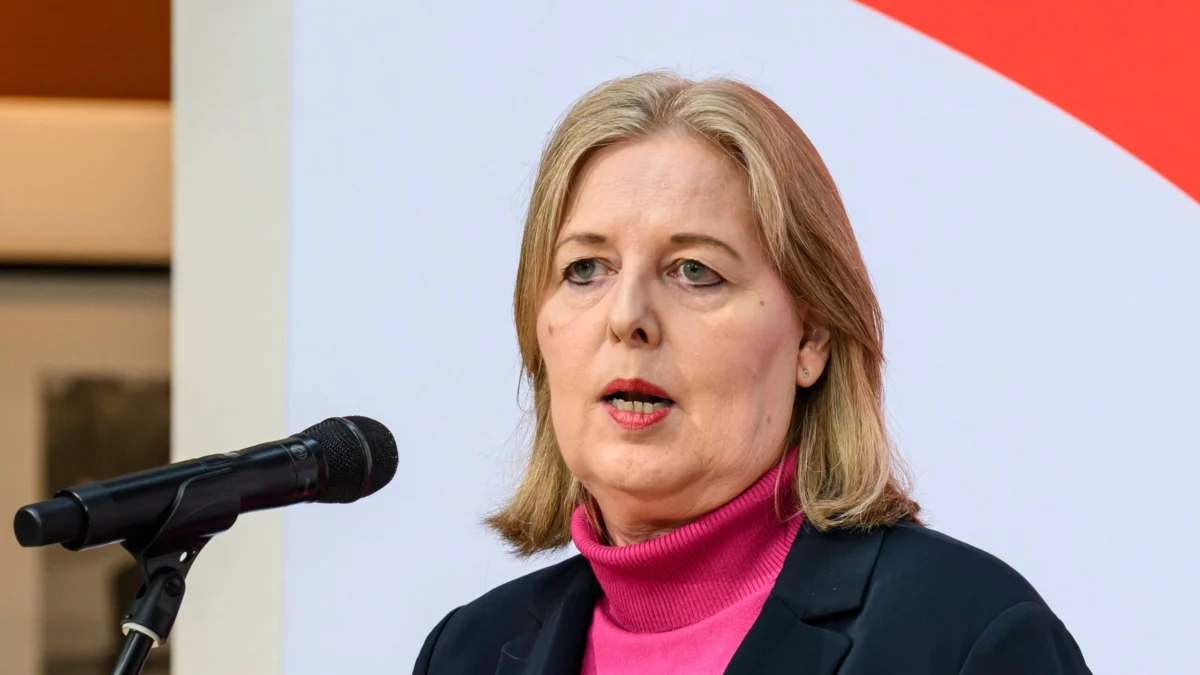
Berlin, Germany – A Monday that was initially poised to focus on the conservative CDU’s internal struggles following recent electoral setbacks dramatically shifted, as Germany’s political landscape was rocked by the sudden resignation of Federal Minister of Labour and Social Affairs and SPD co-leader, Bärbel Bas. Citing a deeply personal family bereavement, Bas announced her immediate departure from both high-profile roles, sending shockwaves through the Social Democratic Party (SPD) and casting a shadow of instability over the fragile "traffic light" coalition government.
The unexpected announcement instantly overshadowed a crucial CDU retreat, where party leader Friedrich Merz was set to address the Union’s future strategy. Instead, all eyes turned to the SPD, which now finds itself scrambling to fill a critical leadership vacuum at a time of escalating political and economic challenges. The resignation not only necessitates a ministerial reshuffle but also ignites a fierce internal power struggle within the SPD, with profound implications for the party’s direction and the stability of Chancellor Olaf Scholz’s government.
A Day of Tumult: Main Facts Unfold
The political agenda for Monday, initially centered on the CDU’s introspective Klausurtagung, was abruptly rewritten. The Christian Democratic Union (CDU), still reeling from recent electoral defeats, had gathered to deliberate on future strategies, with a highly anticipated address from party leader Friedrich Merz scheduled for the afternoon. However, the political spotlight was violently wrenched away by news emanating from the SPD.
Bärbel Bas, a prominent figure in the Social Democratic Party, announced her immediate resignation from her dual roles as Federal Minister of Labour and Social Affairs and as one of the SPD’s two co-chairs. In a poignant message to her party colleagues, Bas explained that a recent, profound bereavement in her immediate family had left her unable to muster the necessary strength to adequately fulfill the demanding responsibilities of her offices. This deeply personal tragedy has thus triggered a national political crisis, transforming what was expected to be a day of reflection for the opposition into a day of frantic damage control for the ruling coalition.
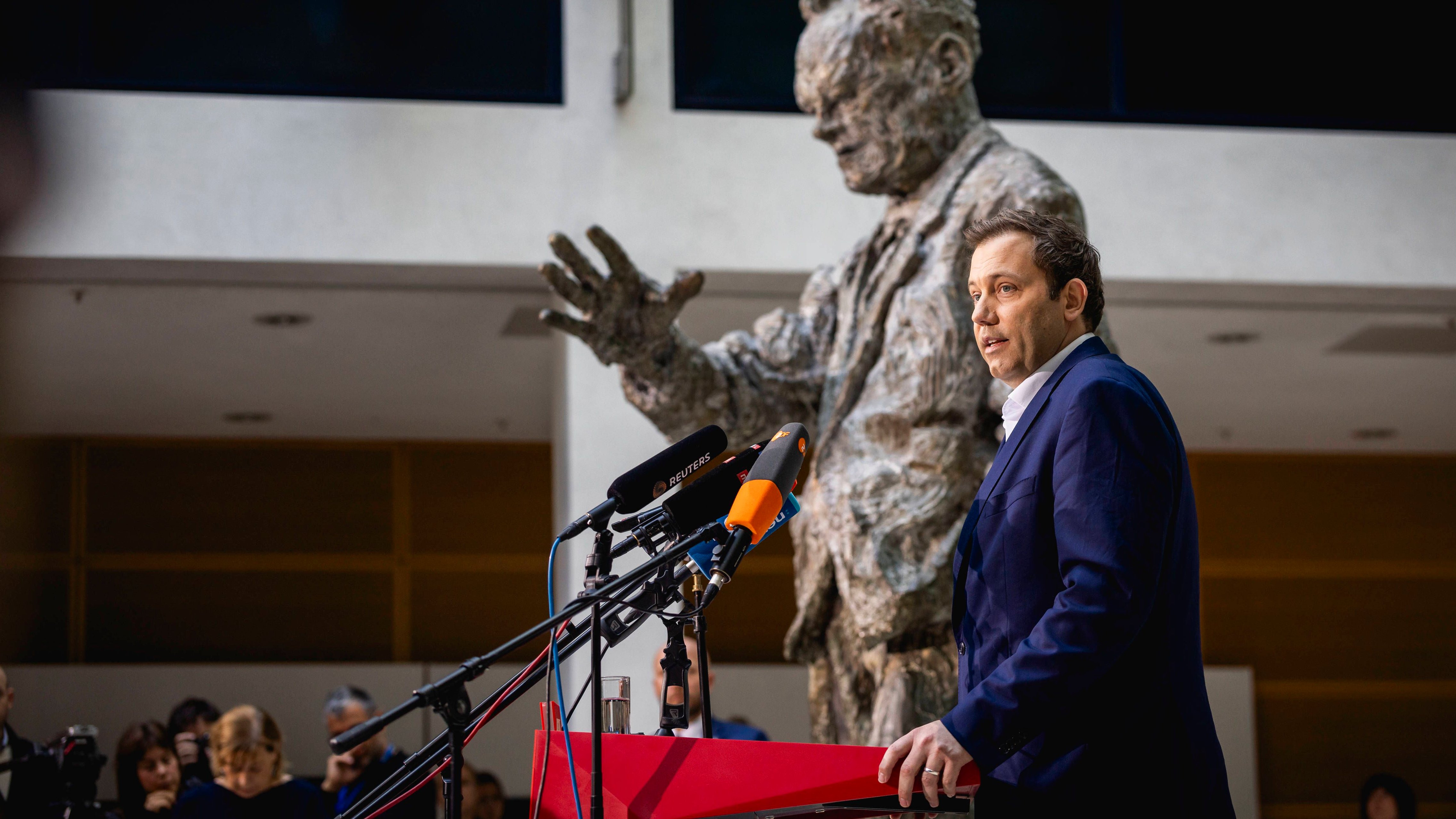
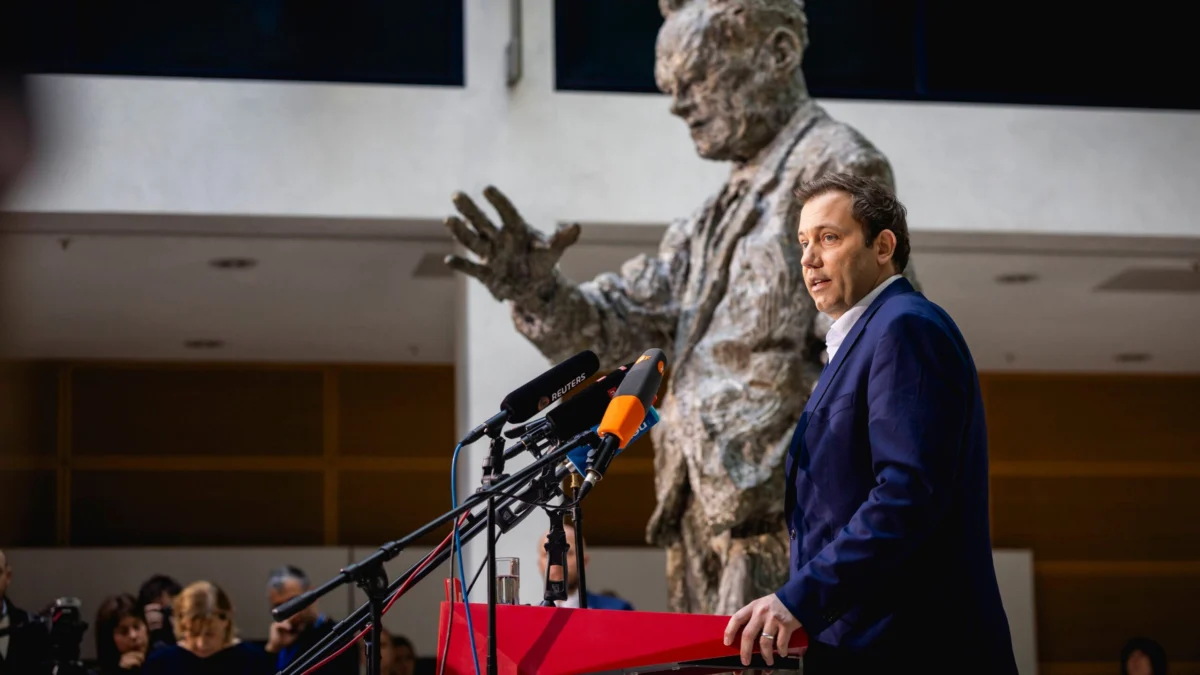
The immediate consequence was a dramatic shift in focus: from the Union’s internal navigation of its post-election blues to the SPD’s sudden plunge into an unforeseen leadership void. Lars Klingbeil, Bas’s co-chair in the SPD, was reportedly informed of her decision on Saturday. His immediate reaction underscored the gravity of the situation: he convened an emergency meeting of the SPD presidium on Monday morning and abruptly canceled a planned five-day international trip to India and Thailand. The sudden turn of events has placed Klingbeil’s own political future under intense scrutiny, with many questioning his ability to steer the party through this tumultuous period.
Chronology of a Political Earthquake
The sequence of events on Monday painted a vivid picture of a political system caught off guard:
- Early Morning (Berlin): The political day began with conventional expectations. The CDU convened its retreat, a crucial gathering to dissect recent electoral losses and chart a path forward. All attention was directed towards Friedrich Merz, whose afternoon address was anticipated to set the tone for the opposition’s response to the government’s policies.
- The Bombshell Drops: The calm was shattered when news broke of Bärbel Bas’s resignation. Her statement, revealing the deeply personal reason behind her departure – a death in her closest family circle – resonated across the political spectrum. It underscored the immense personal toll that high-level political office can exact. The announcement, first reported by Handelsblatt, quickly became the dominant news story, eclipsing the CDU’s agenda entirely.
- SPD in Emergency Mode: Lars Klingbeil, Bas’s co-leader, who had been aware of her intentions since Saturday, sprang into action. He called an urgent meeting of the SPD party presidium, bringing together the party’s top brass to confront the crisis. His swift cancellation of a significant international diplomatic tour highlighted the immediate and pressing nature of the domestic political emergency. The party, which had already been grappling with internal dissent and declining poll numbers, was now faced with an existential leadership challenge.
- Ministerial Succession Swiftly Addressed: Recognizing the imperative to maintain governmental functionality, the SPD moved quickly to name a successor for the Federal Ministry of Labour and Social Affairs. Alexander Schweitzer, the former Minister-President of Rhineland-Palatinate, was identified as the preferred candidate. His government experience and established competence were seen as crucial to ensure the ministry remained immediately operational and stable during the transition.
- Party Leadership Becomes the Central Conundrum: While the ministerial post found a rapid solution, the question of Bas’s successor as SPD co-chair proved far more intricate and politically charged. This leadership vacancy within the party’s highest echelons immediately raised concerns about the internal cohesion of the SPD and, by extension, the broader stability of the federal coalition. The dual leadership model, a distinctive feature of the contemporary SPD, now faced its most severe test.
- Klingbeil’s Strategic Maneuver: In response to the growing crisis and the need for a legitimate leadership mandate, Klingbeil proposed a significant procedural change. Instead of a previously scheduled party convention in December, he advocated for a full, ordinary party congress to be held in January 2027. Crucially, this congress would not merely elect Bas’s successor but would entail a complete re-election of the entire party leadership. This move, while presenting an opportunity for a fresh mandate, also signaled a calculated risk for Klingbeil himself, whose own leadership had faced increasing criticism since his election with a comparatively modest 64.9 percent of the vote in June 2025.
Supporting Data and Internal Discontent
The decision to hold a full party congress for the re-election of the entire leadership underscores the depth of the SPD’s internal challenges, predating Bas’s resignation. Lars Klingbeil’s own mandate as co-chair, secured in June 2025 with just 64.9 percent of the votes, has consistently been a point of vulnerability. This figure, while a majority, is often interpreted within German political circles as a relatively weak showing for a party leader, signaling a lack of overwhelming support.
Since his election, criticism of Klingbeil’s leadership has reportedly intensified. Various SPD sub-organizations, representing different factions and ideological wings within the party, have openly called for a fundamental "new alignment" at the party’s helm. These calls reflect a broader dissatisfaction with the party’s direction, its performance in government, and its perceived inability to connect effectively with the electorate, especially following recent disappointing election results.
Klingbeil’s initial plan to navigate this internal discontent involved a more contained party convention in December, which would likely have offered a less disruptive platform for leadership changes. However, Bas’s sudden departure has forced his hand. The need to elect a new co-chair, combined with the existing clamor for broader reform, made it politically untenable to not open up the entire leadership for re-election. A mere replacement of Bas, without addressing the wider calls for renewal, would have appeared tone-deaf and likely exacerbated internal tensions. Thus, the January 2027 party congress, while risky for Klingbeil, is presented as a necessary step to re-legitimize the party’s leadership and potentially unify its diverse factions.
Adding to the complexity, the SPD is currently navigating difficult policy decisions, particularly regarding austerity measures within the federal budget. These decisions are often unpopular with the party’s traditional base and left-leaning members, further fueling discontent. A party congress held in the aftermath of such measures, as anticipated for early 2027, could become a referendum on the government’s, and by extension the party leadership’s, policy choices, intensifying the pressure on Klingbeil and any new leadership candidates.
Official Responses and the Succession Saga
The immediate aftermath of Bas’s resignation saw a flurry of official statements and discreet political maneuvering, particularly concerning the critical question of her successor as SPD co-chair.
Lars Klingbeil, facing immense pressure, quickly outlined his strategy to the party presidium. According to Handelsblatt information, he pushed for an interim female co-chair, a move interpreted by some party insiders as an attempt to cement the dual leadership model and secure his own position alongside a future female partner.

However, the two most prominent names circulating as potential successors – Minister-Presidents Manuela Schwesig of Mecklenburg-Vorpommern and Anke Rehlinger of Saarland – were quick to express reservations. Rehlinger, facing state elections in Saarland in April 2027, unequivocally stated her unavailability for the federal party leadership, reiterating a stance she has held for two years. Taking on the federal co-chair role so close to her state campaign would undoubtedly disrupt her electoral strategy and dilute her focus.
Manuela Schwesig’s position was more ambiguous. Due to ongoing coalition negotiations in Mecklenburg-Vorpommern, she participated only briefly in Monday’s presidium call. Publicly, Schwesig affirmed the SPD’s capacity to act, stating, "The SPD has a party chairman, it has deputies, so the SPD is capable of action." She emphasized her focus on the state-level coalition talks. Accounts differ on whether her internal refusal specifically targeted the interim role or the long-term party chairmanship.
Despite their initial demurrals, pressure is expected to mount significantly on both Schwesig and Rehlinger in the coming days. However, Schwesig’s situation presents a unique set of circumstances that could make it harder for her to refuse a long-term role. Unlike Rehlinger, Schwesig will have concluded her state coalition negotiations by the time the SPD party congress convenes in January 2027. Moreover, her recent electoral success in Mecklenburg-Vorpommern, where she orchestrated a remarkable comeback for the SPD, has positioned her as a "new hope" and a potential unifying figure within the party.
Conversely, some SPD politicians openly voiced doubts about Klingbeil’s ability to secure a majority at a full party congress, especially one held after the government’s anticipated austerity measures are implemented. These measures, often unpopular with the party’s base, could turn the congress into a referendum on the government’s performance, potentially jeopardizing Klingbeil’s re-election chances.

In this context, Schwesig’s timing could be advantageous. Assuming leadership after the contentious social reforms have been decided might allow her to distance herself from any immediate political fallout. There is also growing speculation within the SPD that a Schwesig leadership could usher in a departure from the dual leadership model. As one party comrade queried, "What reason would there then be for Schwesig to have Klingbeil standing next to her?" This suggests a potential path for Schwesig to become the sole party leader, consolidating power and potentially shifting Klingbeil into a ministerial role (e.g., Finance Minister, as hypothetically mentioned in the original article, although his current role is party co-leader, not a minister), thus ending the often-criticized dual leadership.
Markus Töns, a spokesperson for the Ruhr-SPD, explicitly welcomed Klingbeil’s decision for a full re-election of the party board, advocating for a "strong party leadership" unburdened by additional governmental offices. He suggested that "experienced individuals" within the SPD parliamentary group could fulfill this role, adding further fuel to the speculation about Klingbeil’s future.
Despite these internal dynamics, Klingbeil is known as a shrewd political operator and a survivor. He has cultivated a strong network, with many key SPD figures in the parliamentary group, party, and cabinet owing their positions to his influence. This "protective wall" represents a significant hurdle for any faction seeking a fundamental shift in leadership.
Implications for the Coalition and Beyond
The sudden upheaval within the SPD carries substantial implications, not only for the party itself but also for the stability and future direction of Germany’s "traffic light" coalition government (SPD, Greens, FDP).

Impact on the SPD: The immediate challenge for the SPD is to find a unifying figure who can bridge internal divides and restore public confidence. The leadership vacuum comes at a critical juncture, with the party struggling in opinion polls and facing the difficult task of implementing potentially unpopular policies as part of the ruling coalition. A contested leadership election in January 2027 could exacerbate internal rifts, further weakening the party’s ability to present a united front. Conversely, if a strong, charismatic leader like Manuela Schwesig emerges with a clear mandate, it could inject new energy and direction into the party. The potential shift away from the dual leadership model could also reshape the SPD’s internal power dynamics and public perception.
Stability of the "Traffic Light" Coalition: Bärbel Bas’s resignation, particularly from a key ministerial portfolio like Labour, demands a swift and seamless transition to maintain governmental effectiveness. While Alexander Schweitzer’s appointment is intended to provide continuity, a prolonged internal power struggle within the SPD over its party leadership could distract from the coalition’s legislative agenda and complicate inter-party relations. The coalition, already navigating complex challenges such as energy transition, economic slowdown, and ongoing geopolitical tensions, can ill afford prolonged internal instability from its leading party.
Inter-Party Relations and the Union: The tense exchange between Manuela Schwesig and the CDU over the alleged "inhumane" treatment of Bas highlights the underlying friction within the German political landscape, even between coalition partners in other contexts. Schwesig’s strong condemnation, describing the Union’s alleged behavior as "substandard," and Bas’s own reference to "attacks from the ranks of the coalition partner," underscore a climate of distrust. While Friedrich Merz and other CDU figures vehemently denied personal attacks, emphasizing substantive criticism and expressing sympathy, these public accusations could further strain relationships, particularly if Schwesig assumes a more prominent role at the federal level. A more assertive and critical SPD leader could make coalition negotiations and policy consensus more challenging.
Despite the turmoil, Friedrich Merz maintained a stance of continuity, stating his expectation that the personnel changes within the SPD would not jeopardize the existing coalition agreement or the decisions made by the coalition committee. This reflects a desire from the opposition to project stability, even as their rivals navigate internal chaos.

Future Political Careers: The unfolding events represent a high-stakes gamble for Lars Klingbeil. His proposal for a full leadership re-election could either solidify his position with a renewed mandate or expose his vulnerability to internal challengers. For Manuela Schwesig, the path to federal leadership appears increasingly open, potentially elevating her to one of Germany’s most powerful political figures. Her ability to navigate these dynamics will define her trajectory. The outcomes of the SPD’s leadership contest will not only determine the party’s immediate future but also significantly influence the broader political narrative in Germany, setting the stage for future elections and the shape of German governance.
The CDU may wish to quickly return to its own agenda, but the reverberations of Bas’s resignation mean the SPD faces a profound period of introspection and realignment. The question remains whether the Social Democrats can swiftly regain their footing and present a unified, credible leadership, or if this moment of crisis will plunge them into deeper disarray, further destabilizing the federal government.