Athens, Greece – October 21, 2026 – Greece is experiencing a significant wave of social unrest today, as a nationwide general strike and widespread demonstrations have brought key sectors of the country to a standstill. Unions representing public sector employees, students, and pupils have called for mass mobilization, protesting the spiraling cost of living, exorbitant housing prices, and the chronic underfunding of education. The capital, Athens, has become the epicentre of the protests, with thousands converging on Syntagma Square and a heavy police presence – reportedly 3,000 officers – deployed to prevent potential clashes.
The coordinated action highlights deep-seated public frustration over economic hardship, a decade after the country’s severe financial crisis. While the immediate catalyst for today’s general strike is solidarity with the student movement, the broader demands resonate across Greek society, reflecting a widespread struggle against economic precarity.
Main Facts
Today, October 21, 2026, Greece is witnessing extensive disruption as a coalition of powerful unions and student organizations initiate a nationwide strike and demonstrations. The primary instigators include the General Confederation of Greek Workers (GSEE), the Supreme Administration of Greek Civil Servants’ Unions (ADEDY), and various student and pupil associations. Their collective action aims to pressure the government to address the escalating cost of living crisis, particularly focusing on housing affordability and the state of the public education system.
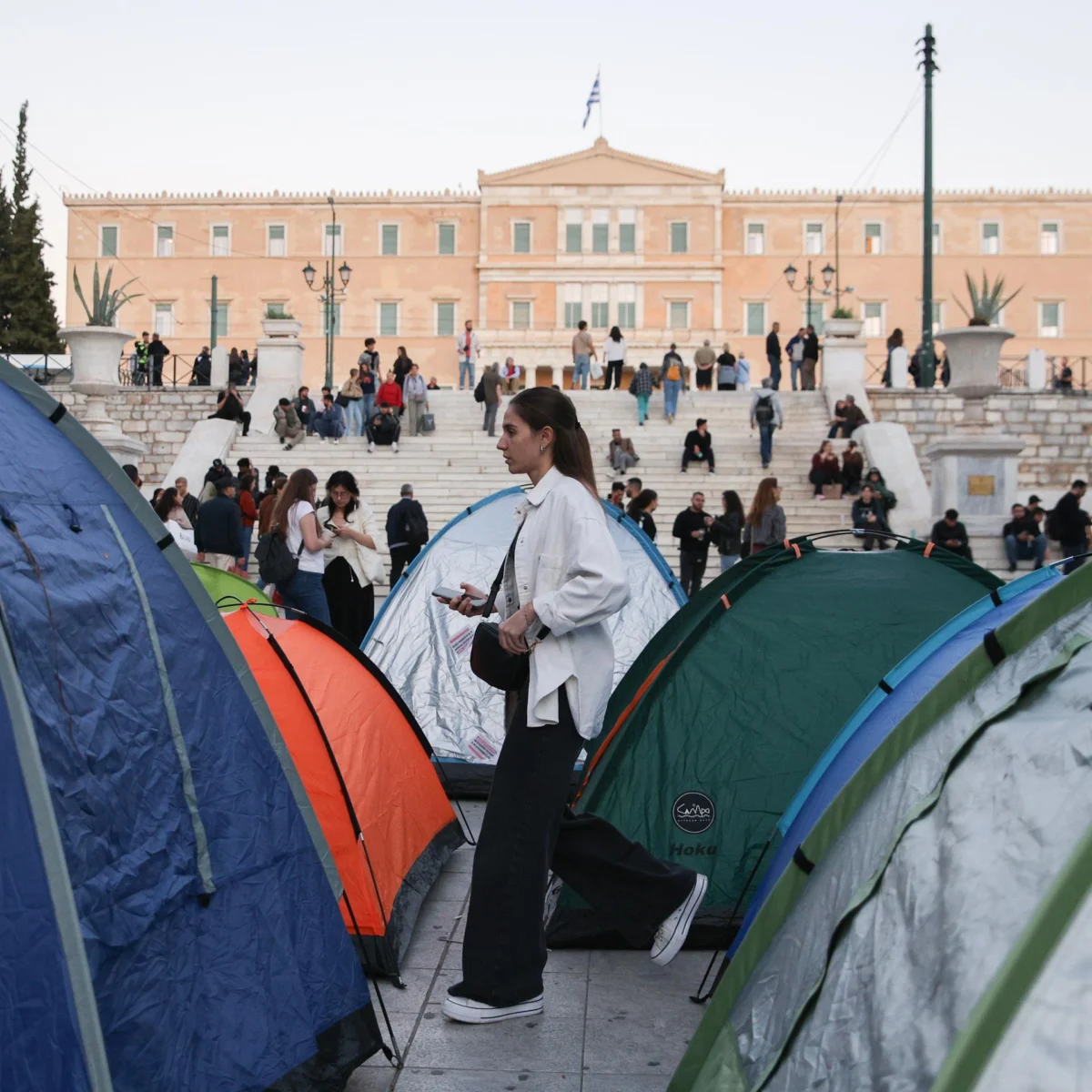
In Athens, the heart of the protests beats strongest at Syntagma Square, directly in front of the Hellenic Parliament. Here, students and pupils have already established a protest encampment, erecting tents as a visible symbol of their grievances. Their core demands are unambiguous: significantly lower rents, increased housing subsidies, the construction of more student dormitories, and a substantial boost in teaching staff across all educational levels. The visual of the tent city underscores the urgency and depth of their despair regarding access to affordable housing and quality education.
The government has responded with a substantial security presence. Media reports indicate that approximately 3,000 police officers have been deployed in Athens alone. This significant mobilization is officially justified as a precautionary measure to prevent potential unrest and violence, drawing parallels to recent protests in other European cities that have sometimes escalated into clashes. Public transport, hospitals (operating with emergency staff), and public services are severely impacted by the strike, causing considerable disruption for citizens across the country. The broad participation underscores the widespread nature of the discontent, extending beyond the student community to encompass a significant portion of the working population.
Chronology of Discontent
The current wave of protests is not an isolated incident but rather the culmination of years of simmering resentment and deteriorating living conditions for many Greeks.
Roots of the Crisis: A Decade of Austerity and Its Aftermath
Greece’s decade-long economic crisis, beginning in 2010, left an indelible mark on its social and economic fabric. While the country exited bailout programs in 2018, the legacy of austerity measures – including wage freezes, pension cuts, and public sector reforms – continues to be felt. Economic recovery has been uneven, and many Greeks feel they have borne the brunt of the crisis without seeing a proportional improvement in their daily lives. For years, wages have struggled to keep pace with the cost of living, and precarious employment has become increasingly common, particularly for younger generations. This long-term erosion of purchasing power laid the groundwork for the current dissatisfaction.
Escalation of Student Anger: The Housing Squeeze
Student discontent has been building steadily over the past two years, reaching a critical point in recent months. The primary driver has been the acute housing crisis, especially in major urban centers like Athens and Thessaloniki. Post-pandemic, a surge in tourism, coupled with speculative real estate investments and a boom in short-term rental platforms (such as Airbnb), has sent rental prices skyrocketing. Students, often reliant on limited family support or part-time jobs, find themselves increasingly priced out of the market. Many are forced to commute long distances, share overcrowded apartments, or even abandon their studies due to an inability to secure affordable accommodation.
The inadequacy of student housing facilities – a long-standing issue of underinvestment – has exacerbated the problem. With only a fraction of students able to secure places in university dormitories, the vast majority are left to contend with the volatile private rental market. Student organizations have been vocal for months, organizing smaller protests, sit-ins, and public awareness campaigns, but their pleas for government intervention largely went unanswered, leading to a decision for more drastic action.
Union Mobilization: Solidarity and Broader Grievances
The decision by major public sector unions, led by ADEDY, to join the strike in solidarity with the student movement marks a significant escalation. While initially focusing on education-related issues, ADEDY’s participation reflects broader grievances within the public sector. Public employees have endured years of stagnant wages and reduced benefits following the austerity era. They too face the daily struggle of rising living costs, including energy bills, groceries, and transportation, which are eroding their already strained household budgets.
The call for a general strike is not merely an act of solidarity but also a strategic move to amplify the message. By combining the student movement’s immediate demands with the broader concerns of public sector workers, the unions aim to exert maximum pressure on the government, signaling that the cost of living crisis is a pervasive national issue affecting diverse segments of society. The decision was formalized after several rounds of internal discussions and a vote by union federations, following smaller, localized industrial actions in preceding weeks.
Government’s Pre-emptive Measures: A Show of Force
In the days leading up to today’s general strike, the government expressed increasing concern about the potential for disorder. Citing intelligence reports and the experience of protests in other European capitals that have sometimes turned violent, the Ministry of Citizen Protection announced an unprecedented deployment of law enforcement personnel. The decision to deploy 3,000 police officers in Athens alone was framed as a necessary measure to maintain public order, protect property, and ensure the safety of both demonstrators and citizens. This pre-emptive show of force also served as a clear warning against any attempts to disrupt public peace or engage in vandalism, reflecting a government keen to project an image of control and prevent a repeat of past instances of urban unrest. Roadblocks and security checks were established around key government buildings and protest flashpoints in the capital.
Supporting Data and Context
The current unrest is deeply rooted in Greece’s challenging socio-economic landscape, characterized by persistent economic vulnerabilities and a widening gap between incomes and expenses.
Economic Landscape: Inflation Outstripping Wages
Despite Greece’s economic recovery showing positive GDP growth in recent years, the benefits have not trickled down sufficiently to the average citizen. Inflation, particularly since the late 2024 energy crisis and global supply chain disruptions, has been a major concern. As of September 2026, the annual inflation rate stood at an estimated 6.8%, significantly higher than the Eurozone average of 4.5%. This persistent inflation has disproportionately impacted essential goods and services. Food prices have risen by an average of 10-12% over the past year, while energy costs remain volatile.
In stark contrast, wage growth has been sluggish. The average nominal wage increase in Greece has hovered around 2-3% annually, meaning real wages have effectively declined for many households. Youth unemployment, while having decreased from its peak during the crisis, still remains stubbornly high at approximately 25% for those under 25, far exceeding the EU average. This disparity creates a precarious environment where young people struggle to gain financial independence, often delaying their entry into the housing market or starting families.
Housing Crisis in Urban Centers: A Student Nightmare
The housing crisis is perhaps the most acutely felt grievance, especially for students and young professionals. In Athens and Thessaloniki, average rental prices for a small, one-bedroom apartment have surged by an estimated 30-40% over the last three years. The average monthly rent in central Athens now stands at approximately €550-€700 for a modest apartment, while the average net monthly income for a recent graduate is often around €800-€1,000. This leaves little disposable income after rent, let alone for other living expenses.
Several factors contribute to this crisis:
- Short-term Rentals: The proliferation of platforms like Airbnb has converted a significant portion of the housing stock in desirable urban areas into tourist accommodation, reducing long-term rental availability.
- Lack of New Construction: Investment in affordable housing construction has been historically low, and bureaucratic hurdles often delay new developments.
- Foreign Investment: Greece’s "Golden Visa" program and other incentives for foreign real estate investment have driven up property values, making homeownership unattainable for many Greeks and indirectly pushing up rental costs.
- Limited Student Dormitories: Public universities collectively offer dormitory places for less than 10% of their student population, a stark contrast to many other European countries where state-subsidized student housing is much more prevalent. This forces the vast majority of students into the competitive private rental market.
Education System Under Strain: Underfunding and Overburden
The Greek education system, from primary schools to universities, has long suffered from chronic underfunding, a direct consequence of years of austerity. Budget cuts have led to:
- Teacher Shortages: A lack of permanent appointments means schools and universities often rely on temporary staff, leading to instability and a shortage of specialized educators. Students are demanding more permanent teaching positions to improve the quality and consistency of instruction.
- Deteriorating Facilities: Many school buildings and university campuses are in disrepair, lacking modern equipment and adequate maintenance.
- Insufficient Student Welfare: Beyond housing, student welfare services, including subsidized meals, mental health support, and career counseling, are often rudimentary or non-existent due to budget constraints.
- Digital Divide: While efforts have been made, the digital infrastructure in many educational institutions still lags behind, impacting modern teaching methods and access to resources.
These issues collectively undermine the quality of education and place additional burdens on students and their families, fueling the current protests.
Public Sector Grievances: Stagnant Wages and Service Quality
ADEDY’s participation in the general strike extends beyond mere solidarity. Public sector employees, encompassing civil servants, healthcare workers, and educators, have seen their wages largely frozen or minimally adjusted for over a decade. While the government recently announced minor adjustments, these are widely seen as insufficient to offset the cumulative impact of inflation and past salary cuts. Additionally, public sector workers often feel the pressure of understaffing and increasing workloads dueating to a general decline in the quality of public services. Their demands include substantial wage increases, better working conditions, and an end to what they perceive as ongoing efforts to privatize or outsource public services.
Social and Political Climate: A Growing Sense of Disillusionment
The current protests occur against a backdrop of increasing public disillusionment. Opinion polls indicate declining public trust in political institutions and a growing sense that the government is out of touch with the everyday struggles of ordinary citizens. While the ruling New Democracy party maintains a parliamentary majority, its approval ratings have seen a noticeable dip, particularly among younger demographics. The echoes of similar protests across Europe – in France, Germany, and the UK, for instance – over inflation and cost of living further underscore a continental trend of social unrest, placing Greece’s situation within a broader context of public dissatisfaction with economic policies.
Official Responses and Government Stance
The Greek government, led by Prime Minister Kyriakos Mitsotakis, finds itself in a challenging position, balancing the need to maintain public order with addressing legitimate grievances and avoiding political instability.
Initial Government Reaction and Communication
In the run-up to the general strike, the government initially adopted a cautious tone, acknowledging the public’s right to protest but also appealing for calm. Education Minister Nikos Anastasiadis issued statements reiterating the government’s commitment to improving education, citing ongoing reforms and increased budget allocations for universities. However, these claims have largely been dismissed by student groups as insufficient and lagging behind the urgent needs. The Ministry of Finance also highlighted the country’s fiscal constraints, implying that large-scale concessions on wages or housing subsidies might jeopardize Greece’s hard-won economic stability.
Justification for Heavy Police Deployment
The decision to deploy 3,000 police officers in Athens was heavily emphasized by Minister of Citizen Protection, Pavlos Marinakis. In a press briefing, Marinakis stated that the measure was "absolutely necessary to safeguard public safety and prevent any potential for violence or destruction, drawing lessons from recent events in other European capitals where peaceful protests unfortunately devolved into riots." He stressed that while the right to peaceful assembly is constitutionally protected, the government would not tolerate acts of vandalism or attempts to disrupt the democratic functioning of the state. Critics, however, viewed the deployment as an excessive show of force, potentially designed to intimidate protestors and stifle dissent rather than merely ensure safety. Opposition parties particularly condemned the move, suggesting it creates an atmosphere of fear.
Addressing Demands: Limited Concessions and Long-term Plans
On the specific demands of the protestors, the government’s response has been mixed and largely focused on long-term strategies rather than immediate, comprehensive solutions.
- Housing: The government has pointed to initiatives aimed at boosting affordable housing, such as a scheme providing low-interest loans for young couples to purchase homes and plans for public-private partnerships to construct new housing units. However, these programs are perceived as too slow and limited in scope to address the immediate rental crisis for students. There have been no concrete commitments to directly cap rents or provide substantial, immediate increases in housing subsidies.
- Education: Regarding education, the government has announced a gradual increase in the number of permanent teaching appointments over the next two years and a commitment to modernizing university curricula. However, the protestors demand immediate hiring and more substantial investment in infrastructure and student welfare services, including a significant expansion of dormitories, which currently remains unfunded.
- Wages: For public sector workers, the government has indicated a willingness to review salary scales in future budget cycles, contingent on economic performance. However, no immediate, substantial wage increases have been offered, leading to continued frustration among ADEDY members.
Prime Minister Mitsotakis, in a televised address on the eve of the strike, acknowledged the hardships faced by many Greeks but urged patience, stating that "sustainable solutions require careful planning and cannot be achieved overnight or through demands that could destabilize our economy."
Opposition Parties’ Stance
Opposition parties have largely expressed solidarity with the protestors, particularly the student movement. SYRIZA, the main opposition party, condemned the government’s handling of the crisis, accusing it of being "indifferent to the suffering of ordinary Greeks" and using "authoritarian tactics" with the heavy police deployment. They called for immediate and concrete measures, including rent controls, increased social welfare spending, and substantial investment in public education. The Communist Party of Greece (KKE) also strongly supported the strikes, framing them as part of a broader class struggle against neoliberal policies. Other smaller parties echoed similar sentiments, reflecting a broad political consensus among the opposition that the government’s current approach is inadequate.
Implications and Outlook
The nationwide strikes and protests of October 21, 2026, represent a critical juncture for Greece, with potential ramifications across its economic, social, and political landscape.
Potential for Escalation
The immediate outlook suggests a high potential for sustained or even escalated unrest if the government fails to offer more tangible concessions. The strong turnout and the coordinated action across different societal segments indicate a deep well of frustration. Should the current protests be met with continued official intransigence, there is a significant risk of further industrial action, potentially leading to more frequent general strikes and larger-scale demonstrations. The encampment on Syntagma Square could become a focal point for ongoing resistance, potentially inspiring similar actions in other cities. The government’s heavy-handed security approach, while intended to deter violence, could also backfire, fueling anger and increasing the likelihood of clashes.
Economic Impact
The short-term economic impact of a nationwide general strike is immediately visible through disruptions to public transport, port operations, and public services. While a single day of strike action might not significantly derail the national economy, sustained or recurring strikes could severely impact productivity, tourism, and foreign investment. Businesses reliant on smooth supply chains or public infrastructure will suffer, leading to potential losses and further economic uncertainty. Moreover, the government’s ability to attract foreign investment, crucial for long-term growth, could be hampered if Greece is perceived as politically unstable or prone to frequent industrial disputes.
Political Ramifications
Politically, these protests pose a significant challenge to the ruling New Democracy government. While general elections are not immediately on the horizon, a continued erosion of public trust, particularly among younger voters, could significantly impact future electoral outcomes. The government’s perceived failure to adequately address the cost of living crisis and housing issues could alienate key demographics. Opposition parties are likely to capitalize on the public discontent, using the protests as a platform to challenge the government’s economic policies and social agenda. The situation could also lead to internal pressures within the ruling party, with calls for a shift in strategy. The government’s ability to navigate this period of unrest will be a crucial test of its resilience and its capacity to respond effectively to societal demands.
Societal Impact
Beyond the immediate political and economic spheres, the protests highlight a growing societal divide. The struggle for affordable living is fostering a sense of solidarity among those affected, but it also risks exacerbating social tensions if solutions are not found. The youth, who feel particularly disenfranchised by the housing crisis and educational shortcomings, are increasingly vocal, signaling a potential shift in social dynamics and political engagement. The public discourse is likely to become more polarized around issues of economic inequality, social justice, and the role of the state in providing welfare and opportunities.
International Context
Greece’s current situation is not unique but rather symptomatic of broader challenges faced across Europe. Many European nations are grappling with persistent inflation, housing crises driven by speculative markets and insufficient supply, and public sector wage stagnation. Protests over cost of living have been observed in countries from France to the UK, highlighting a continent-wide struggle. This international context offers both a sense of shared grievance and a potential for lessons learned (or not learned) from how other governments have responded to similar pressures. Greece’s protests add another voice to a growing chorus of citizens demanding more equitable economic policies and stronger social safety nets from their governments.
In conclusion, the nationwide strikes and protests on October 21, 2026, mark a significant moment of public expression in Greece. Fuelled by a potent mix of economic hardship, a crippling housing crisis, and long-standing issues within the education system, these demonstrations underscore the deep frustration simmering beneath the surface of the country’s economic recovery. How the government responds to these demands – with meaningful concessions or continued austerity – will undoubtedly shape Greece’s social and political trajectory in the coming months and years, determining whether this wave of unrest is a fleeting moment or the harbinger of more profound societal shifts.