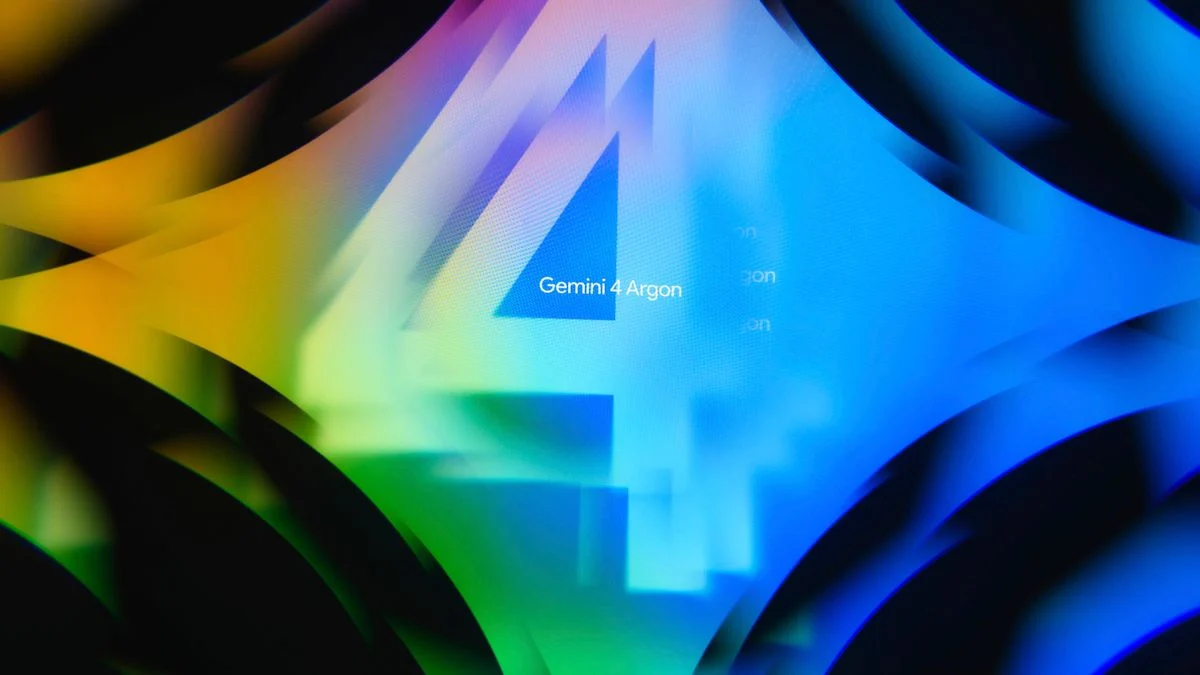
The artificial intelligence landscape, characterized by a dizzying pace of innovation and high-stakes corporate maneuvering, has reached another inflection point. Since the late September announcement of "Gemini 4 Argon," the industry has been gripped by a singular question: Has Google finally engineered a model capable of definitively eclipsing the giants of OpenAI and Anthropic?
Following a period where Google’s perceived momentum stalled—leaving room for competitors to dominate the headlines throughout the spring and summer—the tech giant is now initiating a global rollout of its most sophisticated model to date. Gemini 4 Argon is not merely an incremental update; it is Google’s calculated attempt to reassert its technological hegemony in a market that has grown increasingly skeptical of the company’s ability to maintain its early lead.
The Chronology of a Competitive Stall
To understand the significance of the Gemini 4 Argon launch, one must look at the preceding twelve months. After the generational leap of Gemini 3, Google’s influence in the generative AI space seemed to plateau in the eyes of the public and the developer community. While OpenAI’s models and Anthropic’s Claude series consistently set new benchmarks for reasoning and utility, Google’s presence felt muted.
The tech giant appeared to be navigating a difficult transition period, attempting to balance massive infrastructure overhauls with the need for rapid deployment. Critics often pointed to a "lack of fire" in Google’s recent product cycles, noting that while their models were competent, they lacked the distinct "wow factor" that had characterized the initial arrival of ChatGPT. With the launch of Argon, Google is attempting to pivot from a defensive stance to an aggressive offensive, aiming to reclaim its narrative as the primary architect of the future of intelligence.
Technical Prowess: Matching the New Industry Gold Standard
According to data from the independent intelligence tracking firm Artificial Analysis, Gemini 4 Argon is currently performing at a level that puts it in direct parity with industry benchmarks such as OpenAI’s GPT-6 Astra. This equivalence is significant; for months, the industry has been waiting for a model that doesn’t just compete with the top-tier, but matches it blow-for-blow in benchmarks related to reasoning, coding efficiency, and multimodal synthesis.
Google claims that Argon represents a fundamental shift in how its models process information. By refining its architecture, the company aims to move away from the verbose, often repetitive outputs that have plagued previous iterations of large language models. The stated goal is a more concise, direct, and stylistically obedient interface—a clear response to user feedback that AI should act more like a precision tool and less like a loquacious chatbot.
The Paywall Controversy: A Tiered Strategy
The rollout of Gemini 4 Argon brings with it a complex, tiered access model that has already sparked frustration among the user base. Starting this week, Google is limiting access to the most capable iteration of the model to its premium AI-Pro and AI-Ultra subscribers.
- AI-Pro Subscribers: Gain access to Argon within the Google Search interface and the standard Gemini application.
- AI-Ultra Subscribers: Receive the full suite of features, including integration into "Antigravity," Google’s platform dedicated to autonomous AI agents.
- The Excluded: Customers on the Google AI Plus plan—priced between 4.99 and 9.99 euros—are notably absent from the rollout.
This decision has drawn criticism from long-time users, particularly those who were recently disgruntled by Google’s decision to remove "Pro" models from lower-tier plans. For those accustomed to the mid-tier entry point, the move is viewed as a significant "feature creep" toward higher subscription costs, with AI-Pro subscriptions starting at 21.99 euros per month and AI-Ultra reaching nearly 100 euros per month.
For developers and enterprise clients, however, the API remains the primary gateway. Google has implemented a temporary introductory pricing structure of $2 per million input tokens and $10 per million output tokens. These rates are set to double after November 30, signaling that Google views Argon as a premium enterprise asset rather than a commodity product.
Strategic Focus: Enterprise and High-Stakes Utility
Google is explicitly targeting the corporate and professional sector with this release. In its official press communication, the company highlighted specific domains where Argon is designed to excel:
- Programming and Software Engineering: Enhanced logical reasoning for debugging and architecture.
- Financial Analysis: The ability to process large, complex datasets for market forecasting.
- Legal and Compliance: Improved adherence to strict formatting and high-fidelity text synthesis.
- Scientific Research: Specialized applications in fields such as nuclear fusion, quantum computing, and robotics development.
By positioning Argon as a "professional-grade" model, Google is attempting to lure enterprise clients away from the ecosystem of its competitors. The promise of "less fluff"—direct answers, reduced repetition, and strict adherence to stylistic parameters—is a clear bid to appeal to corporate workflows where time efficiency is paramount.
The Broader Landscape: A War of Agents
The release of Argon occurs against a backdrop of intense, multifaceted competition. Meta, for instance, has taken a distinct path with its "Muse" series, prioritizing the development of personalized AI agents that act as autonomous extensions of the user. While Google focuses on raw intelligence and enterprise utility, Meta is betting on the ubiquity of "personal agents" that integrate deeply into daily digital life.
This divergence in strategy—Google’s focus on the "super-intelligence" for specialized work vs. Meta’s focus on the "personal assistant" for consumer interaction—illustrates a maturing market. The industry is no longer simply asking, "Which model is the smartest?" but rather, "Which model provides the most value for my specific context?"
Implications for the Future
The launch of Gemini 4 Argon signals that the era of "easy gains" in AI is over. The competitive gap between the leading models has narrowed significantly, and the differentiator for companies like Google will no longer be just the underlying model’s performance, but the integration into the existing software stack.
If Google can successfully embed Argon into its suite of Workspace tools, the search engine, and its emerging agent platforms, it may prove that its ecosystem advantage is greater than any individual performance metric. However, the pricing strategy creates a potential hurdle. By restricting the most powerful iteration of its technology to a high-cost tier, Google risks alienating the very developer community that helps refine and pressure-test its models.
Moreover, the pressure on Google to prove that it can maintain its lead is immense. If Argon fails to provide a noticeable, daily utility boost for its professional users, the company may find itself struggling to justify its premium pricing models in the face of increasingly affordable and open-source alternatives.
Conclusion
Gemini 4 Argon is a statement of intent. It is a declaration that Google has emerged from its period of reflection with a product that matches the current pinnacle of the industry. Yet, in the volatile world of artificial intelligence, a technical match is merely the baseline. Success will be determined by execution—how well Google manages the friction of its subscription model, how effectively it translates Argon’s "reasoning power" into tangible enterprise results, and whether it can regain the trust of a user base that has grown accustomed to the agility of competitors like Anthropic and OpenAI.
As we move into the final quarter of the year, the spotlight remains firmly on Mountain View. The "Argon" era has begun, and the industry is watching to see if this is the spark that reignites Google’s dominance or merely another step in an increasingly crowded race.