

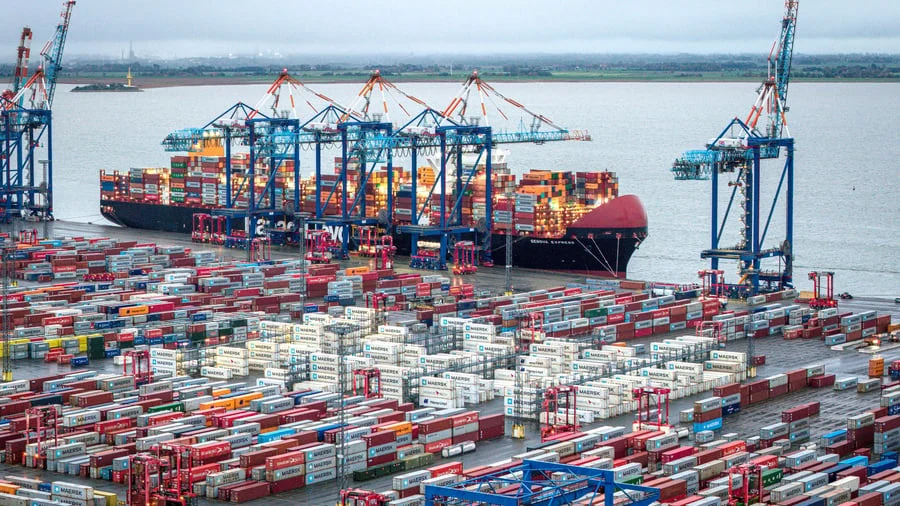
Geneva, Switzerland – The global merchandise trade is set for a remarkably stronger performance this year than initially anticipated, according to a significantly revised forecast from the World Trade Organization (WTO). In a striking update that underscores the dynamic shifts in the global economy, the WTO has nearly doubled its growth projection for goods trade in 2026, from a conservative 1.9 percent to an optimistic 3.9 percent. This upward revision, announced from the organization’s headquarters in Geneva, is primarily attributed to a massive surge in investments in artificial intelligence (AI) technologies.
The first half of 2026 witnessed an unprecedented demand for critical AI components, including semiconductors, data centers, and the foundational digital infrastructure required to power the rapidly expanding AI ecosystem. This insatiable appetite for advanced technology has, according to the WTO, been the driving force behind a substantial portion of the worldwide growth in merchandise trade. The positive momentum is expected to carry into 2027, with the WTO forecasting a further 4.1 percent increase in merchandise trade for that year. This robust outlook follows a healthy 4.6 percent growth recorded in global trade in 2025, demonstrating a sustained, albeit uneven, recovery trajectory.
Remarkably, this resurgence in trade comes despite significant geopolitical headwinds, most notably the ongoing conflict in the Middle East and its associated disruptions, such as the temporary closure of the Strait of Hormuz. While these challenges have indeed imposed considerable burdens on international shipping and supply chains, the WTO asserts that the potent impact of the AI boom has more than compensated for these adverse effects. The revised forecast paints a picture of a global trade system demonstrating profound resilience and adaptability in the face of complex crises, propelled forward by technological innovation.
The Engine of Growth: Artificial Intelligence and Digital Infrastructure
The dramatic revision in the WTO’s trade forecast is a testament to the transformative power of artificial intelligence, which has emerged as an unexpected, yet dominant, catalyst for global economic activity. The unparalleled investment flowing into AI technologies is not merely a trend but a fundamental reshaping of industrial demand, directly translating into tangible increases in goods trade.
Unprecedented Demand for Tech Components
The core of this AI-driven boom lies in the soaring global demand for specialized technological components. Semiconductors, often referred to as the "brains" of modern electronics, are at the forefront. These intricate microchips are indispensable for everything from basic computing to the highly complex computations required by advanced AI models. The development and deployment of generative AI, large language models, and sophisticated machine learning algorithms necessitate vast quantities of cutting-edge processors, memory chips, and graphic processing units (GPUs). Major tech companies and emerging AI startups are locked in a fierce competition to secure these vital components, driving production lines worldwide to their limits.
Beyond the chips themselves, the infrastructure supporting AI operations is experiencing an equally fervent build-out. Data centers, the physical backbone of the digital world, are being constructed and expanded at an astonishing rate. These facilities house the servers, storage systems, and networking equipment essential for processing and storing the immense datasets that AI models require. The sheer scale of these operations demands a constant influx of specialized hardware, cooling systems, power units, and security apparatus, all of which contribute to merchandise trade volumes.
Furthermore, the foundational digital infrastructure – including high-speed fiber optic cables, advanced networking equipment, and cloud computing resources – is undergoing a massive upgrade to accommodate the bandwidth and processing power demands of AI. This involves significant capital expenditure in hardware and services, creating a ripple effect across global manufacturing and supply chains. Nations and corporations are racing to establish their dominance in the AI landscape, viewing it not just as a technological frontier but as a critical determinant of future economic competitiveness and national security. This global race for AI leadership is directly fueling trade in these highly specialized and valuable goods, predominantly manufactured in advanced economies in Asia and North America.
The Supply Chain Response
The rapid escalation in demand for AI-related hardware has put global supply chains to the test, but the WTO’s report suggests a successful, albeit challenging, adaptation. Manufacturers of semiconductors, data center equipment, and networking gear have had to quickly scale up production, often necessitating significant investments in new fabrication plants and assembly lines. This has led to increased trade in raw materials, specialized machinery, and intermediate goods required for production.
Logistics networks have also demonstrated remarkable agility. Shipping companies, freight forwarders, and port operators have had to adjust to new trade patterns, prioritizing the rapid movement of high-value tech components. While some delays and bottlenecks have been reported, the overall ability of the global supply chain to absorb and respond to this unprecedented surge in demand highlights its underlying resilience and the effectiveness of diversified sourcing strategies. The AI boom, therefore, is not just a story of technological advancement but also one of industrial mobilization and logistical prowess.
Navigating Turbulent Waters: Geopolitical Headwinds and Supply Chain Resilience
While the AI sector has injected unprecedented vitality into global trade, the path has been far from smooth. Geopolitical tensions, particularly in the Middle East, have posed significant threats, yet the overall trade system has shown a surprising capacity to adapt and overcome these disruptions.
Mitigating the Middle East Conflict’s Impact
The ongoing conflict in the Middle East, with its direct and indirect implications for vital shipping lanes, represented a major risk factor for global trade at the outset of 2026. The temporary closure or heightened security concerns around the Strait of Hormuz, a choke point for a substantial portion of the world’s oil supply, and more recently, disruptions in the Red Sea affecting the Suez Canal route, forced many shipping companies to reroute vessels. These diversions, often requiring longer journeys around the Cape of Good Hope, translated into increased transit times, higher fuel costs, and elevated insurance premiums, directly impacting the cost and efficiency of international trade.
Despite these considerable burdens, the WTO’s report highlights the impressive ability of the global energy market to adjust. In the first half of 2026, crude oil exports from the Middle East reportedly dropped by approximately 24 percent, and liquefied natural gas (LNG) exports saw an even steeper decline of 47 percent. However, the overall impact on global exports was significantly mitigated. The decrease in worldwide crude oil exports was limited to about six percent, and for LNG, it was a mere one percent. This remarkable containment was achieved through the swift response of "other providers" – non-Middle Eastern oil and gas producers who were able to ramp up production and redirect supplies to meet global demand. This demonstrated diversification of energy sources and the flexibility of the market to reallocate resources under duress.
The rerouting of trade flows also extended beyond energy commodities. Container ships carrying a wide array of goods were forced to abandon the quicker Suez Canal passage for the longer, more expensive route around Africa. While this caused temporary logistical challenges and pushed up freight rates, it prevented a complete paralysis of East-West trade. The willingness and capacity of shipping lines and logistics providers to absorb these changes, albeit with added costs, underscored a determined effort to maintain the flow of goods.
Adapting to Energy and Fertilizer Market Volatility
The resilience observed in the energy sector is mirrored in other critical commodity markets, particularly fertilizers. Global supply chains have been under immense pressure in recent years, first from the COVID-19 pandemic, then from the geopolitical ramifications of the conflict in Eastern Europe, which significantly impacted energy and fertilizer supplies. The WTO’s report indicates that worldwide imports of nitrogenous fertilizers were only 2.8 percent below recent average levels, a statistic that speaks volumes about the successful adaptation of agricultural supply chains.
Fertilizers are crucial for global food security, and any significant disruption can have far-reaching consequences. The fact that imports remained relatively stable suggests that producers and distributors found alternative sources, diversified their procurement strategies, or adapted logistical pathways to circumvent areas of conflict or bottleneck. This adaptability is a testament to lessons learned from previous crises and ongoing efforts to build more robust and redundant supply chains. The collective effort to ensure the flow of essential goods, even under challenging circumstances, showcases a strategic pivot towards supply chain flexibility and risk mitigation.
Container Throughput as a Barometer
A key indicator of this underlying resilience and recovery is the global container throughput. The WTO noted a 3.9 percent increase in worldwide container handling by July compared to the beginning of the year. This metric is a vital barometer for assessing the health and activity level of global merchandise trade. An increase in container throughput signifies not only that goods are being shipped but also that ports are efficiently processing these shipments.
This positive trend in container volumes suggests that despite the challenges posed by geopolitical conflicts and rerouted shipping lanes, the underlying demand for goods remains strong, and the logistical infrastructure is largely coping. It reflects a continued commitment by businesses to maintain international trade flows and consumers’ sustained purchasing power, especially in the context of the AI-driven demand for technological products. The ability of ports and shipping networks to handle increased volumes, even with altered routes, underscores a level of operational resilience that has helped underpin the optimistic trade forecast.
WTO’s Official Stance: A Testament to Trade’s Adaptability
The World Trade Organization’s revised forecast is not merely a collection of economic figures; it represents a powerful endorsement of the global trading system’s inherent strength and capacity for evolution. The official statements from the organization’s leadership emphasize this adaptability as a defining characteristic of contemporary international commerce.
Director-General Okonjo-Iweala on "Resilience in Practice"
Ngozi Okonjo-Iweala, the Director-General of the WTO, encapsulated this sentiment, stating that "The figures attest to the resilience of trade in practice." Her remarks underscore the idea that while theoretical models might predict significant downturns in the face of such widespread disruptions, the practical reality of global trade demonstrates a remarkable ability to find solutions. This "resilience in practice" refers to the dynamic ways businesses, logistics providers, and governments have adjusted to unforeseen circumstances.
It signifies that global supply chains are not rigid structures but rather complex, adaptive networks. This includes diversifying sourcing from multiple countries, investing in alternative transportation routes, and adopting new technologies to enhance logistical efficiency. The WTO’s assessment suggests that the global economy has effectively internalized and adapted to the shocks in energy and fertilizer markets, which were previously major sources of instability. The ability to pivot quickly, find new suppliers, and re-establish trade corridors has been crucial in maintaining the flow of goods and mitigating the worst impacts of regional conflicts and commodity price volatility. This perspective from the WTO’s top official provides a reassuring outlook on the fundamental robustness of the international trade framework.
The Mandate and Significance of WTO Forecasts
As the primary intergovernmental organization that regulates and facilitates international trade, the WTO’s forecasts carry significant weight. Its mandate includes reducing barriers to international trade, ensuring non-discriminatory trade practices, and providing a framework for trade negotiations and dispute resolution. In fulfilling this role, the WTO regularly publishes comprehensive analyses and projections of global trade volumes and trends.
These forecasts are critical tools for policymakers, businesses, and investors worldwide. For governments, they inform economic policy decisions, trade agreements, and infrastructure development plans. Businesses rely on these projections to make strategic decisions regarding production, investment, and supply chain management. Investors use them to gauge economic health and potential market performance. The accuracy and authority of the WTO’s data and analyses provide a credible benchmark against which the global economic landscape can be measured. The current upward revision, therefore, is not just a statistical adjustment; it is a strong signal of renewed confidence in the underlying strength of the global economy, driven by technological innovation, even in the face of ongoing geopolitical instability.
A Mixed Picture: Services Trade Faces Headwinds
While merchandise trade enjoys a robust uplift, the outlook for trade in commercial services presents a more subdued picture. The WTO has revised its forecast downwards for commercial services trade in 2026, cutting it from an initial 4.8 percent to a more modest 3.3 percent. This divergence highlights the differing sensitivities of goods and services sectors to current global challenges.
Downturn in Transport, Travel, and Tourism
The sectors most significantly affected by this slowdown are transport, travel, and tourism. These industries are inherently sensitive to factors such as fuel costs, travel restrictions, and geopolitical tensions. Higher fuel prices directly increase operational costs for airlines, shipping companies, and ground transport services, which are then passed on to consumers and businesses, dampening demand. Flight restrictions, whether due to airspace closures, health regulations, or security concerns, directly impede the movement of people and, by extension, business and leisure travel.
Geopolitical tensions, such as those in the Middle East, create an environment of uncertainty and risk aversion. Travelers may postpone or cancel trips to affected regions or opt for domestic alternatives. Businesses may curtail international travel for their employees, impacting sectors like conventions, conferences, and corporate hospitality. The collective effect of these factors is a significant drag on the services trade, particularly those components that rely on the free and safe movement of people and goods across borders. The hospitality industry, airlines, cruise lines, and related service providers are directly feeling the pinch of these persistent challenges.
Glimmers of Hope for 2027
Despite the current headwinds, the WTO anticipates a strong recovery in commercial services trade for 2027, with a projected growth rate of 6.4 percent. This optimistic outlook suggests that the current challenges are viewed as temporary disruptions rather than fundamental shifts in demand. Several factors could drive this anticipated rebound.
A potential stabilization or reduction in fuel prices would significantly alleviate cost pressures on transport and travel operators. A de-escalation of geopolitical tensions, particularly in critical regions, would likely lead to the lifting of travel restrictions and a return of consumer confidence in international travel. Furthermore, pent-up demand for both business and leisure travel, suppressed during periods of uncertainty, could unleash a wave of activity once conditions improve. The increasing digital transformation driven by AI could also indirectly boost services trade in areas like IT services, cross-border data flows, and digital platforms, compensating for some of the physical travel constraints. The expectation is that once these constraining factors ease, the inherent demand for global connectivity and experiences will reassert itself, propelling the services sector back into robust growth.
Regional Dynamics: Winners and Laggards in Global Trade
The WTO’s report also sheds light on the uneven distribution of trade growth across different regions, highlighting specific areas of strength and persistent weakness. This regional breakdown offers valuable insights into the underlying economic forces at play.
Asia Leads the Charge
For 2026, Asia is projected to achieve the strongest growth in merchandise exports, with an impressive 9.9 percent increase. This leading position is no surprise, as Asia has firmly established itself as the global manufacturing hub for a wide array of goods, particularly those in high demand due to the AI boom. Countries like South Korea, Taiwan, Japan, and China are at the forefront of semiconductor production and advanced electronics manufacturing. Their sophisticated industrial ecosystems are ideally positioned to capitalize on the surging global demand for AI-related hardware, from microchips to data center components.
Moreover, many Asian economies possess large and growing domestic markets, which also contribute to robust intra-regional trade. Their strong integration into global supply chains for technology and consumer goods, coupled with continuous investment in research and development, solidifies Asia’s role as a primary driver of global merchandise trade growth. The region’s agility in adapting to evolving market demands and its technological prowess make it a clear leader in the current trade landscape.
North America, Africa, and South America: Varied Performances
Following Asia, North America is expected to see a respectable 5.7 percent growth in goods exports. This is likely driven by robust domestic demand, particularly in the United States, which is a major investor and developer of AI technologies, fueling demand for imports and supporting its own export sectors. North America also has strong export capabilities in advanced manufacturing, energy, and agriculture, contributing to its overall trade performance.
Africa is projected to achieve a significant 5.6 percent growth in exports. This could be attributed to increasing commodity prices, diversified export baskets in some regions, and growing intra-African trade facilitated by initiatives like the African Continental Free Trade Area (AfCFTA). While still facing infrastructural challenges, many African nations are seeing increased investment and improved trade logistics, allowing them to tap into global markets more effectively.
South America is forecast for a 3.4 percent increase in exports. This growth is often tied to global demand for agricultural products, minerals, and energy resources. While commodity price fluctuations can significantly impact the region, a steady demand for these raw materials, coupled with efforts to diversify economies, supports a moderate export growth.
Europe’s Persistent Struggles
In stark contrast to the strong performances elsewhere, Europe’s export development is expected to remain weak. This reflects a confluence of persistent challenges that have been weighing on the continent’s economic performance. The energy crisis, exacerbated by geopolitical events, has significantly increased production costs for European industries, making their exports less competitive. Many European economies, particularly Germany, are heavily reliant on energy-intensive manufacturing, which has been particularly hit by higher gas and electricity prices.
Furthermore, Europe’s industrial growth has been slower compared to other regions, partly due to structural issues, regulatory burdens, and a slower pace of digital transformation in some sectors. The continent’s reliance on stable global supply chains, which have been repeatedly disrupted, also impacts its ability to export efficiently. Geopolitical tensions and internal market fragmentation further complicate the picture. While Europe remains a major trading bloc, its current export trajectory indicates a need for strategic adjustments to regain momentum in an increasingly competitive global environment.
Future Outlook and Persistent Risks
Looking ahead, the global trade landscape remains a complex interplay of innovation, resilience, and inherent risks. While the AI-driven surge provides a significant tailwind, several critical factors could yet derail the optimistic projections for 2027 and beyond.
Geopolitical Instability: The Lingering Shadow
The Middle East conflict, explicitly cited by the WTO as a key risk for 2027, continues to cast a long shadow over global trade. An escalation of hostilities or a prolonged period of disruption in critical shipping lanes, such as the Red Sea, could lead to sustained increases in shipping costs and transit times, impacting global inflation and consumer prices. Beyond the immediate conflict zone, the broader trend of geopolitical fragmentation and protectionism poses a significant threat. Trade wars, tariffs, and non-tariff barriers, driven by nationalistic economic policies, could reverse the gains made by an open and rules-based trading system. The increasing weaponization of trade and supply chains, as seen in disputes over critical technologies, could lead to a less efficient and more volatile global economy.
The Volatility of Innovation: AI Investment and Energy Prices
The very engine of the current trade boom – AI investment – also carries its own set of risks. A potential slowdown in AI investments, while not currently anticipated, could arise from several factors. Market saturation, where the initial frenzy of investment cools off as early-stage deployments mature, could lead to a decrease in demand for hardware. Regulatory hurdles, as governments worldwide grapple with the ethical, security, and economic implications of AI, could slow down its adoption and investment. Furthermore, a broader global economic downturn could reduce capital available for cutting-edge technological investments. Any significant deceleration in AI-related spending would directly impact the demand for semiconductors, data centers, and digital infrastructure, subsequently dampening merchandise trade growth.
Concurrently, persistently high energy prices remain a significant threat. While global supply chains have shown resilience in adapting to past energy shocks, a sustained period of elevated oil and gas prices would continue to exert inflationary pressure across all sectors. This would increase manufacturing costs, freight expenses, and ultimately consumer prices, potentially dampening consumer demand and slowing economic growth globally. The interplay between energy prices, inflation, and central bank monetary policies creates a delicate balance, and any sustained upward pressure on energy costs could undermine the current trade recovery.
Emerging Challenges and the Path Forward
Beyond these immediate concerns, other emerging challenges loom. The increasing impacts of climate change, including extreme weather events, pose a growing threat to agricultural trade, infrastructure, and supply chain stability. Cyber threats to critical trade infrastructure and digital payment systems could also disrupt global commerce. The potential for new pandemics or global health crises, though not explicitly mentioned, remains a perennial risk, capable of triggering new waves of restrictions and supply chain disruptions.
In conclusion, the WTO’s revised forecast offers a nuanced view of the global trade landscape. It highlights the incredible dynamism and transformative power of technological innovation, particularly in artificial intelligence, to drive economic growth even amidst profound geopolitical instability. However, it also serves as a stark reminder of the delicate balance required to maintain an open, resilient, and equitable global trading system. The path forward demands continued international cooperation, strategic adaptation to evolving risks, and a commitment to fostering an environment where both innovation and stability can thrive. The next few years will test the global community’s ability to harness the power of technology while mitigating the persistent challenges of a volatile world.






















