Berlin, Germany – A critical standoff is unfolding in Germany’s transport sector, threatening the reliability and expansion of the nation’s vital rail network. The German federal states (Länder) have issued an urgent demand to the federal government (Bund) for a comprehensive reform of rail track access charges and immediate financial compensation to avert severe cuts to train timetables. This unprecedented call for action, formalized in a resolution passed at the Transport Ministers’ Conference (Verkehrsministerkonferenz) in Hohenschwangau, Bavaria, highlights a brewing financial crisis exacerbated by a recent European Court of Justice (ECJ) ruling.
The core of the dispute lies in the sharply increasing "Trassenpreise" – the fees levied for using the rail network. These costs, which are critical for funding the maintenance and development of railway infrastructure, have surged following a landmark ECJ decision in March that overturned a German regulation capping these prices for local public transport. Without swift federal intervention, states warn that they will be forced to drastically reduce regional rail services, jeopardizing public mobility, climate targets, and the long-term vision for a robust German rail system.
Main Facts: A Nation’s Rail Future at Risk
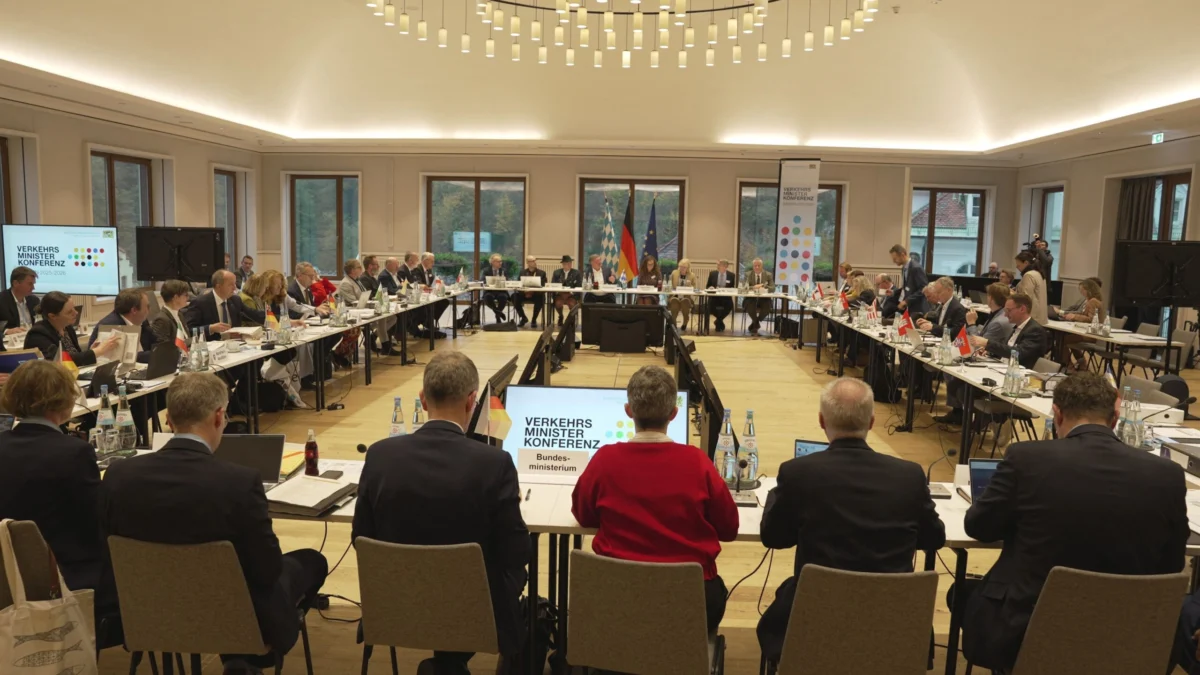
The German states are united in their demand for the federal government to address the escalating costs of rail track access charges. At the two-day Transport Ministers’ Conference in Hohenschwangau, Bavaria, which concluded on Thursday, a resolution was adopted urging the Bund to:
- Immediately compensate for the additional costs incurred by the states due to the rising track access charges.
- Initiate a fundamental reform of the entire track pricing system.
- Exclude specific infrastructure and investment-related costs from being refinanced through these charges, thereby reducing the burden on operators and ultimately, the states.
The immediate trigger for this crisis is a European Court of Justice ruling from March, which invalidated a German provision that had previously capped track usage fees for local passenger transport. This cap was designed to keep regional rail services affordable and promote public transport. Its removal has opened the floodgates for significant price increases, directly impacting the "Regionalisierungsmittel" – federal funds allocated to states for organizing local public transport.
Without adequate federal compensation, states contend that the only recourse will be to "de-order" (cancel) existing train and bus services. This would lead to substantial cuts in timetables, reduced frequencies, and potentially the complete cessation of services on some routes, with some states already contemplating reductions exceeding 30 percent. The federal government, however, has so far indicated a lack of financial flexibility to meet these increased demands.
This unfolding crisis poses a direct threat to Germany’s ambitious "Deutschlandtakt" (Germany-Takt) project, an integrated nationwide regular-interval timetable, and its broader climate goals, which heavily rely on a significant modal shift from road to rail.
Chronology of a Crisis: From Regulatory Cap to Financial Precipice
The current predicament facing Germany’s rail network is the culmination of several developments, rooted in the complex interplay of national and European regulations, and the financial architecture of the country’s public transport system.
The Genesis of the Dispute: Track Access Charges Explained
For decades, the German rail system has operated under a model where rail operators pay "Trassenpreise" (track access charges) to the infrastructure manager, Deutsche Bahn’s subsidiary, DB InfraGo (formerly DB Netz). These charges are meant to cover the costs of maintaining, operating, and investing in the rail infrastructure. Their structure and level are critical, as they directly influence the operational costs for passenger and freight rail companies. In the context of regional public transport (Schienenpersonennahverkehr – SPNV), these costs are primarily borne by the federal states, which contract the services from various rail operators using federal "Regionalisierungsmittel."
Recognizing the public service nature of local transport and aiming to keep it affordable and competitive, Germany had implemented a system that effectively capped these track access charges for SPNV. This cap was a key instrument in managing costs for states and ensuring the stability and expansion of regional rail services.
The ECJ Ruling: A Game Changer
The pivotal moment arrived in March when the European Court of Justice issued a ruling (Case C-429/21, concerning Germany’s track access charge system) that significantly altered the financial landscape. The ECJ found that the German system of capping track access charges for regional passenger transport was incompatible with EU law. Specifically, the court argued that the cap did not fully reflect the direct costs of providing the infrastructure, as required by European directives on railway infrastructure charging.
The ECJ ruling was not an outright prohibition of state support for rail, but rather a judgment on how track access charges are structured and calculated. The essence was that charges should, in principle, cover at least the direct costs attributable to the operation of the train service. By capping these charges at a level potentially below direct costs, Germany was deemed to be providing an indirect subsidy that distorted competition and violated the spirit of the EU’s railway liberalization directives.
The immediate consequence of this ruling was the removal of the legal basis for the previous capping mechanism. This meant that DB InfraGo was no longer legally obligated to cap its charges for regional services, leading to an immediate and substantial increase in the fees demanded from rail operators, and by extension, from the federal states.
Escalating Costs and State Alarms
Following the ECJ decision, states quickly began to feel the financial pinch. The increase in track access charges translated into higher operating costs for the rail companies providing regional services. Since these costs are ultimately passed on to the states through their contracts with operators, the states’ budgets for public transport came under immense pressure.
The "Regionalisierungsmittel," which are the primary source of funding for regional public transport, were not designed to absorb such sudden and significant increases. These funds are negotiated and allocated years in advance, based on established cost structures. The unexpected surge in track access charges has created a gaping hole in state budgets, leaving them scrambling for solutions. Without additional federal funds, the states’ only immediate option to balance their books in the short term is to reduce the services they commission.
The Hohenschwangau Conference: A United Front
The urgency of the situation brought Germany’s transport ministers together at their conference in Hohenschwangau. This traditional gathering serves as a forum for states to coordinate transport policy and present a united front to the federal government. The unanimous adoption of the resolution demanding federal compensation and systemic reform underscores the severity of the crisis and the widespread concern across all states, regardless of political affiliation. The conference became the official platform for the states to articulate their dire warnings about impending timetable cuts and to lay out their expectations for federal action.
Supporting Data and Financial Realities: The "Regionalisierungsmittel" Conundrum
To fully grasp the gravity of the situation, it’s essential to delve into the financial mechanisms at play and the specific challenges they present.
The "Regionalisierungsmittel" Conundrum
The "Regionalisierungsmittel" (regionalization funds) are central to the German public transport system. These are federal grants transferred to the Länder to enable them to procure and organize regional rail passenger transport services (SPNV) and, to a lesser extent, regional bus services. Introduced in 1996 as part of the railway reform, these funds were designed to decentralize responsibility for local public transport, allowing states to tailor services to their specific regional needs.
The amount of these funds is determined through complex negotiations and legal frameworks, often adjusted periodically. While they have increased over the years, they are generally tied to an agreed-upon growth rate and are meant to cover the expected costs of operating regional services, including staff, rolling stock, and crucially, track access charges. The problem now is that the post-ECJ surge in track access charges has far outstripped the planned increase in "Regionalisierungsmittel." The states are essentially caught between rising operational costs and a fixed, or insufficiently flexible, federal budget.
The federal government’s argument of "no financial leeway" often refers to the strict budget rules and the current economic climate, making it difficult to find billions of additional euros on short notice. However, from the states’ perspective, this is a matter of maintaining a critical public service and upholding prior political commitments to strengthen rail transport.

The Burden on State Budgets
The financial burden on the states is immense. As Schleswig-Holstein’s Transport Minister Claus Ruhe Madsen highlighted, even financially strong states like Baden-Württemberg are contemplating "massive ÖPNV de-orders" – essentially cutting public transport services – potentially exceeding 30 percent in the coming years. This isn’t merely a minor adjustment; it signifies a significant rollback of service levels that have been built up over decades.
For many states, particularly those with less robust economies or extensive rural networks, such cuts would be devastating. Public transport is not just a convenience; it’s an essential lifeline for commuters, students, and elderly citizens, connecting them to work, education, and healthcare. A 30% cut could mean entire routes are eliminated, frequencies are drastically reduced, or services are stopped earlier in the evening or on weekends, severely impacting mobility and social inclusion.
The Role of DB InfraGo
DB InfraGo, the newly formed infrastructure company within Deutsche Bahn (effective January 1, 2024, combining DB Netz and DB Station&Service), is at the heart of the track access charge system. As the owner and operator of the vast majority of Germany’s rail infrastructure, it charges fees for its use. The federal government, as the owner of Deutsche Bahn, indirectly controls DB InfraGo.
States argue that the Bund, through its ownership of DB InfraGo, is effectively imposing these increased costs on them. Minister Madsen’s remark, "it is simply bitter that the federal government first burdens the states with massively rising costs via DB InfraGo, then abandons them and commuters," encapsulates this frustration. The states contend that the federal government has a responsibility to mitigate the financial consequences of a ruling that impacts a federally owned entity’s pricing power. They also point out that some of the costs that DB InfraGo seeks to recover through track access charges are related to long-term infrastructure investments, which they believe should be funded directly by the federal government rather than passed on to operating services.
Official Responses and Political Standoff: A Battle for Germany’s Rail Future
The escalating rail crisis has triggered strong reactions from state politicians, while the federal government faces immense pressure to find a viable solution.
States Demand Immediate Action and Systemic Reform
The unanimous resolution from the Transport Ministers’ Conference is a powerful signal. It reflects a consensus across the political spectrum that the current situation is untenable and requires urgent federal intervention. The states are not merely asking for a temporary fix; they are demanding a fundamental overhaul of how rail infrastructure costs are financed.
Their call for a reform of the track pricing system centers on the idea that certain infrastructure costs, particularly those related to long-term investments in expanding and modernizing the network, should not be recovered through day-to-day track access charges. Instead, they argue, these "investment-related costs" should be directly borne by the federal government, as they benefit the entire nation and align with the federal responsibility for infrastructure development. This would alleviate the pressure on operational budgets and allow track access charges to primarily cover the direct costs of running trains, in line with the ECJ ruling.
Voices from the Länder: Madsen and Tonne
The statements from Claus Ruhe Madsen and Grant Hendrik Tonne underscore the depth of concern and the potential consequences.
Claus Ruhe Madsen (CDU, Schleswig-Holstein Transport Minister):
Madsen’s frustration is palpable. His comment that the federal government is "abandoning them and commuters" highlights the perceived lack of solidarity from Berlin. He emphasizes the missed opportunity, stating, "This way, we are missing the unique chance to get more people from cars onto the rails at historically high fuel prices." This directly links the rail crisis to broader climate and transport policy goals. High fuel prices should naturally incentivize a shift to public transport, but if public transport services are simultaneously cut, this incentive is undermined, pushing commuters back to cars. His mention of Baden-Württemberg, a traditionally wealthy state, contemplating 30% cuts, serves as a stark warning that this is not an issue limited to less affluent regions but a systemic problem impacting all states.
Grant Hendrik Tonne (SPD, Lower Saxony Transport Minister):
Tonne echoes the call for both short-term compensation and long-term reform. His focus is on "reliability and predictability," crucial elements for any public transport system. He warns, "The current development endangers existing services in local rail passenger transport and makes additional connections, denser frequencies, and the expansion of services more difficult." This statement points to the dual threat: not only are existing services at risk, but future improvements and expansions – which are vital for attracting more passengers and achieving climate goals – are also jeopardized. Tonne’s economic argument is clear: "Every additional Euro that has to be spent on track access charges will ultimately not be available for additional trains, better frequencies, or service improvements." He concludes with a dire warning: "If costs continue to rise at this level, states and transport authorities will increasingly come under pressure," signaling potential insolvencies or further drastic cuts.
Federal Government’s Stance: Tight Fiscal Constraints
While the federal Ministry of Transport acknowledges the need for reform and is indeed working on it, the federal government’s general stance has been one of fiscal caution. They have indicated "no financial leeway" for significantly more money to address the immediate cost increases. This position is likely influenced by:
- Overall Budget Constraints: Germany, like many European nations, is facing tight budgets, partly due to the aftermath of the pandemic, energy crises, and ongoing geopolitical tensions. Prioritizing spending across various sectors is a constant challenge.
- Legal Complexities: Finding a new, EU-compliant system for track access charges that also addresses the states’ financial concerns is a complex legal and economic undertaking. Any new mechanism must adhere to European competition and state aid rules.
- Division of Responsibilities: The federal government might argue that while they provide "Regionalisierungsmittel," the operational responsibility and cost management for regional transport lie with the states. This creates a classic federal-state blame game, even though the ECJ ruling originated from a federal-level regulatory structure.
The Call for Fundamental Reform
Beyond immediate compensation, the states’ demand for a "fundamental reform" is crucial. They are pushing for a system where the "investment-related costs" of infrastructure development are separated from the operational track access charges. This would mean that the significant investments required for modernizing and expanding Germany’s rail network (e.g., new lines, electrification, digital signaling) would be directly funded by the federal government through its ownership of DB InfraGo, rather than indirectly burdening the operating companies and, ultimately, the states and passengers. Such a reform would align with the federal government’s stated goals of strengthening rail and making it more attractive.
Implications for Germany’s Rail Future: A Critical Juncture
The current crisis represents a critical juncture for Germany’s transport policy and its ambitious climate goals. The outcome of this dispute between the Bund and the Länder will have far-reaching consequences for millions of commuters, the environment, and the national economy.
Threat to Public Transport Accessibility
The most immediate and tangible implication of the proposed timetable cuts is a severe reduction in public transport accessibility. If services are indeed "de-ordered" by 30% or more in some regions, it would mean:
- Reduced Frequencies: Longer waiting times, making rail less attractive for spontaneous travel or short trips.
- Eliminated Routes: Entire towns or rural areas could lose their rail connection, forcing residents to rely on cars or face significant travel challenges.
- Shorter Operating Hours: Services might stop earlier in the evening or not run on weekends, impacting leisure travel, shift workers, and social participation.
- Increased Congestion and Pollution: With fewer public transport options, more people will inevitably turn to private cars, leading to increased road traffic, air pollution, and carbon emissions.
- Social Inequality: Those without access to private vehicles, often lower-income households, students, or the elderly, will be disproportionately affected, potentially leading to social exclusion.
Impact on Climate Goals and Modal Shift
Germany has committed to ambitious climate targets, including a significant reduction in transport emissions. A cornerstone of this strategy is the "modal shift" – encouraging people and goods to move from road and air to rail. The current crisis directly undermines this objective:
- Undermining "Deutschlandtakt": The "Deutschlandtakt" project, aimed at creating a nationwide, integrated, and highly efficient regular-interval timetable, is predicated on expanding and improving rail services. If states are forced to cut services, the very foundation of this ambitious plan crumbles, making it impossible to achieve the seamless connections and increased capacity envisioned.
- Disincentivizing Rail Use: If rail services become less frequent, less reliable, or simply unavailable, the public’s confidence in rail as a viable alternative to cars will erode. This would reverse years of efforts to promote sustainable mobility and make it harder to achieve future climate goals.
- Increased Emissions: A forced return to private car use due to insufficient public transport directly contradicts climate goals and makes the country’s emission reduction targets harder to meet.
Economic Repercussions
Beyond individual mobility and environmental concerns, the crisis carries significant economic implications:
- Impact on Regional Economies: Reliable public transport is crucial for connecting rural areas to urban centers, facilitating labor mobility, and supporting local businesses and tourism. Service cuts could hamper regional economic development.
- Investment Uncertainty: The instability in funding and pricing mechanisms creates uncertainty for rail operators and infrastructure developers. This can deter private investment in rolling stock and services, further hindering modernization and expansion efforts.
- Loss of Jobs: If services are cut, it could lead to job losses among rail operating staff, maintenance personnel, and associated industries.
- Reduced Competitiveness: A less efficient and less extensive rail network could negatively impact Germany’s overall economic competitiveness, especially for freight transport which also relies on predictable and affordable track access.
The Path Forward: Navigating a Complex Landscape
The federal government now faces a formidable challenge. It must reconcile its fiscal constraints with the urgent demands of the states and the broader strategic goals for Germany’s rail system. Potential solutions could include:
- Emergency Federal Funding: A short-term injection of federal funds to bridge the immediate financial gap caused by the ECJ ruling and prevent imminent timetable cuts.
- Accelerated Reform of Track Access Charges: A rapid development and implementation of a new, EU-compliant track pricing system that clearly distinguishes between operational and investment costs, with the latter being directly covered by the federal budget. This would require close collaboration with the states and potentially with the European Commission to ensure compliance.
- Increased "Regionalisierungsmittel": A more substantial and predictable increase in the "Regionalisierungsmittel" to account for rising operational costs and allow for future service expansion.
- Dialogue with the ECJ: Exploring avenues for dialogue with European institutions to understand the full scope of the ECJ ruling and potentially find creative, compliant solutions that allow for state support without distorting competition.
- Long-term Rail Strategy: Developing a coherent, long-term funding strategy for rail infrastructure that is insulated from short-term budget fluctuations and political cycles, ensuring stability and predictability for all stakeholders.
The decisions made in the coming weeks and months will determine whether Germany can steer its rail network away from the precipice of service cuts and continue its journey towards a sustainable and efficient transport future, or if it will be forced to compromise on its ambitions for a robust, accessible, and climate-friendly public transport system. The pressure is on Berlin to deliver a solution that safeguards Germany’s rail services for all.