In the landscape of modern game development, where high-definition graphics and ray tracing have become the industry standard, a curious counter-movement has emerged within the hobbyist community: the "demake." Among the most ambitious of these projects is the ongoing effort by developer Tobias Friedly, known online as "Game of Tobi," to bring the 2007 Wii masterpiece Super Mario Galaxy to the Nintendo Game Boy Advance (GBA). While the GBA was a titan of handheld gaming, its 32-bit architecture is worlds apart from the motion-controlled, 3D-heavy environment of the Wii. This project serves as a testament to the ingenuity of reverse engineering and the enduring legacy of Nintendo’s flagship mascot.
The Core Concept: Engineering a Digital Time Travel
The project, hosted publicly on GitHub, is not a simple "port" in the traditional sense. Recognizing the legal and ethical complexities of distributing copyrighted intellectual property, Friedly has designed a build system that relies entirely on the user’s own resources. To create a playable version of Super Mario Galaxy on the GBA, a user must possess a legally obtained US-region ISO file of the original Wii game.
The build process is an automated, rigorous extraction method. According to Friedly, the software toolchain parses the original ISO and reconstructs every facet of the game—models, animations, textures, sound effects, music, and text—specifically for the GBA hardware. This approach ensures that the project remains within a legal gray area, as the developer is not distributing the game assets themselves, but rather the "recipe" and the engine required to transform the user’s personal copy into a portable format.
The engine powering this transition is rooted in the work of Joshua Barretto and leverages recent, community-driven efforts to decompile Super Mario Galaxy. By bridging the gap between the Wii’s PowerPC architecture and the GBA’s ARM7TDMI processor, Friedly is pushing the limits of what was once considered impossible for 2001-era hardware.
A Chronological Perspective: Bridging Two Eras
To understand the gravity of this technical feat, one must look at the timeline of Nintendo’s hardware evolution.
- 2001: The Game Boy Advance launches, bringing 32-bit portable gaming to the masses. It was primarily designed for 2D sprites, parallax scrolling, and pseudo-3D effects (Mode 7).
- 2006: The Nintendo Wii introduces motion-controlled, high-fidelity 3D gaming to the mainstream, changing the way players interact with digital space.
- 2007: Super Mario Galaxy is released, setting a new benchmark for 3D platforming, complex gravity physics, and orchestral soundtracks.
- 2016: Nintendo brings the title to the Wii U via the eShop, marking its first transition to a new console generation.
- 2020: The Super Mario 3D All-Stars collection brings the game to the Nintendo Switch, introducing higher resolution assets and refined control schemes.
- 2025: Nintendo releases a refreshed bundle for the Switch, pairing Galaxy with its sequel, Super Mario Galaxy 2.
By attempting to place a 2007 console giant onto a 2001 handheld, Friedly is essentially performing a technical "reverse-evolution." He is stripping away nearly two decades of graphical evolution to see how much of the "soul" of the game can survive the transition to the constraints of the GBA’s 16.78 MHz processor and 32 KB of internal WRAM.
Supporting Data and Technical Constraints
The technical hurdles in this project are monumental. The GBA was never designed to handle the complex 3D geometry or the spherical gravity physics that define Super Mario Galaxy. In the original Wii version, the game relies on hardware acceleration to render the lush, space-faring environments. On the GBA, these must be simulated through significantly reduced geometry and simplified texture mapping.
The Hardware Bottleneck
- Processor: The GBA’s ARM7TDMI is a fraction of the speed of the Wii’s "Broadway" CPU.
- Memory: With only 256 KB of external Work RAM and 32 KB of internal RAM, the GBA cannot load the high-resolution textures or complex object arrays found in the original files.
- Rendering: The GBA lacks a dedicated 3D graphics unit. Everything must be rendered through software-based rasterization or highly optimized custom code, which limits the number of polygons that can appear on screen simultaneously.
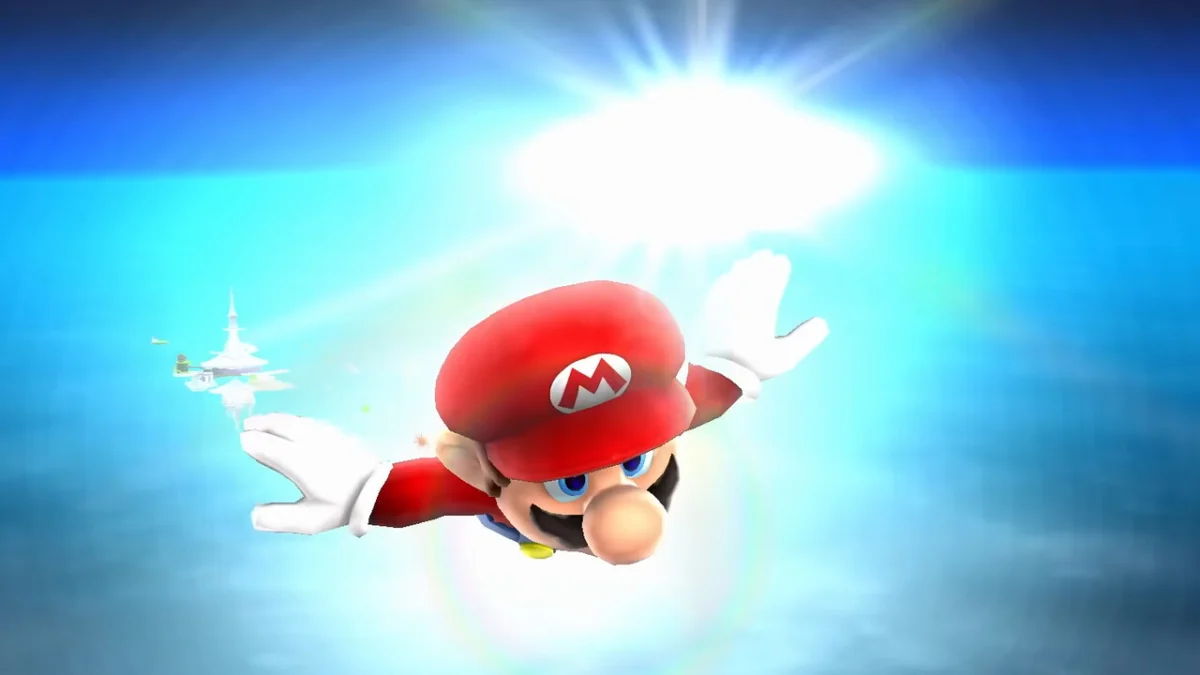
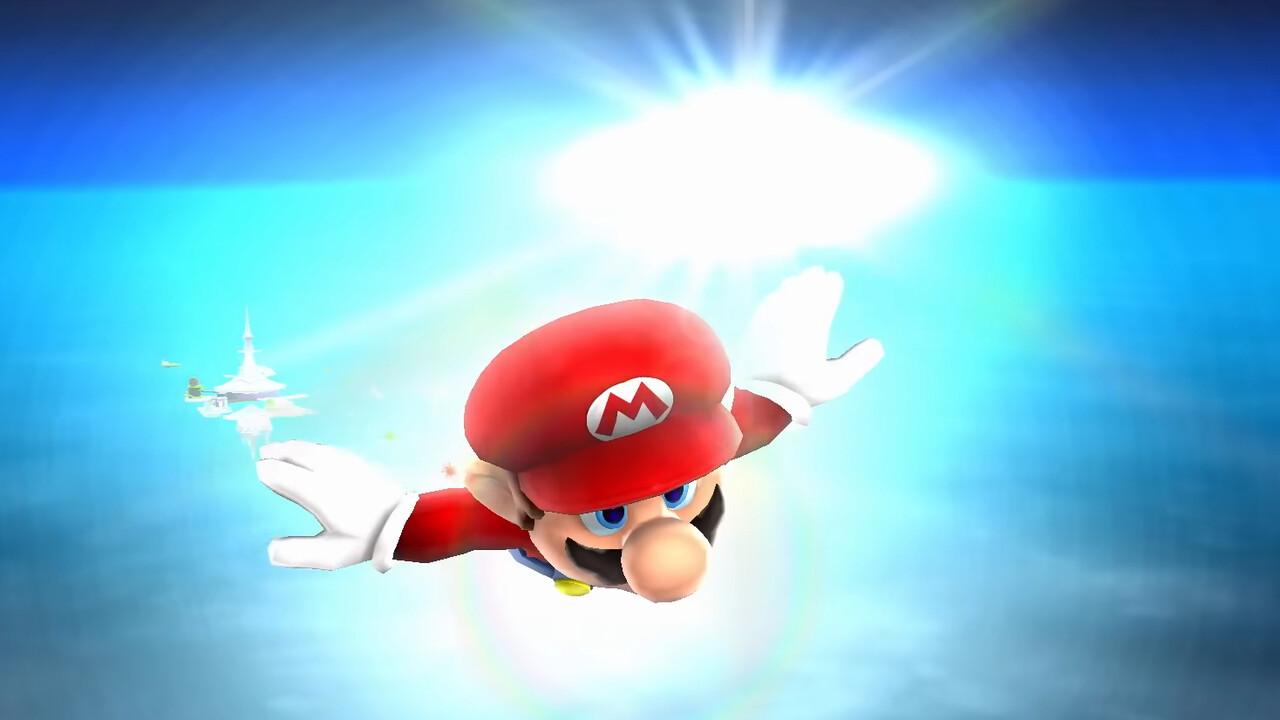
Despite these limitations, the footage released by Friedly shows a functioning, playable 3D space. While the resolution is visibly lower and the textures appear "gritty" compared to the crisp aesthetics of the Wii, the movement, jumping, and camera control are undeniably those of Super Mario Galaxy. It is a display of optimization at its most extreme.
Official Responses and Industry Context
Historically, Nintendo has maintained a strict stance regarding the preservation and modification of its software. The company has often utilized legal channels to shut down fan projects that utilize their assets or source code. However, Friedly’s project occupies a unique position. Because the project does not redistribute assets and relies on the end-user providing their own source material, it mirrors the legal framework used by emulators.
To date, Nintendo has not issued a public statement regarding this specific project. However, the industry has seen a shift in how companies view "decompilation" projects. While some firms view them as a threat to their proprietary IP, others see them as a form of archival research. By open-sourcing the engine code on GitHub, Friedly is contributing to the broader field of game preservation, allowing other developers to study how modern 3D engines can be "down-ported" to legacy hardware.
The Implications of "Demaking"
Why go through the effort of porting a game to a platform that is objectively inferior to the original? The answer lies in the challenge. For developers like Friedly, the motivation is rarely about convenience; it is about proving the limits of silicon and software.
Preservation and Accessibility
While Super Mario Galaxy is available on the Switch, the act of porting it to the GBA preserves the game in a format that bypasses the limitations of official digital storefronts. As storefronts close and cloud services become the norm, having a version of the game that can run on "bare metal"—the original hardware for which it was designed—is a form of digital insurance.
Creative Expression
The "demake" scene has become a form of digital art. It challenges the player to view a familiar experience through a distorted, low-fidelity lens. It forces the developer to prioritize gameplay mechanics over visual fidelity, stripping the game down to its core "loop"—in this case, the satisfying movement and level design that made Super Mario Galaxy a masterpiece.
Future Potential
The success of the Super Mario Galaxy GBA port could pave the way for other impossible ports. If a 3D Wii game can be made to run on a 32-bit handheld, what other titles are waiting for a similar treatment? The project highlights the necessity of the open-source community in keeping older titles relevant. It suggests that even when official support for a console ends, the software can continue to live, breathe, and evolve through the collective effort of dedicated fans.
Conclusion
Tobias Friedly’s work on Super Mario Galaxy for the Game Boy Advance is more than just a novelty; it is a profound technical achievement. By navigating the complex intersections of reverse engineering, hardware constraints, and copyright ethics, he has created something that challenges our perceptions of game development.
Whether one views this project as an act of digital preservation or a bold experiment in optimization, the result is undeniable: Super Mario Galaxy has successfully traveled back in time. For the GBA, a console that defined the childhoods of millions, the addition of such a sophisticated 3D platformer is a late-life surprise that keeps the legacy of 32-bit gaming alive in an increasingly digital world. As the project continues to develop, it will undoubtedly remain a focal point for those interested in the intersection of classic hardware and modern ambition.