By International Sports Desk
Updated: October 22, 2026
The image of Sebastian Vettel—once the icy, finger-pointing dominator of the Formula 1 grid—has undergone a metamorphosis that few could have predicted during his roaring reign at Red Bull Racing. In the newly released ARD documentary series, "Being Sebastian Vettel," the four-time world champion pulls back the curtain on a life defined by high-octane ambition, the crushing weight of expectation, and his eventual pivot toward environmental activism and a quiet, agrarian existence.
For decades, Vettel was the embodiment of the "win at all costs" mentality. Today, he represents a rare archetype in professional sports: the athlete who successfully deconstructs his own legacy to find a deeper, more sustainable purpose.
The Genesis of a Champion: From Karting to the Pinnacle
The story of Sebastian Vettel begins not on the world’s most prestigious asphalt circuits, but on the modest karting tracks of Germany. His father, Norbert, was the architect of his early days, though the pursuit of a racing career placed an immense, often precarious, strain on the family’s finances.
Vettel’s obsession was absolute. Anecdotes from his childhood paint a picture of a boy so consumed by the need to drive that he would frequently skip meals, only abandoning the driver’s seat when his mother, Heike, insisted that his dinner was getting cold. This single-minded focus would become his hallmark. By age 19, he was already breaking barriers, becoming the youngest driver at the time to participate in a Formula 1 race weekend with BMW Sauber, where he immediately secured a points-finish on debut.
His transition to Toro Rosso, the Red Bull junior team, provided the stage for his first true statement of intent. In 2008, at the rain-lashed Italian Grand Prix in Monza, a young Vettel outperformed the entire field in a car that was objectively inferior to the competition. It was a performance that left peers and veterans in awe. Lewis Hamilton, reflecting on that day, noted: "He left everyone behind in a significantly slower car. That was the moment it became clear: this guy has everything it takes to be a World Champion."
The Red Bull Era: An Unrelenting Pursuit of Perfection
If 2008 was the promise, 2010 was the fulfillment. Joining the main Red Bull Racing outfit, Vettel quickly established himself as the team’s spearhead. Reflecting on his mindset during those years, Vettel is starkly honest: "My sole ambition was to be at the front and to win every single race."
In 2010, at just 23 years old, he became the youngest world champion in the history of the sport. The dominance that followed was clinical. Between 2010 and 2013, he secured four consecutive world titles. However, the cracks began to show in 2014. A major regulatory overhaul changed the fundamental mechanics of the cars, particularly the braking systems, which did not suit Vettel’s driving style.
Helmut Marko, the long-time Red Bull advisor, observed the shift in real-time: "He began to doubt himself. The car wasn’t responding to him, and for a driver who thrived on perfect harmony with his machine, that was a psychological turning point."
The Ferrari Years: Tradition, Pressure, and the Pain of Failure
In 2015, Vettel pursued the dream that haunts every driver: winning a title in the scarlet red of Ferrari. The move was supposed to be his crowning glory, a path to mirroring his childhood hero, Michael Schumacher. Instead, it became a period of intense friction.
Vettel, a man who preferred a relaxed, informal atmosphere, found himself clashing with the rigid, tradition-steeped hierarchy of the Scuderia. He attempted to inject levity into the garage, such as gifting music speakers to his mechanics to lift the mood, but the management viewed such gestures as "un-Ferrari-like."
"I realized very quickly that the air in Maranello was different," Vettel recounts in the documentary. "There was a constant, crushing pressure from the outside, and a culture that didn’t always welcome the way I tried to operate."
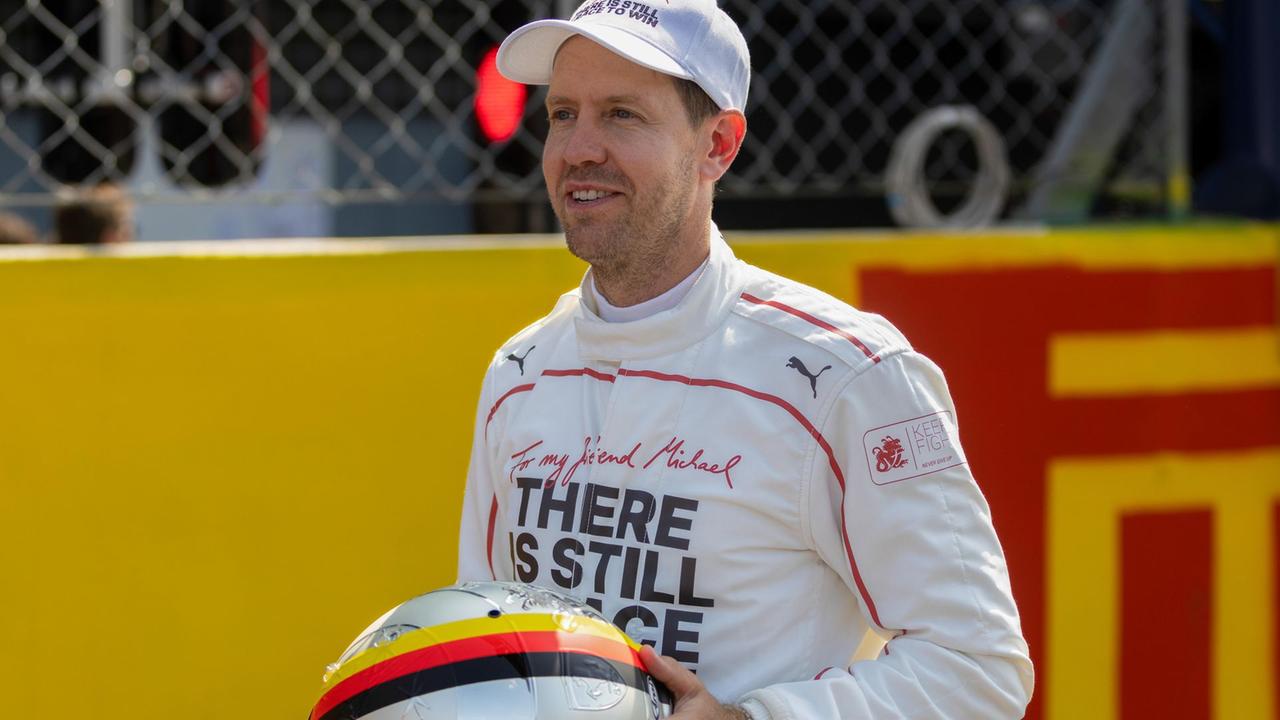
Despite securing 14 Grand Prix victories, he could not bridge the gap to the championship. The 2017 and 2018 seasons were particularly bruising; he led the standings for the majority of both years only to fall away in the second half. By 2020, Ferrari opted not to renew his contract. For a man who had defined himself by his success, this was a profound emotional blow. "I took it personally," he admits. "I felt that I had failed, and I carried that weight for a long time."
The Great Pivot: Environmentalism and the New Reality
Following a twilight stint at Aston Martin, where he officially retired in 2022, Vettel did not disappear into the luxury retirement typical of former champions. Instead, he channeled his restlessness into causes that felt more urgent than lap times.
Vettel’s transition into an environmental activist was not a PR stunt, but a genuine evolution of values. He began participating in public clean-up events, speaking out on biodiversity, and questioning the environmental impact of the very sport that made him a superstar.
"It’s not that I hate racing," Vettel clarifies. "But I don’t love it the way I once did. I realized that my priorities had shifted. I wanted to use my platform to highlight issues that actually matter for the future of the planet."
Today, Vettel spends his time managing a small farm. The quiet labor of agriculture provides a stark contrast to the high-decibel environment of the pit lane. It is a life of tangible results rather than digital telemetry.
Supporting Data and Industry Context
The shift in Vettel’s public persona coincides with a broader conversation within the FIA and Formula 1 regarding sustainability. The sport has pledged to reach Net Zero Carbon by 2030, a goal that Vettel has frequently challenged as insufficient or too slow.
- Carbon Footprint: Formula 1’s own data shows that the majority of its carbon footprint comes from logistics and travel, rather than the cars on the track. Vettel’s advocacy has pushed teams to rethink their global travel schedules and supply chains.
- Public Perception: Market research in 2025 indicated that Vettel’s transition has made him the most "trusted" former driver among the 18–30 demographic, a shift from his status as a polarizing figure during his winning years.
Official Responses and Peer Perspectives
The response from the motorsport community has been largely supportive, though tempered with a degree of nostalgia for his competitive fire.
"Sebastian was a warrior on the track," says team principal Christian Horner. "Seeing him now—calm, thoughtful, and deeply engaged in the world beyond racing—it’s a testament to the person he always was beneath the helmet. He was never just a driver."
However, critics remain. Some die-hard fans argue that a driver who spent his life burning fossil fuels at 200 mph is an imperfect messenger for climate change. Vettel addresses this in the documentary: "I don’t claim to be perfect. I’ve lived a life that is part of the problem. But does that mean I should stay silent? I believe the opposite. If someone who has lived at the center of the engine room can call for change, perhaps it carries more weight."
Implications: The Legacy of a Modern Athlete
The legacy of Sebastian Vettel is no longer defined by his four world titles alone. It is defined by the courage to walk away when the passion no longer aligned with his conscience.
By pivoting from a high-carbon sport to a low-impact, sustainable lifestyle, Vettel has set a precedent for how retired athletes can transition into public intellectuals. He has proven that the "Champion" identity is not a life sentence, but a chapter.
As Being Sebastian Vettel suggests, the four-time world champion has found a new form of success. It isn’t measured in trophies, pole positions, or championship points, but in the quiet satisfaction of a life lived in alignment with his personal values. For the man who once chased every millisecond to reach the top, the most difficult and rewarding race was the one to find himself.