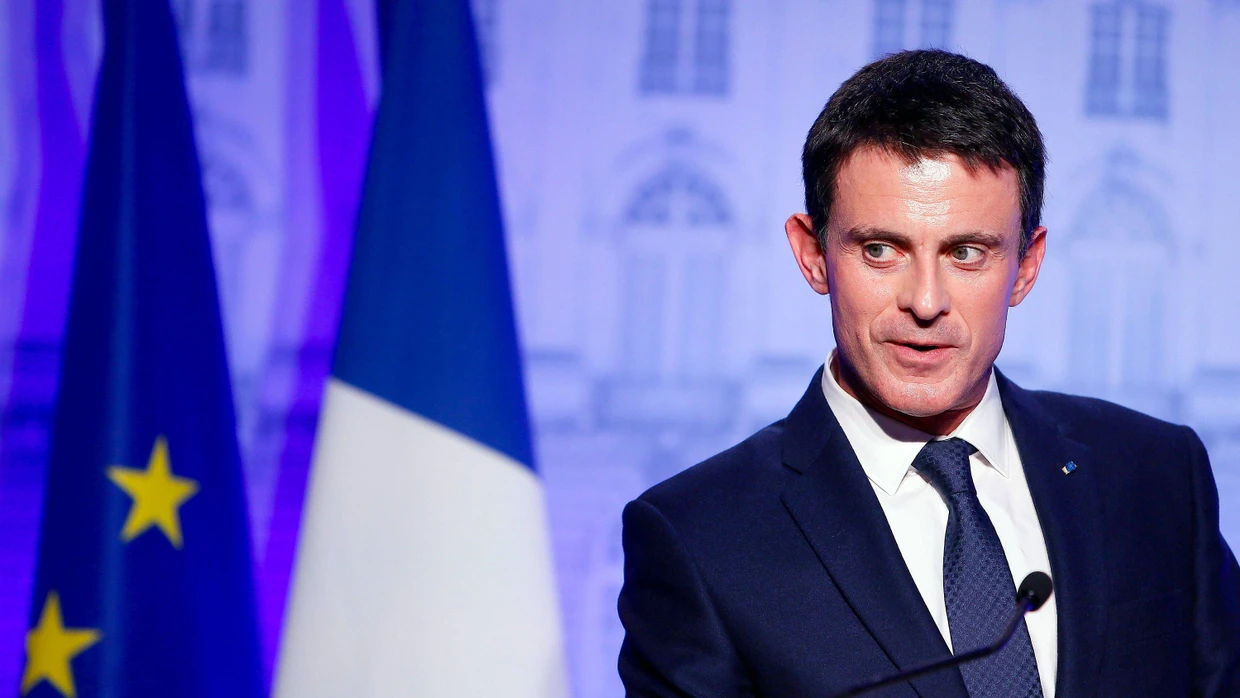
Paris, France – December 5, 2016 – In a move that has sent shockwaves through the French political landscape, Manuel Valls, the incumbent Prime Minister, has declared his candidacy for the Socialist Party’s presidential nomination. This decision, while seemingly a natural progression for a leader of his stature, is fraught with controversy and defiance. Valls finds himself in a precarious position, seeking the support of a party that, for many within its own ranks, views him as an ideological adversary. His background, forged in the often-turbulent banlieues (suburbs) of Paris, provides a stark contrast to the traditional Socialist elite, hinting at a campaign that could redefine the party’s identity and appeal.
The announcement, made on December 5, 2016, marks a pivotal moment in the lead-up to the 2017 French presidential election. Valls, a former Interior Minister known for his firm stance on security and secularism, has long been a polarizing figure. His policies and rhetoric have often alienated the more progressive and left-leaning factions of the Socialist Party, who accuse him of veering too far to the right. Yet, it is precisely this perceived pragmatism and willingness to break with convention that Valls is banking on to propel him to the Élysée Palace.
This article delves into the complexities of Manuel Valls’ presidential bid, examining his unique political journey, the deep divisions within the Socialist Party, and the potential implications of his candidacy for the future of French politics.
The Unconventional Path to Power: Valls’ Journey from the Banlieues to Matignon
Manuel Valls’ political ascent is a narrative of ambition, resilience, and a willingness to embrace challenging realities. Born in Barcelona, Spain, in 1962, Valls emigrated to France as a child. His formative years were spent in the outer suburbs of Paris, areas often characterized by social and economic disparities, and a complex relationship with the state. This immersion in the banlieues, a stark departure from the more privileged backgrounds of many of his political contemporaries, has profoundly shaped his worldview and policy priorities.
He entered politics as a socialist, initially serving as a Member of Parliament and later as the Mayor of Évry, a commune in the Essonne department, for over a decade. His tenure as mayor was marked by a focus on urban renewal, social integration, and a no-nonsense approach to law and order. These experiences, often played out against the backdrop of social unrest and economic hardship, instilled in him a deep understanding of the challenges facing ordinary citizens, particularly those in marginalized communities.
His appointment as Interior Minister in 2012 under President François Hollande was a significant step, placing him at the forefront of France’s security agenda. He gained a reputation for his tough stance on crime and his unwavering commitment to secularism, often clashing with religious communities and human rights groups. His pronouncements on issues such as the burkini ban and the integration of Muslim communities ignited fierce debates, solidifying his image as a controversial yet decisive leader.
In 2014, Valls was appointed Prime Minister, a position he has held with a determined, albeit often embattled, leadership. During his premiership, he has navigated a series of national crises, including the devastating terrorist attacks of 2015 and 2016. His response to these events has been characterized by a blend of national unity appeals and a reinforcement of security measures, further polarizing opinions within the Socialist Party.
A Divided House: The Fractured Landscape of the French Left
Manuel Valls’ decision to run for president is not merely a personal ambition; it is a direct response to, and an exacerbation of, the deep schisms within the French Socialist Party. The party, historically a cornerstone of the French left, has been struggling to define its identity and appeal to a broad electorate in recent years. President Hollande’s term was marked by a decline in popularity, largely attributed to his perceived shift towards more centrist economic policies, a move that alienated many traditional socialist voters.
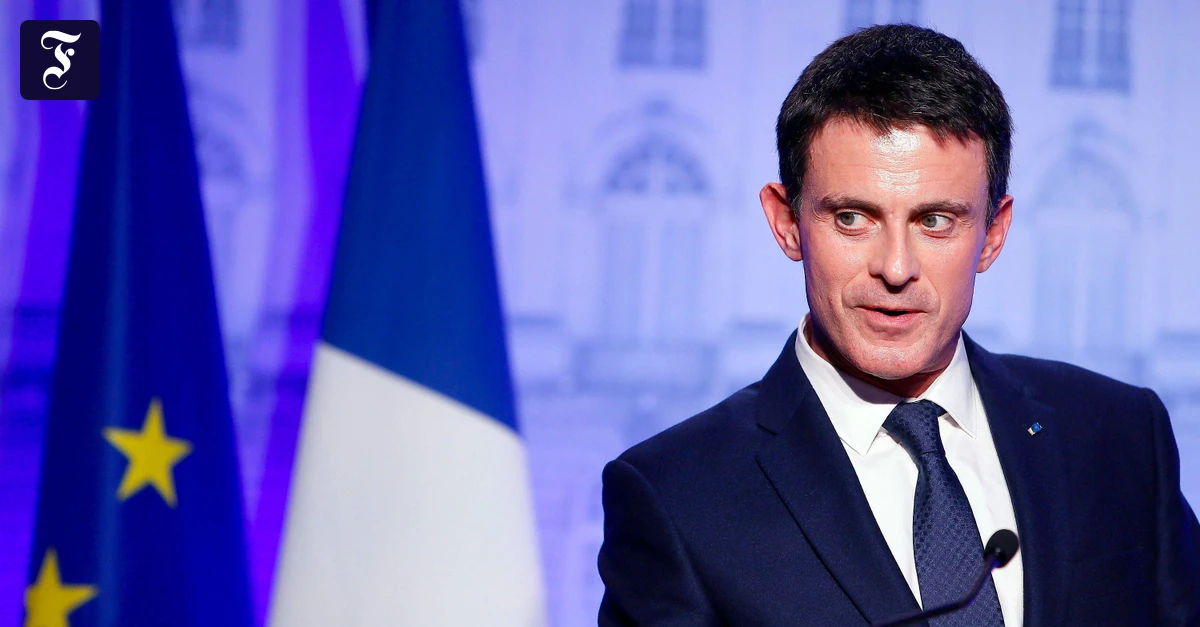
The party’s internal factions represent a spectrum of ideological viewpoints, ranging from the staunchly socialist to the more socially liberal and economically pragmatic. Valls, with his emphasis on security, secularism, and a more assertive state, often finds himself at odds with the more progressive wing, which champions social justice, environmental protection, and a more inclusive approach to cultural diversity.
His candidacy is a direct challenge to the established order within the party. By bypassing the traditional internal consultations and opting to compete in the Socialist Party’s primary election, Valls is forcing a reckoning. He is essentially asking the party faithful to choose between his vision of a strong, secular, and secure France, and the more traditional tenets of socialism that some feel have been abandoned.
The primary election, scheduled for January 2017, is shaping up to be a fiercely contested battle. Valls will face a field of candidates, each representing different strands of the Socialist ideology. Key rivals include Arnaud Montebourg, a former Economy Minister known for his protectionist views, and Benoît Hamon, a former Education Minister who advocates for policies such as a universal basic income. The outcome of this primary will not only determine the Socialist Party’s presidential nominee but will also have a profound impact on the party’s future direction and its ability to regain public trust.
The "Banlieue" Advantage: Connecting with the Disenfranchised?
One of Manuel Valls’ most compelling, yet contested, assets is his upbringing in the Parisian banlieues. This background offers him a unique perspective on the social and economic challenges that plague these often-overlooked communities. While many politicians offer platitudes, Valls can claim a lived experience of the issues – unemployment, social exclusion, and the complexities of integrating diverse populations.
His supporters argue that this direct exposure allows him to speak with authenticity about the needs of those who feel left behind by the political establishment. They believe his policies, particularly those aimed at improving security and creating opportunities, are rooted in a genuine understanding of the realities on the ground. His tough stance on crime, often criticized by civil liberties advocates, is seen by some as a necessary measure to restore order and safety in areas that have suffered from neglect and social unrest.
However, his critics contend that his policies, particularly his emphasis on secularism and his rhetoric on immigration, have often alienated the very communities he claims to represent. Some residents of the banlieues feel that Valls, despite his background, has become a symbol of state authority and control, rather than a champion of their aspirations. His association with austerity measures and his perceived drift towards the center have also eroded his support among some on the left who believe he has abandoned the core principles of social solidarity.
The question remains whether Valls can translate his "banlieue experience" into a broad appeal that transcends the traditional left-right divide. His campaign will likely hinge on his ability to convince voters that his pragmatic, security-focused approach is the most effective way to address the deep-seated issues facing France, including those in its most disadvantaged areas.
Official Responses and Political Repercussions
The declaration of Manuel Valls’ candidacy has triggered a flurry of reactions from across the political spectrum. Within the Socialist Party, the response has been mixed, reflecting the deep divisions within its ranks. Some party loyalists have expressed dismay, viewing his move as a betrayal of President Hollande and an attempt to usurp the party’s leadership. Others, however, see his candidacy as a necessary injection of pragmatism and a potential path to electoral victory.
The left-wing factions within the party have been particularly vocal in their criticism. They accuse Valls of abandoning socialist principles and catering to a more conservative electorate. His past policies, particularly those related to labor reforms and austerity measures, are frequently cited as evidence of his ideological drift. The primary election is thus seen as an opportunity for these factions to reassert the party’s traditional values and offer a more progressive alternative.
From the center-right opposition, the reaction has been one of cautious observation. The potential fragmentation of the left could benefit their own presidential candidate. However, Valls’ strong stance on security and his appeal to a sense of national pride could also resonate with some centrist voters who are disillusioned with the current political landscape.
The implications of Valls’ candidacy extend beyond the Socialist Party. His decision to run means that the incumbent President, François Hollande, will not seek re-election, a historic moment in modern French politics. This opens up the field for other potential candidates within the Socialist Party and creates an even more unpredictable electoral landscape.
The Road Ahead: Implications for French Politics
Manuel Valls’ presidential bid is more than just a personal quest for power; it is a potential turning point for the French left and the broader political discourse in France. His candidacy represents a gamble – a bet that his pragmatic, security-conscious, and somewhat unconventional approach can capture the imagination of a French electorate weary of traditional politics.
If Valls were to secure the Socialist nomination and go on to win the presidency, it would signify a significant shift in the ideological direction of the party. His emphasis on a strong state, national identity, and a firm hand on security could redefine what it means to be a socialist in France. This could lead to a period of ideological realignment, potentially attracting voters from the center while alienating traditional left-wing supporters.
Conversely, if Valls falters in the primary, it would further underscore the deep divisions within the Socialist Party and raise questions about its long-term viability as a major political force. The fragmentation of the left could pave the way for the rise of other political movements, including the far-right National Front, which has been gaining significant traction in recent years.
The 2017 French presidential election is shaping up to be one of the most consequential in decades. Manuel Valls, the "banlieue breaker" with a penchant for challenging the status quo, has thrown his hat into the ring, promising a campaign that will be as divisive as it is compelling. His journey from the diverse suburbs of Paris to the heart of the presidential race is a testament to his ambition and his belief that he can offer France a new path forward. The coming months will reveal whether his audacious bid will succeed in uniting a fractured party and capturing the nation’s attention, or whether it will become another chapter in the ongoing saga of the French left’s struggle for relevance.