Beijing, Brussels – The European Union and China have reached a preliminary agreement aimed at de-escalating a burgeoning trade dispute over electric and hybrid vehicles, a significant development that could avert a full-blown trade war between two of the world’s largest economic blocs. The accord, announced late Friday local time, focuses specifically on limiting the import of Chinese-made hybrid vehicles into the EU market, while also hinting at a broader compromise regarding tariffs on pure electric vehicles.
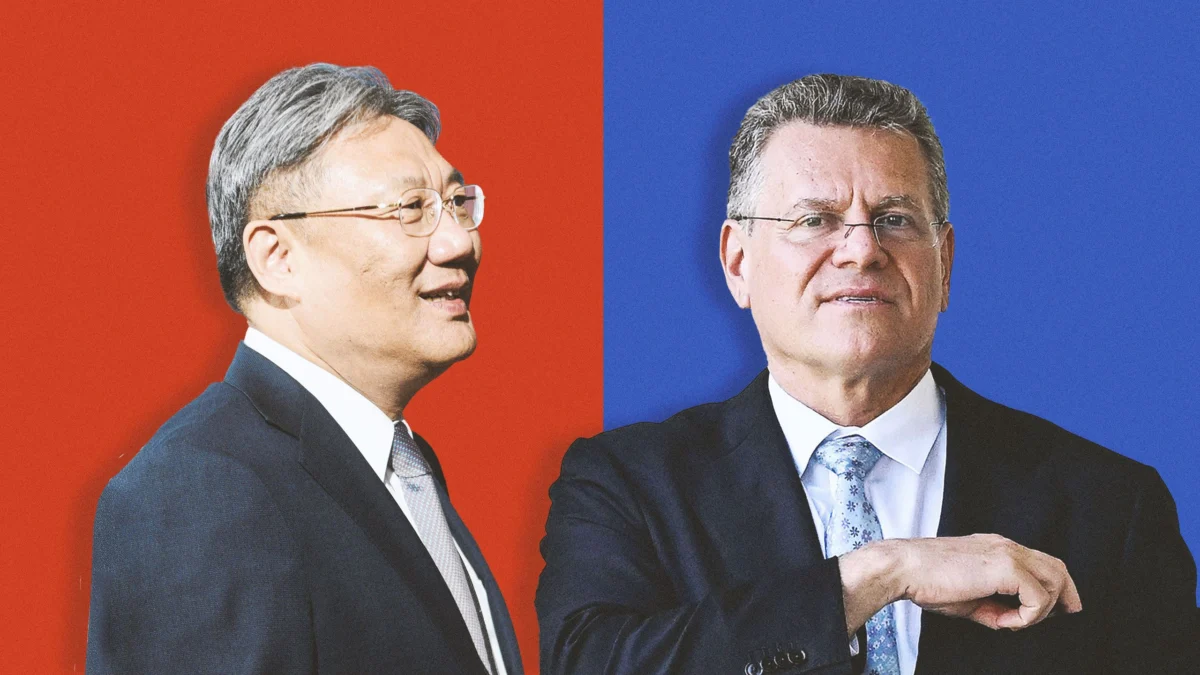
EU Trade Commissioner Maroš Šefčovič, speaking from Beijing, revealed that the understanding, forged after "intensive consultations" and in accordance with World Trade Organization (WTO) rules, is designed to curb the influx of Chinese hybrid and plug-in hybrid cars. This initial breakthrough signals a mutual desire from both Peking and Brussels to prevent an already tense economic relationship from spiraling into a damaging tit-for-tat tariff exchange. The terms of this nascent deal now await crucial approval from the EU’s heads of government.
A Diplomatic Breakthrough in Beijing
The joint statement from the European Commission and China’s Ministry of Commerce marks a critical moment in the ongoing trade tensions. Commissioner Šefčovič emphasized the immediate impact of the agreement: over the next four years, imports of Chinese hybrid and plug-in hybrid vehicles are projected to be halved compared to previous forecasts. While declining to provide exact figures or a baseline for the current year’s imports, Šefčovič stated this would result in "several million fewer Chinese vehicles" entering the European market than would have been the case without the new arrangement. This suggests a substantial re-calibration of trade flows in a rapidly expanding segment of the automotive industry.
The announcement comes after a period of intense diplomatic maneuvering, underscoring the high stakes involved for both economies. The automotive sector is a cornerstone of European manufacturing and employment, while China’s burgeoning EV industry represents a key pillar of its industrial policy and export strategy. The ability to find common ground on even a part of the contentious issue signals a pragmatic approach to preventing economic damage and maintaining a degree of stability in a complex bilateral relationship.

The Genesis of a Trade Tussle: EU Concerns Over Chinese Subsidies
The recent trade tensions between the EU and China did not emerge in a vacuum. They are rooted in growing concerns within Europe regarding what Brussels perceives as unfair state subsidies provided by Beijing to its domestic electric vehicle manufacturers. These subsidies, European officials argue, allow Chinese companies to produce and export EVs at artificially low prices, thereby undermining fair competition and threatening the viability of European carmakers.
Europe’s Anti-Subsidy Investigation
The European Commission formally launched an anti-subsidy investigation into Chinese electric vehicles in September of the previous year. This probe was initiated amidst increasing alarm over the rapid growth of Chinese EV exports to Europe, which saw a surge in market share. The investigation sought to determine whether Chinese manufacturers benefited from excessive government support – including direct grants, preferential loans, land use rights, and subsidized raw materials – that allowed them to gain an unfair advantage in the global market.
The EU’s investigation was a complex and politically charged process, involving extensive data collection from Chinese EV manufacturers, site visits, and consultations with relevant stakeholders. The findings were expected to inform the EU’s decision on whether to impose additional tariffs on Chinese EV imports, beyond the standard 10% customs duty. Early indications from the Commission suggested that these additional tariffs could be substantial, with some reports speculating figures as high as 38.1% for certain manufacturers, depending on the level of subsidy identified. Such tariffs would significantly increase the cost of Chinese EVs in Europe, potentially making them less competitive.
The Stakes: A Flood of Affordable EVs
The automotive industry is not merely a sector of the economy; it is a strategic asset for Europe, employing millions and driving innovation. European car manufacturers, including giants like Volkswagen, Mercedes-Benz, and BMW, are investing heavily in the transition to electric mobility. However, they face fierce competition from Chinese brands like BYD, Nio, and SAIC (MG), which have rapidly expanded their presence in Europe, offering compelling models at competitive price points.

The concern in Brussels was that without intervention, this wave of subsidized Chinese EVs could cripple domestic production, lead to job losses, and undermine Europe’s own green industrial ambitions. The stakes were particularly high for Germany, Europe’s largest economy, which has a deeply integrated automotive industry and significant trade ties with China. German Chancellor Olaf Scholz had reportedly urged caution, emphasizing the need for dialogue over confrontation, highlighting the delicate balance between protecting domestic industry and avoiding a trade war that could harm German exporters.
The Announced Compromise: Halving Hybrid Imports
The agreement announced by Commissioner Šefčovič specifically targets hybrid and plug-in hybrid vehicles, a segment that acts as a bridge between traditional internal combustion engines and pure battery electric vehicles. The decision to focus on hybrids first suggests a strategic move to address a less contentious, yet still significant, part of the market, potentially as a precursor to broader agreements.
Šefčovič’s Revelation and the Four-Year Cap
While the precise mechanisms of the limitation remain undisclosed, Šefčovič confirmed that the agreement would result in a substantial reduction of Chinese hybrid and plug-in hybrid vehicle imports over the next four years. He stated that these imports would be "half lower than previously predicted," indicating a significant quantitative restriction on market access. This move aims to provide European manufacturers with a breathing space to adapt to the competitive landscape and further develop their own hybrid offerings without being overwhelmed by subsidized foreign competition.
The lack of specific numerical data on the agreed-upon import limits has led to some speculation. It is unclear whether this reduction is based on a fixed quota, a percentage of market share, or a cap on growth rates. However, the mention of "several million fewer Chinese vehicles" over the four-year period underscores the ambition of the EU’s protective measure. This implies that the current trajectory of Chinese hybrid exports to Europe was indeed steep, and the new agreement aims to significantly alter that curve. The confidentiality surrounding these details is likely to be maintained until the EU heads of government have had the opportunity to review and approve the deal.
The Elusive E-Car Tariff Resolution
Crucially, the joint statement also "hinted at a compromise in relation to e-car tariffs." This suggests that while the hybrid issue has seen a preliminary resolution, the more contentious question of tariffs on pure battery electric vehicles (BEVs) remains a subject of ongoing discussion or a conditional understanding. The EU’s anti-subsidy investigation was primarily focused on BEVs, which represent the future of automotive mobility and a key battleground for technological leadership.
The "hint" could imply that the positive outcome on hybrids creates a more conducive environment for future negotiations on BEEVs, or that China has offered some concessions or commitments that could lead to a softening of the EU’s proposed tariffs. It is plausible that the full package, including the resolution of BEV tariffs, is contingent on the approval of the hybrid deal and further detailed negotiations. This two-stage approach allows both sides to claim a diplomatic victory while leaving room for further adjustments and concessions on the most sensitive aspects of the trade dispute.
Navigating WTO Rules and Retaliatory Threats
The European Union and China have both stressed that their understanding was reached "in accordance with WTO rules." This adherence to the principles of the World Trade Organization is vital, as it provides a framework for resolving trade disputes and legitimizes any protective measures taken.
Legal Framework and Justifications
Under WTO rules, countries are permitted to impose anti-dumping or anti-subsidy duties if investigations confirm that goods are being imported at unfairly low prices or are benefiting from illegal subsidies, causing injury to domestic industries. The EU’s anti-subsidy investigation into Chinese EVs was conducted with this framework in mind. By explicitly stating that the agreement aligns with WTO rules, both sides seek to reinforce the legitimacy and sustainability of the compromise, making it less vulnerable to challenges from other WTO members.

However, the interpretation and application of WTO rules can often be a source of contention. The specifics of what constitutes an "unfair subsidy" or "injury" are frequently debated. The fact that an agreement was reached outside of a formal WTO dispute settlement process, through direct negotiation, suggests a mutual preference to avoid a protracted legal battle that could further strain relations.
China’s Potential Countermeasures
Prior to this agreement, there were widespread concerns about potential retaliatory measures from China. Beijing had strongly condemned the EU’s anti-subsidy investigation, viewing it as protectionist and a violation of free trade principles. Reports had indicated that China was considering its own tariffs on European goods, particularly in sectors where Europe has a strong export presence, such as luxury cars (especially those with large engines), cognac, and agricultural products.
Such retaliatory tariffs would have severely impacted European businesses, particularly German luxury car manufacturers, who rely heavily on the Chinese market. The "escalation" that both sides reportedly wished to avoid referred precisely to this cycle of increasing tariffs, which could have spiraled into a damaging trade war, harming global supply chains and economic growth. The hybrid vehicle agreement, and the hint of further compromise on EVs, therefore represents a significant step back from the brink of a potentially devastating trade confrontation.
Implications and Future Outlook
The tentative agreement between the EU and China has far-reaching implications, not just for the automotive industry but for the broader geopolitical and economic relationship between the two powers.

A Precarious Balance: Economic and Political Ramifications
For European automakers, the agreement offers a degree of relief, providing a more predictable market environment for their hybrid and plug-in hybrid offerings. The reduced influx of Chinese subsidized vehicles could ease competitive pressures and allow European firms to consolidate their position in this transitional segment. However, the details on BEV tariffs remain crucial, as pure electric vehicles are the long-term focus of the industry. The agreement also reflects the EU’s ongoing struggle to balance its desire for open trade with its need to protect strategic industries and ensure fair competition.
For China, the compromise demonstrates a willingness to engage in dialogue and make concessions to avoid a larger trade conflict. While the reduction in hybrid exports is a setback, it might be viewed as a strategic sacrifice to protect its more critical pure EV exports from higher tariffs, and to maintain overall market access to the EU. It also underscores China’s growing global economic influence and its ability to negotiate on equal footing with major economic blocs.
Consumers in the EU might see a slightly different market dynamic. While the immediate flood of ultra-affordable Chinese hybrids might be curtailed, the competition could still drive innovation and pricing among European manufacturers. The ultimate impact on vehicle prices and consumer choice will depend heavily on the specifics of the BEV tariff resolution.
The Crucial Vote: EU Leaders’ Decision
The agreement is not yet final. EU Trade Commissioner Šefčovič explicitly stated that he would first present the deal to the EU heads of government, who must then decide whether to accept the compromise with China. This step is critical, as individual member states have varying economic interests and geopolitical perspectives regarding China. Countries with strong automotive industries, like Germany and France, will be particularly influential. Some member states might push for stronger protective measures, while others might prioritize maintaining open trade relations.

The decision will likely involve intense internal debate within the EU. The German government, having advocated for de-escalation, may support the deal, but will also need to ensure that it adequately addresses the concerns of its powerful automotive sector. The need for unanimous or qualified majority approval could make the finalization of the deal a complex political process.
Beyond Vehicles: The Broader EU-China Trade Landscape
The EV trade dispute is but one facet of a much broader and increasingly complex economic relationship between the EU and China. Brussels has been advocating for "de-risking" its economic ties with Beijing, aiming to reduce strategic dependencies while avoiding complete decoupling. This involves diversifying supply chains, protecting critical technologies, and addressing concerns about intellectual property rights and market access for European companies in China.
Other sectors, such as solar panels, steel, medical devices, and even wind turbines, have been subjects of past or ongoing trade investigations and disputes. The successful, albeit partial, resolution of the EV trade spat could set a precedent for future negotiations and signal a pathway for managing other areas of economic friction. However, it also highlights the inherent tension between China’s state-led industrial policies and the EU’s market-based economic principles.
Conclusion: A Fragile De-escalation
The tentative agreement on hybrid vehicle exports between the EU and China represents a significant diplomatic achievement, preventing an immediate escalation into a broader trade war. By establishing a framework for limiting Chinese hybrid imports and hinting at a resolution for pure EV tariffs, both sides have demonstrated a willingness to find pragmatic solutions within WTO guidelines.

However, this truce remains fragile. The ultimate success of the de-escalation hinges on the approval of EU leaders and the subsequent, more detailed negotiations concerning tariffs on pure electric vehicles. The automotive sector, a bellwether for global trade, will continue to be a key arena where the EU and China navigate their complex, interdependent, yet increasingly competitive economic relationship. The world will be watching closely to see if this initial compromise can pave the way for a more stable and equitable trading environment, or if it is merely a temporary pause in an underlying strategic rivalry.