A transformative proposal currently circulating within the European Union’s legislative machinery—the Clean Corporate Vehicles Regulation (CCVR)—could serve as the catalyst for a significant industrial shift across the continent. According to a new modeling study conducted by the Fraunhofer Institute for Systems and Innovation Research (ISI) on behalf of the environmental advocacy group Transport & Environment (T&E), the rapid transition of corporate fleets to European-manufactured electric vehicles (EVs) could generate up to 134,000 additional full-time jobs in Germany alone by 2030.
This projection highlights the potential intersection between aggressive climate policy and industrial protectionism, suggesting that if European corporations prioritize domestic production, the continent may stem the tide of deindustrialization that has plagued its traditional automotive heartlands.
The Core Data: Quantifying the "Made in Europe" Dividend
The research presents an optimistic outlook for the European labor market, provided that the CCVR is implemented with rigorous standards. The study suggests that between 2026 and 2030, the shift to EVs could inject approximately 7.8 billion euros in additional value creation into the European economy, bolstered by up to 4.7 billion euros in new industrial investment.
Germany, as the bloc’s automotive powerhouse, stands to be the primary beneficiary, accounting for roughly 39% of the 344,000 total jobs projected to be created across the EU. Other nations with robust automotive supply chains are also expected to see significant gains: Poland is estimated to gain 38,500 jobs, while Slovakia, a nation deeply integrated into the EV supply chain, could see an uptick of 26,200 roles.
These figures, however, are rooted in specific modeling assumptions rather than binding industrial pledges. They rely on the correlation between existing vehicle manufacturing infrastructure and the potential for scaling production to meet the new, high-volume demand for corporate electric fleets.
Chronology and Policy Context
The legislative journey of the CCVR began in earnest on December 16, 2025, when the European Commission officially tabled the proposal. The regulation targets large corporations—defined by the EU Accounting Directive as companies meeting two of three criteria: at least 250 employees, 50 million euros in revenue, or 25 million euros in total assets.
- 2025 (December): The European Commission introduces the CCVR proposal, setting ambitious, binding targets for corporate fleet electrification.
- 2026–2027 (Anticipated): Legislative debate and refinement of the "Made in EU" criteria, including definitions of local content requirements for batteries and electronic components.
- 2028 (January 1st): The proposed implementation date for the requirement that only locally manufactured, zero-emission vehicles qualify for state-backed financial incentives.
- 2030: The target year for reaching the proposed penetration rates for corporate electric fleets, with the goal of achieving 45% zero-emission new registrations EU-wide, and even higher thresholds for specific markets like Germany.
The regulation is designed to force a shift in the corporate sector, which historically accounts for a large percentage of new car registrations. By mandating that these fleets pivot to electric, the Commission aims to create a guaranteed "anchor demand" that will allow European manufacturers to achieve the economies of scale necessary to compete with Chinese and American imports.
Scenario Analysis: Measuring the Impact
To understand the potential range of outcomes, the Fraunhofer ISI study modeled three distinct scenarios for the year 2030:
1. The Baseline Scenario
This model assumes compliance only with existing CO2 fleet limit regulations. Under these conditions, the corporate vehicle market achieves a 47% electrification rate. This is viewed as the "business-as-usual" path, where market forces and current regulations drive slow, incremental change.
2. The Moderate Scenario
By introducing the CCVR and initial "Made in Europe" incentives, the model sees the electrification rate rise to 52%. Here, financial incentives act as a mild stimulant, but the transition remains gradual. The projected employment gain across the EU in this scenario is approximately 196,000 jobs.
3. The "Strong" Scenario
This is the high-growth model where tax advantages and subsidies are aggressively used to push internal combustion engines (ICE) out of corporate fleets. The electrification rate surges to 69%. It is within this scenario that the 134,000-job figure for Germany is derived, alongside a total of 344,000 new jobs across the EU.
Critically, the study defines "additional" jobs as those created relative to the baseline. It does not provide a comprehensive "net" balance sheet that accounts for the inevitable decline in employment in traditional engine manufacturing and legacy transmission supply chains. As such, these figures represent a gross expansion rather than a net gain for the entire automotive workforce.
Volkswagen as a Case Study: The High-Stakes Transformation
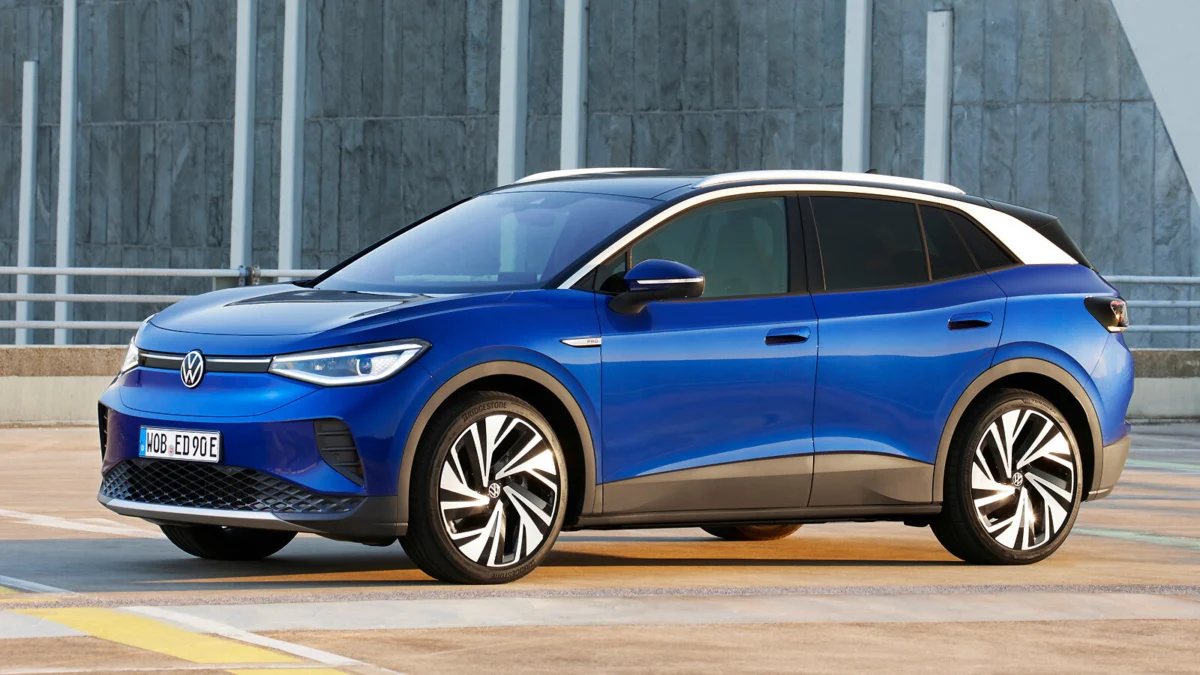
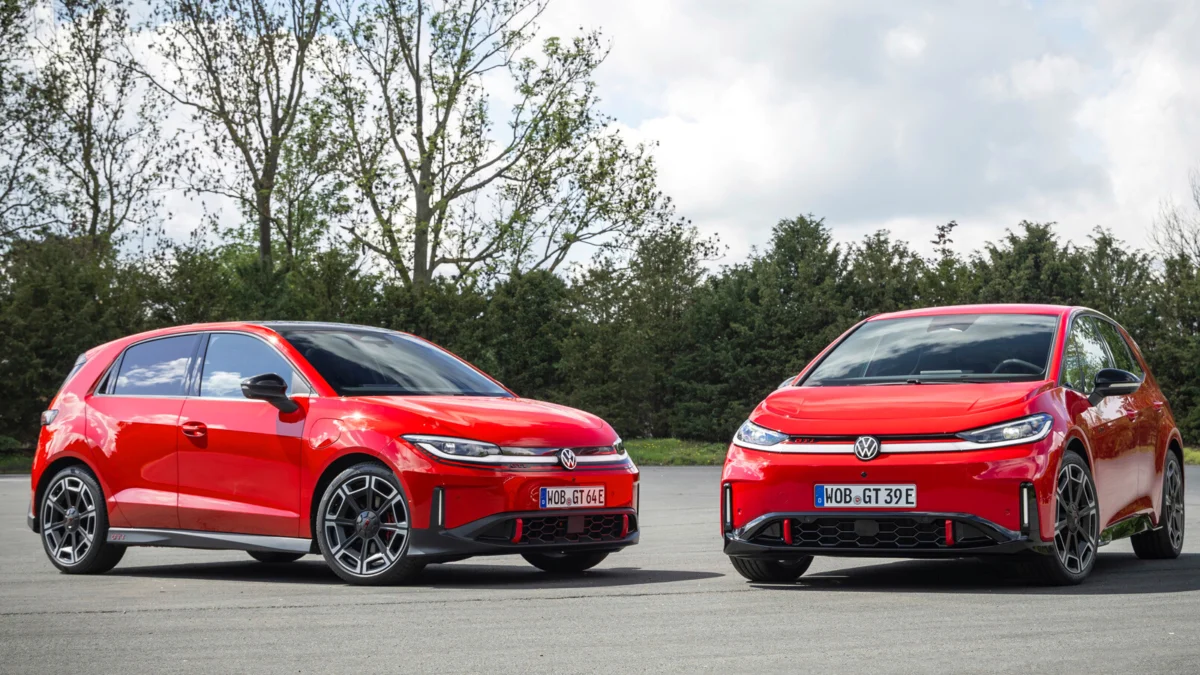
The study provides an in-depth analysis of the Volkswagen Group, which currently faces significant structural challenges. In the "strong" scenario, Volkswagen could see an additional 590,000 electric vehicles sold to European corporate clients by 2030.
For a company that has recently signaled a potential need to reduce its production capacity by 700,000 units due to cooling demand, the CCVR could act as a vital buffer. The study suggests that this increased volume could secure 56,300 direct full-time jobs. Crucially, it identifies specific German plants—Emden, Zwickau, Hannover, and Neckarsulm—as potential beneficiaries. These sites are currently under scrutiny due to the company’s "Future Plan 2030," which has left their long-term viability uncertain.
However, researchers caution that these are mathematical projections. Whether Volkswagen actually allocates production to these specific plants depends on a myriad of factors, including global demand, labor costs, and the availability of battery supply chains, such as those provided by the company’s subsidiary, PowerCo.
Implications: The Geopolitics of Industry
The CCVR is part of a broader European industrial strategy, often referred to as the "Green Industrial Deal." It is closely linked to the proposed Industrial Accelerator Act (IAA), which aims to formalize how "European-made" is defined for the purposes of public procurement and subsidies.
The political climate for these regulations is complex. Recent reports indicate a strategic alignment between German Chancellor Friedrich Merz and French President Emmanuel Macron. The reported "quid pro quo" involves Germany supporting stricter "Made in EU" requirements and more robust industrial protectionism in exchange for France’s support in potentially relaxing the 2035 "ICE ban." This suggests that the future of the European auto industry will not just be decided by environmental policy, but by high-stakes negotiations over the continent’s economic sovereignty.
The Challenge of Definition
The most significant hurdle remains the legal definition of "Made in the EU." The European Commission has yet to define the exact thresholds for local content—how much of a battery, software stack, or motor must originate within Europe or its EFTA/UK partners to qualify for incentives?
If the definition is too narrow, it could lead to supply chain bottlenecks; if too broad, it might fail to stimulate the domestic high-tech manufacturing sector that Europe is so desperate to nurture.
Conclusion: A Double-Edged Sword
The prospect of 134,000 new jobs in Germany is a powerful narrative for policymakers, yet it comes with significant caveats. The transition to electric mobility is inherently labor-efficient—electric powertrains require fewer assembly hours than complex combustion engines. Consequently, the industrial sector faces a "valley of death": the period between the decline of traditional manufacturing and the full-scale ramp-up of the EV ecosystem.
The success of the CCVR will depend on whether these policies can bridge that gap. If the European Union successfully mandates a shift in corporate fleets while simultaneously enforcing a domestic-first manufacturing policy, it may indeed spark a renaissance. However, if the transition is managed poorly, or if the "Made in EU" rules are circumvented, the continent risks seeing a permanent erosion of its industrial base. The next five years will be the definitive test of whether European policy can turn climate ambition into lasting industrial prosperity.