Bunia, Democratic Republic of Congo – A silent and relentless enemy, the Ebola virus, has tightened its grip on the Democratic Republic of Congo, now devastating the already vulnerable internally displaced persons (IDP) camps nestled within the war-torn eastern regions. In these overcrowded and resource-starved settlements, where millions seek refuge from a brutal conflict, the epidemic finds fertile ground, threatening to unleash a humanitarian catastrophe of unimaginable scale. The fight against Ebola here is not just a medical challenge, but a desperate struggle against pervasive insecurity, profound distrust, and a catastrophic lack of basic necessities.
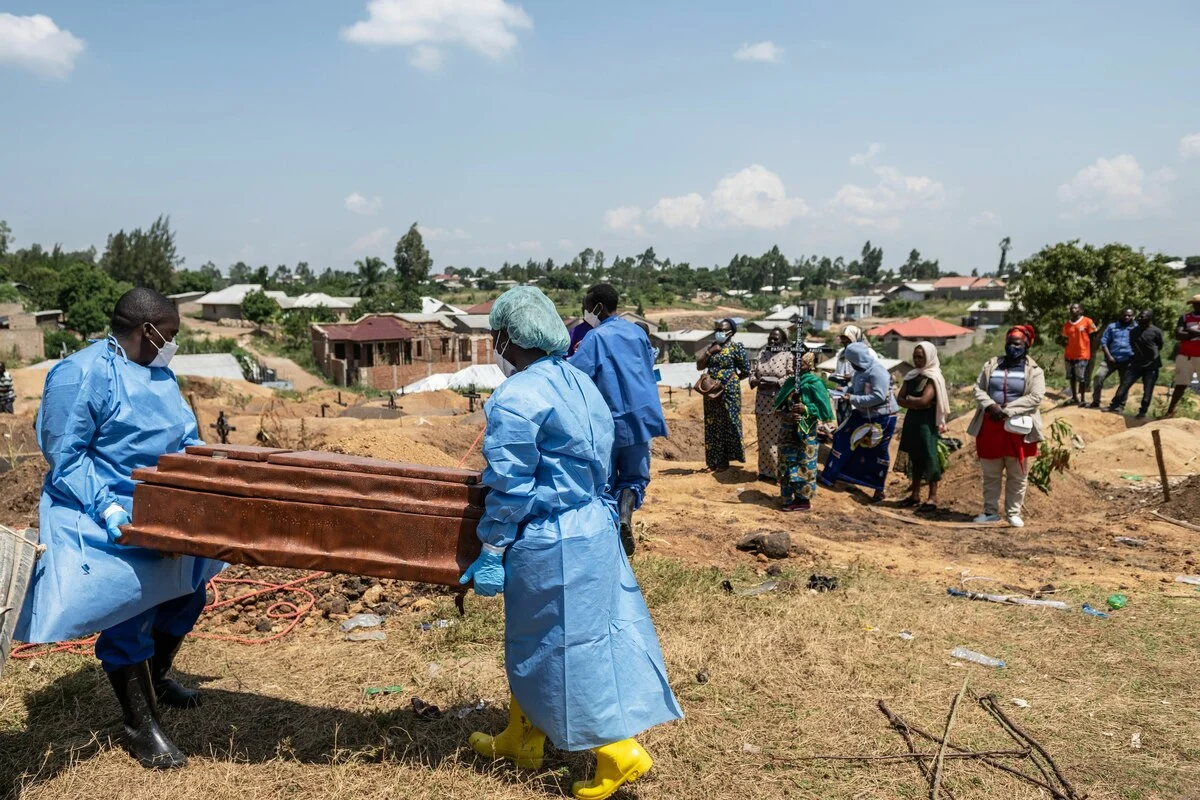
Beyond the stark white tents bearing the logo of the UN Refugee Agency (UNHCR), able-bodied young men toil daily, digging new graves. This grim task has become a near-constant reality. Clad in full-body protective suits, health officials from the Congolese Ministry of Health carefully carry coffins to these freshly dug pits. In recent weeks, a vast cemetery has emerged beside the Kigonze IDP camp, on the outskirts of Bunia, the provincial capital of Ituri in eastern Congo. Approximately 30 individuals, many of them children, have reportedly succumbed to suspected Ebola infections here, marking a stark escalation of the crisis.
Over 15,000 displaced Congolese are crammed into this self-erected tent city, living in extreme proximity. Some have endured this precarious existence for years, driven from their ancestral villages by marauding militias. They sought safety near the provincial capital, a location ostensibly secured by government soldiers and UN peacekeepers. Yet, Kigonze camp, like many others, lies directly within the Ebola zone, and evidence suggests the virus is now spreading with alarming rapidity within its confines.
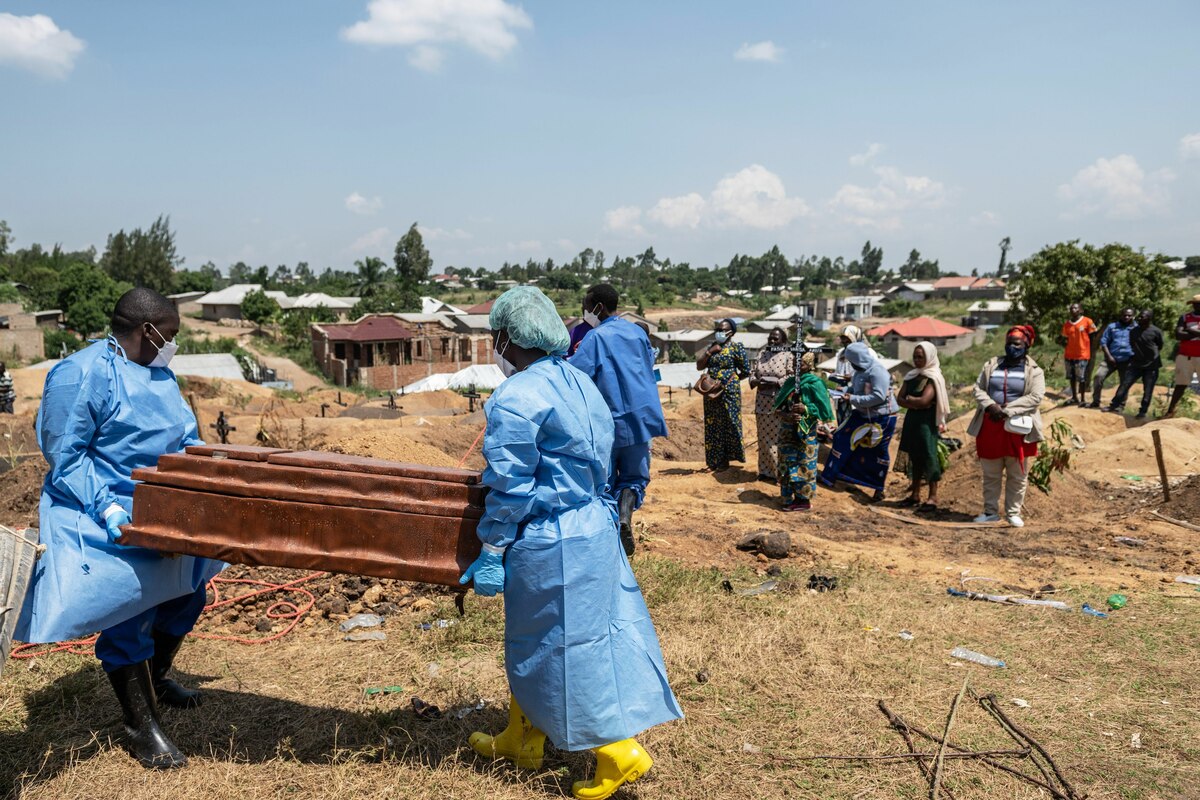
The Shadow of Ebola in Displaced Communities
The plight of the displaced in Kigonze camp underscores the multifaceted challenges confronting the Ebola response. Desire Grodya Bapi, the camp spokesperson, shared with Reuters, "Before, people didn’t just die like this." He reported that ten people died in the previous week alone. Crucially, whether these deaths were due to Ebola remains largely unknown, as families have often refused post-mortem tests. Justin Zanamuzi of the Catholic aid organization Caritas in Kigonze explained the deep-seated resistance: "Our team tried to convince the population to let doctors examine the bodies. They categorically refused." This refusal, rooted in a complex interplay of cultural beliefs, misinformation, and a profound mistrust of external authorities, significantly hinders accurate data collection and effective contact tracing, allowing the virus to propagate unchecked.
Adding to the despair is the dire lack of fundamental hygiene infrastructure. "Another problem is that there is hardly any running water, soap, or disinfectants in the displacement camps," Bapi lamented. The existing latrines quickly become overwhelmed, forcing residents to manually empty them with their bare hands – a practice that presents an extreme risk of disease transmission, not just for Ebola but for a host of other waterborne illnesses. The conditions are a perfect storm for an epidemic: dense populations, poor sanitation, limited access to clean water, and an already weakened populace.
A Broader Crisis: National Figures and Regional Threats
The national picture painted by the Congolese Ministry of Health is equally grim. Over the weekend, the ministry confirmed that the nationwide number of positively tested Ebola patients had surged past 1,000. Of these, 254 have reportedly recovered, but a staggering 200 have succumbed to the disease. The UNHCR has issued a grave warning: the deadly virus could rapidly spread throughout the IDP camps. Already, at least one other camp has reported confirmed cases, signaling the perilous expansion of the outbreak beyond Kigonze.

The scale of the displacement crisis in eastern Congo is immense, exacerbating the public health emergency. According to the UNHCR, more than two million internally displaced persons reside in high-risk areas across the eastern provinces. This region is a crucible of chronic instability, where daily clashes persist between government forces, M23 rebels, and various other armed militias, including the notorious Allied Democratic Forces (ADF). The ceaseless conflict not only fuels displacement but also severely impedes humanitarian access, making it incredibly difficult for aid organizations to reach affected populations and implement crucial health interventions. The constant movement of people fleeing violence inadvertently becomes a vector for disease transmission, carrying the virus to new, unprepared communities.
Challenges in Containment and Treatment
The challenges extend beyond initial detection and prevention. Congolese health authorities and aid organizations have reported a disturbing trend: Ebola patients are repeatedly escaping treatment centers. This alarming phenomenon is not due to a lack of understanding of the disease’s severity, but a desperate response to the abysmal conditions within the clinics themselves. Patients are fleeing because the centers often lack sufficient food, and even basic necessities like water and soap are in short supply. Imagine being isolated, gravely ill, and then denied the most fundamental provisions for survival and dignity – it’s a reality that drives many to seek perceived comfort or care elsewhere, inadvertently spreading the contagion.
This breakdown in trust and provision also has wider implications for general healthcare. In affected areas, many Congolese are now terrified to visit health facilities when they fall ill. The fear of being diagnosed with Ebola, or being subjected to the harsh conditions of a treatment center, is so profound that people are choosing to suffer and die at home from other preventable or treatable diseases, such as malaria. This fear-induced avoidance cripples the entire health system, leading to an increase in mortality from other prevalent ailments and further obscuring the true extent of the Ebola crisis.

Official Responses and Humanitarian Efforts
In response to the escalating crisis, Congo’s Minister of Health visited the affected region in recent days. Recognizing the critical need for community engagement and education, the ministry, in collaboration with the UNHCR and other aid organizations, has initiated a training program for 100 community representatives. These trained individuals are tasked with disseminating vital information about the outbreak, dispelling myths, and building trust within the population – a crucial step in encouraging adherence to health protocols and early presentation for treatment.
Furthermore, a significant policy shift was announced by Congo’s Health Minister Roger Kamba over the weekend. He declared, "Our government has decided to offer free healthcare in the health facilities listed by the health zones of Ituri province for the entire duration of the Ebola epidemic." While a commendable step aimed at removing financial barriers to care, the efficacy of this policy will heavily depend on the actual availability of resources, trained personnel, and secure facilities capable of delivering quality care.
Aid organizations like Caritas and the Red Cross are on the front lines, their staff often risking their lives to provide assistance, conduct safe burials, and educate communities. The image of Red Cross workers preparing to bury an orphaned girl near Bunia, as captured by Moses Sawasawa/AP/dpa, serves as a poignant reminder of the daily tragedies unfolding. Their work is essential but stretched thin by the sheer scale of the crisis and the operational difficulties imposed by conflict and lack of resources.

The Funding Gap: A Critical Setback
Despite these efforts, the UNHCR is sounding the alarm about the potential for a wider, regional spread of Ebola, further fueled by the constant displacement due to the ongoing conflict. To address the most basic hygiene needs across all affected camps – from providing clean water and soap to disinfectants for the limited number of toilets – an additional $14 million is urgently required. This sum is vital to establish rudimentary safeguards against the virus.
However, the international funding landscape presents a bleak picture. Up until 2024, the US Agency for International Development (USAID) had allocated approximately $60 million for hygiene programs in Congo’s IDP camps. Tragically, last year, the Trump administration shuttered USAID’s operations, leading to a substantial cut in vital aid. The UN reports that funding for toilets and handwashing stations in Congo has more than halved between 2024 and 2025, now standing at a mere $38 million. Furthermore, this year’s broader appeal for $80 million to address the comprehensive humanitarian needs in the DRC is currently only 21 percent funded, leaving an enormous shortfall. These funding cuts are not just numbers on a ledger; they translate directly into lives lost, unchecked disease spread, and prolonged suffering for millions already living on the brink.
Implications and Future Outlook
The current Ebola outbreak in the Democratic Republic of Congo, particularly its entrenchment within IDP camps, carries severe implications for regional stability and global public health. The confluence of armed conflict, mass displacement, a weakened healthcare infrastructure, community distrust, and severe funding shortfalls creates an unprecedented challenge to containment. The risk of the virus spreading beyond the borders of eastern Congo into neighboring countries is a tangible threat, demanding immediate and robust international attention.

For the people of the DRC, this crisis is another layer of suffering atop decades of instability. The inability to control the epidemic in these vulnerable settings prolongs the humanitarian emergency, exacerbates food insecurity, and disrupts what little social fabric remains. It undermines trust in government and international aid, potentially creating long-term obstacles to development and peace.
The international community faces a critical juncture. Without a significant and sustained increase in funding, coupled with innovative approaches to reach populations in conflict zones, the Ebola epidemic in eastern DR Congo risks becoming an entrenched crisis with devastating consequences. The fight against Ebola in these camps is not just a battle against a virus; it is a profound test of humanity’s commitment to protect its most vulnerable populations in the face of complex and interconnected crises. The lives of millions depend on a coordinated, well-resourced, and empathetic response, urgently delivered.