By Editorial Staff
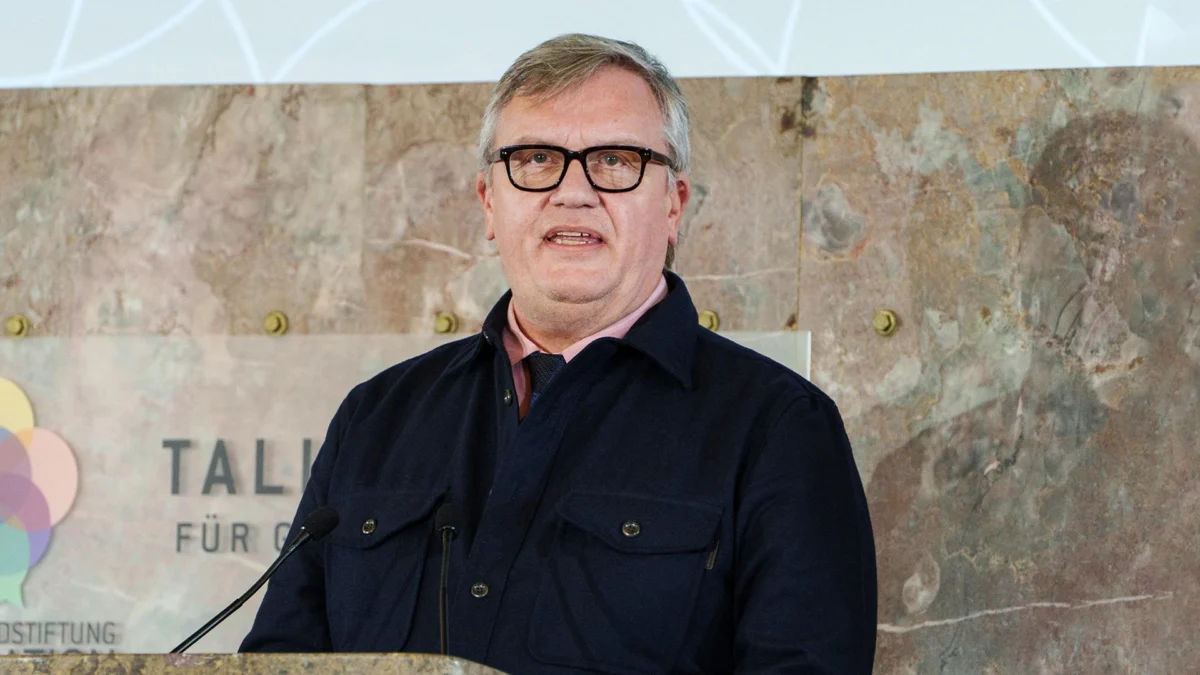
In a powerful demonstration of civic engagement and democratic values, the Deutschlandstiftung Integration gathered luminaries and local leaders in the historic Frankfurt Paulskirche this Tuesday. The event, which served as the backdrop for the presentation of the prestigious "Talisman" award, featured a keynote address by acclaimed actor, comedian, and author Hape Kerkeling. His message was clear, urgent, and resonant: Democracy is not a static condition sustained by institutions alone, but a living practice that begins at our own front doors, in our neighborhoods, and through the commitment of local volunteers.
The Core Objective: Celebrating Local Democracy
The Talisman award, presented annually by the Deutschlandstiftung Integration, honors local politicians who have demonstrated extraordinary commitment to social cohesion. In an era where political discourse is increasingly fractured and local representatives face unprecedented levels of abuse, threats, and harassment, the award serves as a vital reminder of the necessity of grassroots governance.
This year’s recipients included leaders from Cologne, Rhaunen, Göttingen, and Ostritz, alongside former Cologne Mayor Henriette Reker. Each was recognized for their efforts in fostering inclusive, forward-thinking, and resilient communities. The ceremony, attended by dignitaries including former Federal President Christian Wulff—who delivered the laudatory speech—underscored the foundation’s mission: to support the "invisible glue" of the republic through individual responsibility.

Chronology of a Defining Speech
The evening reached its emotional peak during Hape Kerkeling’s keynote address. Kerkeling, long known for his humor, pivoted to a somber, reflective tone appropriate for the historic venue—the site of the first freely elected German parliament in 1848.
- 18:00 CET: The ceremony commenced in the Paulskirche, emphasizing the historical weight of the venue as the cradle of German democracy.
- 18:45 CET: Former Federal President Christian Wulff praised the winners, highlighting the personal risks taken by local politicians in the current climate of political polarization.
- 19:15 CET: Hape Kerkeling took the stage. His speech spanned the history of German democracy, the dangers of political complacency, and the vital importance of optimism as a proactive force.
- 20:00 CET: The formal presentation of the Talisman 2026 awards concluded, followed by a reception centered on discussions regarding future integration policies and civic education.
The Philosophical Core: Optimism as a Duty
Kerkeling’s address was not merely a congratulatory speech; it was a manifesto for modern citizenship. He challenged the audience to rethink the nature of optimism, framing it not as a naive temperament, but as a deliberate, arduous decision to take responsibility for the future.
The Lessons of History
Kerkeling drew a sharp, uncomfortable line between the 1930s and today. He recounted the fatal complacency of those who dismissed the rise of National Socialism with the phrase, "It won’t be that bad." He warned that history is repeating itself in the form of "hater" culture, where extremism is no longer whispered in shadows but shouted from the rooftops of social media.
"Whoever hates so deeply ultimately destroys themselves," Kerkeling remarked, noting that the civilizational rupture of the mid-20th century taught Germany the high cost of division. He argued that the current rise of right-wing populism, particularly the rhetoric of the AfD, mirrors the tactics of past movements that sought to dismantle the democratic order by portraying the state as a "dictatorship of the elites."

The "Jackpot" of Democracy
Reflecting on Germany’s post-war trajectory, Kerkeling reminded the audience that living in one of the world’s 26 full democracies is akin to "hitting the jackpot." He emphasized that the German Basic Law (Grundgesetz), beginning with the inviolability of human dignity, was the ultimate response to the horrors of Auschwitz. This document, he claimed, is the primary source of the optimism required to navigate today’s "polycrisis"—a convergence of climate change, technological upheaval, and social fragmentation.
Supporting Data: Integration and Economic Reality
Kerkeling’s argument for a more open society was grounded in economic and historical reality. He utilized the Ruhr region—his home—as a primary case study for successful integration. He pointed to the "Ruhr Poles" of the late 19th century, whose descendants have become an inextricable part of the region’s identity.
- Economic Necessity: Kerkeling highlighted that Germany’s aging population and labor shortages in essential sectors—such as nursing, construction, and hospitality—make immigration not just a humanitarian issue, but an economic imperative.
- Social Cohesion: He acknowledged that integration is a "herculean task" and not a "one-way street." He emphasized that while newcomers must learn the language and contribute, the host society must also open doors and provide a framework for mutual respect.
- Democratic Participation: The speech cited the importance of the "invisible kitt" (invisible glue) of the republic: the millions of volunteers in sports clubs, fire departments, and refugee aid organizations. These individuals, according to Kerkeling, are the true architects of the nation’s future.
Official Responses and Political Implications
The event highlighted a growing consensus among moderate political forces in Germany: the need to protect local officials from intimidation. The Deutschlandstiftung Integration’s decision to elevate this topic is a direct response to the "shrinking space" for civil discourse.
Former President Christian Wulff’s participation reinforced the message that defending democracy is a cross-party responsibility. By honoring local mayors, the foundation signaled that the "front line" of democracy is not in Berlin, but in the town halls where policies are implemented and citizens are met face-to-face.

The speech sparked immediate debate in political circles. Critics of the AfD welcomed Kerkeling’s explicit condemnation of the party’s rhetoric as "gutter jargon." Conversely, the speech served as a rallying cry for those feeling discouraged by the current political climate, urging them to move beyond "protest" as a destructive act and instead engage in "protest" as a constructive, participatory act.
Implications for the Future
The implications of the evening are twofold. First, there is a renewed push for "civic courage" (Zivilcourage). Kerkeling’s plea for citizens to "roll up their sleeves" is an invitation to transition from passive consumers of news to active participants in community life.
Second, the event highlighted the fragility of the current democratic consensus. With the rise of artificial intelligence, climate anxiety, and the erosion of common facts, Kerkeling suggested that the "three pillars" of Western civilization—Athenian democracy, the Judeo-Christian tradition of individual dignity, and the Enlightenment—are under siege by a new wave of anti-intellectualism.
Conclusion: A Call to Action
The evening at the Paulskirche concluded with a standing ovation, but the true test of the message lies in the months ahead. Kerkeling’s final challenge to the audience was simple yet profound: "Remain courageous."

As Germany navigates an increasingly complex global landscape, the message delivered in the heart of Frankfurt is a vital one. It suggests that while the challenges of the 21st century are unprecedented, the tools to meet them—humanity, respect, and a commitment to the democratic project—remain as potent as they were in 1949. The "Talisman" award is more than just a trophy; it is a symbol of the responsibility every citizen holds to ensure that the light of democracy does not flicker out in the face of hatred and cynicism.
The event confirmed that the Deutschlandstiftung Integration will continue its work in supporting young talent with immigrant backgrounds, ensuring that the next generation of leaders understands that the strength of a country is measured not by its ancestry or past wars, but by its capacity to build a future where all can thrive.