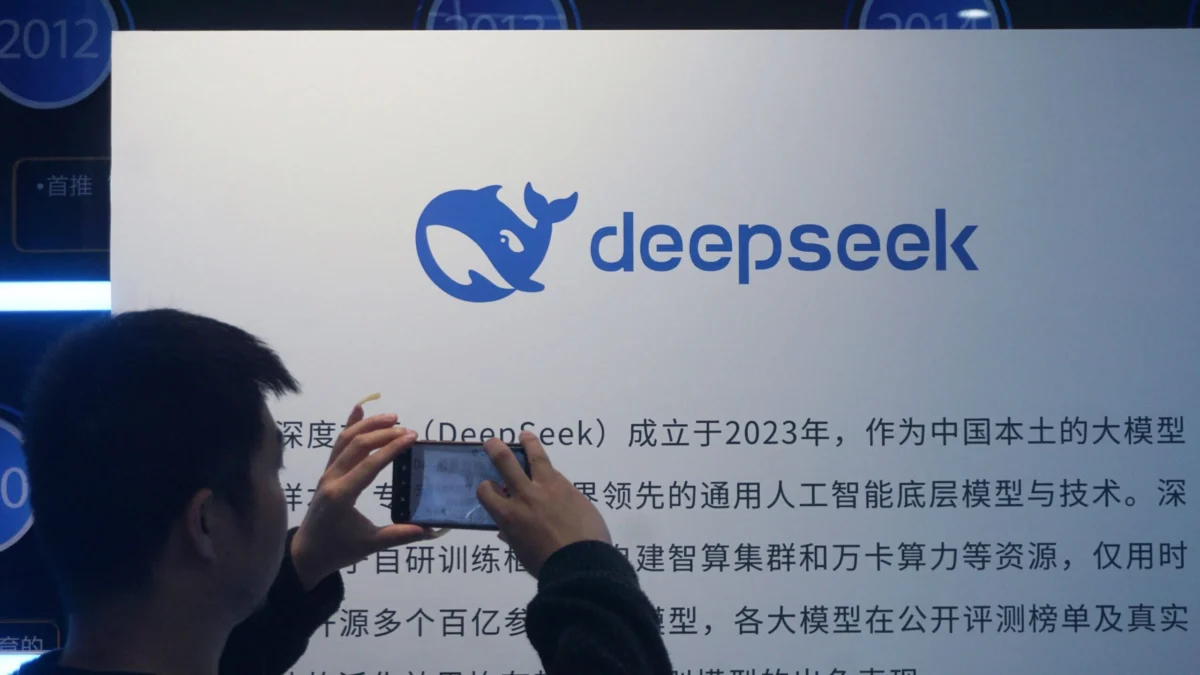
HONG KONG — In a move that signals a seismic shift in the global artificial intelligence landscape, the Chinese AI startup DeepSeek is nearing the conclusion of a massive financing round, reportedly raising approximately 100 billion yuan (roughly $15 billion). This capital injection, secured from a mix of incumbent backers and high-profile new entrants, underscores the intensifying ambition of Chinese tech firms to challenge the hegemony of Silicon Valley in the generative AI era.
The Core Facts: A Record-Breaking Capital Infusion
According to four individuals familiar with the matter, the funding round has seen participation from over 15 distinct investors. The scale of the investment is striking: the company has successfully doubled its original target of 50 billion yuan, reflecting an unprecedented level of investor confidence. Before this fresh influx of capital, the firm was valued at 500 billion yuan.
The roster of investors reads like a "who’s who" of the Chinese industrial and digital economy. Among the most prominent existing supporters are the battery manufacturing giant CATL and the digital conglomerate Tencent, the latter being the operator of the ubiquitous WeChat super-app. These companies have doubled down on their commitments, joined now by a formidable cohort of new strategic partners, including the major home appliance manufacturer Midea, the food delivery behemoth Meituan, and the automotive innovator Geely.
The deal is expected to be finalized within the coming days, though sources caution that final terms remain subject to minor adjustments.
A Chronology of Rapid Ascendance
To understand the significance of this funding round, one must look at the recent trajectory of DeepSeek. The startup has emerged from relative obscurity to become a central pillar of China’s national AI strategy.
- Early Development Phase: Initially focused on developing specialized models and infrastructure, DeepSeek spent years in the "research-first" phase, prioritizing technical architecture over aggressive marketing.
- The Scaling Pivot: Throughout the last 18 months, as the global frenzy surrounding Large Language Models (LLMs) reached a fever pitch, DeepSeek pivoted toward rapid scaling.
- The Funding Surge: Faced with the high costs of compute—specifically the acquisition of high-end GPUs like Nvidia’s H100s, which are restricted under US export controls—DeepSeek initiated a fundraising campaign earlier this year.
- Doubling Expectations: While the original goal was a substantial 50 billion yuan, the overwhelming demand from domestic corporate giants pushed the total to the 100 billion yuan mark, indicating that major Chinese players view DeepSeek as a sovereign-level strategic asset.
Supporting Data: The High Cost of the AI Arms Race
The sheer size of this investment highlights the capital-intensive nature of modern AI development. Developing a "frontier" model is no longer a matter of software engineering alone; it is a battle of logistics, power consumption, and hardware acquisition.
| Category | Estimated Impact of $15B Funding |
|---|---|
| Compute Infrastructure | Massive procurement of AI chips and cluster build-outs. |
| R&D Talent | Aggressive recruitment of global machine learning researchers. |
| Data Acquisition | Securing proprietary datasets to train multi-modal models. |
| Operational Scaling | Expanding cloud service capacity to support millions of API calls. |
The move by companies like Geely and Midea is particularly revealing. These firms are not merely "investors" in the traditional venture capital sense; they are seeking to integrate AI directly into their supply chains. For a car manufacturer like Geely, the investment is a hedge against future dependency on foreign software, allowing them to embed sophisticated, sovereign AI into autonomous driving systems and in-car infotainment.
Official Responses and Strategic Silence
As is typical with high-stakes private funding rounds involving sensitive technology, the parties involved have maintained a strict degree of confidentiality. Representatives for DeepSeek have declined to provide a formal comment on the specifics of the valuation or the identity of all individual backers.
Tencent and CATL have similarly remained tight-lipped, adhering to the standard corporate policy of not commenting on "market speculation." However, market analysts suggest that the participation of such diverse sectors—ranging from green energy to food delivery—points to a "whole-of-nation" approach to technological development. By diversifying their investor base, DeepSeek is effectively building a coalition of the most powerful corporate entities in China, ensuring that the company’s AI models will have immediate, real-world applications across various industrial sectors.

Strategic Implications: The Global AI Divide
The implications of this funding round extend far beyond the balance sheets of the involved companies. This is a critical development in the ongoing geopolitical competition between China and the United States for technological supremacy.
1. Navigating Export Controls
The most immediate challenge facing DeepSeek—and indeed all Chinese AI firms—is the restrictive export policy imposed by the United States. By raising $15 billion, DeepSeek has secured the "war chest" necessary to navigate this environment. This capital allows them to invest in domestic chip development, optimize software for less powerful hardware, and potentially explore alternative supply chains for high-end computing components.
2. The "Sovereign AI" Paradigm
China has long expressed the desire for "self-reliance" in critical technologies. By fostering a champion like DeepSeek, the country is reducing its reliance on American giants like OpenAI, Google, and Anthropic. If Chinese companies can utilize a homegrown, highly capable LLM that is culturally and linguistically attuned to the Chinese market, the competitive advantage for domestic firms could be massive.
3. The Future of Productivity
The integration of DeepSeek’s technology into companies like Meituan (logistics and delivery optimization) and Midea (smart home automation) could provide a tangible boost to productivity. While much of the Western conversation around AI focuses on creative tools or chatbots, the industrial application of AI in China—often described as "AI for the real economy"—could yield faster GDP-related results.
4. Market Confidence
The fact that this round is significantly oversubscribed indicates that despite economic headwinds in the broader Chinese market, there is an insatiable appetite for AI-driven growth. Investors are betting that the "AI winter" is a myth and that the companies which control the foundational models of the next decade will be the most valuable entities on the planet.
Conclusion: A New Era of Competition
DeepSeek’s record-breaking funding round is a watershed moment. It signals that the era of "garage startups" in the AI space is being superseded by a model of massive, state-aligned corporate industrialism. With $15 billion in capital, DeepSeek is now equipped to sustain the long-term research and development cycles required to stay at the cutting edge of innovation.
As the United States and China continue to circle one another in a delicate dance of trade restrictions and technological nationalism, the success of companies like DeepSeek will be the primary barometer of China’s progress. Whether this capital translates into a technological breakthrough that closes the gap with Silicon Valley remains to be seen, but one thing is certain: the global AI race has just become significantly more expensive, and far more intense.
For the global technology sector, the message is clear: the race for the future of intelligence is not a sprint, but a marathon of capital, compute, and strategic industrial integration. And with this latest move, DeepSeek has firmly established itself as a frontrunner in that race.