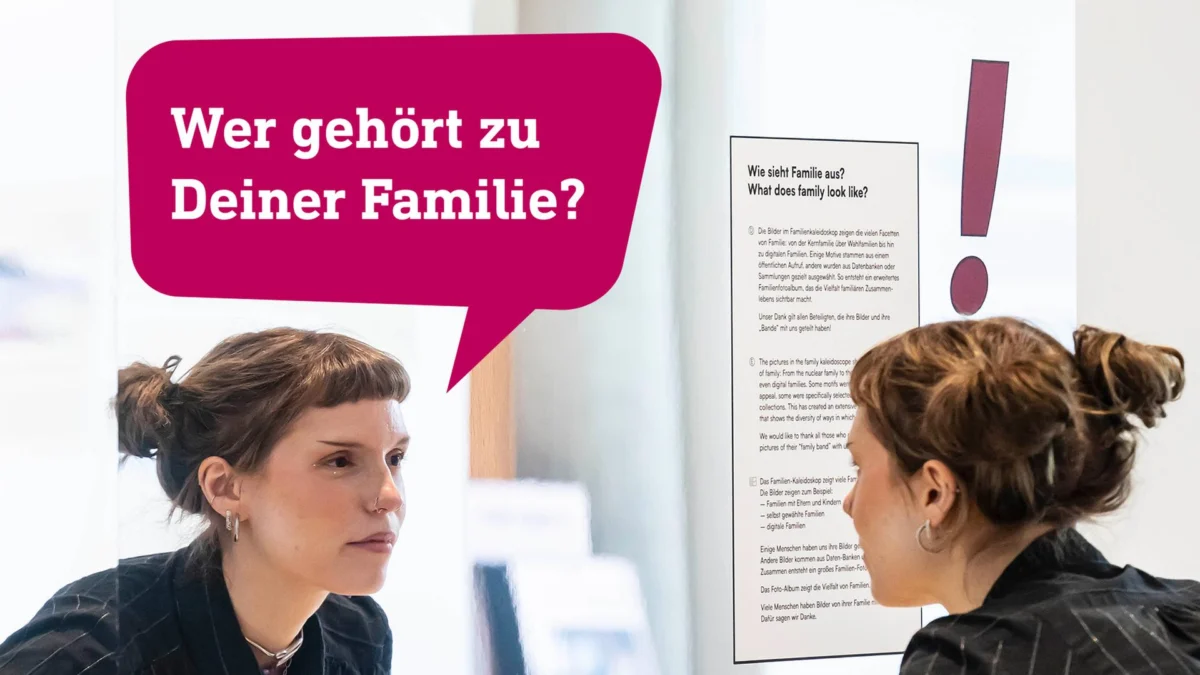
In an era where the traditional nuclear family is no longer the sole blueprint for human connection, the Museum for Communication in Frankfurt is inviting the public to participate in a bold, interactive exploration of what binds us together. The new exhibition, titled "Familienbande. How to Family," challenges visitors to move beyond archaic definitions of domesticity and consider the fluid, often messy, and deeply personal ways we construct our own "families."
Running from October 22, 2027, through February 27, 2028, the exhibition acts as a social laboratory. By transforming the museum space into a metaphorical home—complete with a kitchen, living room, basement, and garden—the curators have created an immersive environment that is as much about psychological reflection as it is about cultural history.
Main Facts: A New Approach to Traditional Bonds
At the heart of the exhibition is a radical rethinking of kinship. Rather than focusing on bloodlines or legal contracts, Familienbande leans heavily into the sociological concept of "Doing Family." This theory posits that a family is not merely a static entity one is born into, but a dynamic practice performed through daily communication, shared rituals, and emotional labor.
The exhibition is designed to be highly accessible and interactive. One of its most poignant features addresses the universal "pain points" of family gatherings: those unsolicited, often stinging questions like "When are you getting married?" or "Why haven’t you had children yet?" Instead of merely documenting these frustrations, the museum provides a cathartic release. Visitors are invited to write these uncomfortable phrases onto specialized seed paper. Once written, these "foul" remarks can be discarded into a glass vessel or taken home to be planted in the earth. The result is a symbolic transformation: the toxicity of social pressure is literally recycled into blooming flowers.

Chronology: From Sexuality to the Sociology of Kinship
The development of this exhibition follows a deliberate trajectory in the museum’s programming. Curators have spent the last several years curating a series of social-focused exhibitions that examine the human condition through the lens of communication.
- The Foundational Phase: Three years ago, the team began brainstorming themes that would resonate with the modern public. Previous successful exhibitions at the museum have tackled themes of Love, Climate, and Conflict.
- The Precursor: Most recently, the museum hosted a highly acclaimed exhibition on the topic of human sexuality.
- The Logical Conclusion: According to curator Tine Nowak, exploring "Family" was the natural next step. "We had covered love, climate, and conflict; then we focused on sex. Family is the logical conclusion," Nowak explains.
- The Launch: On October 22, 2027, the doors opened to the public, marking the culmination of years of research into how families communicate, form, and evolve in the digital age.
Supporting Data: The Architecture of the Exhibition
The museum has utilized its physical space to mirror the domestic structure, creating a sense of familiarity that encourages visitors to open up about their own private experiences.
The Zones of Connection
- The Entryway (Identity): Here, visitors are asked to define what "family" means to them. It is a space for challenging the biological imperative.
- The Basement (History): Decorated with wooden partitions reminiscent of storage units, this area invites visitors to explore their own archives—the cardboard boxes and fragmented memories that define their lineage.
- The Kitchen and Living Room (Rituals): This is the hub of the exhibition, focusing on how families celebrate—or mourn—through events like Christmas, Ramadan, and Chanukka. It is also a space for intergenerational exchange, including activities for children.
- The Garden (Global Perspectives): The final, green-hued section looks outward, addressing families on a global scale, including the complex experiences of families with migration histories or those displaced by conflict.
Interactive Elements
The exhibition rejects the traditional "do not touch" approach of many museums. Instead, it offers:
- Collaborative Recipe Books: Visitors contribute their own family recipes to a growing communal archive.
- Digital Play: A "Nintendo Wii" station underscores the role of shared leisure in bonding.
- Influencer Studies: Screens display content from family-oriented influencers—ranging from parenting vloggers to "rainbow families"—to analyze how digital media reflects and shapes modern family life.
- Podcast Integration: Audio pieces, such as excerpts from the "Halbe Katoffl" podcast, provide intimate accounts of people with migration histories navigating life in Germany.
Official Responses and Philosophical Implications
Museum Director Annabelle Hornung emphasizes that the exhibition is fundamentally about the power of choice. "This doesn’t have to be the biological nuclear family," Hornung notes. "As a chosen family, you can view people who look after you as family, even if they aren’t your family of origin."

Hornung’s own perspective is refreshingly human; she admits that she experiences a profound sense of "family" not just in her private life, but in the collective fervor of watching an Eintracht Frankfurt football match. This inclusion of "chosen" groups as family highlights the exhibition’s core message: that community, support, and shared experience are the true markers of kinship.
The "Doing Family" Concept
The sociological underpinning of the exhibition—"Doing Family"—suggests that technology has radically altered our ability to maintain these bonds. In an age where families are often spread across continents, the exhibition explores how digital communication (video calls, messaging apps, and social media) allows people to "do family" across thousands of miles. The museum showcases how these tools are not just distractions, but vital lifelines that sustain the emotional architecture of modern households.
Implications for Society: Why This Exhibition Matters
The importance of Familienbande lies in its ability to validate a wide spectrum of lived experiences. By deconstructing the "ideal" family, the exhibition provides a mirror for the contemporary visitor.
Breaking the Stigma of the "Non-Traditional"
By including narratives of LGBTQ+ families, blended families, and families created through migration, the museum is actively working to dismantle the stigma that often surrounds those who do not fit the traditional mold. It frames these configurations not as "alternatives," but as equally valid, resilient, and necessary structures in a pluralistic society.

A Pedagogical Tool for Intergenerational Dialogue
The exhibition serves as a bridge between generations. For older visitors, it offers a space to reflect on the traditions they have inherited. For younger visitors, it provides the vocabulary to advocate for their own modern family structures. The ability to write a postcard to a grandmother at a desk and mail it directly from the museum is a tactile, meaningful way to encourage communication in an increasingly digital world.
The Call to Action
Ultimately, the museum invites the visitor to move from passive observer to active participant. Whether it is through the planting of seeds to grow flowers from hurtful words, or the contribution of a personal story to the communal archives, the exhibition demands that we reflect on our own roles within our families.
As we look toward the future, the lessons provided by Familienbande are clear: the structures of our families are not fixed, but are instead a living, breathing work of art that we create every day through our words, our presence, and our willingness to listen.
Exhibition Details:
- "Familienbande. How to Family"
- Venue: Museum for Communication, Frankfurt
- Dates: October 22, 2027 – February 27, 2028
- Access: Open daily, except Mondays. Visitors are encouraged to set aside ample time to engage with the many small, hidden, and interactive details throughout the exhibition.