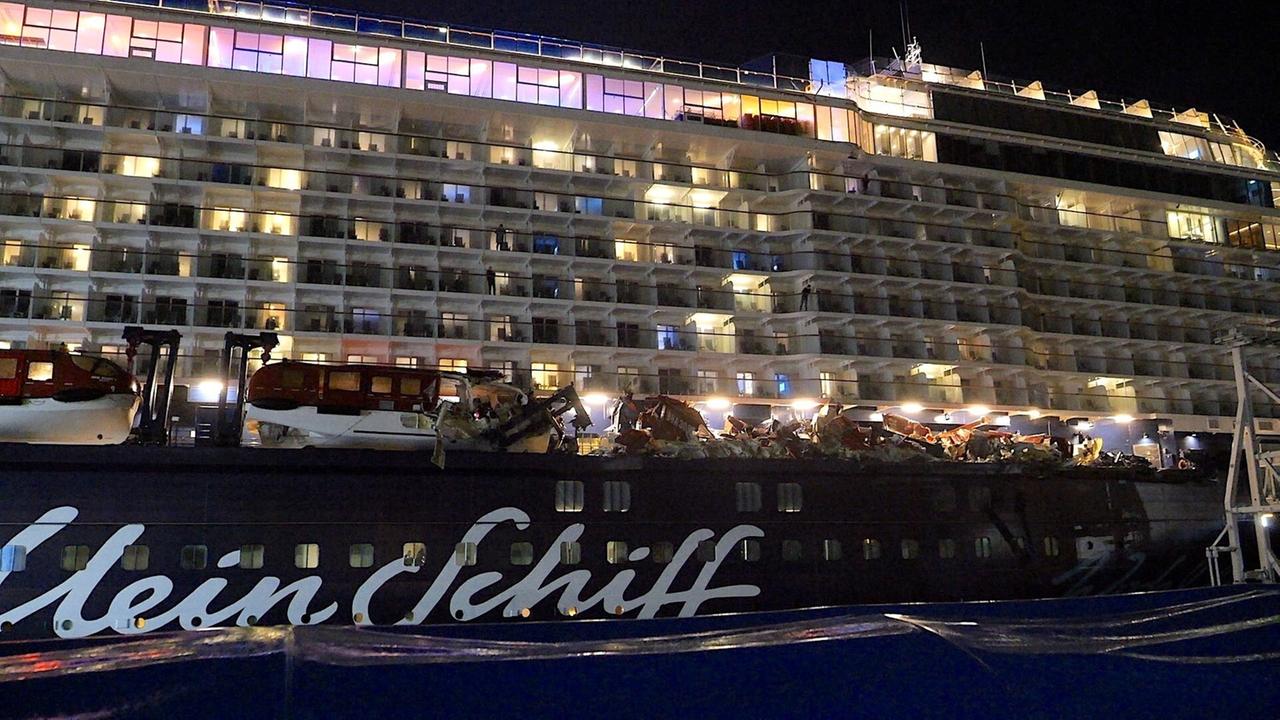
Bremerhaven, Germany – October 26, 2026 – The cruise ship "Mein Schiff 3" was involved in a dramatic collision with at least two other vessels shortly after departing Bremerhaven’s Columbuskaje on Sunday morning. The incident, which occurred amidst severe gale-force winds and rough seas, resulted in significant damage to the luxury liner, two assisting tugboats, and a stationary container ship. Miraculously, despite over 3,000 people being on board the "Mein Schiff 3" at the time, no injuries have been reported. The vessel has since returned to port for extensive damage assessment, casting a shadow over the planned voyage.
The Unforeseen Collision: A Detailed Account
The "Mein Schiff 3," a prominent vessel in the TUI Cruises fleet, embarked on what was meant to be a routine departure from Bremerhaven, a critical hub for cruise and cargo shipping in northern Germany. However, the weather conditions on Sunday were anything but routine. Strong winds and a substantial swell created challenging navigational circumstances for the massive ship, even with the assistance of powerful tugboats designed to guide such behemoths safely out of port.
Eyewitness accounts and a verified video circulating online paint a vivid picture of the unfolding disaster. The footage captures the "Mein Schiff 3" slowly maneuvering away from the Columbuskaje, its colossal hull being buffeted by visible waves. Alongside, the tugboats struggled to maintain optimal control against the formidable natural forces. As the cruise ship progressed, the gap between its starboard side and a large container vessel moored at the quay rapidly diminished. In a moment of alarming inevitability, the "Mein Schiff 3" veered off course, its port side scraping and then forcefully ramming into the stationary container ship.
The impact was clearly audible and visually jarring, causing the eyewitness video to momentarily shake. A voice, audibly distressed, can be heard exclaiming, "I think that’s it for the trip," reflecting the immediate understanding among those observing that the voyage was severely compromised. Debris, including parts of the "Mein Schiff 3"’s structure and components from its lifeboat davits, was seen falling into the water, signaling the severity of the damage. Initial reports confirmed that the "Mein Schiff 3" itself sustained damage, particularly to its lifeboats and their suspension mechanisms, which are critical safety equipment.
Chronology of Events
The collision unfolded rapidly, transforming a planned luxury cruise into an unexpected return to port and a complex investigation.
Pre-Departure and Challenging Conditions
The "Mein Schiff 3" was scheduled to depart from Bremerhaven’s Columbuskaje on Sunday. Forecasters had warned of significant wind speeds and considerable wave action in the region, factors that inherently complicate large vessel movements. Despite these warnings, and likely after careful consideration by the pilot and port authorities, the decision was made to proceed with the departure, presumably with enhanced tug assistance.
The Departure Attempt
As the cruise liner began its slow egress from the pier, it was flanked by two powerful tugboats, essential for maneuvering such a large vessel in confined waters and adverse conditions. These tugs were tasked with pushing and pulling the "Mein Schiff 3" to maintain its precise course, especially critical when navigating narrow channels or exiting a busy port basin. However, the combination of the ship’s immense inertia, the tugs’ limited influence against extreme weather, and the sheer force of the wind and swell proved to be an overwhelming challenge.
The Collision Sequence
During its outbound maneuver, the "Mein Schiff 3" drifted perilously close to a container ship that was securely docked at the Columbuskaje. The precise moment of collision saw the port side of the cruise ship make heavy contact with the starboard side of the container vessel. This initial impact was severe enough to cause visible structural damage to both ships. Following this primary collision, the two tugboats assisting the "Mein Schiff 3" also sustained damage, indicating they were either caught in the direct impact zone or struck by the shifting cruise ship as it lost control. This sequence suggests a cascade of events where the loss of control of the main vessel led to multiple points of contact.
Immediate Aftermath and Return to Port
Following the collision, the immediate priority was to stabilize the "Mein Schiff 3" and ensure the safety of all persons on board. Given the damage to the cruise ship and the assisting tugs, and the significant crack observed on the container ship, the decision was quickly made to abort the departure. The "Mein Schiff 3" was carefully guided back to the Columbuskaje, where it could be securely moored and undergo a thorough inspection. Passengers, initially excited for their voyage, were informed of the incident and the indefinite delay.
Damage Assessment and Passenger Situation
Upon its return, the "Mein Schiff 3" was immediately subjected to a detailed damage assessment by marine engineers and classification society representatives. The primary concerns included the integrity of the hull, the functionality of the lifeboats and their deployment systems, and any potential issues with propulsion or steering. Concurrently, the container ship and the tugboats were also inspected for their respective damages. Passengers were advised that they would remain on board while these assessments were conducted, with TUI Cruises promising further information as soon as it became available.
Supporting Data and Context
The incident highlights the inherent complexities and risks associated with operating large vessels, even in well-regulated environments like Bremerhaven.
The "Mein Schiff 3": A Modern Marvel
The "Mein Schiff 3" is a TUI Cruises vessel, delivered in 2014, known for its modern design, energy efficiency, and extensive amenities. With a gross tonnage of approximately 99,500 GT, a length of 293 meters, and a beam of 35.8 meters, it is a significant presence on the seas. Its capacity of 2,506 passengers (at double occupancy) and 1,000 crew members (original design) underscores the immense logistical challenge of managing such a vessel, especially during an emergency. At the time of the collision, there were 2,428 guests and 922 crew members on board, totaling 3,350 individuals whose safety was paramount. The sheer size and mass of such a vessel mean that even minor impacts can cause substantial damage, and controlling it in adverse conditions requires immense power and precision.
Bremerhaven: A Crucial Maritime Hub
Bremerhaven is one of Germany’s most important port cities, serving as a vital hub for container shipping, vehicle exports, and, increasingly, cruise tourism. The Columbuskaje, where the incident occurred, is specifically designed to accommodate large cruise ships and cargo vessels. The port’s infrastructure, including its sophisticated pilotage services and tugboat fleet, is generally considered state-of-the-art. However, even the most advanced systems and experienced personnel can be pushed to their limits by extreme weather events, which are becoming more frequent and intense in many parts of the world.
The Indispensable Role of Tugboats
Tugboats play a crucial, often unsung, role in port operations. These powerful, agile vessels are essential for assisting large ships – which have limited maneuverability at low speeds – in docking, undocking, and navigating confined waterways. Their ability to push, pull, and steer massive hulls is critical for safety and efficiency. The fact that two tugboats were damaged in this incident underscores the severity of the forces at play and the hazardous conditions under which they were operating. Their failure to fully control the "Mein Schiff 3" in the extreme weather highlights the limits of even advanced maritime assistance.
Navigational Challenges in Adverse Weather
Navigating large vessels in stormy weather presents a multitude of challenges. High winds can exert immense pressure on the ship’s superstructure, pushing it off course regardless of engine power or rudder input. Rough seas introduce pitching, rolling, and heaving motions, making precise maneuvering exceedingly difficult. Visibility can also be reduced. Marine pilots, who are experts in local port conditions, and ship captains must constantly assess these variables, often making finely balanced decisions about whether to proceed or delay movements. This incident serves as a stark reminder of the inherent risks when these complex factors align adversely.
Maritime Safety Protocols
The global shipping industry operates under stringent international and national safety regulations, including those set by the International Maritime Organization (IMO) and national maritime authorities. These protocols cover everything from ship design and construction to operational procedures, emergency response, and crew training. Investigations into incidents like this typically scrutinize adherence to these protocols, the effectiveness of risk assessments, and whether any systemic failures contributed to the accident. The damage to the "Mein Schiff 3"’s lifeboats is particularly concerning, as these are fundamental safety devices for passenger evacuation in an emergency.
Official Responses and Investigations
The collision triggered immediate responses from various stakeholders, including the cruise line, local police, and port authorities, each providing pieces of the unfolding narrative.
TUI Cruises’ Initial Statement
TUI Cruises, the operator of "Mein Schiff 3," quickly confirmed the incident. A spokesperson acknowledged the collision, stating that the ship had come into contact with a container vessel. Interestingly, their initial communication mentioned only one other ship, rather than the three that police later confirmed. The cruise line emphasized that the "Mein Schiff 3" had returned to the pier and that damage assessment was underway. Crucially, they confirmed that all 2,428 guests and 922 crew members were safe and uninjured, and were permitted to remain on board. TUI Cruises pledged to provide further updates as soon as definitive findings were available, prioritizing transparency and passenger well-being.
Police Clarification and Damage Details
Local police later issued a statement clarifying the scope of the incident. Contrary to initial reports of a single collision, law enforcement confirmed that a total of three vessels were involved: the "Mein Schiff 3," the stationary container ship, and two tugboats that were assisting the cruise liner. This clarification indicated a more complex and potentially more impactful series of events than first understood. The police statement also provided more specific details regarding the damage: while the "Mein Schiff 3" sustained visible damage, particularly to its lifeboats, the container ship suffered a significant ten-meter-long crack in its hull.
Port Authority’s Assessment
The Bremerhaven Port Authority, through the Bremer Häfenressort (Bremen Ports Department), offered crucial insights into the immediate aftermath. They confirmed that despite the severe crack on the container ship, there was no reported water ingress into any of the affected vessels. This is a critical detail, as water ingress could lead to sinking or capsizing, significantly escalating the emergency. The absence of water ingress likely contributed to the decision to keep passengers on board the "Mein Schiff 3," as it indicated that the hull integrity, while compromised externally, was not immediately threatening stability.
Ongoing Investigation
A comprehensive investigation has been launched by maritime authorities to determine the precise cause of the collision. This inquiry will involve examining various factors, including the prevailing weather conditions, the maneuvers executed by the "Mein Schiff 3" and its tugs, the experience and decisions of the pilot and captain, the functionality of navigational equipment, and the structural integrity of all involved vessels. Black box data (Voyage Data Recorder – VDR) from the "Mein Schiff 3" and potentially the tugs will be crucial in reconstructing the events leading up to the impact. The findings of this investigation will be vital for understanding what went wrong and for implementing any necessary measures to prevent similar incidents in the future.
Implications and Future Outlook
The collision of the "Mein Schiff 3" has far-reaching implications, impacting passengers, TUI Cruises, the port of Bremerhaven, and potentially broader maritime safety practices.
Impact on Passengers
For the 2,428 guests on board, the incident has undoubtedly turned their holiday plans upside down. What began as an exciting departure has become an indefinite wait in port. The immediate concern is the cancellation of their cruise, requiring TUI Cruises to arrange alternative travel back home, potentially offer future cruise credits, or full refunds. Beyond the logistical inconveniences, there may be psychological impacts from experiencing such a dramatic event, even without physical injury. Clear communication and empathetic support from the cruise line will be crucial in managing passenger dissatisfaction.
Financial Implications for TUI Cruises
The financial ramifications for TUI Cruises will be substantial. These include:
- Repair Costs: The "Mein Schiff 3" and its damaged lifeboats will require significant repairs, which could keep the vessel out of service for weeks or even months. The container ship and tugs will also incur repair costs, which may fall, at least partially, on TUI Cruises depending on liability.
- Lost Revenue: Every day the "Mein Schiff 3" is out of service translates to millions in lost revenue from cancelled cruises.
- Compensation: Passengers will be due compensation for their cancelled voyages, including potential reimbursement for travel expenses to and from Bremerhaven.
- Reputational Damage: While TUI Cruises acted swiftly to ensure passenger safety, any maritime incident can negatively impact a brand’s reputation, potentially affecting future bookings.
- Insurance Claims: Extensive insurance claims will be filed, involving multiple parties and potentially complex legal processes to determine liability.
Impact on Port Operations
While the Columbuskaje is designed for large vessels, an incident of this magnitude can cause temporary disruptions to port operations. The damaged container ship will likely occupy a berth for repairs, potentially affecting cargo schedules. The investigation itself may require access to parts of the port, leading to minor delays for other shipping movements. However, given Bremerhaven’s robust infrastructure, any long-term disruption is unlikely.
Potential Regulatory Review and Safety Recommendations
Maritime incidents, especially those involving large passenger vessels, often lead to a review of existing safety regulations and operational procedures. The investigation’s findings could prompt maritime authorities to issue new recommendations regarding departures in extreme weather, tugboat requirements, pilotage protocols, or even ship design elements related to lifeboat protection. This continuous improvement cycle is a cornerstone of maritime safety.
Broader Discussion on Maritime Safety
This incident serves as a pertinent case study in the ongoing discussion about maritime safety in an era of increasingly extreme weather events. As climate change leads to more volatile conditions, the challenges for ship operators and port authorities will only intensify. It raises questions about the thresholds for safe departure, the capabilities of modern navigation systems in mitigating human error, and the resilience of port infrastructure against unforeseen circumstances.
The "Mein Schiff 3" collision in Bremerhaven stands as a stark reminder of the powerful forces at play in maritime operations and the critical importance of vigilance, robust protocols, and rapid response in ensuring the safety of lives and property at sea. As investigations proceed, the maritime community will undoubtedly learn valuable lessons from this unforeseen event.