By Editorial Staff, Science & Technology Desk
Updated: June 22, 2026
For centuries, the sudden, violent shifting of the Earth’s crust has remained one of the most elusive enigmas in the geosciences. Earthquakes, by their very nature, are unpredictable, occurring deep beneath the surface within complex fault systems that are difficult to monitor and even harder to decipher. For generations, the scientific consensus held that accurate, reliable earthquake prediction was an impossibility—a "holy grail" that would forever remain out of reach.
However, a breakthrough study published in Nature Communications by a team of researchers at the GFZ German Research Centre for Geosciences in Potsdam, in collaboration with international partners, suggests the tide may be turning. By leveraging the power of Artificial Intelligence (AI), scientists have identified hidden, recurring patterns in the seismic activity that precede catastrophic tremors. This advancement marks a pivotal shift in seismology, moving away from reactive observation toward a future of proactive, data-driven forecasting.
The Shift to Unsupervised Machine Learning
The research team, led by Sadegh Karimpouli and Patricia Martínez-Garzón, adopted a sophisticated approach known as "unsupervised machine learning." In traditional seismological modeling, researchers often feed AI algorithms specific, human-defined parameters or historical examples of past earthquakes, hoping the machine will learn to spot those exact signatures again.
The GFZ team took a different path. By using unsupervised learning, the algorithm was not given rigid search instructions. Instead, it was tasked with analyzing vast global earthquake catalogs with a "blank slate" perspective. The AI autonomously grouped similar data structures, allowing it to discern relationships that human analysts had previously overlooked.
The core of this breakthrough is the focus on "seismicity families." Rather than analyzing isolated, individual tremors—which are often just background noise—the AI examines clusters of earthquakes that occur in close spatial proximity, within tight time windows, and share similar magnitudes. This focus on the "collective behavior" of fault lines provides a much more granular understanding of how pressure builds up deep within the crust.
Chronology of a Breakthrough: From Lab to Reality
The transition from theoretical modeling to real-world application was the greatest challenge for the team. The researchers first tested their hypotheses in controlled laboratory settings, using rock samples subjected to intense pressure to see if they could identify patterns of structural failure before a fracture occurred.
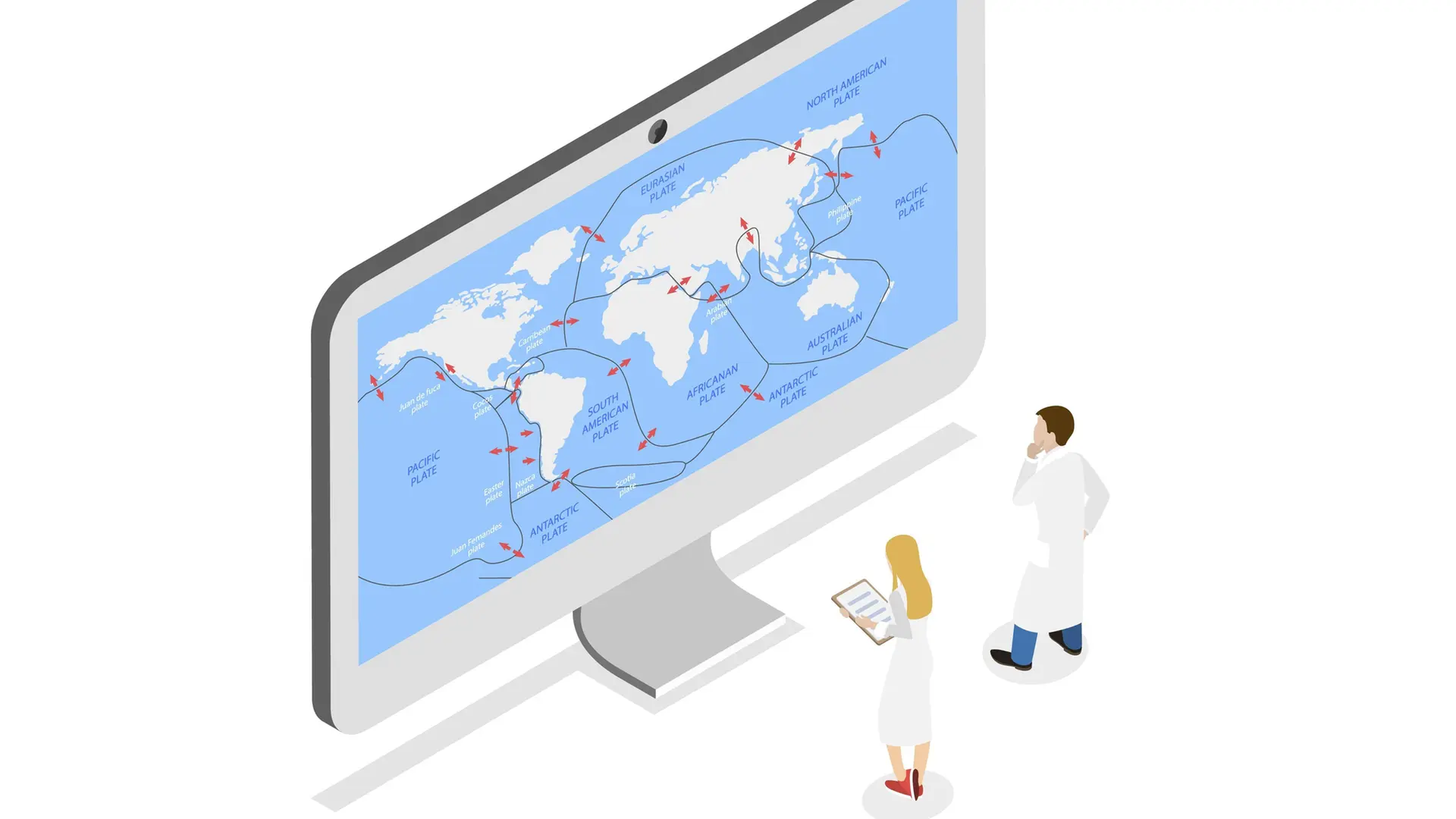
Following successful lab trials, the researchers applied their model retrospectively to three major historical earthquakes, each representing a distinct geological environment:
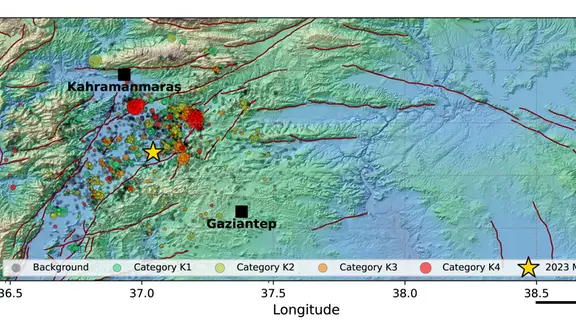
- The 2023 Kahramanmaraş Earthquake (Turkey, Magnitude 7.8): This event occurred at a transform plate boundary, where tectonic plates slide horizontally past one another. The AI successfully identified a "critical" category of seismic families in the weeks preceding the main shock.
- The 2009 L’Aquila Earthquake (Italy, Magnitude 6.1): Occurring in a region of crustal extension with highly fragmented, complex fault networks, the model again pinpointed a shift in the behavior of seismic families prior to the disaster.
- The 2014 Iquique Earthquake (Chile, Magnitude 8.1): Situated in a subduction zone—where one plate is forced beneath another—the AI detected clear, organized precursor patterns that emerged long before the massive rupture.
In each of these instances, the AI identified a specific transition phase where the seismic system moved from a state of "stable background activity" to a highly organized, critical state.
Identifying the "Critical State"
The study highlights three distinct indicators that characterize this critical phase. First, small earthquakes begin to cluster in time and space, effectively "lining up" their activity. Second, the interaction between these individual tremors intensifies significantly. Third, there is a measurable increase in the release of seismic strain, known as "Kostrov strain."
As Marco Bohnhoff, head of the GFZ section for "Geomechanics and Scientific Drilling," explains, "Earthquakes are not isolated events. They influence one another, and that interaction becomes more pronounced as we approach a major rupture. We are seeing a transition from random noise to a system that is, in a sense, ‘organizing’ itself before the main fracture occurs."
The Complexity Problem: Not Every Quake Follows the Rules
Despite the excitement surrounding these findings, the research team is careful to manage expectations. A crucial, perhaps sobering, realization of the study is that earthquake mechanisms do not always follow a universal "script."
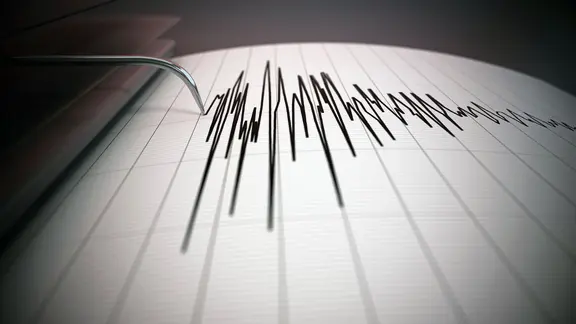
When the researchers applied their algorithm to the 2016 Amatrice earthquake in Italy and the 2024 Noto earthquake in Japan, the AI failed to produce a clear warning signal. In the case of Amatrice, the seismic record showed a prolonged period of "seismic silence," suggesting that the fault was building tension without releasing the small, precursor tremors necessary for the AI to track. In the Noto case, while there was significant "swarm" activity, it never evolved into the specific, critical category identified by the model.
This variability underscores the immense geological complexity of our planet. "Some faults fail silently," notes Patricia Martínez-Garzón. "This can be due to aseismic creep—where plates slide past each other without causing tremors—or because fluids deep within the crust alter the friction levels, preventing small warnings from occurring. This is a massive challenge for any prediction model."
Official Responses and Scientific Implications
The global scientific community has reacted with cautious optimism. While seismologists emphasize that we are still far from a "deterministic prediction" capability—the ability to say exactly when and where a quake will strike on a specific calendar day—the utility of this AI tool for emergency management is immense.
By integrating this model into regional seismic monitoring networks, authorities could potentially receive "probabilistic warnings." If the AI identifies that a fault system has shifted into a "critical state," local governments could increase vigilance, check infrastructure integrity, and prepare emergency services for a potential event.
The GFZ team is now working on integrating this methodology into real-time monitoring streams. The goal is to create a dynamic system that continuously calculates the deviation of current seismic activity from long-term norms. When the data drifts away from the "stable" baseline and enters the "critical" range, the system would trigger an alert for geoscientists to conduct a closer, human-led inspection of the region.
Looking Ahead: The Future of Earthquake Resilience
The implications of this research extend far beyond the laboratory. As urban centers grow in seismically active regions, the need for robust, technology-driven risk mitigation has never been higher.
The next phase of the project involves two primary tracks:
- Real-Time Deployment: Testing the algorithm against live seismic data in active regions, such as the San Andreas Fault and the North Anatolian Fault, to see if the model holds up under real-world, high-noise conditions.
- Addressing the "Silent" Failures: Researching why certain faults show clear precursors while others do not. By incorporating satellite data (InSAR) to measure surface deformation and borehole sensors to monitor fluid pressure, the researchers hope to build a multi-layered model that can account for the "silent" quakes that currently escape detection.
"We are not talking about a crystal ball," says Sadegh Karimpouli. "We are talking about a sophisticated diagnostic tool. Just as a doctor looks for biomarkers in a patient’s blood to detect an illness before symptoms become severe, we are looking for the ‘seismic biomarkers’ of a fault line. We have found that the Earth often speaks before it strikes; we are finally learning how to listen."
As this technology matures, it promises to transform our relationship with the ground beneath our feet. While we may never be able to stop earthquakes, the ability to anticipate their arrival—even with a margin of uncertainty—would represent one of the most significant leaps forward in the history of disaster risk reduction, potentially saving thousands of lives and allowing societies to adapt to the inherent instability of our living planet.