


Berlin, Germany – October 8, 2026 – In a move that has sent ripples through the international defense and political landscape, British Prime Minister Andy Burnham, during his inaugural state visit to Berlin, extended a surprising and significant offer to Germany: joint development of a next-generation fighter jet. This proposal, revealed during a high-stakes meeting with German Chancellor Friedrich Merz at the Chancellery, underscores a potent desire from the new British leadership to forge a deeper, more integrated strategic relationship with continental Europe, particularly with Germany, in the wake of Brexit.
The offer centers on Germany’s potential participation in the Global Combat Air Programme (GCAP), a multinational initiative spearheaded by the United Kingdom, Italy, and Japan. GCAP aims to develop a cutting-edge stealth fighter jet, a project that represents a crucial step in modernizing air power for the participating nations. This overture comes at a critical juncture for Germany, which recently saw its own ambitious Franco-German fighter jet project, the Future Combat Air System (FCAS), falter after protracted disputes. Burnham’s proposal presents a compelling alternative, positioning Germany at the forefront of a significant European defense undertaking.
A Bold Defense Overture: Beyond Bilateralism
Prime Minister Burnham’s willingness to extend an invitation to Germany for the GCAP program signifies a strategic shift. GCAP, a collaborative effort already involving three major global players, represents a significant technological and financial undertaking. Germany’s potential inclusion would not only bolster the program’s capabilities but also signal a renewed commitment to European defense integration, even outside the formal structures of the European Union.
"We are open to Germany participating in this project," Prime Minister Burnham stated at a joint press conference following his discussions with Chancellor Merz. "This is something we are eager to advance in the coming period." The implication is clear: Britain, despite its departure from the EU, views Germany not merely as a bilateral partner, but as a crucial player in shaping the future of European security architecture.
The Kensington Treaty: A Framework for Renewed Alliance
The defense cooperation offer is intrinsically linked to the recently ratified Kensington Treaty, a comprehensive friendship agreement signed in July 2025 during Chancellor Merz’s reciprocal visit to London. This landmark accord, meticulously negotiated, goes beyond mere defense, encompassing a wide array of collaborative initiatives spanning foreign policy, security, and economic engagement. The treaty’s ambitious scope aims to create a robust framework for continued, and in some areas, intensified cooperation between the two nations, even in the post-Brexit era.
Among the treaty’s provisions are measures designed to foster closer ties in areas such as combating hybrid threats, enhancing intelligence sharing, and streamlining diplomatic efforts on the global stage. Furthermore, the Kensington Treaty includes provisions for enhanced people-to-people connections, such as planned visa facilitation for school groups undertaking educational trips, a seemingly minor detail that speaks to a broader ambition to nurture future generations of cross-cultural understanding and collaboration.
Chancellor Merz hailed the treaty and the ensuing visit as "a historic day," emphasizing its potential to unlock "new opportunities for cooperation" between the United Kingdom and Germany. His remarks, particularly the poignant observation that "after Great Britain unfortunately left the European Union, we are now at least bilaterally making a treaty," highlight the unique diplomatic challenge and opportunity presented by this new relationship. It acknowledges the reality of Brexit while simultaneously forging a strong, independent partnership.
Prime Minister Burnham echoed this sentiment, framing the treaty as an essential response to the current global climate. "In challenging times – and these are challenging times – we need cooperation of the highest quality with our closest partners, and Germany is indeed one of our closest partners," he asserted. He further elaborated that the Kensington Treaty is poised to "improve security in Europe, grow the economies of both countries, and raise the living standards of their populations."
Addressing Hybrid Threats and the Post-Brexit Landscape
Beyond the headline-grabbing fighter jet proposal, the Kensington Treaty outlines concrete steps for collaboration on pressing security challenges. Prime Minister Burnham specifically highlighted the joint approach to countering hybrid threats. Both Germany and the United Kingdom, he noted, are "confronted with these challenges, and it makes sense to face these threats together and to support each other in their defense." This shared vulnerability to sophisticated, often state-sponsored, interference and disruption underscores the practical necessity of their enhanced security cooperation.
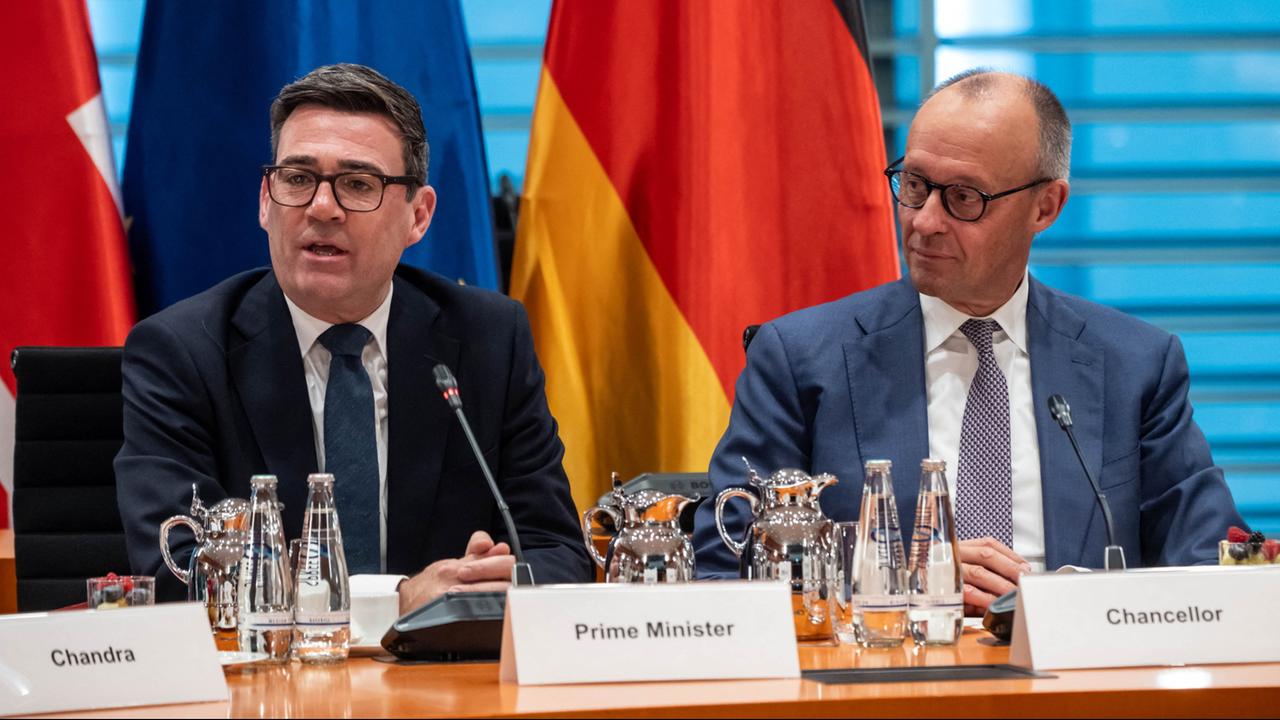
Burnham’s visit to Berlin is particularly noteworthy as it marks his first official trip to an EU member state since assuming the premiership. This deliberate choice signals a clear intention to re-engage with European partners, even as Britain navigates its post-Brexit reality. His prior visits to Ukraine and the United States already indicated a focus on key strategic alliances.
The British Prime Minister has, in recent weeks, also openly discussed the possibility of the UK’s eventual return to the European Union. This nuanced stance, acknowledging the potential benefits of EU membership while simultaneously pursuing robust bilateral agreements, suggests a pragmatic and adaptable approach to Britain’s international relations. His engagement with Germany, a leading power within the EU, is a critical component of this broader strategy.
Chronology of a Developing Partnership:
- July 2025: Prime Minister Andy Burnham, shortly after assuming office, undertakes a pivotal visit to London. During this visit, the comprehensive Kensington Treaty is formally signed by Chancellor Friedrich Merz and Prime Minister Burnham. This agreement lays the groundwork for a significantly deepened bilateral relationship.
- Early September 2025: Following the signing of the Kensington Treaty, initial working groups are established to flesh out the details of various collaborative initiatives outlined in the agreement, including defense, economic cooperation, and cultural exchange programs.
- October 8, 2026: Prime Minister Andy Burnham embarks on his inaugural state visit to Berlin as the British Prime Minister. This visit is specifically designated as his first official trip to an EU member state.
- October 8, 2026 (During the Berlin Visit): In a significant announcement during a press conference with Chancellor Merz at the Chancellery, Prime Minister Burnham extends a formal invitation to Germany to join the United Kingdom, Italy, and Japan in the Global Combat Air Programme (GCAP), a next-generation fighter jet development initiative.
- October 8, 2026: Chancellor Merz publicly endorses the Kensington Treaty as a "historic day" and a testament to the enduring strength of the UK-Germany relationship.
Supporting Data and Context:
The decision to offer Germany participation in GCAP is underpinned by several key factors:
- The Failure of FCAS: The collapse of the Franco-German Future Combat Air System (FCAS) project in the summer of 2026 left Germany without a clear path forward for its next-generation air combat capabilities. This void created an opportune moment for Britain to present GCAP as a viable and advanced alternative. FCAS was plagued by disagreements over industrial leadership, technological specifications, and strategic direction, highlighting the complexities of large-scale multilateral defense projects.
- Technological Advancement of GCAP: The GCAP program, while still in its developmental stages, is widely recognized for its ambitious technological goals, including advanced stealth capabilities, integrated sensor fusion, and network-centric warfare integration. These characteristics align with the future operational requirements of modern air forces.
- Economic Synergies: Germany’s inclusion in GCAP would bring significant industrial and technological expertise, potentially enhancing the program’s overall efficiency and innovation. From an economic perspective, such a joint venture could lead to substantial investment, job creation, and the development of cutting-edge aerospace technologies in both nations.
- Strategic Imperatives: In an increasingly volatile global security environment, characterized by rising geopolitical tensions and the proliferation of advanced military technologies, a robust and technologically superior air defense capability is paramount. The GCAP initiative, with German participation, would represent a significant enhancement of collective European and transatlantic security.
Official Responses and Reactions:
German Chancellor Friedrich Merz:
"This is a truly historic day for the relationship between Germany and the United Kingdom. The Kensington Treaty represents a profound commitment to our shared future, and Prime Minister Burnham’s offer to include Germany in the Global Combat Air Programme is a testament to the trust and strategic alignment we are building. Germany has always been committed to ensuring its security and that of its allies through cutting-edge technology and strong partnerships. We will, of course, thoroughly evaluate this proposal, which has the potential to significantly strengthen our defense capabilities and our role in European security architecture. This underscores the enduring strength of the UK-Germany bond, even as we navigate evolving geopolitical landscapes."
British Prime Minister Andy Burnham:
"In these undeniably challenging times, the necessity for robust cooperation with our closest allies cannot be overstated. Germany stands as one of our most vital partners, and the Kensington Treaty provides a powerful framework for deepening this relationship across all domains. Our offer to Germany regarding the GCAP program is born from a shared understanding of the future of air combat and a mutual desire to lead in technological innovation. This collaboration, alongside the broader provisions of the Kensington Treaty, will undoubtedly bolster European security, stimulate economic growth, and improve the quality of life for our citizens. We are forging a path of shared responsibility and mutual benefit."
Unnamed Senior EU Diplomat (commenting anonymously):
"This development is significant. It shows that post-Brexit, bilateral relationships can still be incredibly robust and strategically important. While it doesn’t replace the institutional cooperation within the EU, it highlights the UK’s continued engagement with European security, particularly through its partnership with Germany. The success of GCAP with German involvement would be a major win for European defense capabilities."
Implications and Future Outlook:
The implications of Prime Minister Burnham’s offer and the broader Kensington Treaty are far-reaching:
- Reshaping European Defense: The potential inclusion of Germany in GCAP could significantly alter the landscape of European defense cooperation. It offers a tangible alternative to stalled national or bilateral projects and signals a willingness to integrate into established multinational programs. This could foster greater interoperability and a more unified approach to future defense procurement.
- Strengthening the UK-Germany Alliance: The Kensington Treaty solidifies the bilateral relationship between the UK and Germany as a cornerstone of European security and economic stability. It demonstrates that even after Brexit, a deep and productive partnership can thrive.
- Economic Opportunities: A joint fighter jet program represents a substantial economic undertaking, promising significant investment in research, development, and manufacturing sectors in both countries. This could lead to the creation of high-skilled jobs and the advancement of aerospace technology.
- Navigating Post-Brexit Realities: Prime Minister Burnham’s diplomatic overtures to Germany, an EU powerhouse, while simultaneously engaging with the US and Ukraine, showcase a pragmatic and adaptable foreign policy approach for post-Brexit Britain. It suggests a strategy of building strong bilateral ties and participating in key multinational initiatives, even outside formal EU structures.
- Potential for Future EU Engagement: While the Kensington Treaty is a bilateral agreement, the spirit of enhanced cooperation it embodies could pave the way for future discussions and potential reintegration on specific issues, should the political climate evolve. Prime Minister Burnham’s own recent remarks about the possibility of future EU membership add a layer of intrigue to this long-term outlook.
In conclusion, Prime Minister Andy Burnham’s visit to Berlin has marked a pivotal moment in UK-Germany relations. The ambitious offer of defense cooperation, coupled with the comprehensive Kensington Treaty, signals a new era of strategic partnership. As the world grapples with complex security challenges, the renewed commitment between these two European powerhouses offers a beacon of stability and a testament to the enduring value of close collaboration. The coming months will be crucial in determining the full realization of these ambitious plans, but the initial signals are undeniably strong, pointing towards a more integrated and secure future for both nations and for Europe as a whole.






