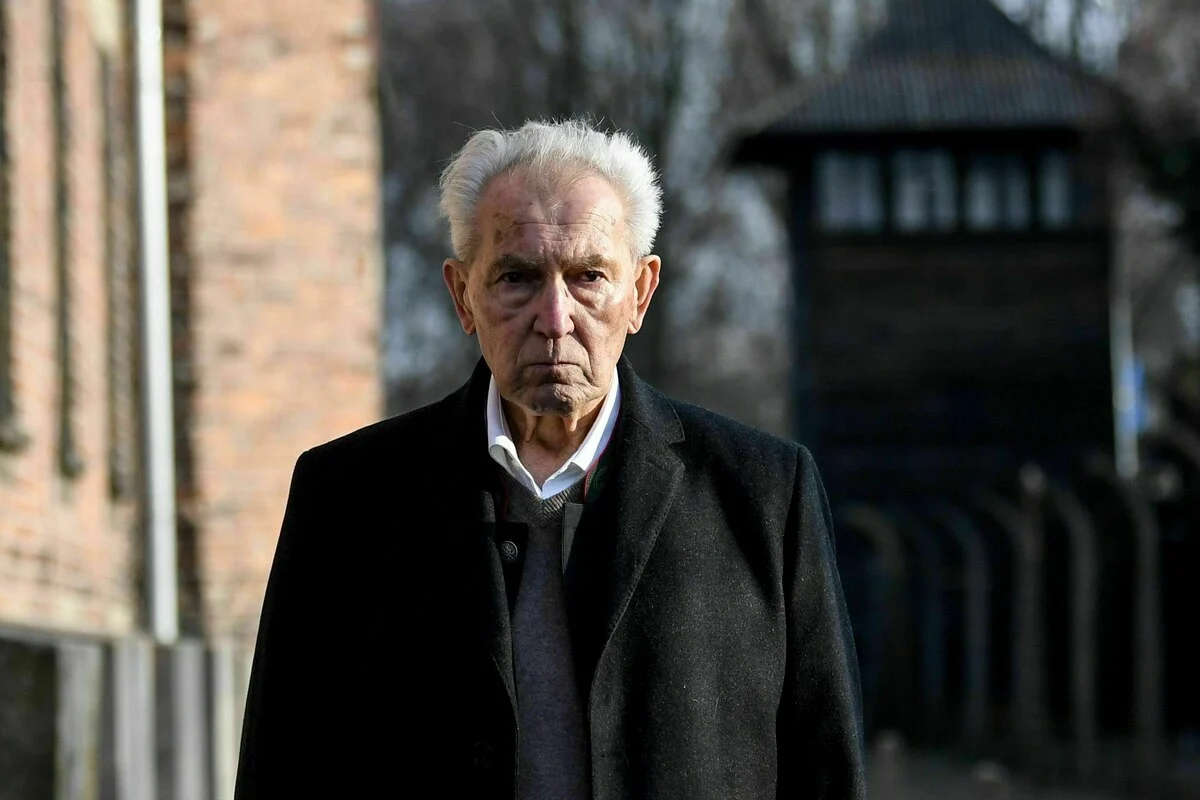
Munich, Germany – Hermann Hüllenreiner, a resilient Sinto who endured the unspeakable horrors of three Nazi concentration camps – Auschwitz, Ravensbrück, and Sachsenhausen – and later became a powerful voice for remembrance, has passed away peacefully in Oberbayern, surrounded by his family. He was 92, just three days shy of his 93rd birthday. His death marks a profound loss for the Sinti and Roma community and for all who champion the fight against historical revisionism and prejudice.
For decades, Hüllenreiner, known to his family as Mano, carried the burden of his past in silence, a common experience for many survivors of racist persecution. The lingering discrimination against Sinti and Roma in post-war Germany meant that the injustice he faced did not simply vanish with the defeat of Nazism. However, in the last two decades of his life, he found the courage to speak out, dedicating himself tirelessly to ensuring that the systematic persecution and murder of Sinti and Roma under National Socialism would never be forgotten. He delivered lectures, engaged actively with the Central Council of German Sinti and Roma, and gave numerous interviews, sharing his harrowing experiences with a steadfast resolve to educate and enlighten.
From Munich to the Abyss: The Persecution of a Sinto Family
Hermann Hüllenreiner’s early life began far from the brutality he would later encounter. Born in Munich, his family was deeply rooted in German society. His father operated a hauling business and traded horses on Deisenhofer Straße, a testament to a settled life that had long moved beyond the nomadic traditions associated with some Romani groups. The Hüllenreiners were German citizens, contributing to their community, until the insidious machinery of National Socialism began to systematically strip Sinti and Roma of their rights and dignity.
The Nazi regime, fueled by a virulent ideology of racial purity and social engineering, targeted Sinti and Roma as "racially alien" and "asocial." This persecution was not a sudden act but a gradual, deliberate erosion of their existence. By the late 1930s and early 1940s, Sinti and Roma, like the young Hermann, were subjected to increasingly restrictive laws. They were forbidden from visiting cinemas, using public transport, and were subjected to meticulous registration and surveillance. His father, in 1942, was expelled from the Wehrmacht and forced into compulsory labor, a stark illustration of the regime’s escalating oppression. Those deemed "asocial" – a broad and arbitrary category used to justify persecution – were systematically deported to concentration camps.
The culmination of this systematic dehumanization came with SS Reichsführer Heinrich Himmler’s infamous "Auschwitz Decree" in December 1942, ordering the deportation of all Sinti and Roma from Germany and German-occupied territories to Auschwitz-Birkenau. This decree solidified the regime’s genocidal intent against the Sinti and Roma, a genocide often referred to as the Porajmos or Samudaripen, meaning "the Devouring" or "the Mass Killing" in Romani.
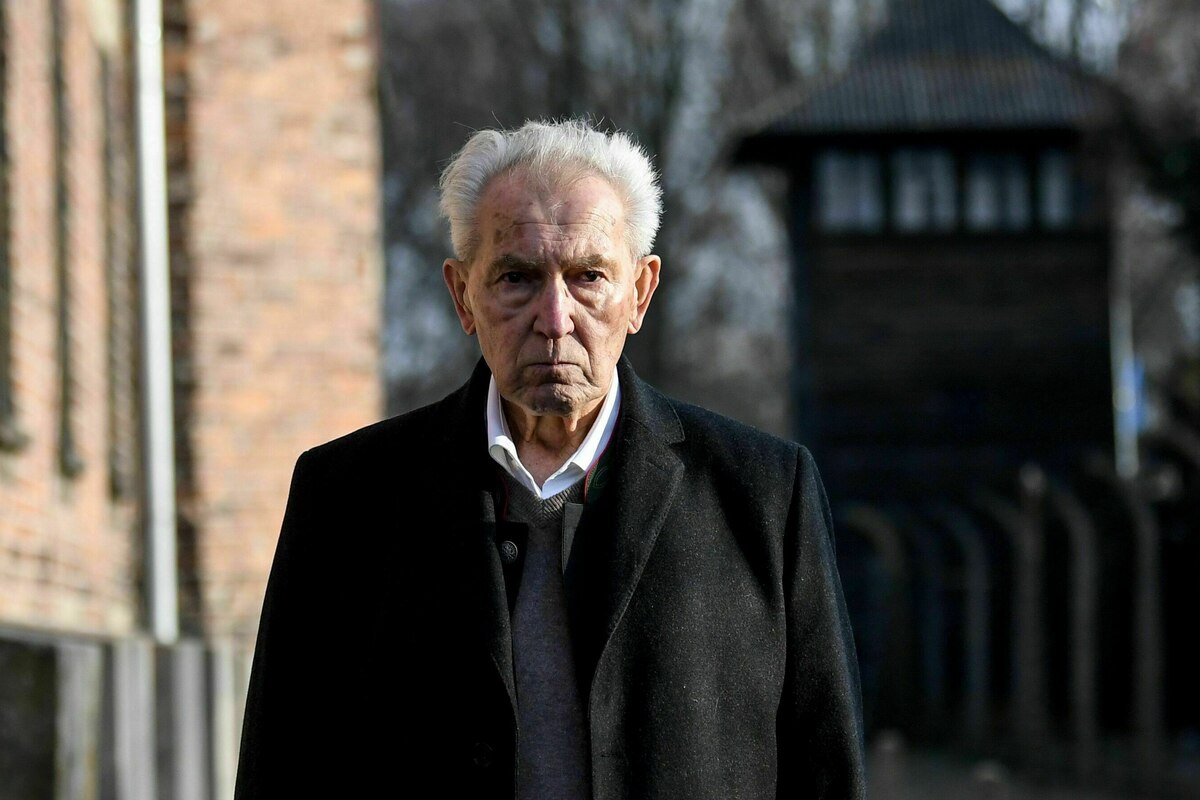
Hüllenreiner vividly recalled the day the Nazis came for his family in March 1943. "In the morning, everything was surrounded. Then the Gestapo came," he recounted in a 2016 ARD documentary. He, along with other relatives, was rounded up and crammed into a freight car. "30 to 40 people in the wagon, it was terrible. We had no water," he described, painting a picture of inhumane conditions that defined the journey to the ultimate destination of terror: the Auschwitz concentration and extermination camp.
The Horrors of Auschwitz and Beyond
Upon arrival at Auschwitz, Hermann Hüllenreiner was stripped of his identity and branded with the prisoner number Z – 3526, tattooed onto his arm by a Kapo, a prisoner appointed by the SS to supervise forced labor. His family was confined to the so-called "Gypsy Family Camp" (Zigeunerfamilienlager) within Auschwitz-Birkenau. This particular section was designed to systematically annihilate Sinti and Roma through forced labor, starvation, disease, and brutal living conditions. Thousands perished there, succumbing to the relentless grind of the camp. Hüllenreiner remembered the daily roll call at five in the morning, a ritual of dehumanization that marked the beginning of each harrowing day.
It was in Auschwitz that Hermann, barely a child, encountered the infamous SS doctor Josef Mengele, known as the "Angel of Death." Mengele conducted horrific medical experiments on young Sinti and Roma, and Hermann was among his victims. "He was a devil," Hüllenreiner stated, recalling the torment. "We received injections and blankets full of typhus lice. From that, we got scabies and typhus fever." These cruel experiments were not aimed at medical advancement but at racial pseudo-science and sadistic torture, leaving indelible physical and psychological scars on the child survivors.
The omnipresent reality of mass murder in the adjacent extermination camp was an open secret among the prisoners. Hüllenreiner recounted how the children, seeing the crematorium chimneys billowing thick smoke, would grimly observe that "now people are being burned again." This chilling awareness, internalized by children, underscores the utter depravity and industrial scale of the Nazi genocide.
In May 1944, the "Gypsy Family Camp" in Auschwitz was dissolved, and many of its remaining inhabitants were murdered in the gas chambers. The Hüllenreiner family was among those transferred, first to the Ravensbrück concentration camp, and later Hermann found himself alone in Sachsenhausen. It was there, at just 11 years old, that he cried out for his mother and prayed for deliverance, a prayer that remained unanswered by the "Lord God," as he recounted. As the war neared its end, he survived a brutal death march, a final act of Nazi cruelty designed to eliminate prisoners before liberation.

Liberation, Isolation, and a Lingering Shadow
After the liberation, Hermann Hüllenreiner, still a child, was taken to France by French fellow prisoners, where he found refuge in a foster family. His true identity and the trauma he carried were revealed when the tattoo of his prisoner number on his arm was discovered, initiating the search for his surviving family. In December 1946, he finally returned to Bavaria, a scarred survivor to a broken homeland. The scale of his family’s loss was immense: over 100 of his relatives had been murdered by the National Socialists.
Hüllenreiner’s journey back to a semblance of normalcy was fraught with challenges. The end of the war did not bring an end to discrimination against Sinti and Roma in Germany. For decades after 1945, they continued to be marginalized, denied recognition for their suffering, and often dismissed as "asocial" even within the new Federal Republic. This pervasive prejudice contributed to the long silence observed by many survivors, who feared further stigmatization or even lacked the platforms and validation to share their stories. Compensation and recognition for the Porajmos were slow in coming, with official acknowledgment from the German government only truly solidifying in the late 20th century.
Despite the enduring shadows of his past, Hermann Hüllenreiner found love and built a family. In 1956, he met Else, who would become his wife. Together, they raised a daughter, and his wife and daughter remained by his side until his final days, a testament to the quiet strength and love that anchored him through his life.
A Voice for the Voiceless: Decades of Activism and Remembrance
It was only in the last two decades of his life that Hermann Hüllenreiner chose to break his long silence, transforming his personal tragedy into a powerful tool for education and remembrance. His decision to speak out was not merely a personal act of catharsis but a crucial contribution to collective memory, especially as the generation of Holocaust survivors dwindles. He became an invaluable witness, sharing his story with students, policymakers, and the public, helping to shed light on a often-overlooked aspect of the Holocaust – the genocide of the Sinti and Roma.
His commitment extended beyond personal testimony. Hüllenreiner was actively involved with the Central Council of German Sinti and Roma, an organization dedicated to representing the interests of Sinti and Roma in Germany, promoting their rights, and preserving their culture and history. Through this platform, he tirelessly campaigned for greater awareness of Antiziganism – the specific form of racism directed at Sinti and Roma – and worked to counter historical revisionism. His lectures were not merely historical accounts; they were urgent calls to action, urging listeners to confront prejudice in all its forms and to uphold human dignity.

His work was particularly vital in educating younger generations, providing them with a direct, human connection to the atrocities of the past. By putting a face and a personal narrative to the abstract statistics of the Porajmos, Hüllenreiner ensured that the lessons of history resonated deeply. His contributions helped to cement the place of Sinti and Roma suffering within the broader narrative of Holocaust remembrance, advocating for a more inclusive understanding of Nazi crimes.
Official Acknowledgment and the Fight Against Antiziganism
Germany’s official response to the Porajmos, and the subsequent recognition of Sinti and Roma as victims of the Holocaust, has been a long and often challenging process. For many years, Sinti and Roma survivors struggled for recognition and reparations, often facing bureaucratic hurdles and lingering prejudice. However, through the persistent advocacy of individuals like Hermann Hüllenreiner and organizations like the Central Council of German Sinti and Roma, significant progress has been made.
In 1982, the German government officially recognized the genocide of Sinti and Roma. This was a crucial turning point, paving the way for greater historical acknowledgment and, albeit belatedly, some forms of compensation for survivors. A powerful symbol of this recognition is the Memorial to the Murdered Sinti and Roma of Europe in Berlin, inaugurated in 2012, a place of contemplation and remembrance designed to honor the victims and educate future generations.
Despite these advancements, the fight against Antiziganism continues. Studies consistently show that Sinti and Roma still face widespread discrimination in various aspects of life, from education and housing to employment and public perception. Official bodies and civil society organizations in Germany and across Europe are actively working to combat these prejudices, promote integration, and ensure that the historical lessons of the Porajmos are integrated into educational curricula and public discourse. The testimonies of survivors like Hüllenreiner serve as a stark reminder of the devastating consequences of unchecked hatred and the importance of vigilance against all forms of racism.
The Enduring Legacy of Hermann Hüllenreiner
Hermann Hüllenreiner’s passing marks the diminishing number of those who can offer first-hand accounts of the Holocaust. His life, from the unimaginable suffering of childhood in concentration camps to his courageous advocacy in old age, serves as an enduring testament to human resilience and the imperative of remembrance. He was not just a survivor; he was a teacher, a witness, and a moral compass.

His legacy calls upon us to not only remember the past but to actively shape a future free from the prejudices that led to such atrocities. Hüllenreiner’s story underscores the vital importance of listening to and amplifying the voices of survivors, ensuring that their experiences are never forgotten or diminished. As societies grapple with rising nationalism, xenophobia, and hate speech, the lessons embedded in his personal history become ever more relevant.
Hermann Hüllenreiner lived a life defined by unimaginable loss and profound courage. His unwavering commitment to truth and justice will continue to resonate, urging us all to confront Antiziganism, challenge all forms of discrimination, and champion human dignity. His passing is a somber reminder of a generation nearing its end, but his voice, forged in fire and reclaimed in defiance, will echo on as a beacon against oblivion.