By Sports Desk | October 12, 2026
In the high-stakes theater of the National Football League, games are often decided by inches—a toe-tap in the end zone, a fingertip deflection, or a perfectly placed spiral. However, in a surreal Sunday night showdown at Northwest Stadium, the Washington Commanders proved that games can just as easily be decided by a complete lapse in cognitive processing. In a match that will likely be remembered as the "Clock Management Blunder of the Decade," the Commanders squandered a golden opportunity to secure a victory against the New York Giants, settling for a 27-27 draw that felt, by all accounts, like a gut-wrenching defeat.
The Anatomy of the Collapse: A Chronology of the Final Minute
The drama unfolded with just 55 seconds remaining in overtime. The Commanders, locked in a 27-27 deadlock, found themselves in a position that every NFL offensive coordinator dreams of: they had the ball at the Giants’ 26-yard line, well within the range of a game-winning field goal. With nearly a minute on the clock, the objective was simple and singular: protect the football, bleed the clock to near zero, and set up kicker Drew Stevens for a chip-shot field goal to end the game as time expired. This would have denied the Giants any possibility of a response.
The first down was executed efficiently, moving the ball to the 24-yard line. The stadium was electric, the fans were sensing victory, and the coaching staff had the win in their grasp. However, rather than utilizing the "victory formation"—a knee-down that would have preserved the clock and minimized the risk of a turnover or an injury—quarterback Jayden Daniels opted for a high-risk running play through the teeth of the Giants’ defense.
As the snap occurred, the Giants’ defensive front, playing with desperation, surged into the backfield. Daniels was met with a wall of defenders. Instead of sliding or navigating out of bounds to stop the clock, he was tackled in-bounds. The clock continued to hemorrhage precious seconds. By the time the play was whistled dead, only eight seconds remained. The chaotic scramble to reorganize the field goal unit was too much; the field goal was not attempted, and the whistle blew, signaling the end of the overtime period and a deflating stalemate.
The View from the Sidelines: Harbaugh’s Disbelief
New York Giants Head Coach John Harbaugh, a man who has seen almost every iteration of success and failure in his storied career, was visibly stunned during his post-game press conference. His assessment of the final minute was as blunt as it was damning.
"I have been around this game for a long time, and I have seen some strange finishes, but this? This is something else," Harbaugh remarked, his voice tinged with genuine astonishment. "I don’t want any of you in this room to pretend that what we just witnessed is normal. You don’t see that kind of sequence at this level. Ever. It was a bizarre, once-in-a-lifetime conclusion to a football game."
Harbaugh’s comments underscored the absurdity of the situation. While his team walked away with a draw, he seemed genuinely perplexed that the Commanders, an organization with professional coaching and a veteran roster, had failed to execute the most fundamental tenet of situational football.
Inside the Commanders’ Locker Room: Accountability and Regret
For the Washington Commanders, the mood was funereal. Wide receiver Terry McLaurin, a veteran leader who has weathered many storms in Washington, did not mince words when addressing the media. "It’s inalienable—this is unacceptable," McLaurin stated. "When you have the game in your hands, when you are in the driver’s seat, you have to close the door. We didn’t just leave the door ajar; we walked away from it. To walk out of here with a tie feels exactly like a loss. There is no moral victory in failing to execute basic clock management."
Quarterback Jayden Daniels, the man at the center of the final sequence, accepted the burden of the error with professional humility. "We have to stop the clock. That is the bottom line," Daniels said, his frustration evident. "We have to be aware of the situation, the down, the distance, and the time remaining. That falls on me. I am the one on the field making the reads. I take full responsibility for not getting us into a better position to win."
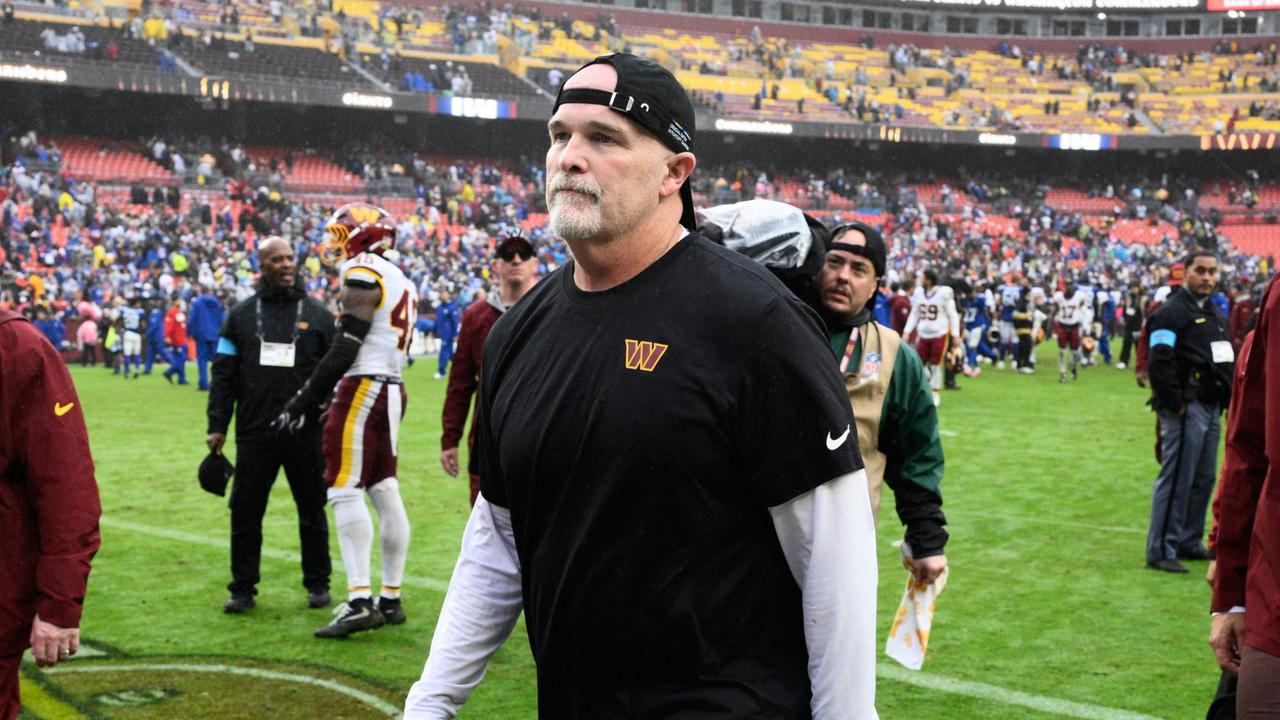
Head Coach Dan Quinn, while appreciative of his quarterback’s willingness to shoulder the blame, attempted to provide a broader perspective on the failure. "It’s not just on Jayden," Quinn noted. "We shouldn’t have been in that position to begin with. We had multiple opportunities throughout the game to build a lead that made this final minute irrelevant. That is my responsibility as a head coach. We will look at the tape, we will address the communication, and we will move forward. But tonight? Tonight is a missed opportunity."
The Digital Outcry: Magic Johnson’s Frustration
The blunder did not escape the notice of the team’s ownership and celebrity supporters. NBA legend and Commanders minority stakeholder, Magic Johnson, took to social media platform X (formerly Twitter) to voice his disappointment.
"Absolutely unbelievable," Johnson wrote. "Poor clock management has cost us a victory tonight. We were in the red zone with plenty of time. All we needed was a simple field goal to win. Instead, we let the clock run out. This is a tough one to swallow for the fans and the entire organization."
Johnson’s post quickly went viral, serving as a reflection of the sentiment held by the fanbase—a mixture of anger, disbelief, and a longing for the discipline required to compete at the highest level of the NFL.
Implications for the NFC East Race
The ramifications of this draw extend far beyond the frustration of a single Sunday. The NFC East is one of the most competitive divisions in the league, and every single win is a precious commodity in the quest for the playoffs. By failing to secure the victory, the Commanders have significantly hindered their ability to climb the standings.
The New York Giants, meanwhile, leave the stadium feeling as though they have stolen a point. Despite the Commanders’ dominance in several statistical categories during the game, the Giants successfully protected their spot at the top of the division. For Washington, the "tie" is a statistical dead-end that leaves them trailing the leaders, forcing them to play catch-up for the remainder of the season.
Statistical Breakdown: A Game of "What-Ifs"
While the final minute dominates the headlines, the broader statistical narrative of the game suggests that Washington had the tools to win decisively. The Commanders’ offense had effectively moved the ball throughout the night, with a balanced attack that kept the Giants’ defense on its heels.
- Red Zone Efficiency: Prior to the final collapse, Washington had been relatively proficient in the red zone, a trend that makes the final failure even more glaring.
- Time of Possession: The Commanders held the ball for the majority of the game, wearing down the Giants’ defensive line and creating scoring opportunities.
- Third-Down Conversions: Washington’s ability to move the chains on third down was a key highlight, providing them with the field position that set up the final, fateful drive.
The failure to convert on the final drive was not a result of an inability to move the ball, but a complete breakdown in the mental processing of the game’s final seconds. It was a failure of coaching, situational awareness, and execution that has left the organization soul-searching.
The Path Forward: Can Washington Recover?
The question facing the Commanders now is whether this singular moment of incompetence will define their season or act as a catalyst for growth. NFL history is replete with teams that have suffered crushing mid-season heartbreaks only to use those moments as a turning point for focus and discipline.
For Coach Dan Quinn, the coming week will be defined by film study and internal accountability. The team must address why the communication broke down on the field and ensure that the "clock awareness" protocols are not just understood, but instinctual.
As the players prepare for the next challenge, the haunting images of the final seconds against the Giants will undoubtedly loom large. In the NFL, you are only as good as your last drive, and for the Washington Commanders, the last drive was a stark reminder that in the world of professional football, the clock is not just a measurement of time—it is a formidable opponent that must be respected, managed, and ultimately, mastered.
Whether the Commanders can rebound from this "Overtime Blackout" remains to be seen, but one thing is certain: they have provided the league with a cautionary tale that will be discussed for years to come—a reminder that in the pursuit of greatness, the smallest details are often the ones that matter the most.