The Rhine Derby has long been defined by intense passion, but the October 12th encounter between 1. FC Köln and Borussia Mönchengladbach will be remembered for all the wrong reasons. In a match that served as a microcosm of both clubs’ current trajectories, Köln secured a hard-fought 2-1 victory, further deepening the crisis for a winless Gladbach side while providing a glimmer of hope for the "Billy Goats." However, the sporting narrative was unfortunately marred by violent scenes in the stands, casting a shadow over the debut of new Gladbach head coach Alexander Blessin.
The State of Play: A Tale of Two Clubs
Entering the match, the atmospheric tension was palpable. Borussia Mönchengladbach arrived at the RheinEnergieStadion in a state of professional emergency. With zero points from their first four Bundesliga fixtures and a staggering 16 goals conceded, the pressure on the newly appointed Alexander Blessin was immense. Tasked with replacing Eugen Polanski during the international break, Blessin faced the ultimate baptism of fire: a derby away from home.
Conversely, 1. FC Köln—under the guidance of René Wagner—entered the contest with a sense of cautious optimism. Sitting mid-table with four points, the FC faithful were looking for a statement win to consolidate their position. By the final whistle, the standings told the story: Köln climbed to a respectable tenth place with seven points, while Borussia Mönchengladbach remained firmly rooted to the bottom of the table, their search for a first point extending into the fifth week of the season.
Chronology of the Match: From Tactical Gridlock to High Drama
The match began with a subdued energy, interrupted almost immediately by the sound of pyrotechnics. The kickoff was delayed as fans from both ends of the stadium engaged in the reckless use of flares and smoke bombs.
Once the whistle blew, the tactical discipline favored the visitors early on. Blessin’s side looked organized, clearly prioritizing defensive stability to address the leaks that had plagued their early campaign. Philipp Sander tested Köln goalkeeper Marvin Schwäbe with a stinging 20-meter free-kick in the 7th minute, but the keeper was equal to the task.
The breakthrough came against the run of play in the 26th minute. A perfectly executed set-piece routine saw a free-kick from Leart Paqarada flicked on by an unfortunate Gladbach defender, landing perfectly for Ísak Jóhannesson. The Icelandic midfielder unleashed a stunning, clinical volley from the edge of the box that left the goalkeeper with no chance, rocketing into the top corner.
Gladbach’s response was character-driven rather than tactical. As the first half waned, they pushed forward with desperation. In the 39th minute, a sweeping move from right to left culminated in a cross from Lukas Ullrich. A clumsy headed clearance by Köln’s Jahmai Simpson-Pussey fell kindly for Joe Scally, who directed the ball home to equalize. The halftime whistle blew with the score level, a fair reflection of a fractured but highly charged 45 minutes.
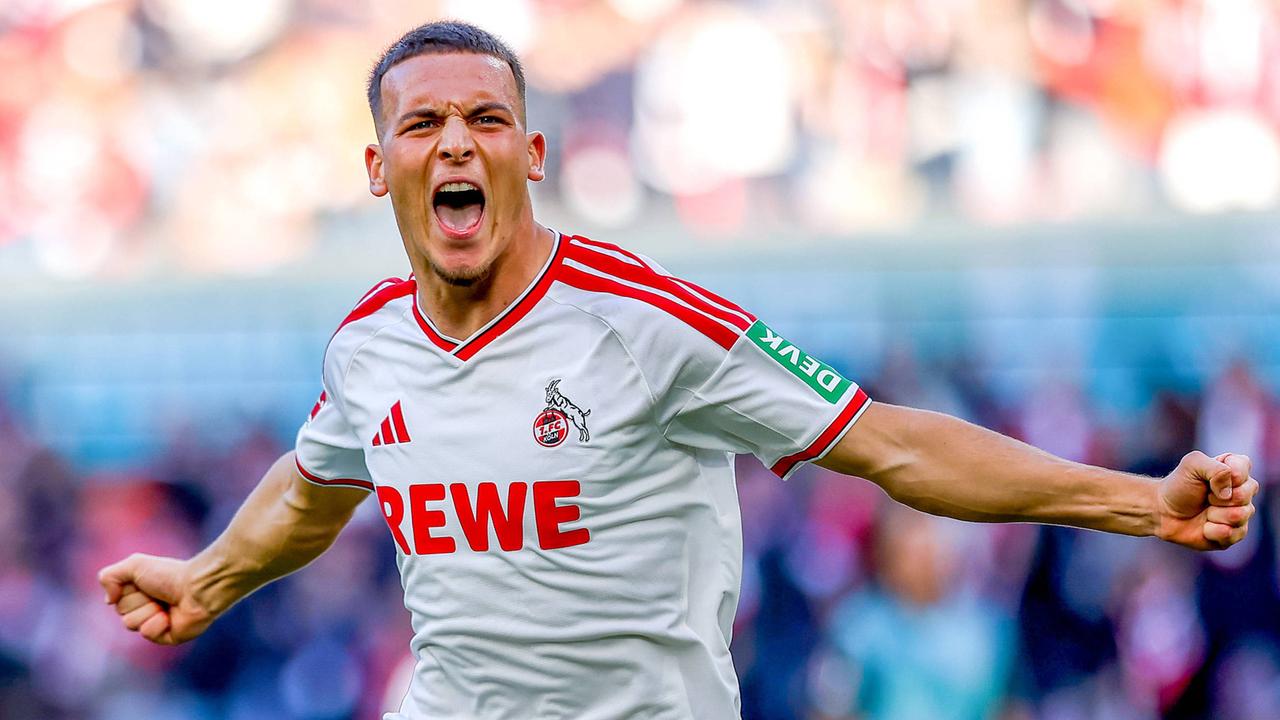
The second half belonged to Said El Mala. The 20-year-old rising star, who had recently debuted for Germany’s youth setup, was a constant nuisance for the Gladbach backline. After a missed opportunity in the 57th minute—where he chose to shoot instead of squaring to a teammate—he redeemed himself ten minutes later. Following a ball-winning play by Linton Maina, El Mala drove inside and curled a sublime shot into the far corner. It was a goal of pure quality, the kind that separates mid-table sides from relegation candidates.
Supporting Data and Personnel Challenges
The game was a war of attrition, reflected in the injury reports from both sides. FC Köln was forced to adapt after losing strikers Thijs Dallinga and Ragnar Ache during a midweek test match against Viktoria Köln. This necessitated a tactical shuffle, with Marius Bülter operating as a makeshift target man.
Gladbach’s infirmary was equally crowded; Blessin was deprived of Ko Itakura, Franck Honorat, and Tim Kleindienst. The loss of such key personnel contributed to the disjointed nature of the visitors’ attack, though the defensive structure showed signs of improvement under the new manager.
The most concerning statistic of the evening, however, was not on the scoreboard but in the medical reports. The intense physicality of the match extended to the pitch, resulting in a severe injury for Köln’s Ellyes Skhiri, who was stretchered off following a heavy collision with Florian Neuhaus. Medical reports later confirmed the midfielder would face a prolonged recovery period, a significant blow to Wagner’s squad depth.
Official Responses: Disappointment and Resolve
Post-match comments reflected the divergence in the two clubs’ current realities.
Alexander Blessin, while acknowledging the defeat, was visibly frustrated by the winning goal. "It was very balanced in the first half, we had a good structure," the Gladbach boss stated. "In the second half, we became too inactive. And on the 2-1 goal—I have to say, it was a clear foul." Blessin was referring to a challenge by El Mala on Hashioka in the buildup, which the referee deemed legal. However, he remained focused on the long-term project: "There is a lot to improve, but I saw that the boys want it. That is the most important thing for me."
Philipp Sander, representing the playing squad, echoed the sentiment of belief. "In the first half, we were the better team. If we were just a bit more clinical, we would be walking away with a point. But the belief is there—in the trainer, in the squad. We have the quality to compete in the Bundesliga, and we will prove that in the coming weeks."
René Wagner was understandably jubilant. "I am very happy. Everyone in the stadium saw that the boys fought for every ball," the Köln coach noted. When questioned about his team’s continued defensive vulnerabilities—having conceded once again—he remained pragmatic: "We just have to make sure we score one more than the opponent. That’s how you win games."
The Shadow of Violence: A Failure of the "Stadionallianz"
Perhaps the most significant aspect of the day occurred off the pitch. The second half saw a complete breakdown in order as fans from the Gladbach block launched fireworks into adjacent sections and engaged in physical altercations with Köln supporters at the perimeter of the home end. The violence was indiscriminate, with police reporting that a child, a spectator, and a stadium steward were among the injured.
This incident served as the first major stress test for the newly implemented "Stadionallianzen NRW" (North Rhine-Westphalia Stadium Alliances). Agreed upon in July by Interior Minister Herbert Reul and the professional clubs, the initiative aims to reduce the presence of police inside stadiums, encouraging a "hands-off" approach to policing in favor of internal security.
The events of October 12th have already triggered a political firestorm. Critics argue that the reliance on private security was insufficient to handle the volatility of a derby, while police unions are expected to demand a return to a more visible security presence. The incident threatens to undo the progress of the dialogue between the DFL and fan groups, as the safety of the matchday experience is once again under intense scrutiny.
Implications for the Future
The implications of this result are far-reaching. For 1. FC Köln, the win is a morale-boosting victory that provides stability ahead of a difficult away trip to Eintracht Frankfurt. Wagner’s ability to extract a result despite injury crises suggests a tactical flexibility that will be vital for a long, grueling season.
For Borussia Mönchengladbach, the outlook is bleak. The "new manager bounce" failed to materialize in terms of points, and the reality of the relegation battle is setting in early. With TSG Hoffenheim arriving next Sunday, Blessin is running out of time to instill his philosophy before the club risks falling into a deep, possibly terminal, early-season slump.
Ultimately, the match will be remembered for the brilliance of Said El Mala, but the conversation surrounding the Rhine Derby is now dominated by the failure of the new security measures. As the DFL reviews the footage and the police conclude their investigations into the violence, the football world is left to wonder: in a league where the atmosphere is the product’s greatest asset, how can the authorities balance passion with the fundamental necessity of safety?
The Bundesliga is at a crossroads, and for Gladbach, the climb out of the basement looks steeper than ever. For Köln, the path forward is illuminated by the promise of young talents like El Mala, provided they can keep their star players healthy and their matches played strictly within the white lines of the pitch.