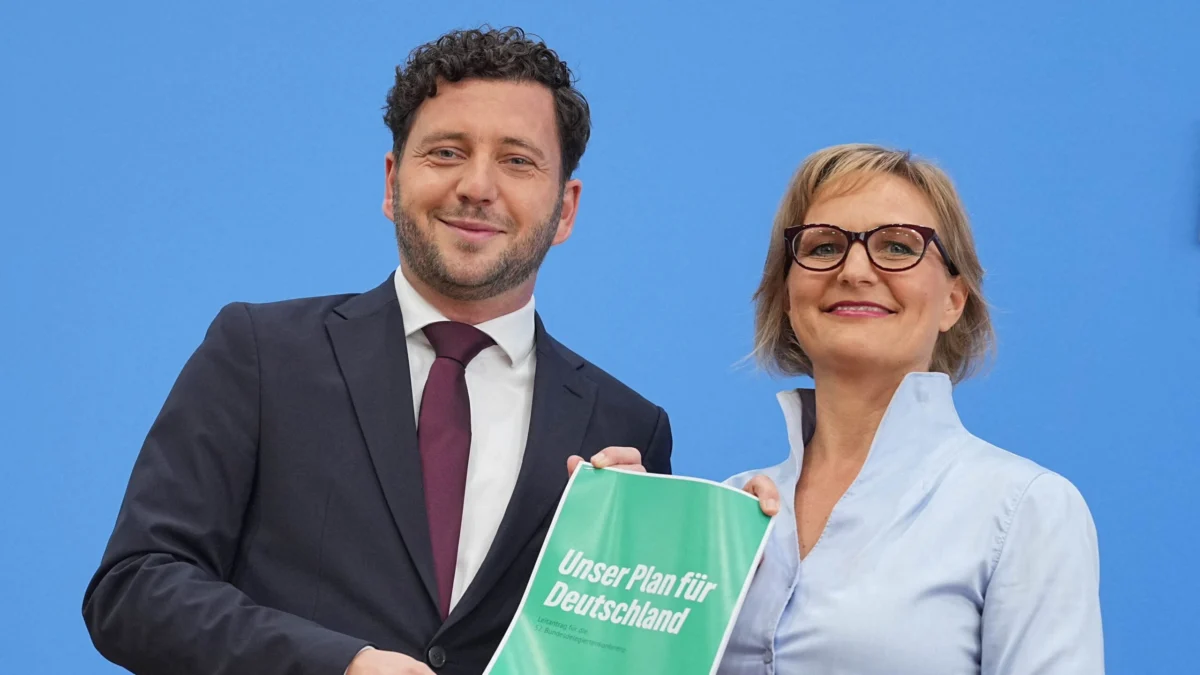
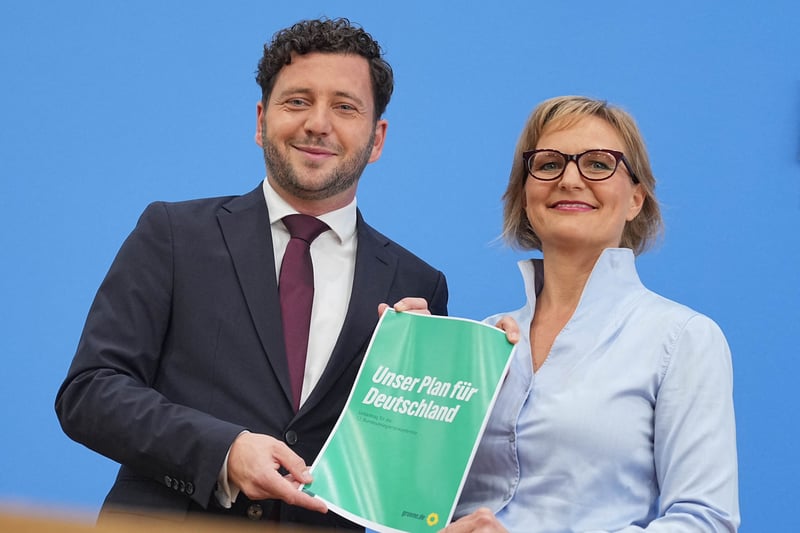
Berlin, Germany – In a significant strategic pivot, Germany’s Green Party leadership has unveiled a sweeping agenda encompassing fundamental economic reorientation and far-reaching state reforms, explicitly aimed at rebuilding public trust and stemming the growing tide of far-right populism exemplified by the Alternative for Germany (AfD). The proposals, presented in two seminal motions by federal co-chairs Franziska Brantner and Felix Banaszak, signal a profound self-reflection and a pragmatic shift in the party’s approach to governance and the economy ahead of its crucial December party conference.
The core message from the party’s top brass is clear: the Greens must move beyond merely "distributing wealth losses" and instead focus on "generating new prosperity." This acknowledgment comes with a candid admission of past errors, particularly a perceived tendency during their time in government to place businesses under "general suspicion." This shift represents a deliberate effort to recalibrate the party’s image and policy framework, seeking to foster a more cooperative relationship between the state and the private sector.
A Pivotal Shift in Green Strategy
The Green Party’s recent announcement marks a critical juncture in its political evolution. For decades, the Greens have been synonymous with stringent environmental regulations and a skeptical stance towards unfettered industrial growth, often viewing corporate interests with a degree of apprehension. This perspective, while rooted in genuine concerns about ecological sustainability and social equity, has, according to the leadership, sometimes alienated key economic actors and segments of the electorate.
Acknowledging Past Missteps
Felix Banaszak articulated the party’s self-critique, stating, "We must get out of the mode of merely distributing wealth losses and instead manage to generate new prosperity." This statement implicitly acknowledges that the party’s focus, particularly during challenging economic times, may have leaned too heavily on redistributive policies or regulatory burdens without sufficiently emphasizing wealth creation. The phrase "general suspicion" towards businesses is particularly telling. It suggests that a perceived adversarial relationship with the private sector may have stifled innovation, discouraged investment, and contributed to a sense of economic insecurity among the populace.
This introspection is likely fueled by recent electoral setbacks and the broader political landscape, where economic anxieties are increasingly exploited by populist movements. By admitting these past tendencies, the Greens aim to demonstrate a willingness to learn and adapt, presenting themselves as a more pragmatic and growth-oriented force. The challenge will be to convince both their traditional voter base and the broader public that this is a genuine evolution, not merely a tactical retreat.
Reimagining the State-Economy Relationship
Franziska Brantner elaborated on this new philosophy, advocating for a fundamental change in the relationship between the state and the economy. Her vision is one where the state acts as an enabler rather than a prescriptive authority. "It’s not us telling everyone what to do," Brantner emphasized, "but rather enabling those who have a plan for their lives, for their companies, to implement it accordingly." This signifies a departure from a top-down, command-and-control approach to one that fosters innovation, entrepreneurship, and individual agency.
This shift is further underscored by the party’s intention to move away from a "classic general suspicion" and "controlling everything" towards a "risk-based control" model. This approach implies that regulatory oversight would become more targeted and efficient, focusing resources on areas of genuine risk while reducing bureaucratic hurdles for compliant businesses. Crucially, Brantner added that this lighter touch would be balanced by "harsher sanctions for black sheep," ensuring that deregulation does not lead to a weakening of standards or accountability. This nuanced position seeks to strike a balance between fostering economic dynamism and upholding environmental and social protections, a tightrope walk for any Green party.
The Blueprint for State Transformation and Economic Renewal
The two key motions tabled for the December party conference are expected to flesh out these broad principles with concrete policy proposals, aiming to lay the groundwork for a more dynamic and trusted governance model.
Economic Pillars: From Green Ideals to Pragmatic Growth
While the specifics of "new taxes" were not detailed in the initial announcement, the context of "generating new prosperity" suggests a focus on innovative revenue streams that align with Green principles while stimulating growth. Potential avenues could include:
- Targeted Carbon Taxes and Dividends: Moving beyond blanket carbon pricing to systems that funnel revenues back into climate-friendly investments or directly to citizens, thereby mitigating economic burdens while incentivizing green transitions.
- Progressive Wealth and Inheritance Taxation: Re-evaluating existing tax structures to ensure fairer distribution of wealth and to fund public investments in education, infrastructure, and renewable energy, rather than solely for redistribution. This aligns with traditional Green ideas of social justice but would be framed as a means to empower broader economic participation.
- Digital Economy Levies: Exploring taxation models for large digital corporations that currently benefit from globalized tax loopholes, ensuring they contribute fairly to the German economy where they generate value.
- Investment in Future Technologies: Proposing fiscal incentives and public funding mechanisms for research and development in green technologies, artificial intelligence, and sustainable manufacturing. The "new prosperity" would thus be rooted in future-proof industries, creating high-value jobs and enhancing Germany’s competitive edge.
The emphasis on generating new prosperity also implies a more proactive role for the state in supporting strategic industries and facilitating their transition to a climate-neutral economy. This could involve direct investments in renewable energy infrastructure, support for green hydrogen production, and fostering a circular economy that reduces resource dependency. By actively shaping market conditions and providing clear investment signals, the Greens hope to unlock private capital and accelerate sustainable economic growth.
Modernizing Governance: Beyond Bureaucracy
The call for "far-reaching state reforms" addresses a pervasive sentiment of frustration with Germany’s often sluggish and complex bureaucracy. These reforms are likely to focus on several key areas:
- Digitalization of Public Services: Accelerating the transition to fully digital government services, making interactions with authorities simpler, faster, and more transparent for citizens and businesses alike. This includes online applications, digital identity solutions, and integrated data systems.
- Streamlining Administrative Processes: Reducing red tape and simplifying regulatory frameworks to make it easier for companies to start, grow, and innovate. This would involve a critical review of existing laws and permits, identifying and eliminating unnecessary bureaucratic hurdles.
- Enhancing Citizen Participation: Exploring new mechanisms for citizens to engage directly in policy-making and local governance, fostering a greater sense of ownership and trust in democratic processes. This could include digital platforms for feedback, citizen assemblies, or participatory budgeting.
- Improving Efficiency and Responsiveness: Implementing modern management techniques within public administration to improve decision-making speed and accountability. This would mean investing in training, talent development, and organizational restructuring within government agencies.
These reforms are not merely about efficiency; they are fundamentally about restoring faith in the state’s capacity to deliver. By demonstrating a more agile, transparent, and user-friendly government, the Greens aim to directly counter the narrative that the state is an unwieldy, inefficient, and often obstructive entity, a common refrain among populist movements.

Addressing the Spectre of the Far-Right
The Green Party’s renewed focus on economic growth and state reform is overtly framed as a direct response to the escalating influence of the AfD and other right-wing populist forces in Germany.
Rebuilding Trust in Democratic Institutions
The AfD’s success often stems from tapping into widespread public dissatisfaction with established political parties, economic anxieties, and a pervasive sense of being unheard or unrepresented. Their narrative frequently casts the government as out of touch, inefficient, and detrimental to the interests of ordinary Germans. By emphasizing "new prosperity" and "enabling" rather than "dictating," the Greens are attempting to reclaim the narrative around economic opportunity and competent governance.
A state that is perceived as efficient, transparent, and supportive of economic well-being is inherently more resilient to populist attacks. By reducing bureaucratic burdens, fostering innovation, and generating tangible economic benefits, the Greens hope to demonstrate that mainstream politics can deliver concrete improvements in people’s lives. This strategy aims to deprive the AfD of its fertile ground – public frustration and a feeling of being left behind.

The Socio-Economic Roots of Discontent
The rise of the AfD is multifaceted, fueled by concerns ranging from immigration and cultural identity to economic stagnation, inflation, and high energy costs. While the Greens’ proposals don’t directly address all these issues, the economic reorientation and state reforms implicitly tackle some of the underlying socio-economic drivers of discontent.
By focusing on generating new, sustainable prosperity, the Greens are aiming to alleviate economic anxieties that push voters towards extremist parties. If people feel secure in their jobs, see opportunities for their children, and experience a state that genuinely supports their endeavors, the appeal of simplistic, often divisive, populist solutions diminishes. The emphasis on streamlining governance also aims to restore faith in the capacity of democratic institutions to effectively manage complex challenges, rather than appearing overwhelmed or incompetent.
Chronology of Green Party’s Evolving Stance
The Green Party’s journey to this point has been marked by a constant negotiation between its foundational environmental principles and the realities of political power.

- Early Years (1980s-1990s): Characterized by radical environmentalism, anti-nuclear sentiment, and a strong focus on grassroots activism. Economic policies were often secondary or framed in terms of degrowth and redistribution. The party was seen as a protest movement, often at odds with traditional industry.
- First Coalition Government (1998-2005): Participation in the "Red-Green" coalition under Chancellor Gerhard Schröder forced a degree of pragmatism. While key environmental policies like the nuclear phase-out were achieved, the party also learned the complexities of governing a major industrial nation. This period began the internal debates about economic realism.
- Opposition and Growth (2005-2021): The Greens continued to refine their platform, increasingly integrating economic arguments into their environmental agenda. Concepts like "green growth" and the "ecological-social market economy" gained traction. However, a strong regulatory impulse and a critical stance towards big business often remained.
- Current Coalition (since 2021): As a senior partner in the "Ampelkoalition" (traffic light coalition) with the SPD and FDP, the Greens have faced unprecedented pressure to deliver on climate goals while navigating an energy crisis, inflation, and a looming recession. The realities of governing, making compromises, and dealing with public backlash have evidently forced a deeper re-evaluation of their policy approach, culminating in the current self-critical proposals. The visible rise of the AfD in opinion polls has acted as a stark wake-up call, underscoring the urgency of regaining broad public support.
Official Responses and Political Landscape
The Greens’ new proposals are expected to ignite considerable debate across Germany’s political spectrum and within their own ranks.
- Within the Green Party: While the leadership has framed these motions as a necessary evolution, elements within the party’s more fundamentalist or left-wing factions may view the emphasis on economic growth and a lighter regulatory touch with skepticism, fearing a dilution of core Green values. Expect lively discussions and potential amendments at the December party conference as the party seeks to balance pragmatism with principle.
- Coalition Partners (SPD and FDP): The Social Democrats (SPD) and especially the liberal FDP are likely to welcome the Greens’ shift towards a more business-friendly and growth-oriented economic policy. The FDP, in particular, has long advocated for deregulation and economic dynamism. This alignment could ease tensions within the fragile coalition and facilitate more coherent economic policy-making.
- Opposition Parties (CDU/CSU): The conservative CDU/CSU opposition will likely scrutinize the proposals closely. While they might applaud the recognition of past "mistakes" concerning businesses, they will also likely criticize the Greens for belatedly adopting policies they have long advocated. They will seek to highlight any perceived inconsistencies or continued interventionist tendencies.
- Alternative for Germany (AfD): The AfD will predictably dismiss these proposals as too little, too late, or as a cynical attempt to co-opt their own critiques of the establishment. They will likely continue to focus on immigration and cultural issues, while also framing any Green economic policies, even growth-oriented ones, as inherently detrimental to German prosperity. Their rhetoric thrives on division, and they will seek to exploit any internal Green disagreements.
Implications for Germany’s Political Future
The success or failure of this Green Party reorientation will have significant implications for Germany’s political future.
Firstly, it represents a crucial test of whether a major party, deeply rooted in specific ideological principles, can adapt sufficiently to address new political realities without losing its identity. If the Greens can successfully pivot to a more economically pragmatic and state-reforming agenda while maintaining their commitment to climate protection, they could potentially broaden their appeal and regain trust among segments of the electorate currently drawn to populist alternatives.

Secondly, the emphasis on generating "new prosperity" and streamlining governance could contribute to a more dynamic German economy, better equipped to navigate global challenges and lead in green technologies. This could strengthen Germany’s position in Europe and globally, offering a model for sustainable economic development.
However, the path to implementation will be fraught with challenges. Translating ambitious proposals into concrete, effective policies requires consensus within the party, cooperation within the coalition, and sustained public support. The communication of this new direction will be paramount – convincing voters that these are not mere cosmetic changes but a fundamental re-commitment to their well-being and the future of the nation.
Ultimately, the Greens’ bold move signifies a recognition that countering the rise of the far-right requires not just moral condemnation, but a compelling, positive vision for the future that addresses the legitimate economic and social anxieties of the populace. Their December party conference will be a critical forum to debate whether this new strategic direction is robust enough to reshape Germany’s political landscape.