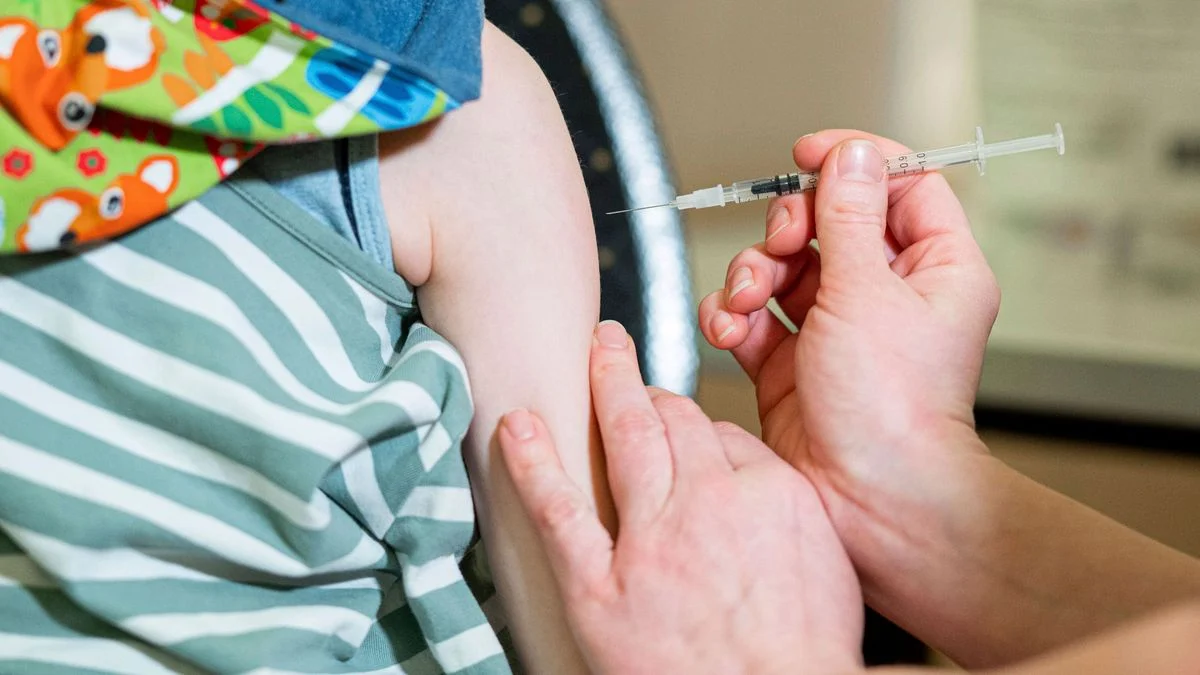
After decades of success in eradicating and controlling infectious diseases, Europe is facing a critical turning point. A new study reveals a widespread stagnation and decline in childhood vaccination rates across the European Union, raising fears of a public health crisis that could undo nearly half a century of medical progress.
Public health experts have long hailed vaccines as one of the greatest triumphs of modern medicine. By virtually eliminating the threat of once-deadly diseases like polio, measles, and rubella, vaccination programs have saved countless lives and spared generations from debilitating complications. However, a comprehensive analysis published in the journal The Lancet Regional Health – Europe paints a sobering picture: the shield of herd immunity, which has protected the European population for decades, is beginning to crack.
The State of Play: A Continent-Wide Trend
The study, led by Luigi Russo and his team at the Università Cattolica del Sacro Cuore in Rome, analyzed immunization data provided by the World Health Organization (WHO) and UNICEF spanning from 1980 to 2024. The findings are not merely a statistical anomaly but a clear signal of a downward trend across the majority of EU member states.
While the data shows significant long-term progress over the past four decades, the trajectory has shifted sharply in recent years. In 16 of the 27 EU countries, at least four of the seven routine vaccines monitored are currently showing declining trends. This development is not confined to the periphery; it is hitting central European nations with equal force.
Chronology of a Crisis: From Stability to Hesitancy
To understand the current situation, one must look at the timeline. For decades, European vaccination coverage steadily climbed, reaching targets that effectively suppressed the circulation of pathogens. However, the period between 2019 and 2022 marked a definitive inflection point.
The onset of the COVID-19 pandemic acted as a massive disruptor. While initial concerns were centered on the logistics of medical care during lockdowns, the long-term consequences have proven to be sociological. The pandemic environment fostered a "perfect storm" for vaccine skepticism: an information ecosystem saturated with misinformation, a decline in public trust toward institutional medicine, and the politicization of public health mandates.

While the Lancet study was not designed to establish direct causation, experts point to this period as the moment when the public perception of routine childhood vaccinations began to sour. The lingering effects of this skepticism persist today, manifesting in missed appointments and a growing number of parents opting out of recommended vaccine schedules.
Supporting Data: Where the Gaps Are Growing
The research examined seven key vaccine series, including those for diphtheria, tetanus, pertussis (DTP), polio, measles, and Haemophilus influenzae type b (Hib). The data reveals that the decline is not uniform but varies significantly by disease and geography.
- The Polio and Hib Problem: Perhaps most concerning is the drop in uptake for polio and Hib vaccines. Twenty EU countries have reported declining trends for these immunizations. Hib is a primary cause of severe bacterial infections in infants, such as meningitis and epiglottitis, while polio, though rare in Europe, remains a threat that can cause permanent paralysis if circulation resumes.
- Widespread Declines: 18 countries are seeing a decline in Hepatitis B vaccinations, and 17 are seeing drops in DTP coverage.
- The Measles Divide: Measles presents a mixed, albeit fragile, picture. While 14 countries are seeing rising or stable uptake, 13 are experiencing declines. Given that measles is one of the most contagious diseases known to man, even small pockets of under-vaccinated populations can trigger large-scale outbreaks.
Geographic Hotspots
The study identified a alarming divide. While countries like Hungary, Luxembourg, Denmark, and Portugal have maintained or improved their vaccination efforts, the situation is dire elsewhere. Five countries—Bulgaria, Cyprus, Ireland, the Netherlands, Romania, and Sweden—showed declining trends across all seven vaccine categories.
Germany and Spain also fall into the "highly affected" category, with five out of seven vaccine indicators trending downward. Only Hepatitis B and the first dose of the measles vaccine show slight upward momentum in the German context, a thin silver lining in an otherwise gloomy outlook.
Implications: The Return of Preventable Diseases
The gold standard for community protection is a 95% vaccination rate. This threshold ensures that even if a pathogen is introduced, it cannot find enough susceptible hosts to sustain an outbreak. When coverage falls below this, the risk of transmission increases exponentially.
The consequences of failing to meet these targets are not theoretical. In the United States, which has seen similar declines, health authorities have already reported significant measles outbreaks. Globally, the situation is even more dire; as of 2026, Bangladesh is battling a major measles epidemic with over 1,000 recorded deaths—a direct result of the breakdown in immunization coverage.

Who is at Risk?
The primary victims of declining immunization rates are not just the unvaccinated children themselves, but the vulnerable populations around them. Infants who are too young to be vaccinated, the elderly, and those who are immunocompromised (such as cancer patients or those with autoimmune disorders) rely entirely on the immunity of the collective. When that collective immunity is compromised, these groups face the highest risk of severe illness or death.
Official Responses and the Road Ahead
The scientific community is sounding the alarm. The researchers emphasize that national averages can be deceptive. A country might report a high national rate while specific regions or marginalized communities suffer from severe "immunity gaps." These local pockets of low vaccination are the perfect incubators for future outbreaks.
Public health authorities are now faced with the monumental task of rebuilding public trust. This involves moving beyond simple awareness campaigns and addressing the underlying drivers of vaccine hesitancy, including the digital spread of misinformation and the erosion of the patient-physician relationship.
In many parts of Europe, discussions are shifting toward strengthening the infrastructure for routine check-ups. For instance, in Germany, new initiatives, such as the proposed "U10" pediatric examination, are being designed to bridge long-standing gaps in the monitoring of child health. These checks serve as a critical touchpoint where doctors can address parents’ concerns, correct misconceptions, and ensure that vaccinations are not just suggested, but prioritized.
Conclusion: A Call to Action
The findings from the Lancet study are a wake-up call for the European Union. The success of the past was built on the premise that vaccines were a social contract—a collective effort to protect the most vulnerable among us. The current trend toward individualism and skepticism threatens to dismantle this foundation.
As the data suggests, the window to reverse this trend is narrowing. Without a concerted effort to restore confidence in medical science and prioritize the accessibility of these life-saving procedures, Europe risks a return to an era where diseases once considered "history" become a routine, and devastating, reality for the next generation. The message is clear: vaccines remain the most effective tool in the public health arsenal, but they only work if they are used.