By Editorial Staff
Updated: July 22, 2026
The image of a city plunged into darkness is no longer the stuff of dystopian fiction; for 50,000 households in Berlin earlier this year, it was a cold, silent reality. As the grid failed, the immediate disruption to communication, heating, and basic infrastructure exposed the vulnerabilities of a modern capital city. While the lights eventually flickered back on, the incident has ignited a national debate: How prepared is Germany, an industrial powerhouse, for a cascading failure of its critical infrastructure in an era of heightened geopolitical instability and cyber-warfare?
The Anatomy of the Outage: A Crisis of Connectivity
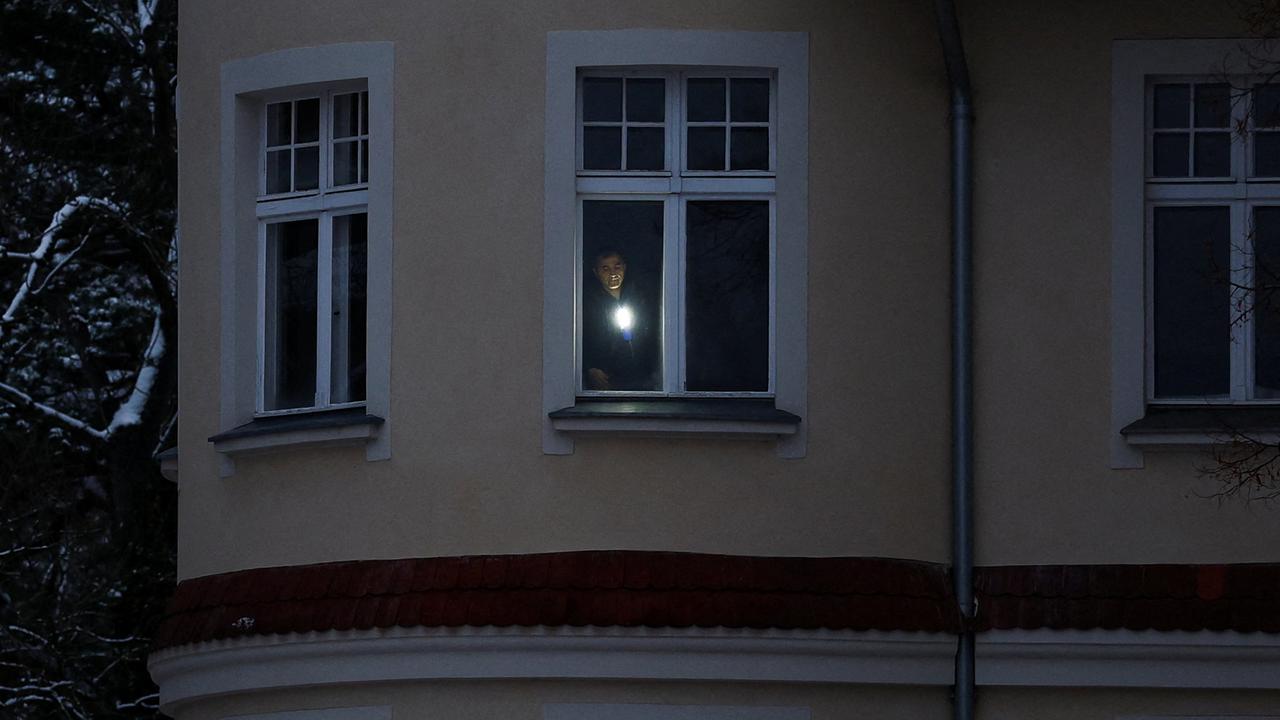
The January blackout in Berlin was not merely an inconvenience; it was a stress test for urban resilience. In the Heinrich- und Margarete-Grüber-Haus, a residential care facility, the loss of power triggered an immediate logistical crisis. For 70 residents, the failure meant more than just the loss of lighting.
"Communication was virtually impossible," explains Anja Geserick, the facility’s director. "The cellular network collapsed, and the internal nurse-call system—our lifeline for emergencies—went dead instantly."
The situation highlighted the "cascading effect" of modern blackouts. Without electricity, the building’s heating system failed, forcing staff to move residents into beds for warmth. Because the electronic call systems were down, staff were forced to conduct constant, manual rounds to ensure the safety of vulnerable individuals. For residents like Michael Zeebe, a retired firefighter, the experience was a stark reminder of the importance of preparedness. Zeebe, who kept a hand-crank radio on hand, was one of the few who remained informed as the digital world went dark.
A Chronology of Vulnerability
The Berlin incident, which authorities attribute to a deliberate act of sabotage claimed by the extremist "Vulkangruppe," serves as a case study for future risk management.
- The Trigger: An attack on critical energy infrastructure by extremist elements, according to the Berlin Office for the Protection of the Constitution.
- The Initial Hours: Widespread loss of power across 50,000 households. The immediate collapse of telecommunications networks hindered emergency coordination.
- The Secondary Phase: Public services, including nursing homes and public transport, faced significant operational paralysis due to the dependency of modern systems on a constant electrical supply.
- The Recovery: While the grid was stabilized, the incident revealed deep-seated anxieties regarding the "last mile" of power delivery and the protection of decentralized utility hubs.
The Rising Threat: Cyber-Warfare and Sabotage
While physical sabotage is a tangible threat, experts point to a more insidious danger: cyber-attacks. The Federal Network Agency (Bundesnetzagentur) reports a staggering 43% increase in cyber-attacks on critical infrastructure in 2024 alone, totaling 769 documented incidents.
Markus Doll, a lead official at the Bundesnetzagentur, acknowledges that the trend is moving in an alarming direction. "The systematic testing of our vulnerabilities is no longer a hypothetical scenario," says General Physician Rolf von Uslar of the German Armed Forces. "We are witnessing a concerted effort by hostile actors—particularly from the Russian sphere—to map and probe our weak points."
The protection of the grid is a cat-and-mouse game. While grid operators like Amprion have begun air-gapping critical IT systems from the internet to prevent remote tampering, the sheer scale of the network makes a 100% security guarantee impossible. "We can reinforce fences around substations and monitor vulnerable points," says Doll, "but total surveillance of the entire grid is, by definition, unachievable."
Official Responses and Strategic Defenses
Despite the vulnerability, stakeholders emphasize that Germany remains a global leader in supply reliability. Hendrik Neumann, managing director of the transmission system operator Amprion, points to Germany’s role in the European interconnected grid—the largest electrical network in the world.
"We are at the absolute top tier of world-class reliability," Neumann asserts. "Large-scale, prolonged disruptions remain extremely rare and statistically improbable."
To manage the fallout of any potential "worst-case" scenario, the state maintains a system of 174 "blackstart-capable" power plants. These facilities are designed to restart the grid from a total blackout state without needing power from the external network. They act as the "engine starters" for the national power system. However, experts argue that having the technology to restart is only half the battle; the resilience of the end-user—the citizen and the local facility—is the other half.
Implications for Public Policy and Private Preparedness
The discussion is shifting from "how to prevent a blackout" to "how to survive one." The current standard for hospital emergency power, which mandates only 24 hours of autonomous supply, is increasingly viewed by military and civil defense experts as insufficient. General von Uslar suggests that, in a prolonged crisis, these facilities require significantly more robust, long-term energy autonomy.
Furthermore, the burden of preparedness is being placed increasingly on the individual. The Federal Office for Civil Protection and Disaster Assistance (BBK) now strongly advises households to maintain a ten-day supply of food and, most critically, water.
"By the second day of a blackout, the reality sets in for most people," says Benno Fritzen, a firefighter with extensive experience in disaster response. "They realize the taps are dry and the cupboards are empty. Trinkwasser (drinking water) is the primary survival metric."
Looking Ahead: The Cost of Resilience
The Berlin outage has served as a wake-up call for a society that has taken the "always-on" nature of electricity for granted. As Europe navigates an increasingly volatile geopolitical landscape, the reliance on interconnected digital systems represents both a massive efficiency gain and a massive structural risk.
The path forward requires a multi-layered approach:
- Hardware Hardening: Increased physical security and air-gapping of grid management systems.
- Decentralization: Investing in local, autonomous energy nodes to prevent a domino effect during a failure.
- Public Education: Moving away from the assumption that the state will provide immediate relief during a disaster.
As the Bundesnetzagentur and grid operators continue to refine their defensive strategies, the Berlin incident serves as a poignant reminder that even the most advanced systems possess fragile foundations. Resilience in the 21st century is not just about the strength of the grid; it is about the preparedness of the society it powers. The question remains: is Germany truly ready for the next time the lights go out? As the data suggests, the answer is a work in progress, requiring both technological investment and a cultural shift toward personal responsibility.