Introduction: The Enduring Critique of Nolan’s Female Characters
Christopher Nolan stands as one of the most revered and influential filmmakers of our time, a cinematic architect renowned for his intricate narratives, ambitious concepts, and grand-scale spectacles. From the mind-bending complexity of "Inception" to the existential gravitas of "Interstellar" and the historical epic of "Oppenheimer," his films consistently push the boundaries of storytelling and visual artistry, captivating vast audiences and garnering critical acclaim. Yet, beneath the veneer of technical brilliance and intellectual ambition, a persistent and increasingly vocal critique shadows his impressive filmography: his consistent struggle to craft convincing, multifaceted female characters.
This issue has become a discernible "shibboleth," an involuntary marker for a segment of his fanbase that, whether consciously or not, often appears less invested in the nuanced portrayal of women on screen. Valérie Catil, writing for taz, provocatively posits that Nolan’s work often caters to an audience less concerned with complex female narratives, unless these women are presented in a one-dimensional, subservient role to a male protagonist. His latest venture, "The Odyssey," a sweeping epic attempting to redefine one of humanity’s oldest tales, unfortunately reinforces this long-standing weakness, proving that even in the face of mythological grandeur, Nolan’s female characters remain largely underdeveloped and serve primarily as conduits for male narratives.
Chronology: A Cinematic History of Underwritten Women
Nolan’s career, spanning over two decades, offers a rich tapestry of cinematic innovation. However, a chronological review of his work reveals a recurring pattern in his approach to female character development, a pattern that consistently prioritizes male perspectives and emotional arcs.
Early Works & Establishing Patterns:
Even in his acclaimed early works, the foundation of this issue can be observed. In "Memento" (2000), the pivotal female characters, Leonard Shelby’s deceased wife and the enigmatic Natalie, exist largely as plot devices or reflections of Leonard’s fragmented memory and trauma. His wife is the ultimate "fridged" character, her death serving as the sole impetus for Leonard’s quest for revenge and identity. Natalie, while appearing more active, ultimately manipulates Leonard for her own ends, fitting into a femme fatale archetype rather than emerging as a fully rounded individual with independent motivations beyond her interactions with the protagonist.
"Insomnia" (2002), though a remake, features Detective Ellie Burr (Hilary Swank) who, despite her professional competence, often functions as a moral compass or a foil for Al Pacino’s tormented Detective Dormer. Her growth is tied to his descent, and her character is less about her own internal struggles and more about how she reacts to the male protagonist’s actions and moral compromises.
The initial installment of his groundbreaking Batman trilogy, "Batman Begins" (2005), introduced Rachel Dawes (Katie Holmes), Bruce Wayne’s childhood friend and moral anchor. While intended as a strong, independent Assistant District Attorney, her primary role quickly became that of an object of affection and a symbol of Bruce’s past and future choices. Her agency, though present, is consistently overshadowed by her relationship with Bruce, making her less a character in her own right and more a necessary component of his hero’s journey.
The Rise to Acclaim & Recurring Issues:
As Nolan’s star ascended, the criticism, though often drowned out by the sheer spectacle, persisted. "The Prestige" (2006), an intricate tale of rival magicians, features Julia Carpenter (Piper Perabo) and Sarah Borden (Rebecca Hall) as wives, and Olivia Wenscombe (Scarlett Johansson) as a magician’s assistant. All three women are largely defined by their relationships with the male leads, serving as emotional stakes, victims, or tools in the magicians’ escalating rivalry. Their inner lives, ambitions, and perspectives remain largely unexplored, reducing them to pawns in a masculine game of obsession and deception.
"The Dark Knight" (2008) saw Rachel Dawes recast with Maggie Gyllenhaal. Her character arc culminated in her tragic death, a classic example of "fridging"—her demise serving as the catalyst for Batman’s despair and the Joker’s moral assault on Gotham. While impactful, her death reinforces the idea that female characters often exist to provide emotional depth or motivate male heroes, rather than to pursue their own independent narratives.
"Inception" (2010), with its complex dreamscapes, introduced Mal (Marion Cotillard), Cobb’s deceased wife, whose presence is almost entirely as a guilt-ridden projection within his subconscious. She is the manifestation of his trauma, a constant reminder of his past failures, and the driving force behind his quest for redemption. While beautifully rendered as an ethereal figure, she lacks agency and a tangible presence outside of Cobb’s mind, existing purely as a psychological construct. Ariadne (Ellen Page), the architect, while intelligent and capable, primarily functions as an expository guide and a surrogate for the audience, learning alongside Cobb and rarely charting her own emotional course.
Flickers of Hope and Regression:
"The Dark Knight Rises" (2012) offered a glimmer of hope with Selina Kyle/Catwoman (Anne Hathaway), a morally ambiguous and fiercely independent thief, and Talia al Ghul (Marion Cotillard), a cunning villainess. Selina, in particular, displayed agency and a complex moral code, operating outside of Batman’s immediate influence. However, even she ultimately becomes entwined in Batman’s narrative, serving as a romantic interest and eventual partner in his fight. Talia, while initially a strong female antagonist, is revealed to be driven by a familial vendetta, still largely defined by her relationship to her father and his legacy.

"Interstellar" (2014) presented perhaps Nolan’s most celebrated female character: Murphy Cooper (Jessica Chastain). Murphy is an intelligent, determined scientist whose emotional journey and scientific pursuit are central to the film’s resolution. She is not merely a love interest or a plot device but a protagonist in her own right, with her own motivations and arc that are not solely dependent on her relationship with the male lead, her father Cooper. This film stood out as a rare instance where a female character was given genuine depth and significance, leading some to hope for a shift in Nolan’s approach.
However, this hopeful trajectory was not sustained. "Dunkirk" (2017), a visceral war epic, notably almost entirely omits female characters, focusing exclusively on the male experience of war. While justifiable in its historical context, it underscored a directorial choice to sideline women from narratives when not explicitly necessary for male emotional arcs.
Recent Disappointments:
The pattern resurfaced prominently in "Tenet" (2020) with Kat (Elizabeth Debicki), a woman trapped in an abusive marriage, whose primary motivation is to escape her husband and protect her son. While her predicament is compelling, her character is largely defined by her victimhood and her connection to the male protagonist’s mission. She exists as a means to move the plot forward and as a figure to be saved, rather than an active agent of her own destiny.
"Oppenheimer" (2023), despite its critical and commercial success, drew significant criticism for its portrayal of its female characters. Kitty Oppenheimer (Emily Blunt) and Jean Tatlock (Florence Pugh) were depicted as largely reactive figures, defined by their relationships with J. Robert Oppenheimer. Kitty, while feisty and intelligent, is often relegated to the role of the troubled wife, her struggles and ambitions secondary to Oppenheimer’s genius and moral dilemmas. Jean Tatlock, a complex historical figure, is reduced to a tragic lover and a symbol of Oppenheimer’s past indiscretions, her intellectual and political life barely explored beyond her impact on him. Valérie Catil highlights this as "one of the least differentiated women in his filmography," a stark regression from the potential seen in "Interstellar."
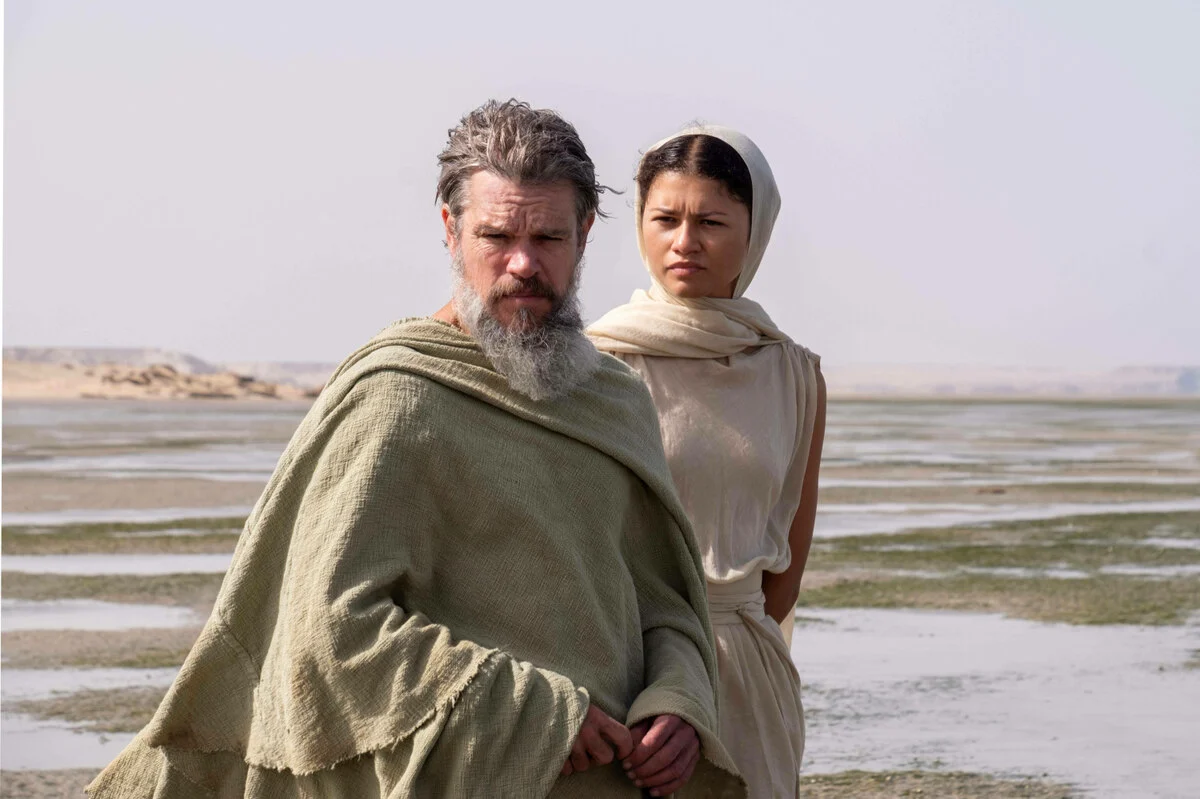
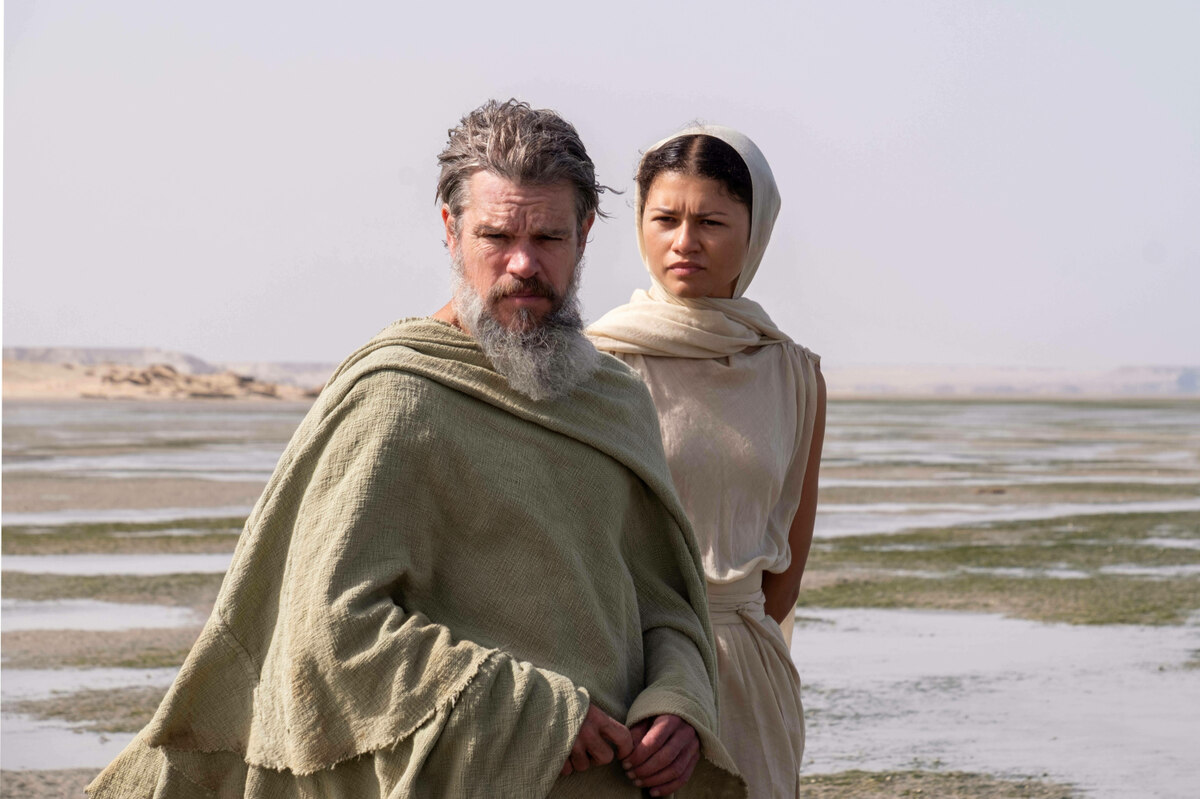
And now, "The Odyssey", Nolan’s ambitious retelling of Homer’s epic. The original epic, while patriarchal, still imbued its female figures with cunning, power, and distinct personalities. Nolan’s adaptation, however, appears to strip away even these ambiguities. The women are presented as archetypal projections: the "harlot, traitor, or seductive witch" impeding Odysseus’s return to Ithaca. Penelope is reduced to a "treudoofe Hausfrau" (a naively loyal housewife), her cunning and resilience from the original epic diluted. Calypso, the powerful nymph who holds Odysseus captive, becomes a mere "Krankenschwester" (nurse), tending to his wounds rather than challenging his will. Even Athene, the goddess of wisdom and war, who in Homer actively aids Odysseus with her divine intellect, is portrayed as chasing him, serving him, begging him to become reasonable – a diminished, almost nagging figure.
Circe, perhaps the most iconic sorceress of the epic, played by the talented Samantha Morton, suffers a similar fate. While Madeline Miller’s acclaimed novel "Circe" provided a rich, feminist reinterpretation of her motivations, Nolan’s narrative offers only "ein paar halbüberzeugende Sätze Odysseus’" (a few half-convincing sentences from Odysseus) to persuade her to release his men from their swine forms. This stands in stark contrast to Homer’s version, where Odysseus requires Hermes’ divine intervention and spends a year as Circe’s lover before she finally aids his journey. Nolan’s adaptation, in its eagerness to center Odysseus, undermines the complexity and power inherent in these mythical women, further solidifying the critique that his female characters are consistently secondary.

Supporting Data & Critical Context: Echoes from Academia and Criticism
The critique of Nolan’s female characters is not merely anecdotal; it resonates with broader discussions in feminist film theory and analyses of gender representation in Hollywood. Simone de Beauvoir’s seminal work, "The Second Sex," posited that myths about the "eternal feminine" prevent men from perceiving women as full human beings, capable of independent thought, desire, and agency. Nolan’s consistent portrayal of women as extensions of male narratives, as symbolic figures rather than fully fleshed individuals, seems to embody this very phenomenon. They are often defined by their relationships to men (wives, mothers, lovers), their deaths serve male character development, or their roles are purely functional to the plot.
Many of Nolan’s films struggle with the Bechdel Test, which requires a film to feature at least two women who talk to each other about something other than a man. While a simple metric, its difficulty for many blockbusters, including Nolan’s, highlights a systemic issue in screenwriting. The lack of female-to-female interaction often signals a lack of independent female character development.
The trope of "fridging," where a female character is killed or harmed to motivate a male protagonist, is evident in multiple Nolan films, most notably with Rachel Dawes in "The Dark Knight" and Mal in "Inception." This device, while providing emotional stakes, is often criticized for its reductive view of female agency, positioning women as expendable plot devices rather than characters whose lives and deaths hold intrinsic meaning beyond their impact on a man.
Beyond specific tropes, the general lack of complex interiority for Nolan’s female characters is a consistent point of contention among critics. Film critic Manohla Dargis of The New York Times, while generally appreciative of Nolan’s work, has often pointed out the thinness of his female roles, noting that they often serve as "narrative furniture." Academic studies on gender in blockbuster cinema frequently cite Nolan as an example of a director whose narratives, despite their intellectual ambition, remain firmly entrenched in a masculine-centric worldview, often failing to break free from traditional gender roles and archetypes.
In contrast, contemporary filmmakers like Greta Gerwig ("Barbie," "Lady Bird"), Chloé Zhao ("Nomadland"), and Emerald Fennell ("Promising Young Woman") actively subvert these norms, offering rich, complex, and often challenging portrayals of female experiences and agency. Even within the blockbuster space, directors like Denis Villeneuve ("Arrival," "Dune") have demonstrated a capacity for crafting strong, independent female leads with profound emotional and intellectual depth. This highlights that the issue is not a limitation of the medium or genre, but often a conscious or unconscious directorial choice.

Official Responses & The Director’s Stance (or Silence)
Christopher Nolan is known for his guarded approach to interviews, often preferring to discuss the technical and conceptual aspects of his films rather than delving into personal interpretations or criticisms. Direct official responses from Nolan explicitly addressing the critique of his female characters are notably scarce. When questioned about character development, he tends to speak in broad terms about narrative function and emotional resonance, without specifically addressing the gender dynamics.
For instance, in discussions around "Oppenheimer," while much was made of the film’s historical accuracy, Nolan focused more on the titular character’s internal conflict and the moral weight of his decisions, rather than the depth afforded to Kitty or Jean. He has occasionally alluded to the functional role characters play in his intricate plots, suggesting that some characters are designed to serve specific narrative purposes, which could inadvertently explain the perceived lack of depth in some female roles. However, this explanation often falls short for critics who argue that even functional characters can possess compelling interior lives.
Actresses who have worked with Nolan, such as Anne Hathaway, Emily Blunt, and Florence Pugh, have generally expressed admiration for his directing style and the opportunity to work on his ambitious projects. Their public statements rarely delve into the specific limitations of their characters’ arcs, often focusing on the collaborative process or the scale of the production. This silence is not necessarily an endorsement of the critique but rather a reflection of the professional environment, where direct criticism of a director’s choices, especially from within the production, is uncommon.
The absence of a robust public dialogue from Nolan on this particular critique suggests either an unawareness, a disagreement with the premise, or a strategic decision to avoid engaging with it directly. Regardless of the reason, his consistent output continues to fuel the debate, leaving many to wonder if this aspect of his storytelling will ever evolve.
Implications: Legacy, Representation, and the Future of Blockbuster Cinema

The ongoing critique of Christopher Nolan’s female characters carries significant implications for his legacy, the broader landscape of cinematic representation, and the future of blockbuster filmmaking. As an auteur of his stature, Nolan’s choices carry immense weight, influencing both aspiring filmmakers and audience expectations.
Impact on Nolan’s Legacy: While his technical mastery and narrative ambition are undeniable, this persistent blind spot for female characters could, over time, temper his standing as a truly universal storyteller. A legacy defined solely by male-centric narratives, no matter how complex or innovative, risks appearing increasingly anachronistic in an era that demands more inclusive and diverse storytelling. Future appraisals of his oeuvre may increasingly highlight this limitation, potentially framing him as a brilliant craftsman who, ironically, struggled with the very human dimension of half the population.
Audience Expectations and Influence: Nolan’s films reach global audiences, shaping perceptions and expectations of what compelling cinema looks like. When a director of his influence consistently portrays women as secondary or symbolic, it subtly reinforces traditional gender roles and biases within the cultural consciousness. This can contribute to a perpetuation of a cinematic status quo where female stories and perspectives are deemed less central or less worthy of exploration, impacting how audiences, especially younger generations, view women on screen and, by extension, in society.
The Responsibility of Auteurs: Auteurs like Nolan wield immense creative power and, with it, a certain responsibility to reflect and challenge societal norms, not merely to reproduce them. His ability to construct intricate worlds and explore profound philosophical questions makes his omission of equally profound female interiority all the more conspicuous and, for some, disappointing. It highlights the ongoing need for influential directors to critically examine their own biases and to actively seek out diverse voices and perspectives in their creative teams, from writers to producers, to ensure a richer tapestry of characters.
Call for Evolution: The conversation around Nolan’s female characters is part of a larger, vital dialogue about gender equality and representation in Hollywood. As the industry continues to grapple with issues of diversity and inclusion, the hope remains that even established masters will evolve. For Nolan, embracing the challenge of creating truly complex, autonomous female characters – characters with their own dreams, flaws, and journeys independent of a male gaze – would not only silence a persistent critique but also enrich his storytelling, adding another layer of depth to his already remarkable cinematic universe. Until then, his epics, whether set in space, the subconscious, or ancient Greece, risk remaining, as Valérie Catil suggests, primarily "a director for men," missing the opportunity to speak to the full breadth of human experience.