As Berlin’s Humboldt Forum marks its fifth anniversary, the institution finds itself at a crossroads. Conceived as a grand "debate space" and a center for the critical reappraisal of Germany’s colonial past, the project continues to wrestle with the architectural ghosts of the Prussian palace and the weight of its own ambitious mandate.
Introduction: A Monumental Challenge
Five years have passed since the doors of the Humboldt Forum in Berlin opened to the public. Positioned in the heart of the German capital, the structure—reconstructed to mirror the Prussian royal palace—was never intended to be a mere repository for art. From its inception, it was framed as a bold, modern experiment: a "museum of a new type" designed to facilitate a dialogue between cultures and confront the darker chapters of German history, particularly its colonial engagements.
As of July 2026, the verdict on the institution remains deeply divided. While it has successfully established itself as a major tourist destination and a venue for high-profile cultural discourse, critics argue that the "debate space" has yet to fully realize its potential as an international platform for genuine, equitable exchange.
Chronology: From Concept to Contradiction
The path to the Humboldt Forum was never smooth. The project was defined by controversy long before the first brick was laid.
- 2002–2008: The German Bundestag votes to reconstruct the exterior of the Berlin Palace, a decision that ignites years of fierce architectural and political debate regarding the restoration of Prussian symbols in a reunified, democratic Germany.
- 2013–2018: As the building rises, focus shifts to the contents of the museum. Public outcry grows regarding the ethics of displaying non-European ethnological collections within a building that symbolizes the very imperial power structure that acquired them.
- 2021: The Humboldt Forum opens its doors amidst the backdrop of a global pandemic and intense pressure to address colonial provenance. It is marketed as a "debate space" dedicated to the critical interrogation of historical injustice.
- 2022–2024: The institution begins high-profile restitution processes, most notably the transfer of ownership of the Benin Bronzes to Nigeria, signaling a shift toward active decolonization.
- 2026: The five-year mark. Officials characterize this as a "caesura"—a moment to transition from the initial phase of establishment to a more complex, mature era of operation.
The Weight of History: The Luf Boat
No single object encapsulates the dilemma of the Humboldt Forum more poignantly than the Luf Boat. An outrigger canoe from the island of Luf in present-day Papua New Guinea, the boat was brought to Germany under the shadow of colonial violence and exploitation.
Today, it serves as a central exhibition piece, curated with a focus on its traumatic history. For visitors like Klaus Fisching, a tourist from Dortmund, the exhibit is a successful exercise in transparency. "It is a massive crime that happened back then," he says. "It is good that it is being displayed and made clear to the public." Yet, for others, the act of placing such an object within the grandeur of a reconstructed imperial palace remains a jarring, perhaps irreconcilable, aesthetic and moral contradiction.
Official Perspectives: The Path Forward
The fifth anniversary has prompted reflection among stakeholders regarding the institution’s trajectory.
Wolfram Weimer, the incumbent State Minister for Culture, described the anniversary as both a success and a turning point. "The phases of foundation and construction are completed," Weimer noted in a statement to the dpa. "Now begins the more demanding task." Weimer advocates for the institution to evolve into a body with a "shared self-image," moving away from the friction of its early years toward a more unified institutional identity.
Hartmut Dorgerloh, the General Director of the Humboldt Forum, defends the institution’s current path. While acknowledging that the forum is not the "navel of the world," he emphasizes that it has become an essential hub for addressing contemporary global questions. "We welcome critical debate," Dorgerloh states, noting that the events held at the forum are designed to bridge cultural divides and have been met with strong public engagement.
Supporting Data: By the Numbers
The Humboldt Forum is undeniably a "magnet," though the nature of its success remains a point of contention.
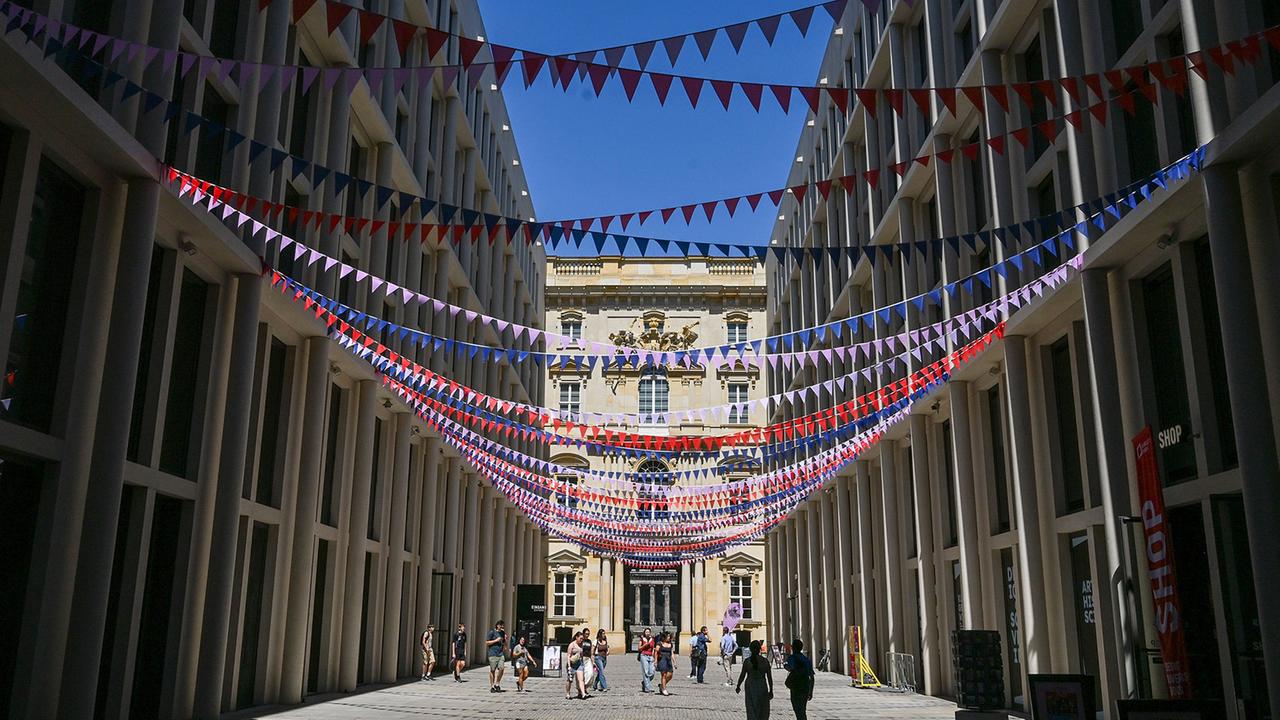
- Total Attendance: In the past year, the Forum recorded approximately 3.3 million visits. However, critics point out that this number includes casual passersby walking through the courtyards.
- Exhibition Engagement: The actual galleries saw 634,000 visitors, while organized events attracted 132,000 attendees.
- Demographics: Data suggests that roughly 60 percent of visitors are tourists, raising questions about whether the institution has successfully integrated itself into the local, everyday life of Berlin’s diverse society.
Criticisms and the "Relevance" Gap
Despite the visitor numbers, voices from the cultural sector remain skeptical. Volker Hassemer, former Berlin Senator for Culture and a member of the Stiftung Zukunft Berlin, argues that the vision for the institution has stalled.
"The original idea went beyond merely presenting cultures; it was meant to activate them," Hassemer explains. "Currently, the cultures of the world do not feel called upon to have their say here in the way they were promised." He calls for a clearer political mandate and a restructuring of the leadership, as the current model—a collaboration between the Humboldt University, the City of Berlin, and the Prussian Cultural Heritage Foundation—often suffers from diffuse decision-making powers.
Nicola Kuhn, a journalist for Der Tagesspiegel, echoes this sentiment, noting that while the forum has captured the attention of international tourists, it has yet to earn the genuine acceptance of the Berlin cultural scene. "There is a lingering skepticism in the arts and academic community," she observes.
The Architectural Controversy
The debate surrounding the building’s facade is far from settled. Noa K. Ha, scientific director at the German Center for Integration and Migration Research, views the architecture as a "colonial-revisionist gesture."
According to Ha, the facade implicitly celebrates the German colonial project, regardless of how radical or critical the exhibitions inside might be. She argues that even five years on, the institution must be willing to engage in symbolic deconstruction, such as altering the facade or removing specific elements to acknowledge the building’s problematic provenance.
However, Ha also acknowledges the positive shifts the institution has facilitated. "The connection between colonial history and racism is a topic we have only truly begun to grapple with as a society because of the decision to build this forum," she notes.
The Future: Restitution and Beyond
The return of the Benin Bronzes is often cited by the Prussian Cultural Heritage Foundation as a hallmark achievement. However, activists and scholars warn that this should be the beginning, not the end, of the process.
"The Benin Bronzes are the tip of the iceberg," warns Noa K. Ha. The challenge for the next five years will be moving from symbolic, high-profile restitutions to a systematic, proactive investigation of provenance across the entire collection. The Foundation acknowledges that while a roadmap for further returns exists, the process is hampered by complex negotiations and, crucially, a need for greater financial resources to support the necessary research.
Conclusion: A Work in Progress
As the Humboldt Forum looks toward its next half-decade, it faces a fundamental challenge: reconciling its physical form with its intellectual ambitions. It is a space that frequently "rubs people the wrong way," as the saying goes—a place of friction and, often, productive discomfort.
The initial era of construction and public outcry has passed. What lies ahead is the more difficult, quiet, and persistent work of becoming the "debate space" it promised to be. Whether the Humboldt Forum will eventually be remembered as a successful bridge between cultures or as an architectural monument to an unresolved past remains, five years on, an open question. For now, it remains a vital, if imperfect, site where the struggle for a post-colonial understanding of history continues to unfold in real-time.