The 2026 FIFA World Cup has reached its dramatic conclusion, cementing a new era of Spanish dominance while leaving a trail of geopolitical tension and sporting controversy in its wake. In a tournament defined by expansion, star power, and unexpected diplomatic friction, Spain emerged as the world champion, defeating Argentina 1-0 in a tense final in East Rutherford, New Jersey.
As Madrid erupts in a massive, million-strong celebration, the footballing world is left to grapple with the fallout of a tournament that blurred the lines between sport, politics, and the personal ambitions of global leaders.
The Coronation: Spain’s Path to Glory
The Spanish national team, led by captain Rodri and the prodigious 19-year-old sensation Lamine Yamal, has completed a remarkable cycle of dominance. With their 1-0 victory over Lionel Messi’s Argentina, secured by a decisive goal from Ferran Torres in extra time, Spain confirmed its status as the world’s premier footballing nation.
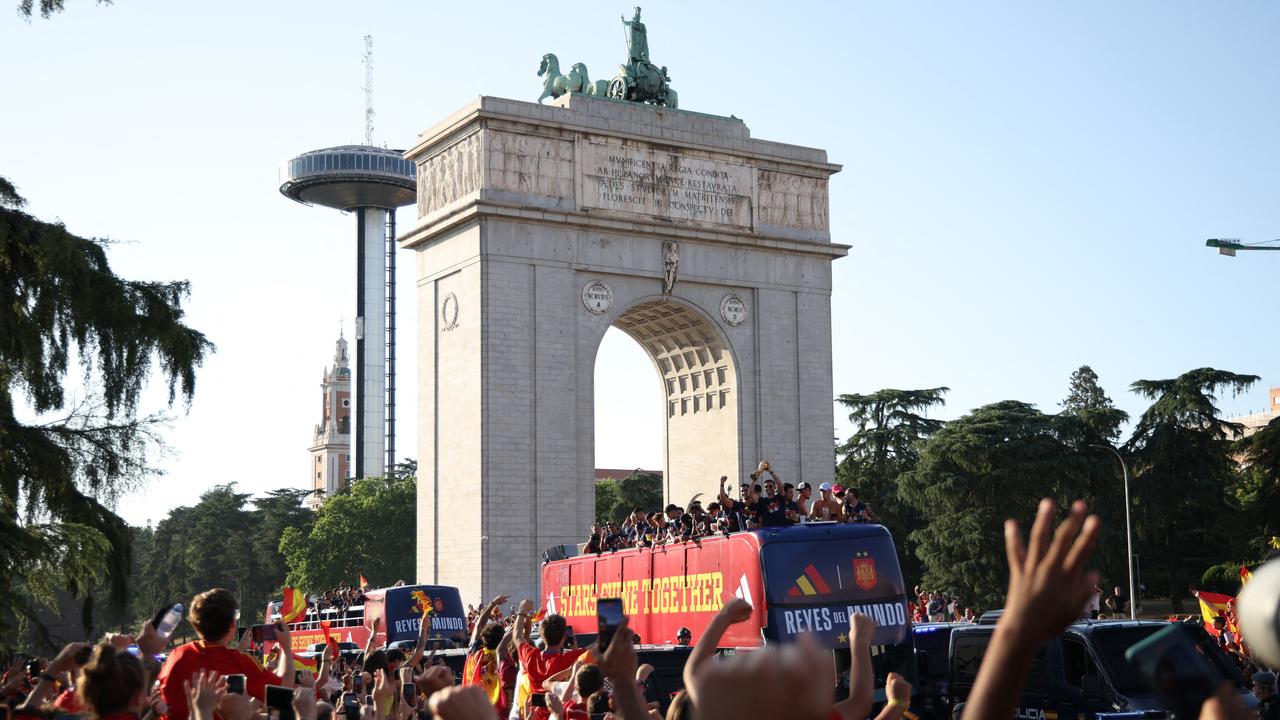
Following their return to Madrid, the team was received by King Felipe VI at the Palacio Real. "You are tired, but it is a wonderful tiredness," the King remarked, acknowledging the squad’s "epic" journey. The celebrations culminated in a bus parade through the streets of Madrid, ending at the iconic Cibeles fountain, where an estimated one million fans gathered to pay tribute to a squad that now holds both the men’s and women’s World Cup titles simultaneously.
A Chronology of Conflict and Celebration
The final days of the tournament were marked by a stark contrast between the joy of the pitch and the discord off it.
- July 19: The final match between Spain and Argentina took place at the MetLife Stadium. Despite a spectacular halftime show featuring global icons like Madonna, Coldplay, and Shakira, the atmosphere was marred by significant entry issues. Technical failures in FIFA’s ticket-scanning system and heightened security protocols—due to the presence of U.S. President Donald Trump—resulted in long delays and empty seats at kickoff.
- Post-Match Scuffles: Immediately following the final whistle, tensions boiled over. Argentinian player Leandro Paredes was involved in a physical altercation with Spanish players, leading to a straight red card. FIFA’s Disciplinary Committee has since launched an investigation into the incident, which may extend to other members of the Argentinian squad and coaching staff.
- July 20: The world champion Spanish squad arrived back in Madrid to a hero’s welcome, while back in the United States, the focus shifted to the ongoing fallout of the tournament’s administrative failures and the controversial political presence surrounding the final.
Supporting Data: The Statistics of Success
Spain’s victory is not merely a symbolic achievement; it is backed by a level of systemic success rarely seen in modern sport. Over the last five years, Spain has secured 17 major titles across men’s and women’s divisions, from the U17 level to the senior World Cup.
The individual accolades were equally distributed among the champions:
- Rodri was awarded the Golden Ball as the tournament’s best player, an accolade that follows his success as the player of the tournament at Euro 2024.
- Unai Simón was named the best goalkeeper, while 19-year-old Pau Cubarsi received the award for best young player.
- Lamine Yamal entered the record books as the youngest player ever to win both the European Championship and the World Cup by the age of 19.
Conversely, the tournament saw Argentina’s Lionel Messi, in his sixth and likely final World Cup appearance, fall just short of his second title. Despite his individual brilliance, Messi expressed the "immeasurable pain" of the defeat, leaving the future of his international career in doubt.
Official Responses and FIFA’s Vision
The 2026 World Cup has been a lightning rod for criticism regarding FIFA’s management. The relationship between FIFA and UEFA has reached an all-time low, highlighted by UEFA President Aleksander Ceferin’s decision to boycott the final. The friction stems from a series of high-profile disputes, most notably the FIFA Disciplinary Committee’s decision to overturn the red-card suspension of U.S. striker Folarin Balogun—a move allegedly influenced by direct pressure from President Trump.
FIFA President Gianni Infantino, however, remains unapologetic, framing the tournament as the most successful in history. "The FIFA is the official provider of happiness for humanity," Infantino stated during a speech at the Trump Tower, where he praised President Trump’s role in the tournament’s logistical success.
Infantino also signaled that the expansion of the tournament is far from over. With the 2030 World Cup already slated for Spain, Portugal, and Morocco—with additional matches in South America—the FIFA president is actively lobbying for an increase to 64 participating teams, up from the 48 featured in North America.
The Darker Implications: A Tournament of Tragedy
Beneath the veneer of success, the tournament was haunted by incidents that have cast a long shadow. In Spain, the celebrations were shattered by the tragic death of a 13-year-old in Ciudad Rodrigo, who was crushed when a stone monument collapsed during a jubilant crowd surge.
Furthermore, the involvement of political figures in the sport has sparked intense debate. The presence of U.S. President Donald Trump at the final, combined with the attendance of Mexican President Claudia Sheinbaum and Canadian Prime Minister Mark Carney, turned the final into a diplomatic stage. While FIFA argues that this level of high-profile engagement bolsters the tournament’s global significance, critics argue that the politicization of the sport undermines the neutrality and integrity of the game.
The Future of the Beautiful Game
As the dust settles, the footballing world is left to digest a tournament that set records for revenue and viewership but also raised fundamental questions about the direction of the sport.
The record-breaking prize pool of $50 million for the world champion, while massive, underscores the growing commercialization of the World Cup. The total distribution of $871 million to participating associations is meant to foster development, yet the disparity in power between the governing bodies remains a glaring issue.
For the fans, the 2026 World Cup will be remembered for Spain’s tactical brilliance and the rise of a new generation of superstars like Yamal. For the stakeholders, it will be remembered as the moment the World Cup truly became a global political entity. Whether this evolution will strengthen the game or fracture its core remains to be seen.
One thing is certain: as Spain parades the trophy through the streets of Madrid, the echoes of this tournament will continue to resonate for years to come. The "Golden Generation 2.0" has arrived, but they have taken the throne at a time when the kingdom of football is more divided than ever.
With the 2030 tournament on the horizon, FIFA’s push for a 64-team competition looms large. If the 2026 edition is the template, we can expect even more drama, more political entanglement, and more challenges for a sport trying to balance its role as a universal unifier with the realities of modern global influence. Spain may have won the match, but the battle for the future of football is only just beginning.