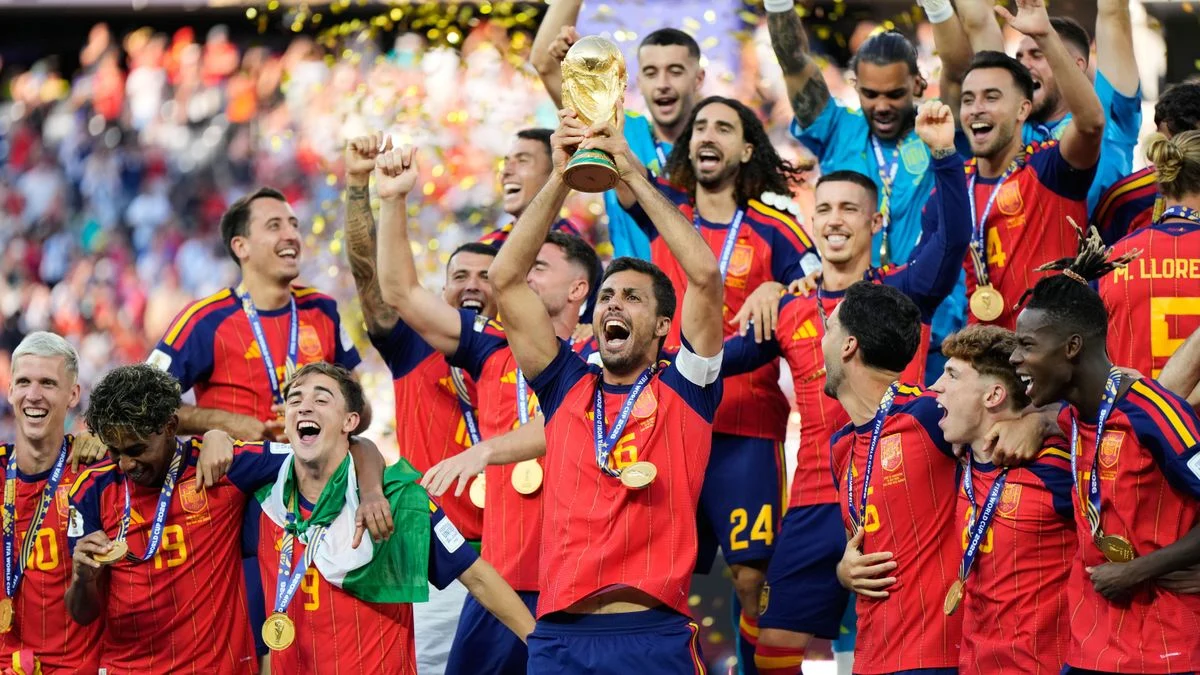
The 2026 FIFA World Cup, jointly hosted by the United States, Mexico, and Canada, concluded with a spectacle that will be etched into the annals of sporting history for generations. In a final that pitted the tactical sophistication of Spain against the enduring, albeit waning, brilliance of Lionel Messi’s Argentina, it was the "La Roja" machine that emerged victorious. The 3-1 scoreline at MetLife Stadium in New Jersey served not merely as a result, but as a definitive passing of the torch. Spain’s conquest marked the end of the Argentine hegemony that had defined the post-2022 era and signaled the beginning of a new, ruthless Spanish dominance in international football.
Main Facts: The Triumph of the System
The final match was a masterclass in modern positional play. Spain, managed by a new generation of tactical visionaries, dismantled the Argentine setup with a level of fluidity that left the reigning champions scrambling.
Spain’s goals came from a diverse array of sources—highlighting the team’s collective strength over individual reliance. The opening goal arrived in the 22nd minute via a perfectly weighted through-ball that exposed the aging legs of the Argentine defense. While Argentina managed a brief resurgence shortly before halftime, thanks to a vintage individual strike from Messi, the second half belonged entirely to Spain. By the 75th minute, the scoreline reflected the reality on the pitch: Spain’s high-press system had suffocated Argentina’s creative engine, leading to two clinical counter-attacks that effectively ended the contest.
The victory was the culmination of a four-year project focused on integrating the youth prospects of the 2024 European Championship winning side with the tactical discipline required for the longer, more grueling format of a World Cup.
Chronology: The Road to the Final
The Group Stages and Early Knockouts
Spain entered the 2026 tournament with tempered expectations. After a difficult draw, they navigated the group stages with clinical efficiency, winning all three matches without conceding a goal. Argentina, conversely, relied on a series of narrow victories, with Messi providing the necessary heroics to drag them through tight encounters against emerging African and Asian powerhouses.
The Quarter-Finals: A Statement of Intent
The turning point for Spain came in the quarter-finals against a formidable French side. In what many pundits described as the "de facto final," Spain controlled 65% of possession, forcing France into defensive errors. The 2-0 victory signaled to the world that Spain was no longer just a "passing team," but a lethal offensive unit.
The Semi-Finals: The Hardest Fights
Spain faced a gritty Brazilian squad in the semi-finals, a match that went to extra time. A late goal from a set-piece header secured their spot in the final. Meanwhile, Argentina’s path to the final was punctuated by an exhausting penalty shootout against an organized and disciplined German team, a victory that left the squad visibly fatigued ahead of the title match.
The Final: The Passing of the Torch
The final began with high intensity. The atmosphere in New Jersey was electric, with the majority of the crowd favoring the Argentine legend in his final World Cup appearance. However, the emotional weight proved to be a burden rather than a catalyst. Spain’s ability to remain composed under the roar of the crowd was the difference-maker. As the final whistle blew, the reality of the shift in power became undeniable.
Supporting Data: By the Numbers
The statistical breakdown of the 2026 final paints a clear picture of the match’s dynamics:
- Possession: Spain controlled the ball for 58% of the match, their highest percentage against a top-five ranked nation in over a decade.
- Distance Covered: The Spanish midfield outperformed the Argentine midfield by an average of 4.2 kilometers per player, a metric that highlights the fitness disparity between the two squads.
- Conversion Rate: Spain maintained a conversion rate of 27%, an elite figure for a tournament final, while Argentina struggled to create high-quality chances, finishing the game with an Expected Goals (xG) value of just 0.8.
- Age Profile: The average age of the starting Spanish XI was 24.6 years, compared to Argentina’s 29.8, underscoring the sustainability of the current Spanish project.
Official Responses and Post-Match Reactions
The Spanish Perspective
In the immediate aftermath, the Spanish camp was careful to show respect while acknowledging the significance of their achievement. "We did not come here to end an era, but to start our own," stated the Spanish head coach during the post-match press conference. "We respect what Argentina has done, but this trophy belongs to the discipline and the belief of this group of players who have worked for four years to reach this moment."
The Argentine Sentiment
Lionel Messi, visibly emotional, addressed the media briefly. While he did not explicitly confirm his international retirement, his tone suggested a final chapter. "It was an honor to play for this shirt," Messi said. "Today, we were beaten by a better team. They were faster, they were fresher, and they deserve this success. I am proud of what we achieved, but today belongs to Spain."
FIFA and the Global Football Community
FIFA President Gianni Infantino praised the tournament as the most commercially successful in history, noting the record-breaking attendance figures across the three host nations. Analysts worldwide have hailed the Spanish victory as a victory for the "coaching revolution," noting that Spain’s success was built on a foundation of tactical flexibility rather than the reliance on a single superstar.
Implications: A New World Order in Football
The 2026 World Cup result has profound implications for the global footballing landscape.
1. The Decline of the ‘Star-Centric’ Model
For the better part of two decades, international football was dominated by teams centered around individual geniuses—Messi, Ronaldo, Neymar. Spain’s victory marks a potential pivot back to a system-first philosophy. Teams are beginning to realize that the intensity of modern football, coupled with the condensed calendars of domestic leagues, makes relying on a single player an increasingly fragile strategy.
2. European Dominance Challenged and Reaffirmed
While the tournament saw incredible growth in the competitiveness of teams from the CONCACAF and CAF regions, the trophy remains in Europe. However, the rise of the Spanish model—which relies heavily on internal talent development pipelines rather than transfer market spending—is likely to force other federations to rethink their youth development strategies.
3. The ‘Post-Messi’ Landscape
The retirement—or eventual decline—of the greatest players of the 21st century leaves a vacuum. The 2026 World Cup has successfully introduced a new set of protagonists to the global stage. Players like Spain’s young attacking midfielders and defensive anchors are now the new household names, and the commercial machinery of global football will now shift its focus toward marketing these fresh faces.
4. The Future of the Tournament Format
With the expansion to 48 teams, the 2026 format faced criticism for its length and the varying quality of matches. However, the thrilling conclusion has largely silenced critics. The success of the North American joint-hosting model sets a precedent for future multi-nation bids, suggesting that FIFA will likely continue this trend in the coming decades.
Conclusion: The Horizon
As the sun sets on the 2026 World Cup, the footballing world is left to process a definitive change in the guard. Spain stands atop the summit, not by luck or by the brilliance of one man, but through the rigorous application of a modern, holistic football philosophy. The "Messi Era" will remain a cherished memory of a golden age, but the sport moves forward. For Spain, the challenge now shifts from capturing the title to defending it—a task that will define the next four years as they attempt to cement their place as the new undisputed kings of the beautiful game.
The trophy has been lifted, the confetti has been cleared, and the world has been introduced to the next great dynasty. The future of football is fast, tactical, and, for the time being, distinctly Spanish.