By International Affairs Desk
Published: June 18, 2026
In the corridors of power, from the Kremlin to Mar-a-Lago, a theological ghost has been exhumed. The term is "Katechon"—an obscure Greek word derived from the New Testament that has, in recent years, transitioned from the dusty shelves of academic theology into the vanguard of modern right-wing political discourse. As geopolitical tensions rise and the liberal international order faces unprecedented strain, the Katechon is being deployed as a powerful, albeit nebulous, narrative device to justify autocracy, define enemies, and frame current events as a cosmic battle for the survival of civilization.
The Theological Origins: A Brief History of Delay
To understand the current fascination with the Katechon, one must look to the Second Epistle to the Thessalonians, attributed to the Apostle Paul. In the early days of Christianity, the faithful lived in constant, palpable expectation of the Parousia—the Second Coming of Christ and the subsequent end of the world. However, as decades passed without this event, the early church faced a crisis of expectations.
Theologians termed this the "Parousia delay." In this context, the Katechon (from the Greek katechein, meaning "to hold back" or "to restrain") was identified as a mysterious, divinely ordained force that stands between the present age and the coming of the Antichrist. By holding back the forces of chaos, the Katechon prevents the apocalypse from occurring prematurely. It is, by definition, a "restrainer."
Historically, this concept has been interpreted in various ways. Early Church Father Tertullian famously identified the Roman Empire as the Katechon—not because it was inherently virtuous, but because it provided the structure and law necessary to prevent total social collapse. Throughout the centuries, the label has been applied to the Church, the monarchy, and the nation-state. In each instance, the logic remains the same: the entity in question is not necessarily "good" in a moral sense; it is "necessary" as a barrier against the forces of dissolution.
Chronology: From Carl Schmitt to the Digital Age
The secularization of the Katechon is largely credited to the controversial German jurist Carl Schmitt. A prominent legal theorist during the Weimar Republic and the early Nazi era, Schmitt sought to bridge the gap between religious dogma and political power. In his "Political Theology," Schmitt argued that modern state concepts are essentially secularized theological concepts.
For Schmitt, the state functioned as the Katechon, tasked with maintaining order against the perceived nihilism of liberalism. After World War II, Schmitt’s influence persisted in far-right circles, where his warnings against a globalized, liberal world order provided a ready-made intellectual framework for critics of the post-war status quo.
In the 21st century, the concept has undergone a resurgence. As globalization and the rapid pace of social change began to alienate conservative voters, the need for a "strongman" who could "hold back" progressivism became a recurring theme. The timeline of this resurgence aligns with the rise of populism:
- 2010s: Intellectuals in the "New Right" (Nouvelle Droite) began incorporating Schmittian themes into their critiques of the European Union.
- 2022-2024: Following the invasion of Ukraine and the rise of the MAGA movement, Russian ideologues and American populists simultaneously began using the term to describe their respective leaders.
- 2025-2026: The term has entered the mainstream of fringe political commentary on social media, with figures like Maximilian Krah (AfD) explicitly framing Donald Trump as a potential Katechon.
Supporting Data: Why the Term Resonates
The strength of the Katechon as a political tool lies in its profound ambiguity. As historian and author Volker Weiß explains in his book, Katechon: On the Return of Political Theology in the Present, the term is a "fill-in-the-blank" mechanism.
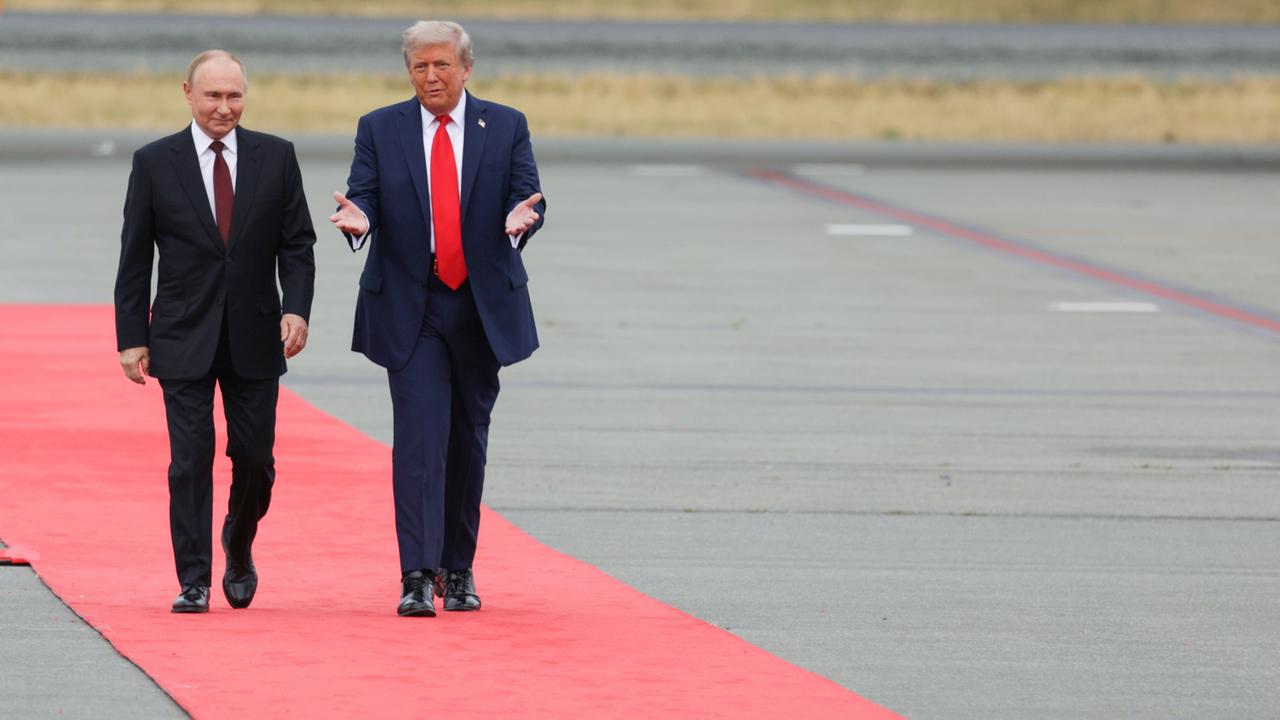
"The advantage of the Katechon figure is that it remains undefined," says Weiß. "Unlike the Messianic figure, who is usually tied to specific virtues or prophecies, the Katechon is defined solely by what it opposes. It is a negative definition of power. If you hate the current liberal order, you can project the role of the ‘restrainer’ onto anyone who threatens that order, whether it is Vladimir Putin or Donald Trump."
Data from political sentiment analysis shows that usage of the term has spiked in echo chambers where "civilizational decline" narratives are prominent. For fundamentalist Christian groups in the U.S., the argument is that Trump, despite his personal failings, acts as a divinely permitted bulwark against the "demonic" influences of secular progressivism. Conversely, in Russia, Alexander Dugin, a key ideological voice for the Kremlin, has explicitly cast Vladimir Putin as the world’s last true Katechon, protecting traditional values against a decadent, postmodern West.
Official Responses and Academic Perspectives
The adoption of this terminology by political actors has sparked significant alarm among theologians and political scientists. Most mainstream religious leaders have distanced themselves from the appropriation of the term, noting that the biblical Katechon was never intended to be a justification for modern political partisanship.
Dr. Elena Rossi, a scholar of political religion at the University of Geneva, argues that the use of "Katechon" is a dangerous form of "political eschatology."
"By framing political rivals as the ‘Antichrist’ or ‘forces of chaos’ and one’s own leaders as the ‘restrainer,’ you essentially remove the possibility of democratic compromise," Rossi states. "If your leader is the only thing standing between the world and total destruction, any critique of that leader becomes an act of cosmic sabotage. It is a rhetorical trap designed to demand total, unquestioning loyalty."
Implications: A New Era of Political Theology
The implications of this trend are profound. First, it signifies a departure from secular, policy-based discourse. When a political movement begins to describe its mission in apocalyptic terms, the stakes are elevated from "better governance" to "existential survival."
Second, the expansion of the term to include "technological innovation" is a new and troubling development. Figures like Peter Thiel have, in various contexts, alluded to the idea that technological acceleration is the only way to prevent the stagnation and collapse of Western society. Here, the Katechon is no longer a human ruler, but the engine of silicon-based progress. This shifts the focus from traditional politics to a form of techno-utopianism that views government regulation as a form of apocalyptic interference.
As we look toward the remainder of the 2020s, the "Katechon" will likely remain a fixture in the rhetoric of the global right. It serves a dual purpose: it offers a sense of historical importance to supporters who feel marginalized, and it provides an excuse for the consolidation of power. If the world is ending, the logic goes, one cannot afford the luxuries of transparency, checks and balances, or democratic debate.
In summary, the revival of the Katechon is a symptom of a broader crisis of confidence in the liberal order. By dressing modern authoritarianism in the robes of ancient scripture, its proponents are attempting to create a narrative that is immune to rational critique. As long as voters feel they are living in a "pre-apocalyptic" world, the siren song of the "restrainer" will continue to sound—no matter the cost to the democratic institutions they claim to be saving.