The German national team’s campaign in the 2026 FIFA World Cup has been dealt a significant blow. Defensive anchor Nico Schlotterbeck will play no further part in the tournament after sustaining a severe interior ligament injury in his left ankle during Germany’s hard-fought victory over the Ivory Coast.
As the squad prepares for their final group stage encounter against Ecuador, the atmosphere within the German camp has shifted from the euphoria of early tournament success to a somber reflection on the physical toll of international football. The loss of Schlotterbeck is not merely a tactical setback; it represents the absence of one of the team’s most reliable playmakers from the backline.
The Incident: A Moment of Grit and Consequence
The injury occurred early in the second group-stage match against the Ivory Coast. Only 13 minutes into the high-intensity clash, a routine defensive duel turned critical. Schlotterbeck, known for his aggressive style and commitment to the challenge, collided awkwardly, immediately clutching his left ankle.
Despite the obvious pain, the 26-year-old Borussia Dortmund defender opted to remain on the pitch. For the next 30 minutes, he performed with a level of stoicism that drew praise from his coaching staff and teammates alike. He "bit the bullet," as the German idiom suggests, effectively neutralizing several counter-attacks before finally being replaced by Antonio Rüdiger at the half-time whistle.
Medical examinations conducted by the DFB (German Football Association) medical team later confirmed the worst: an interior ligament tear in the left ankle. The injury will require an extended recovery period, ruling him out for the duration of the tournament.
Tactical Implications: A Void in the Defensive Structure
Under head coach Julian Nagelsmann, Schlotterbeck had become an indispensable asset. As the only natural left-footed central defender in the squad, his ability to initiate play from the back provided a unique dimension to Germany’s build-up strategy.
"Schlotti was going to be a pillar of our defense. His vision and his ability to progress the ball were central to our tactical setup," Nagelsmann noted during a press briefing. "It is devastating because this tournament had the potential to be his defining moment on the world stage."
The tactical void left by Schlotterbeck is significant, but the coaching staff remains composed. Nagelsmann emphasized that the depth of the current roster—featuring stalwarts like Jonathan Tah, Antonio Rüdiger, Waldemar Anton, and Malick Thiaw—provides the necessary stability to continue the pursuit of the title.
The Return of Antonio Rüdiger
The primary beneficiary of the rotation—and the natural replacement—is Real Madrid’s Antonio Rüdiger. Despite having limited match rhythm over the past few weeks, Rüdiger’s performance upon replacing Schlotterbeck against the Ivory Coast was exemplary. His commanding presence and uncompromising tackling style were crucial in securing the narrow victory.
"Antonio did an excellent job coming into such an intense game cold," Nagelsmann said. "He showed the experience and focus that we need at this stage of the competition."
Official Responses and Team Dynamics
Despite the heartbreak of an early exit, the DFB has confirmed that Schlotterbeck will remain with the team for the foreseeable future. This decision, championed by Nagelsmann, is intended to maintain team cohesion and psychological morale.
"He is a positive character who has already begun looking forward," Nagelsmann stated. "Even off the pitch, his influence is felt. Keeping him with the group is a gesture of unity and respect for what he has contributed to this squad."
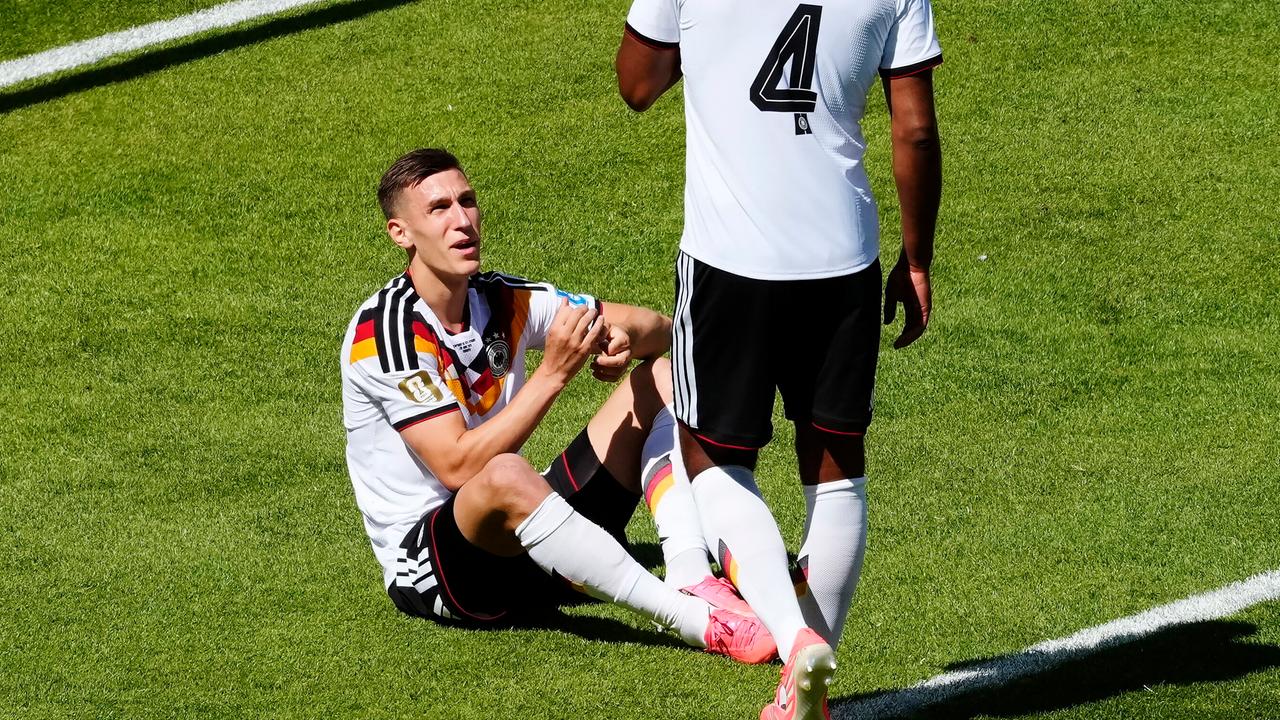
The team’s reaction has been one of solidarity. Players and staff alike have rallied around the defender, acknowledging his effort to play through the pain. The collective sentiment is that the team must now play for those who cannot finish the journey, a narrative that often serves as a powerful motivator in tournament football.
The Regulatory Reality: A Squad Locked in Place
A frustrating reality for the German camp is the rigidity of the FIFA tournament regulations regarding squad replacement. According to the official tournament guidelines, teams are permitted to replace injured players only up to 24 hours before their first match of the tournament.
Because the injury occurred after the commencement of the group stage, Nagelsmann is barred from calling up a replacement. The squad is now fixed. This follows the earlier withdrawal of Lennart Karl due to a muscle injury, leaving the German side thinner than anticipated.
The only exception to this rule is the goalkeeping position, where, upon rigorous medical validation by FIFA, teams may call up a replacement at any time. For the outfield positions, however, the current roster must suffice for the duration of the 2026 World Cup.
Looking Ahead: The Ecuador Challenge
Germany has already secured their path to the knockout stages following victories over Curaçao and the Ivory Coast. However, the final group-stage match against Ecuador remains vital for momentum and group seeding.
Ecuador, having struggled to find the back of the net in their draw against Curaçao, enters the game with everything to play for. They are currently fighting to avoid elimination and will likely adopt a desperate, high-pressing approach. For Germany, the challenge will be to maintain defensive integrity without the tactical flexibility offered by Schlotterbeck.
The match, scheduled for Thursday at 22:00 CEST, will be a litmus test for the defensive partnership of Tah and Rüdiger. With top spot in Group E already locked in, the coaching staff may choose to manage player fitness, but the primary goal remains to sharpen the defensive transition in the wake of the recent personnel changes.
Historical Context: A Familiar Struggle
For Schlotterbeck, this injury is a particularly cruel chapter in his career. Just last year, he faced a grueling six-month rehabilitation following a significant meniscus tear. Having fought his way back to elite form and secured a starting berth in the national team, the timing of this ankle injury is an unfortunate reminder of the fragility of an athlete’s career.
The German public and fans of Borussia Dortmund have expressed an outpouring of support on social media, emphasizing his resilience. Having overcome long-term injury before, there is a widespread belief that the 26-year-old will eventually return to the pitch stronger than before.
Summary and Outlook
As the tournament progresses, the focus for Germany shifts toward adapting to the new defensive reality. While the loss of Schlotterbeck is a tangible blow to their defensive versatility, the squad’s depth and the leadership of veterans like Rüdiger suggest that the team’s ambitions remain undeterred.
The path to the trophy in 2026 has become significantly more difficult, but the German team has proven its ability to perform under pressure. Whether this injury becomes a rallying point or a recurring obstacle will be determined in the coming weeks. For now, the eyes of the nation remain fixed on the upcoming clash with Ecuador, where the team will look to honor their fallen comrade with another dominant performance.
The tournament moves forward, and while Nico Schlotterbeck will be watching from the sidelines, his contribution to the team’s early success remains a permanent part of this World Cup campaign.