The 2026 FIFA World Cup, hosted across North America, promises to be the largest sporting event in history. With 48 teams competing across 104 matches, the logistical challenge of broadcasting the tournament is unprecedented. However, for the modern fan, the primary hurdle is no longer just finding the match—it is ensuring that your stream is as close to real-time as possible.
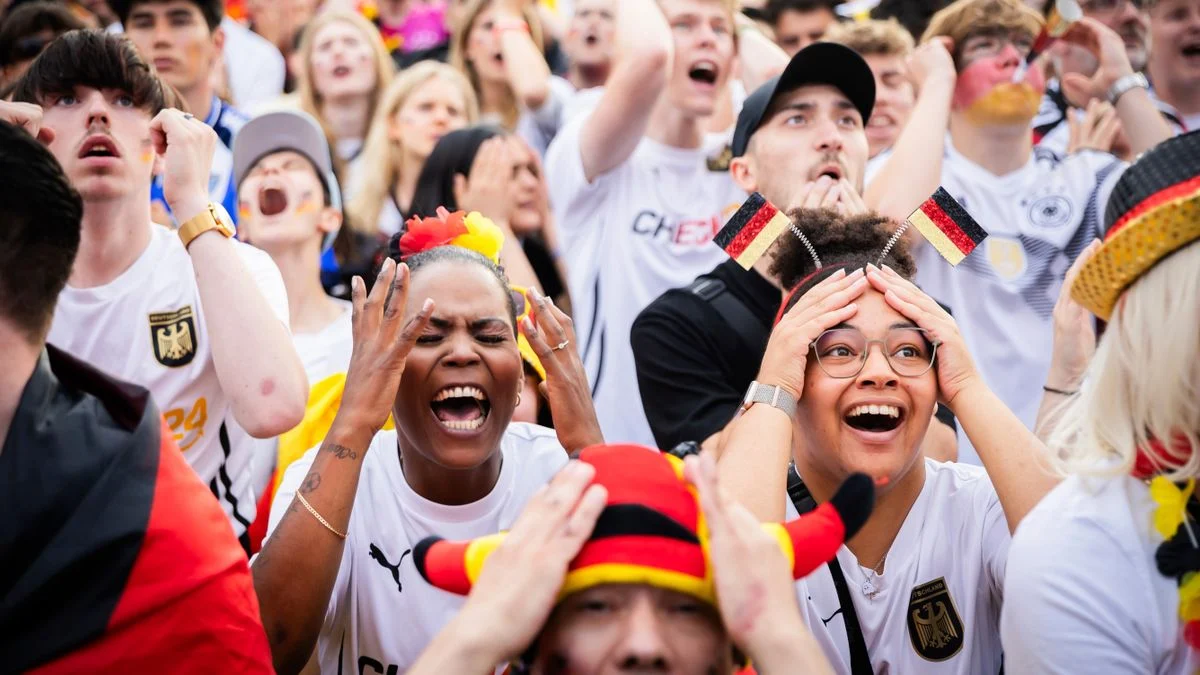
In an era of ultra-fast fiber optics and satellite broadcasting, the "spoiler delay"—the lag between a goal being scored and it appearing on your screen—has become a significant point of contention. As neighbors cheer for a goal that you haven’t seen yet, the digital experience of live sports is being redefined by latency.
The Chronology of Broadcast Latency
To understand why your neighbor might be celebrating thirty seconds before you, we must look at the evolution of television technology.
1. The Era of Analog (Pre-2010s)
In the past, terrestrial broadcasts (antenna TV) were the gold standard for live sports. Because the signal was broadcast through the air and picked up directly by a receiver, the delay was negligible—often mere milliseconds. This was the era where everyone in a neighborhood truly watched the match simultaneously.
2. The Rise of HD and Satellite
As High Definition became the standard, satellite transmission introduced a slight delay. The signal had to travel from the stadium to a satellite in geostationary orbit and back down to the provider, adding roughly 3–5 seconds of lag. Most viewers accepted this as a trade-off for superior picture quality.
3. The Streaming Revolution (2015–Present)
The current landscape is dominated by Over-the-Top (OTT) streaming services. Streaming requires the video to be broken into "chunks" or segments. These segments are encoded, packaged, and transmitted through a Content Delivery Network (CDN) to the end user. Depending on the buffer settings and the player’s ability to "catch up" to the live feed, the latency can range from 15 to 60 seconds.
Supporting Data: The Physics of the Delay
The delay in streaming is not a flaw in the technology, but a structural necessity of the internet. When you watch a match via a web app or a smart TV streaming service, several variables determine your "Time-to-Glass" (TTG) metric:
- Encoding Time: High-quality 4K/UHD streams require significant processing power to compress data. This can take 2–5 seconds.
- Segment Duration: Most players wait for a 2-second or 5-second chunk of video to arrive before starting playback. If the player waits for two chunks to ensure a smooth stream without buffering, you are already 10 seconds behind.
- CDN Hop: The data must travel from the server farm to your local ISP. If your ISP is congested, your device may request a lower-bitrate stream, which requires additional handshaking, further increasing the delay.
In 2026, the volume of traffic will be immense. Experts estimate that the demand for bandwidth during peak match hours will test the limits of even the most robust municipal fiber networks.
Strategies for "Live" Viewing: How to Beat the Delay
If you want to be the first to cheer in your neighborhood, you must prioritize "low-latency" pathways.
H3: Prioritizing Terrestrial and Cable over IP
While streaming is convenient, it is inherently slower than traditional broadcast methods. If your goal is speed, prioritize the following in descending order:
- Direct Broadcast (Antenna/DVB-T2): This remains the fastest method, as it bypasses the internet infrastructure entirely.
- Cable TV: Cable providers often receive a direct fiber feed from the broadcaster, which is usually processed faster than the public internet stream.
- Satellite (DTH): Reliable, though slightly slower than cable.
- IPTV/Web Streaming: The slowest category. If you must stream, look for apps that offer "Low Latency" settings or prioritize the official broadcaster’s own app over third-party aggregators.
H3: Optimizing Your Home Network
If you are locked into a streaming service, you can mitigate the lag by optimizing your home environment:
- Hardwire your device: Use an Ethernet cable instead of Wi-Fi. Wi-Fi overhead and signal interference can force your device to re-request packets, increasing latency.
- Clear the Cache: Ensure your streaming device (Apple TV, Fire Stick, etc.) has sufficient storage and a clean cache to process the incoming video stream efficiently.
- Close Background Processes: If your smart TV is running multiple background apps, your processor’s efficiency in decoding the video stream may drop.
Official Responses and Industry Outlook
Broadcasters are acutely aware of the "spoiler" problem. During the 2022 World Cup and subsequent major events, companies like Akamai and AWS have developed "Low Latency HLS" (HTTP Live Streaming) protocols. These technologies aim to reduce the buffer segments from 10 seconds down to 1–2 seconds, potentially bringing streaming in line with traditional satellite broadcasts.
"The goal for 2026 is parity," says a spokesperson for a major telecommunications firm involved in the tournament’s infrastructure. "We are working toward a standard where the digital stream and the terrestrial broadcast arrive at the consumer’s home within a two-second window of each other. However, this requires universal adoption of new encoding standards, which is a massive logistical undertaking."
FIFA itself has emphasized the need for a unified global viewing experience, but they remain beholden to local rights holders, who often use legacy infrastructure that is difficult to upgrade on short notice.
Implications for the Fan Experience
The implications of these delays extend beyond just "spoiled" goals. It changes the social fabric of the event.
For years, the "World Cup moment" was communal—the roar from the street, the sound of cheering through open windows. In the streaming age, we are becoming isolated in our own digital bubbles, each watching a slightly different version of reality. If the delay persists or widens, we risk losing the "global village" aspect of the sport.
Furthermore, there is the issue of betting latency. For those who engage in live sports wagering, the delay is a critical factor. Bookmakers are already using sophisticated algorithms to detect "latency arbitrage"—where a user with a faster satellite feed bets on a goal before the bookmaker’s stream reflects the score. In 2026, expect even stricter regulation on in-play betting as regulators try to close the gap between the stadium and the screen.
Conclusion: The Future of the Match
As we look toward 2026, the technology to eliminate the delay exists, but the financial incentives to overhaul global broadcasting infrastructure are complex. Until fiber-to-the-home and low-latency streaming become the global standard, the best way to enjoy the World Cup remains a high-quality antenna or a direct cable feed.
For the true enthusiast, the hardware choice is just as important as the team they are cheering for. If you don’t want to hear your neighbor’s victory cry before you’ve even seen the ball hit the back of the net, it is time to audit your home setup. The 2026 World Cup will be a spectacle of digital prowess—ensure your view of it isn’t left in the past.