By Editorial Staff
Published: June 19, 2026
Ten years ago, on June 19, 2016, the German cultural landscape lost one of its most formidable pillars. Götz George was not merely an actor; he was a seismograph of the German soul—a man who bridged the gap between the post-war reconstruction era and the modern, fractured identity of the 21st century. While he was internationally synonymous with the rough-around-the-edges, beer-drinking, foul-mouthed Duisburg detective Horst Schimanski, his life’s work spanned seven decades, traversing the gamut from juvenile heartthrob to the portrayal of monsters and historical tragedies.
As we mark a decade since his passing, his legacy remains as complex and enduring as the roles he chose. George was a performer who eschewed the "stardom" of the modern age in favor of a relentless, often agonizing pursuit of artistic authenticity.
The Schimanski Revolution: Breaking the Television Mold
To understand the impact of Götz George, one must understand the television landscape of the late 1970s and early 1980s. Before "Schimmi" arrived on the scene in the Tatort series, the German detective was a polished, polite, and distinctly bloodless figure. These were men who operated by the book, drank tea, and rarely let their emotions—let alone their fists—do the talking.
When George stepped into the role of Horst Schimanski in 1981, he didn’t just play a cop; he acted as a wrecking ball to the conventions of the ARD crime drama. He wore a disheveled field jacket, cursed in a way that shocked the conservative sensibilities of the time, and operated in the gritty, industrial decay of the Ruhr region. When he famously uttered the word "Scheiße" (shit) during an investigation, it wasn’t just a line of dialogue—it was a cultural threshold.
George transformed the police procedural into a character study of the marginalized. He gave the Ruhrgebiet—a region that had long felt ignored or looked down upon by the rest of the republic—a sense of raw, defiant pride. He was the voice of the worker, the underdog, and the man who refused to be sanitized.
A Chronology of a Life in Focus
The trajectory of Götz George’s career is a mirror of German history itself. Born into a prominent acting family in Berlin, his path seemed preordained, yet he spent his entire life trying to carve out a space distinct from his father, the legendary Heinrich George.
- The Early Years (1950s): George began his stage career as a child, but his cinematic breakout came at 15 in Wenn der weiße Flieder wieder blüht (1953) alongside Romy Schneider. His performance as the boxer Gustav in Jacqueline (1959) earned him the German Film Prize for Best Young Actor, signaling the arrival of a major talent.
- The Karl-May Era (1960s): Seeking to build his craft, George took on roles in the immensely popular Karl-May adaptations, including The Treasure of the Silver Lake. These films provided him with the physical training that would later inform the visceral realism of his fight scenes in Tatort.
- The Theatrical Retreat (1970s): Disillusioned with the trends of the New German Cinema and its intellectual detachment, George largely retreated to the stage. This period was vital for his development, sharpening his craft in the intimacy of the theater.
- The Schimanski Years (1981–1991, 1997–2013): The era that defined him. Over 29 Tatort episodes and subsequent spin-offs, he redefined the genre.
- The Late Career (1990s–2016): Post-Schimanski, George sought to shed his typecasting. He delivered chilling performances in films like Der Totmacher (1995), where he played serial killer Fritz Haarmann, and later, the role of Josef Mengele, proving his capacity for profound, terrifying psychological depth.
The Burden of the "Century Actor": The Shadow of Heinrich George
Perhaps the most significant psychological struggle of Götz George’s life was his relationship with his father, Heinrich George. Heinrich was an icon of the Weimar Republic, a titan of the stage, but his legacy is permanently stained by his collaboration with the Nazi regime and his participation in propaganda films.
Heinrich died in 1946 in a Soviet special camp, leaving behind a legacy that was both a gift and a curse for his son. For decades, Götz lived in the shadow of his father’s fame and the moral complexity of his father’s choices. In his final years, George took the courageous step of confronting this history directly in the 2013 docu-drama George, where he played his own father. This was not merely an acting role; it was a process of catharsis. By portraying the man he admired yet deeply struggled to reconcile with, George finally seemed to reach a personal peace.
Cultural Implications: From Outcast to Monument
In the 1980s, the reception of Schimanski in Duisburg was divided. While the working class saw a hero, the local administration initially viewed the character as an insult to the city’s reputation. They feared the image of the "drunken, fighting cop" would define the city in the eyes of the nation.
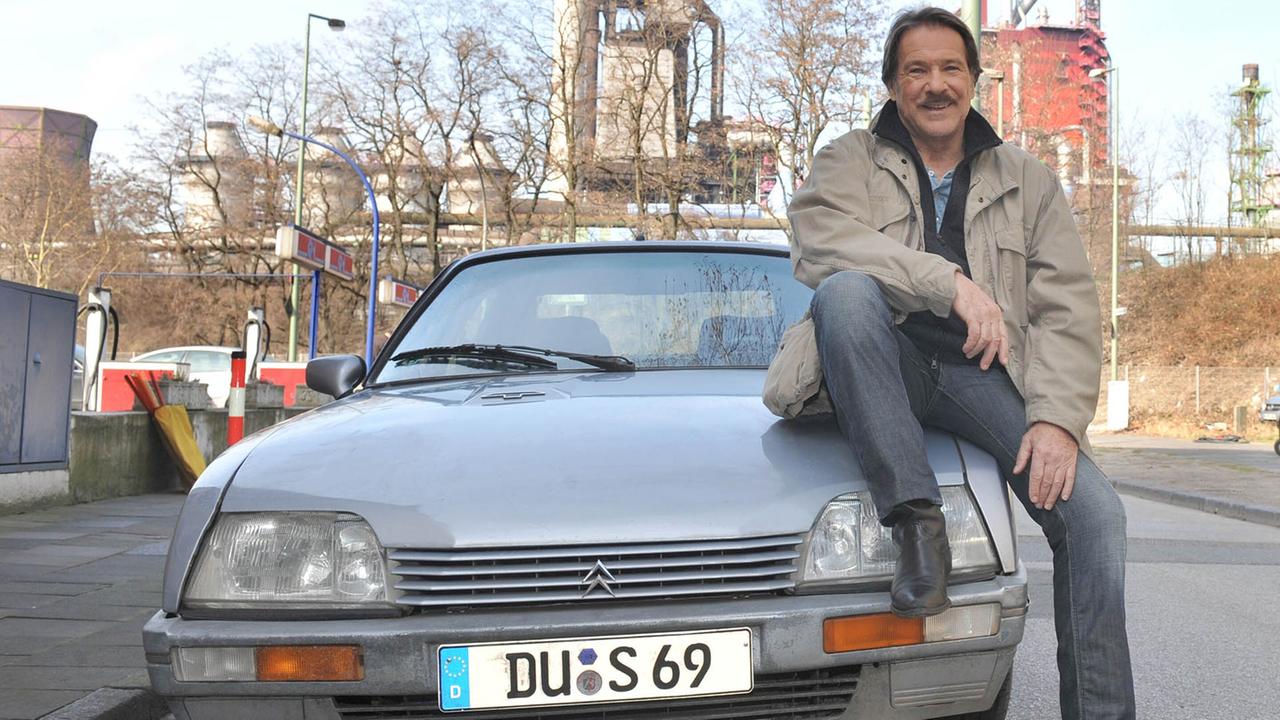
History, however, has proven the critics wrong. Today, the relationship is one of mutual pride. The city of Duisburg has institutionalized the "Schimmi" cult, most notably with the creation of the Horst-Schimanski-Gasse (Horst-Schimanski-Alley) and the bronze bust that commemorates the character. In 2021, the city’s acquisition and restoration of his iconic Citroën served as a final acknowledgment: Schimanski was not just a character; he was a vital part of the city’s identity.
Reflections on a Private Life
Götz George was famously guarded about his private life. He viewed the modern obsession with celebrity culture and the invasion of privacy as a detriment to the art of acting. He believed that the audience should know him only through his work. This distance often made him appear grumpy or difficult to the media, but it was a calculated defense of his craft.
When he died in 2016, he did so with the same privacy he guarded in life. His battle with cancer was known to none but his inner circle. Even his final resting place—in Berlin’s Zehlendorf cemetery, just meters from his father—was a quiet, family affair.
Conclusion: The Void Left Behind
Ten years on, the German acting scene is still grappling with the void left by Götz George. He represented a generation of actors who prioritized craft over brand, and substance over style. While many modern detectives in German media possess a "Schimanski-lite" edge, none have managed to replicate the dangerous, raw vulnerability that George brought to every frame.
As film historians and fans alike look back, the consensus is clear: Götz George did not just play roles; he lived them. He was a flawed, brilliant, and deeply dedicated artist who held a mirror up to Germany—the good, the bad, and the ugly—and forced the nation to look at its own reflection. Even a decade later, the mirror remains, and the reflection is as sharp as ever.