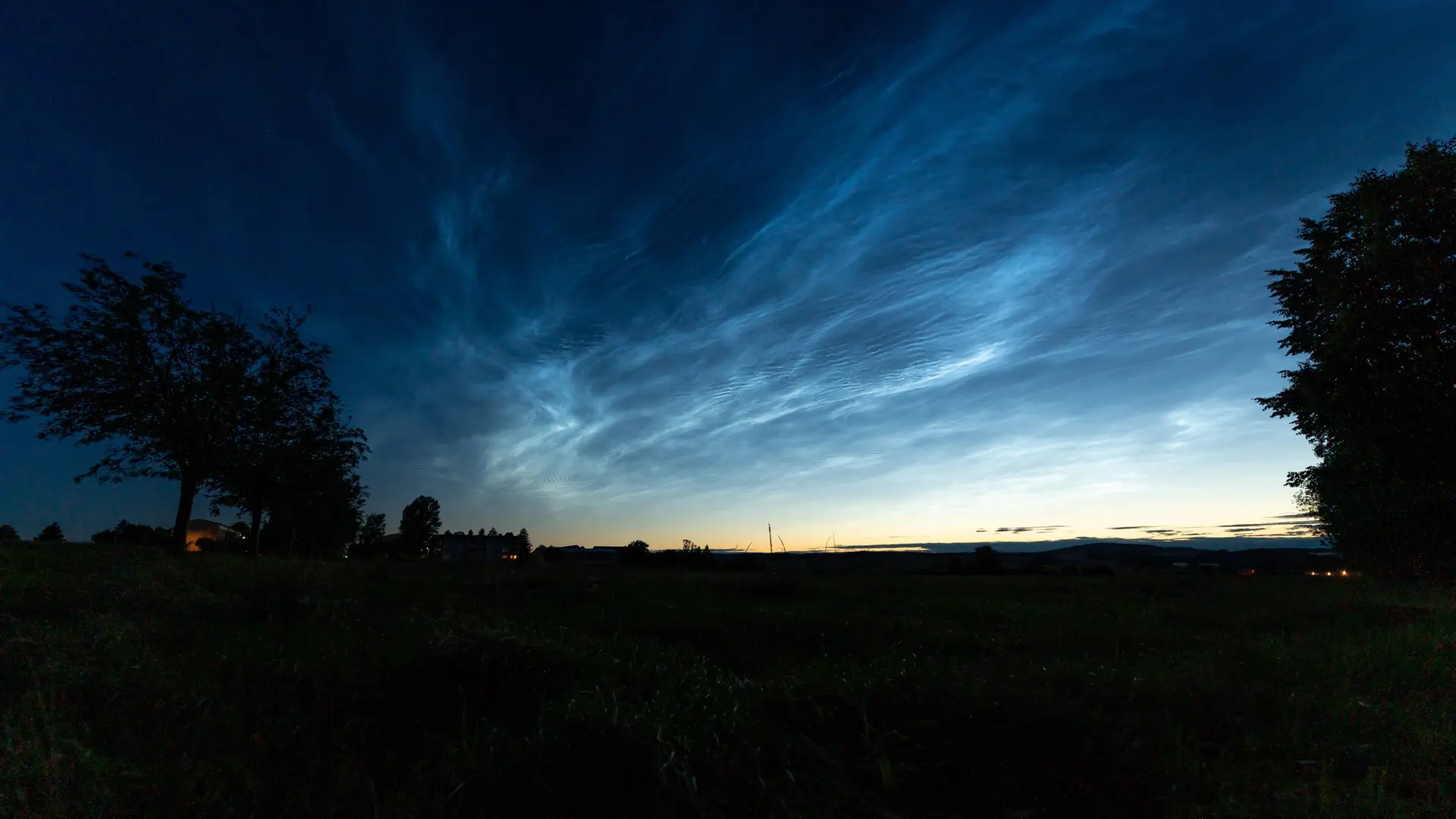
Every summer, as the sun dips below the horizon and the twilight deepens across Central Europe, a ethereal, hauntingly beautiful phenomenon graces the northern skies. For those who know where and when to look, the night sky transforms into an otherworldly canvas, painted in strokes of electric blue, pearlescent silver, and ghostly white. These are the Noctilucent Clouds (NLCs)—or leuchtende Nachtwolken—a rare and mesmerizing atmospheric event that bridges the gap between our terrestrial weather and the cold, silent reaches of space.
While most clouds that define our daily weather exist within the lowest ten kilometers of the Earth’s atmosphere, Noctilucent Clouds occupy a vastly different realm. They reside in the mesopause, an incredibly thin and frigid layer of the atmosphere located between 80 and 85 kilometers above the Earth’s surface. This is the boundary between the mesosphere and the thermosphere, a region so remote and extreme that it is often referred to as the edge of space.
The Science of the "Night-Shining" Clouds
The existence of Noctilucent Clouds is a testament to the complex, delicate interplay of chemistry, physics, and meteorology occurring at the very limits of our planet’s envelope. To the casual observer, they appear as delicate, rippling veils of light, but their formation requires a set of conditions so precise that they seem almost paradoxical.
The Paradox of the Mesopause
The mesopause is, during the summer months, one of the coldest regions in the Earth’s atmosphere, with temperatures plummeting to between -130°C and -150°C. This extreme cold is the primary catalyst for the formation of NLCs. During the summer, global atmospheric circulation patterns cause warm air from lower altitudes to rise over the polar regions. As this air ascends, it expands rapidly, a process known as adiabatic cooling, which drives the temperature in the mesopause down to those record-breaking lows.
The Role of Atmospheric Moisture
Perhaps the most counterintuitive aspect of these clouds is that they require water vapor in a region that is, by any conventional standard, bone-dry. The mesosphere is estimated to be millions of times drier than the Sahara Desert. Yet, despite this, tiny amounts of water vapor reach these altitudes through two primary channels: vertical updrafts from the lower atmosphere and a complex chemical process involving methane. When solar ultraviolet radiation strikes methane molecules in the upper atmosphere, hydrogen atoms are stripped away and bond with oxygen atoms, creating water molecules.
Nucleation and Eiskristalle
Even with cold temperatures and the presence of water vapor, clouds cannot form without something to cling to. In the lower atmosphere, clouds form around dust, salt, or smoke particles. In the high-altitude mesopause, there is no such thing as "terrestrial" dust. Instead, the clouds rely on cosmic dust—the remnants of countless micrometeorites that burn up upon entering the Earth’s atmosphere every day. These infinitesimal specks of extraterrestrial material provide the necessary condensation nuclei for the water vapor to freeze into ice crystals, creating the high-altitude clouds that catch the light of the sun long after it has set for those on the ground.
Chronology of Observation: From Rare Curiosity to Seasonal Predictability
While Noctilucent Clouds have likely graced our skies for eons, they were only formally identified and documented by science in the late 19th century. Following the catastrophic 1883 eruption of Krakatoa, which injected massive amounts of volcanic material into the upper atmosphere, observers around the globe reported vivid, unusual twilight displays.
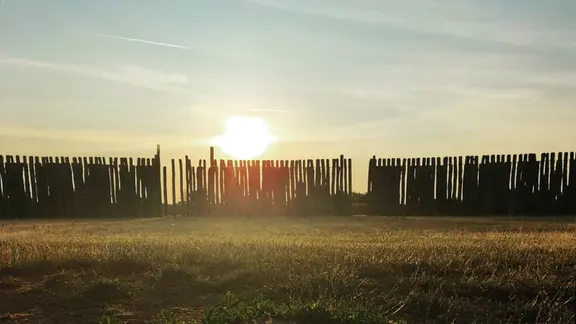
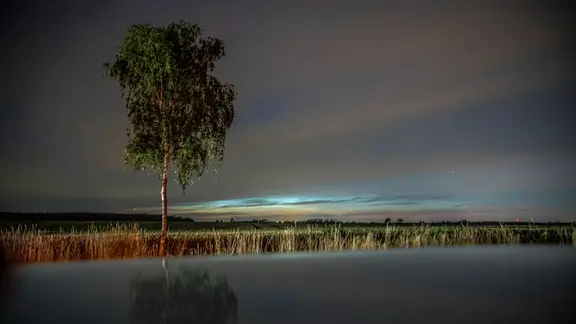
In the decades that followed, scientists began to distinguish between these temporary volcanic effects and the persistent, seasonal nature of NLCs. By the mid-20th century, meteorologists had mapped the seasonal cycle of these clouds with high precision. In Central Europe, the window of opportunity for viewing these phenomena is remarkably consistent: from early June to late July.
During these months, the sun remains at an ideal angle relative to the horizon—between 6 and 16 degrees below—allowing it to illuminate the high-altitude ice crystals from beneath while the observer on the ground is plunged into the darkness of civil and astronomical twilight.
Supporting Data: Viewing the Phenomenon
For enthusiasts and amateur astronomers, the pursuit of NLCs requires patience, a clear northern horizon, and an understanding of the temporal dynamics of the night sky. The following data highlights the optimal conditions for observation in the Central European region:
- Optimal Viewing Window: June 1st to July 31st.
- Time of Day: Late evening (22:00 – 00:30) and early morning (02:30 – 04:30).
- Direction: North-West to North-East.
- Altitude Requirement: The clouds often appear low on the horizon, requiring an unobstructed view of the northern skyline.
- Solar Depression: The phenomenon is only visible when the sun is at least 6 degrees below the horizon, but not so deep that the sunlight can no longer reach the mesosphere (typically capped at 16 degrees).
Official Scientific Perspectives and Climate Implications
The study of Noctilucent Clouds has moved beyond mere aesthetic appreciation. In recent years, atmospheric scientists have utilized NLCs as a "canary in the coal mine" for understanding climate change.
The Link to Global Warming
While NLCs require extreme cold to form in the upper atmosphere, their frequency and brightness have shown an increasing trend in recent decades. Scientists posit that this is linked to the rise in atmospheric greenhouse gases, particularly methane. As methane concentrations increase in the lower atmosphere, more of it migrates to the upper reaches, where it is oxidized into water vapor. This increase in water vapor provides more "fuel" for the formation of ice crystals in the mesopause, leading to more frequent and more visible Noctilucent Cloud displays.
The Role of Research Institutions
Agencies such as the European Space Agency (ESA) and various meteorological institutes across Germany and Poland have integrated the observation of NLCs into their broader climate monitoring programs. By tracking the density and distribution of these clouds, researchers can gather data on the cooling trends of the middle atmosphere, providing a crucial, often overlooked, dimension to our understanding of the human impact on the Earth’s climate system.
Implications for Future Atmospheric Research
The study of the mesopause and the phenomenon of Noctilucent Clouds represents a fascinating intersection of planetary science and meteorology. As we look to the future, the implications are two-fold:
- Technological Advancement: The need to better observe these high-altitude events has driven advancements in LIDAR (Light Detection and Ranging) technology and satellite-based atmospheric sensors. These tools not only help us track NLCs but also allow us to monitor the composition of the upper atmosphere in real-time.
- Climate Modeling: Incorporating the dynamics of the mesopause into global climate models is essential for accuracy. As the Earth’s atmosphere undergoes structural changes due to human activity, the behavior of these high-altitude layers may hold secrets to long-term atmospheric shifts that have yet to manifest in the lower strata.
Conclusion: A Reminder of Our Place in the Cosmos
The Noctilucent Clouds are more than just a beautiful summer night diversion. They are a visual reminder of the vast, interconnected nature of our planet’s atmosphere. When we look up and see that faint, electric-blue glow, we are witnessing a physical process that reaches across the threshold of space, fueled by cosmic dust and the complex chemical legacy of our own industrial activity.

As we move deeper into the summer months, the citizens of Central Europe are invited to look north. Whether from the rolling hills of Saxony or the open plains of the north, the opportunity to observe this silent, shimmering display remains one of the most accessible and profound ways to engage with the science of our world. It is a spectacle that demands nothing more than a clear night, a dark horizon, and a willingness to look up into the deep, mysterious expanse of the twilight sky.
The mystery of the "night-shining" clouds remains a compelling frontier—a bridge between the terrestrial and the celestial, reminding us that even at the very edge of our world, there is always more to discover.