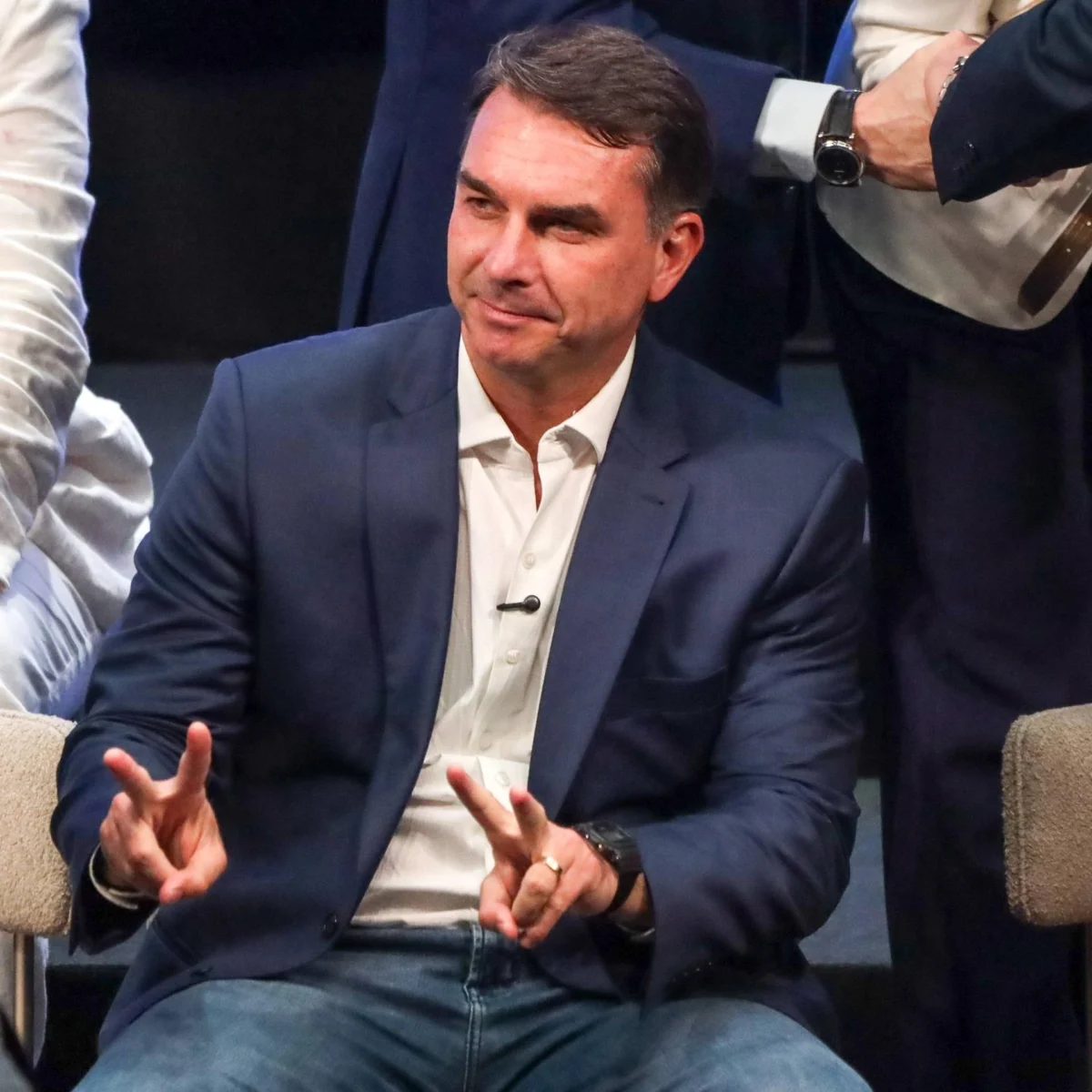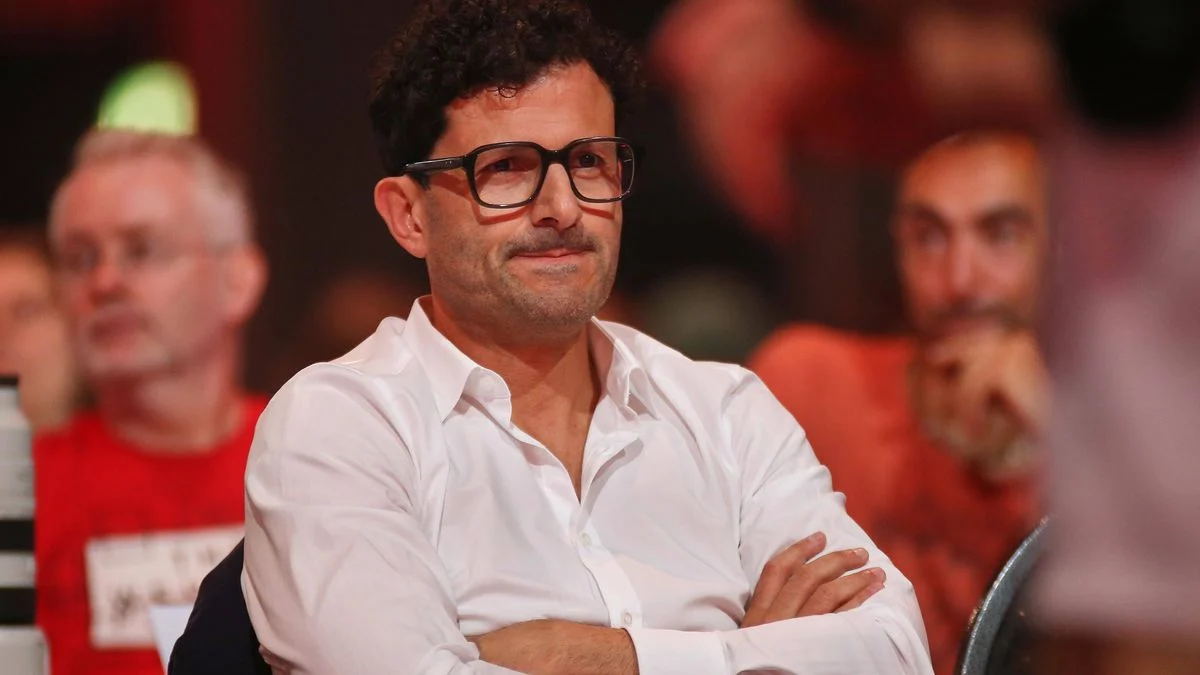
Potsdam, Germany – Die Linke, Germany’s socialist party, has inaugurated a new era of leadership with the election of Luigi Pantisano as co-chair, a move signaling a generational shift and a potential sharpening of the party’s ideological stance. However, Pantisano’s ascension to the top post is clouded by a surprisingly weak mandate from party delegates and immediate controversy stemming from his assertive rhetoric. Elected with just 53.3 percent of the vote, the 46-year-old Baden-Württemberg politician faces the immediate challenge of uniting a party grappling with declining relevance and internal fragmentation.
In stark contrast to Pantisano’s narrow victory, his co-chair, Ines Schwerdtner, secured a robust endorsement, receiving 85.7 percent of the delegates’ approval. This disparity highlights a potential schism within the party, with Schwerdtner’s strong mandate underscoring a broader base of support for her leadership style, while Pantisano’s weaker showing suggests significant skepticism or reservations among the party’s rank and file. The divergent outcomes set a complex tone for the new leadership duo as they navigate the turbulent waters of German politics and strive to redefine Die Linke’s identity and future trajectory.
A New Chapter: Shifting Leadership and Ideological Declarations
Luigi Pantisano steps into the role previously held by the veteran politician Jan van Aken, who at 65, chose not to seek re-election dueating to health concerns. Van Aken’s departure marks a notable shift towards a younger leadership cohort for Die Linke. Pantisano, an architect and urban planner by profession, and the son of Italian guest workers, has been a Member of the Bundestag since last year, serving as the party’s transport policy spokesperson and deputy parliamentary group leader. His political career has seen him come close to mayoral office in Konstanz in 2020, demonstrating a capacity for local engagement before his recent foray into federal politics.
In his impassioned candidacy speech, Pantisano laid out a clear, combative vision for the party. He directly targeted Friedrich Merz, the leader of the Christian Democratic Union (CDU), asserting that Merz’s proposed "reforms" were merely a smokescreen for "ripping people off." Pantisano declared Die Linke’s intention to "organize resistance" against such policies, aiming to "win back the working class" and "throw open the factory gates for Die Linke." This rhetoric signals a pivot towards a more confrontational and class-struggle oriented approach, seeking to reclaim the party’s traditional base amidst fierce competition from both the mainstream and the surging far-right.
The "Fascism" Firestorm: A Controversial Start
Even before his official election, Pantisano ignited a significant controversy with a provocative statement regarding the CDU. In an interview with "Bild," a widely read German tabloid, he accused the CDU of engaging in "fascist politics." His exact words, "Ultimately, there is currently no difference between the CDU, which makes fascist politics, the AfD, or the fascists themselves," sent shockwaves across the political spectrum. He emphasized that Die Linke must prevent "fascists from coming to power," implying that the CDU, through its policies, was contributing to a dangerous political climate.
The accusation, particularly potent in a country still deeply scarred by its Nazi past, drew immediate and sharp criticism, not only from opposing parties but also from within Die Linke’s own ranks. Eva von Angern, Die Linke’s lead candidate in Saxony-Anhalt, expressed her surprise and disagreement in an interview with "T-Online." She firmly countered Pantisano’s assertion, stating, "That doesn’t fit at all with what Mr. Pantisano has always said otherwise… The CDU is a democratic party in which many democrats are involved and who make politics for the people." Von Angern stressed the clear distinction between the CDU and the far-right Alternative for Germany (AfD), even while acknowledging the need for criticism of the former.

Pantisano later sought to clarify his controversial phrasing, admitting that his choice of words was "unfortunate" and "abbreviated." He explained that his core concern was not to equate the CDU directly with fascism, but rather to highlight how mainstream parties like the CDU, by adopting certain policies or rhetoric, inadvertently empower and strengthen the AfD. He maintained that it was secondary "whether the same inhumane politics are made by another party – or by the AfD itself." He voiced "great concern" that the CDU was becoming "increasingly uninhibited" in expressing "xenophobic resentments" and contempt towards workers and migrants.
Navigating Contradictions: Alliances and Ideological Purity
The controversy surrounding Pantisano’s remarks was further complicated by seemingly contradictory statements on potential alliances. In an earlier interview with "ARD," when asked if he would consider a coalition with the CDU to prevent an AfD government, Pantisano responded with a direct "Yes." However, he quickly added that the "bigger question mark" lay with the CDU. This willingness to engage with the CDU, even conditionally, stands in stark contrast to his strong denunciation of their policies as "partially fascist."
During the party conference, delegates pressed Pantisano on this apparent inconsistency. He clarified that decisions on government participation would ultimately rest with local Linke branches. However, he stressed that Die Linke would only enter a government if the positions of working people were adopted, firmly rejecting any readiness to support the "neoliberal policies of the CDU, SPD, or Greens." This stance suggests a pragmatic approach to local power-sharing tempered by an unwavering commitment to core socialist principles and a deep mistrust of established centrist parties. The delicate balance between ideological purity and strategic alliance-building remains a perennial challenge for Die Linke, and Pantisano’s nuanced position reflects this ongoing internal debate.
Supporting Data: A Mandate Under Scrutiny
Pantisano’s 53.3 percent approval rating is a significant point of concern for a party leader elected without a direct challenger. In the absence of an alternative candidate, such a result typically indicates a lack of enthusiastic support, deep-seated reservations, or a significant protest vote among delegates. It suggests that nearly half of the voting delegates either abstained, voted against, or submitted invalid ballots, underscoring a fragile consensus around his leadership.
This figure contrasts sharply with Ines Schwerdtner’s commanding 85.7 percent, a testament to her established standing and broader acceptance within the party. Even two years ago, when Die Linke was experiencing a trough in opinion polls, Schwerdtner secured almost 80 percent of the votes, a figure she has now surpassed. The comparison highlights the different political capital each co-chair brings to the table and raises questions about Pantisano’s immediate ability to unify the diverse factions within Die Linke. A strong mandate is crucial for a leader to implement their vision and command authority, and Pantisano’s weaker showing could complicate his efforts to steer the party in a new direction.
The context of Jan van Aken’s departure further illuminates the situation. Van Aken, a respected figure known for his nuanced foreign policy expertise and a balancing approach on sensitive issues like the Middle East, represented a more pragmatic wing of the party. His ability to lead Die Linke, alongside Schwerdtner, to a surprisingly strong performance in the last Bundestag elections, suggested a successful blend of experience and fresh perspective. Pantisano, by contrast, is perceived by some within the party, particularly in the parliamentary group, with skepticism regarding whether his more radical approach will broaden Die Linke’s appeal or further alienate potential voters and internal pragmatists.

Official Responses: Internal Unease and External Scrutiny
The immediate aftermath of Pantisano’s election has been marked by a flurry of internal discussions and external reactions. The unease among some prominent East German Linke politicians, exemplified by Eva von Angern’s public disavowal of the "fascist politics" accusation, reveals a significant internal rift. This is particularly sensitive in East Germany, where Die Linke still holds a stronger electoral base and where the political landscape often necessitates pragmatic alliances to gain influence. For these regional leaders, maintaining a clear distinction from the far-right AfD is paramount, and Pantisano’s rhetoric risked blurring those lines in a damaging way.
Pantisano’s subsequent clarification, while attempting to walk back the most inflammatory aspects of his statement, did not entirely quell the concerns. His insistence that the CDU’s policies, by adopting AfD-like sentiments, were "human-hostile" and contributed to the rise of the far-right, maintains a confrontational tone. This reflects a growing frustration within parts of the left across Europe, where mainstream conservative parties are seen as increasingly accommodating or even mimicking the rhetoric of populist right-wing movements, particularly on issues of migration and social welfare.
The broader German political landscape has also taken note. While direct condemnations from other parties are expected following such accusations, the focus remains on Die Linke’s internal cohesion. The party has a history of ideological struggles and high-profile departures, most notably the recent formation of the BSW (Bündnis Sahra Wagenknecht), which has siphoned off significant support. Pantisano’s polarizing statements, coupled with his weak mandate, raise questions about his ability to prevent further fragmentation and to project a unified, credible image to the electorate.
Implications: Die Linke at a Crossroads
Luigi Pantisano’s election marks a critical juncture for Die Linke, a party struggling for political relevance and an identity in a rapidly shifting German political landscape. His arrival signals a potential shift towards a more radical, confrontational, and class-focused approach, moving away from the more pragmatic and unifying leadership style represented by Jan van Aken. The immediate implications are multifaceted:
1. Internal Cohesion: The stark difference in approval ratings between Pantisano and Schwerdtner, coupled with the internal dissent over his rhetoric, suggests that Pantisano’s primary challenge will be to unite the party. He must bridge the gap between those advocating for a sharper, more ideologically pure line and those who fear that such a stance will further isolate Die Linke and hinder its ability to forge necessary alliances or attract broader support. The party’s history is rife with internal conflicts, and Pantisano’s initial steps will be crucial in determining whether he can consolidate power or exacerbate existing divisions.
2. Strategic Positioning: Pantisano’s emphasis on "winning back the working class" and his strong criticism of "neoliberal" policies indicate a desire to reclaim Die Linke’s traditional role as the voice of the disadvantaged. However, the German political landscape is highly competitive, with the AfD increasingly appealing to segments of the working class with anti-establishment rhetoric, while the Social Democrats (SPD) also vie for this demographic. Die Linke must articulate a clear, distinctive, and appealing alternative that resonates with voters beyond its core base.

3. Alliance Politics: The contradictory statements regarding potential alliances with the CDU highlight the party’s ongoing dilemma. While rejecting "neoliberal" policies, Pantisano’s conditional openness to a CDU alliance to block the AfD suggests a strategic flexibility, albeit one that is likely to provoke further internal debate. In a fragmented multi-party system, the ability to form coalitions is often essential for political influence. Die Linke must clarify its red lines and its willingness to compromise, particularly as it faces critical state elections where the AfD’s rise makes coalition arithmetic increasingly complex.
4. Public Perception and Media Scrutiny: Pantisano’s "fascist politics" accusation has immediately placed him under intense media scrutiny. While such strong language might energize a segment of the party’s base, it risks alienating moderate voters and reinforcing negative stereotypes of Die Linke as an extremist or anti-democratic force. His ability to communicate his message effectively, and to clarify complex positions without resorting to potentially damaging rhetoric, will be critical for shaping public perception.
5. The Legacy of Jan van Aken: Van Aken’s farewell was marked by "standing ovations" and an emotional tribute from Ines Schwerdtner, who praised his ability to make the wealth tax "cool again." His vision of Die Linke as a "socialist people’s party" aiming for "20 to 25 percent" represents a significant aspiration and a challenge for the new leadership. While van Aken acknowledged this as a "task" rather than a mere dream, it underscores the monumental effort required to restore Die Linke to a position of significant political power. His balanced approach, particularly on contentious issues, will be a benchmark against which Pantisano’s leadership will be measured.
As Die Linke grapples with internal challenges and the existential threat posed by the AfD’s surge in upcoming state elections, the new leadership under Luigi Pantisano and Ines Schwerdtner faces an arduous path. Schwerdtner and parliamentary group leader Heidi Reichinnek have already galvanized the party against the AfD, warning of an impending "storm" that "will not pass us by without a trace." Pantisano’s radical rhetoric and his lukewarm mandate suggest a difficult period of internal alignment and external repositioning for Die Linke as it strives to carve out a viable future in Germany’s complex political landscape.