As global light pollution accelerates, the enchanting spectacle of fireflies flickering in the darkness is under threat. New scientific evidence reveals that artificial light at night (ALAN) is not merely a nuisance but a critical barrier to the reproduction of these insects, potentially driving local populations toward extinction.
For millions of years, the synchronised, rhythmic bioluminescence of fireflies has served as nature’s own semaphore. From the lush corridors of the Hainich National Park in Germany to the quiet woodlands of Leipzig and the meadows of Salzwedel, the arrival of mid-June marks a brief, fleeting period of courtship. Yet, this delicate ritual, honed over eons, is increasingly being drowned out by the relentless advance of human-generated light.
New research suggests that as our nights grow brighter, the firefly—a creature that spends the vast majority of its life as a ground-dwelling larva—is losing its ability to find the partners necessary to sustain its species.
The Ritual of the Night: A Life Cycle Under Siege
To understand the gravity of the situation, one must first appreciate the brevity of the firefly’s adult existence. After spending three years in the soil as larvae, these insects emerge as adults for only a few short nights. Their primary objective during this final stage of life is reproduction.
In this courtship, the roles are strictly defined. It is the males that take to the air, performing their signature aerial displays, while the females, which are flightless, remain grounded, often perched on blades of grass or shrubbery. The female emits a soft, bioluminescent glow—a precise, species-specific signal intended to beckon a suitor. When a male perceives this light, he descends, and the two embark on a mating process that can last anywhere from 20 to 90 minutes.
This behavior, documented by researchers such as Jeremy Niven, is the cornerstone of their survival. However, it relies entirely on the contrast between the bioluminescence of the female and the surrounding darkness. When artificial light is introduced, this contrast vanishes, turning a clear beacon into a needle in a haystack.
Scientific Investigation: The "Y-Maze" Experiment
A research team led by Jeremy Niven and Estelle Moubarak at the University of Sussex in the United Kingdom set out to quantify exactly how artificial light disrupts this biological imperative. Their methodology was as elegant as it was revealing.
The researchers constructed a Y-shaped maze to simulate the natural environment of a male firefly searching for a mate. At one end of the fork, they placed a green LED—calibrated to mimic the exact wavelength and intensity of a female firefly’s glow. They then tested the movement of male fireflies under two conditions: complete darkness and varying intensities of artificial light, ranging from 25 to 145 lux.
The results were stark. In total darkness, virtually every male firefly successfully navigated the maze to reach the "female" LED. However, as artificial light was introduced, the success rate plummeted. At 25 lux, the success rate dropped to 70 percent. At higher intensities—comparable to the harsh glare of a standard streetlamp—the success rate withered to a mere 21 percent.
Beyond the reduced success rate, the time required for males to reach the target increased significantly. In darkness, males took an average of 48 seconds to find their target; at 25 lux, that time jumped to 60 seconds. Furthermore, the light appeared to cause behavioral disorientation: in the presence of the brightest artificial light, males spent significantly more time trapped in the lower sections of the maze, unable or unwilling to move toward the stimulus.
The Biological Defense Mechanism
Perhaps the most striking finding of the study was the reaction of the fireflies to the presence of light. Estelle Moubarak observed that the male fireflies often attempted to shield their eyes using a "head shield," a physical structure that functions similarly to a pair of sunglasses.
In total darkness, the fireflies engaged this defense mechanism in only 0.5 percent of trials. When exposed to bright white light, however, they engaged it in nearly 25 percent of the cases. "That the male fireflies kept their eyes under their head shields suggests they are attempting to avoid exposure to the white light, indicating that they find it fundamentally detrimental," Niven noted. This suggests that the impact of light pollution is not merely a failure of vision, but a stress response that forces the insects to prioritize self-preservation over the critical task of reproduction.
The Broader Context: A World Without Darkness
The plight of the firefly is a microcosm of a much larger global issue: the exponential growth of light pollution. Data from "Globe at Night," a citizen-science initiative, indicates that the world is becoming brighter at an alarming rate.
In Europe, the annual rate of sky brightening is estimated at 6.5 percent, while in North America, it has reached 10.4 percent. Christopher Kyba, lead author of a seminal study on the topic, painted a grim picture for the future of our night skies. He calculated that a child born today in an area where 250 stars are visible to the naked eye would see only 100 of those stars by their 18th birthday, assuming current trends continue.
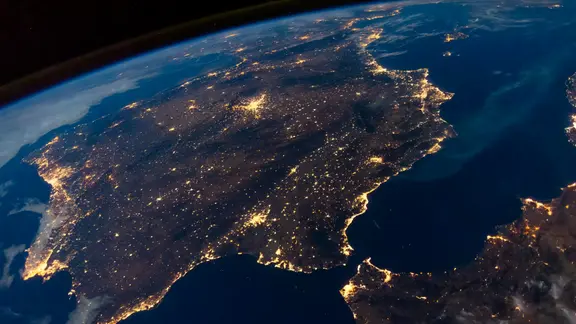
This shift has profound implications for biodiversity. Nocturnal species, which have evolved to utilize the cover of darkness for navigation, hunting, and mating, are increasingly finding their niches compromised. The loss of dark skies is effectively shrinking the habitable world for thousands of species, fireflies included.
What Can Be Done? Practical Steps for Conservation
While the macro-level statistics regarding light pollution are daunting, there is significant potential for individual action to mitigate the damage. The researchers emphasize that the home garden can serve as a vital refuge for firefly populations.
- Reduce Outdoor Lighting: The most direct intervention is to switch off unnecessary exterior lights. Motion-sensor lights, which only activate when needed, are far less harmful than continuous floodlighting.
- Preserve Natural Habitats: Fireflies require specific environmental conditions to thrive. Avoiding the "over-tidying" of gardens—leaving patches of long grass, leaf litter, and old wood—provides the essential shelter and humidity that firefly larvae require.
- Encourage Biodiversity: Since the larvae of many firefly species prey on snails and slugs, maintaining a garden that supports these organisms can create a sustainable food web.
- Community Advocacy: Engaging with local municipalities to adopt "dark sky" policies—such as using warm-spectrum, shielded streetlights that direct light downward rather than into the sky—can have a massive impact on local ecosystems.
Future Outlook and Citizen Science
The scientific community is calling for more robust data to understand the long-term demographic shifts of firefly populations. The "Globe at Night" project remains one of the most effective ways for the public to contribute to this understanding. By participating in these observations, citizens help researchers track how light pollution levels correlate with the disappearance of insects and the fading of the stars.
Interactive tools, such as those provided by lightpollutionmap.info, allow users to visualize the intensity of light pollution in their own regions. By selecting data from the VIIRS (Visible/Infrared Imager Radiometer Suite) satellite, individuals can see how their neighborhoods have brightened over the last decade.
The extinction of the firefly would be more than just the loss of a beautiful summer tradition; it would represent a catastrophic failure of human stewardship. As we continue to illuminate our nights, we must ask whether the convenience of perpetual light is worth the price of the silence that follows when the creatures of the dark are forced into the shadows forever.
The evidence is clear: for the firefly, darkness is not merely the absence of light—it is the prerequisite for life. Restoring that darkness is not only a gift to the stars but a vital necessity for the survival of one of nature’s most iconic, and vulnerable, wonders.