The myth of Robin Hood has served as a cultural mirror for centuries, reflecting the anxieties and aspirations of the era in which it is told. From the egalitarian balladry of the Middle Ages to the swashbuckling cinema of the mid-20th century, the Prince of Thieves has remained an immortal symbol of resistance against systemic corruption. However, a new cinematic project, The Death of Robin Hood, promises to dismantle the hero-worship of old, opting instead for a gritty, melancholic, and deeply human examination of a man reaching the end of a violent and morally ambiguous road.
Main Facts: A Hero in Winter
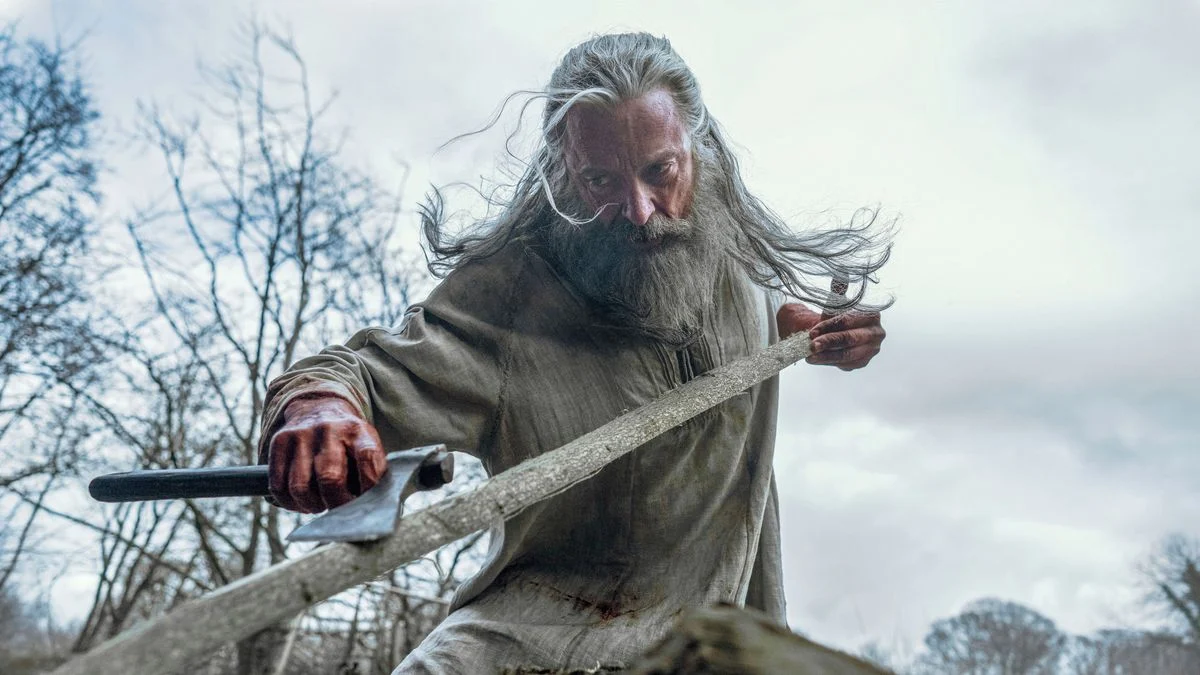
The upcoming film, titled The Death of Robin Hood, is not a reboot in the traditional sense. Eschewing the forest high-jinks and the lighthearted rivalry with the Sheriff of Nottingham, the production focuses on the waning years of the protagonist. According to early reports and production briefings, the film explores the legend after the legend has faded.
Robin Hood is no longer the agile youth leaping through Sherwood Forest; he is an aging, weary man grappling with the physical and psychological scars of a life defined by violence. The narrative centers on a confrontation with his past, forcing the audience to reconcile the "hero" of popular folklore with the reality of a man who committed atrocities under the guise of justice. This is a story about the cost of heroism, the erosion of memory, and the inevitable decay of myths when they are forced to collide with the harsh reality of mortality.
Chronology: From Ballad to Screen
The evolution of the Robin Hood archetype is one of literature’s most enduring sagas.
- 14th Century (The Origins): The earliest surviving ballads, such as Robin Hood and the Monk, portray him not as a benevolent redistributionist, but as a violent, rebellious yeoman.
- 19th Century (The Romanticization): Sir Walter Scott’s Ivanhoe and the Victorian fascination with chivalry transformed Robin Hood into the altruistic nobleman fighting for the rightful King.
- 1938 – 1991 (The Golden Age): The Errol Flynn era solidified the "Merry Men" dynamic, followed by Kevin Costner’s gritty (yet still heroic) interpretation.
- 2024 (The Deconstruction): With the announcement of The Death of Robin Hood, the industry is entering a post-heroic phase. The film seeks to strip away the varnish of the Victorian "noble bandit" to return to something far more somber and grounded.
Supporting Data: The Economic and Cultural Shift
Why return to this story now? The shift in cinematic focus from "origin stories" to "final chapters" is a reflection of broader cultural trends. Analysis of box-office data from the last decade suggests that audiences are experiencing "superhero fatigue." Audiences are increasingly drawn to projects that subvert familiar tropes, particularly those that examine the psychological toll of power and violence.
Furthermore, academic studies into the "Robin Hood Mythos" indicate that society’s perception of economic justice is shifting. In a modern context, the concept of "stealing from the rich" is increasingly viewed through a lens of systemic complexity rather than binary morality. The Death of Robin Hood arrives at a time when the audience is primed to ask: What happens when the revolutionary becomes an establishment figure? What happens when the rebellion is over, but the structural inequality remains?
Official Responses and Creative Vision
The creative team behind the project has been notably tight-lipped regarding specific plot twists, yet they have emphasized the tone of the production. "We aren’t interested in the arrows," one representative for the production stated. "We are interested in the hands that held the bow for too long."
The film is being framed as a "noir-western" hybrid. It emphasizes atmospheric storytelling over spectacle. By focusing on the "Death" aspect of the title, the filmmakers aim to subvert the expectation that Robin Hood is a static icon. Instead, he is presented as a character in flux, an individual who must contend with the fact that his legacy—and his very existence—may have been a distortion of the truth.
Critics have noted that this approach aligns with the current trend of "deconstructionist cinema," where filmmakers take established IPs and expose the foundational rot within their premises. This is not meant to alienate fans of the traditional myth, but rather to deepen their engagement with it.
Implications: The End of an Archetype
The implications of such a film are profound for the future of mythological storytelling in cinema. If this project succeeds, it suggests that legacy characters—those figures who have survived for nearly a millennium—do not need to be perpetually "rebooted" into younger, faster, and more modern iterations. Instead, they can be allowed to grow old, to fail, and to face the consequences of their historical actions.
1. The Humanization of Myth
By focusing on the physical decline of Robin Hood, the film removes the barrier of "otherness." The hero becomes a proxy for the viewer’s own fears regarding aging and the obsolescence of one’s life work.
2. Challenging Historical Revisionism
Every era reinvents Robin Hood to fit its own political agenda. By creating a film that centers on the end of the story, the filmmakers are effectively declaring that the "Robin Hood" narrative is a closed loop. They are challenging the idea that the legend is an infinite well of content, instead proposing that the story has a definitive, and perhaps tragic, conclusion.
3. The Shift in Genre
If The Death of Robin Hood gains critical acclaim, we can expect a wave of similar "twilight" films focusing on other legendary figures. The industry is currently exploring the intersection of genre fiction and character study, moving away from the "villain-of-the-week" structure and toward a more introspective, character-driven pace.
Conclusion: A Necessary Reckoning
The decision to tackle the end of the Robin Hood legend is a daring move, both artistically and commercially. It requires the audience to surrender their nostalgic attachment to the green-clad archer in favor of a narrative that is likely to be uncomfortable, bleak, and deeply reflective.
Ultimately, The Death of Robin Hood serves as a reminder that stories are living things. They grow, they change, and sometimes, they must die in order to be understood in their entirety. Whether the film ultimately presents the protagonist as a tragic hero or a misguided insurgent remains to be seen, but its arrival marks a pivotal moment in the history of legendary archetypes. We are no longer content to simply watch the hero win; we are now demanding to see what becomes of him when the applause dies down and the forest falls silent.
As we look toward the release, the cultural question remains: Are we ready to let Robin Hood die, or does the weight of our collective imagination necessitate that he be resurrected once more? The film provides a final, perhaps necessary, answer to that question, signaling that the most important part of the journey is not the aim, but the arrival at the end of the road.