


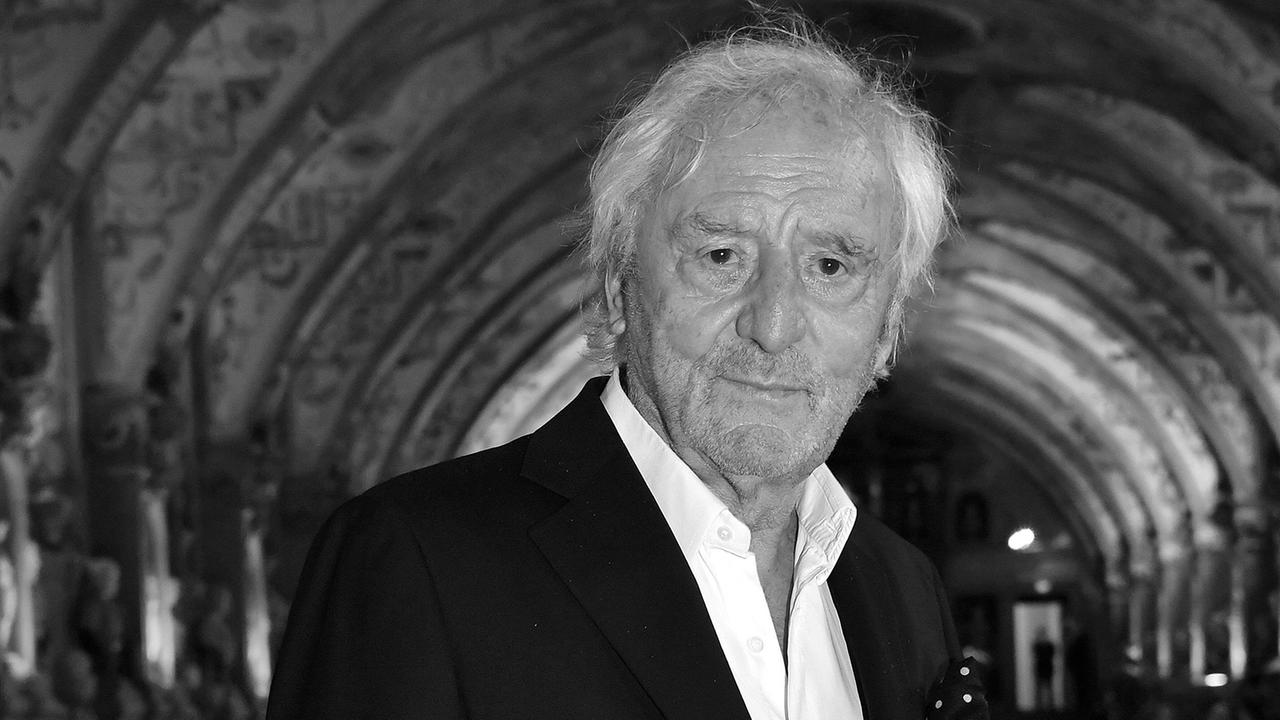
The German cultural landscape is in mourning following the announcement of the passing of legendary actor Günther Maria Halmer. A staple of television, film, and theater for over five decades, Halmer leaves behind a monumental body of work that defined generations of German entertainment. He died at the age of 83 following a severe illness.
The news was confirmed by the Munich Residenztheater, which announced that the actor passed away this past Sunday. With a career spanning more than 180 film and television productions, Halmer was not merely an actor; he was a bridge between the classic era of German theater and the modern age of international cinematic prestige.
The Man Behind the Roles: A Brief Chronology
Born in 1943 in the picturesque town of Rosenheim, Bavaria, Günther Maria Halmer’s path to stardom was anything but conventional. As a young man, he displayed a restless spirit, famously dropping out of gymnasium to seek adventure in Canada. This early life experience—stepping outside the traditional confines of post-war German society—likely contributed to the raw, authentic charisma he would later bring to the screen.
Upon returning to Germany, he enrolled in the prestigious Otto Falckenberg School in Munich, one of the most respected acting conservatories in the country. His professional trajectory began in 1969 with his debut at the Munich Kammerspiele, marking the start of a lifelong love affair with the stage.
- 1969: Initial engagement at the Munich Kammerspiele.
- 1974: The breakthrough moment as Karl "Tscharlie" in the iconic Münchner Geschichten.
- 1980s: International expansion, including pivotal roles in Gandhi and Sophie’s Choice.
- 1990s–2000s: Establishing himself as a household name through the legal drama Anwalt Abel.
- 2025: A final, poignant return to the stage for the Brandner Kaspar.
- 2026: Passing at the age of 83.
From Bavarian Roots to Hollywood Heights
While Halmer was a cornerstone of German television, his influence reached far beyond national borders. In the early 1980s, he successfully transitioned into the international spotlight, showcasing a range that allowed him to move seamlessly between light-hearted television comedy and somber, challenging historical dramas.
The International Breakthrough
Halmer’s foray into international cinema remains a testament to his versatility. He secured a notable supporting role in the Oscar-winning historical epic Gandhi (1982), an experience that solidified his reputation as a world-class character actor. Perhaps even more daring was his performance in the critically acclaimed Sophie’s Choice (1982), where he shared the screen with the legendary Meryl Streep. Playing the harrowing role of the Auschwitz commandant Rudolf Höß, Halmer demonstrated a profound ability to inhabit dark, complex characters, leaving a lasting impression on global audiences and critics alike.
The "Tscharlie" Phenomenon
Domestically, however, it was his role as the charmingly roguish Karl "Tscharlie" in the 1974 series Münchner Geschichten that cemented his status as a national treasure. The series, which captured the soul of Munich, resonated deeply with viewers. Halmer’s portrayal of a man navigating the complexities of urban life became a cultural touchstone, defining the "Bavarian identity" for millions. This foundation of popularity allowed him to transition into the long-running series Anwalt Abel, where he brought a nuanced, human touch to the role of a lawyer, moving away from the archetypal "cold professional" often seen in procedural dramas.
The Final Curtain: A Return to the Theater
In a move that touched the hearts of his many admirers, Halmer returned to his roots in 2025. After decades of success in front of the camera, he stepped back onto the stage at the Residenztheater for a production of Gschichtn vom Brandner Kaspar.
This return was more than just a nostalgic appearance; it was a masterclass in commitment. Despite the physical challenges posed by his advancing age and the onset of the illness that would eventually take his life, Halmer performed twelve shows. It was only when his health deteriorated significantly that he was forced to step down from the role—a decision that spoke volumes about his professional integrity and dedication to his craft.
Official Responses and Industry Tributes
The loss of Halmer has prompted an outpouring of grief from the highest echelons of the German arts community. Andreas Beck, the State Intendant of the Residenztheater, led the tributes, offering a somber reflection on the actor’s impact.
"I bow before a wonderful, great actor," Beck stated in an official press release. His sentiment was echoed by colleagues across the country, who praised not only his technical brilliance but his humility. Despite his international film credits and his massive popularity, peers consistently described Halmer as a grounded, thoughtful individual who viewed acting not as a pursuit of fame, but as a rigorous and necessary pursuit of truth.
The Implications of a Lost Era
The passing of Günther Maria Halmer represents more than just the loss of a talented performer; it marks the fading of a generation of German actors who mastered the delicate balance between the intimacy of the theater and the broad, demanding reach of television.
A Master of Nuance
Halmer’s career spanned the transition from the analog age of television to the digital era of streaming. His ability to remain relevant for over 50 years suggests a rare adaptability. Whether he was playing a comedic lead or a historical villain, his performances were characterized by a lack of affectation. He possessed a "naturalistic" style that influenced younger generations of German actors to prioritize emotional honesty over theatrical exaggeration.
The Legacy of the "Character Actor"
In an industry that often prioritizes youth and celebrity, Halmer’s late-career work—such as his role as an emeritus philosophy professor in Trapps Sommer—highlighted the value of the "dignified elder" archetype in cinema. He proved that an actor’s depth only increases with experience, offering a roadmap for longevity that is rarely seen in today’s rapid-turnover entertainment environment.
Conclusion: A Life Well-Lived
As the curtains close on the life of Günther Maria Halmer, the focus remains on the immense catalog of work he leaves behind. From the streets of Munich in the 1970s to the global stages of Hollywood and back to the hallowed halls of the Residenztheater, he spent his life telling stories.
He was a man who lived fully, embracing his restless youth, achieving professional peaks that few reach, and meeting his final days with the same quiet dignity that defined his most celebrated performances. While his voice is now silenced, his presence remains permanently etched into the fabric of German culture.
For fans who grew up watching "Tscharlie" on their television screens, or those who saw him command the stage in his final theater appearances, the sentiment remains the same: a great light has dimmed, but the work remains, a permanent testament to an extraordinary life. Günther Maria Halmer was, and will remain, an irreplaceable pillar of the arts.













Leave a Reply