In the global race for aviation supremacy, success has long been measured by passenger volume and the number of aircraft movements. However, a new environmental calculus is emerging, revealing a stark disconnect between how busy an airport is and the true extent of its climate impact. While airports like Atlanta and Chicago dominate in sheer operational frequency, the global hierarchy of carbon emissions tells a very different, and far more concerning, story.
The Global Hierarchy of Emissions
The current data reveals a startling trend: operational volume does not equate linearly to environmental damage. London Heathrow, the United Kingdom’s primary gateway, stands as a prime example. Despite not being the busiest airport in the world by raw aircraft movements, it ranks second globally in CO2 emissions, eclipsed only by the massive hub of Dubai.
This ranking highlights a critical nuance in aviation analytics. Frankfurt Airport, often cited as a cornerstone of European connectivity, provides a case study in this phenomenon. While Frankfurt ranks a modest 20th globally in terms of total flight movements, its carbon footprint places it firmly in the world’s top eight. The discrepancy is not a clerical error; it is a direct result of the nature of the flights being serviced.
The Disproportionate Burden of Long-Haul Travel
The core of the issue lies in the physics of aviation. As expert analysis from researchers like Kunkel points out, the distribution of emissions is fundamentally skewed by distance.
"Long-haul flights are the primary drivers of aviation’s carbon footprint," Kunkel explains. "While these intercontinental journeys account for less than ten percent of all flights globally, they are responsible for approximately forty percent of total aviation emissions."
This realization creates a "carbon paradox" for airport operators. A regional hub facilitating thousands of short-haul, high-efficiency flights might have a significantly lower environmental impact than a global transit hub operating a fraction of that number in long-haul capacity. For airports like Frankfurt, which serves as Germany’s primary conduit for intercontinental travel, this structural reality ensures a high carbon ranking regardless of efficiency improvements in short-haul operations.
The Cargo Variable: The Leipzig-Halle Case Study
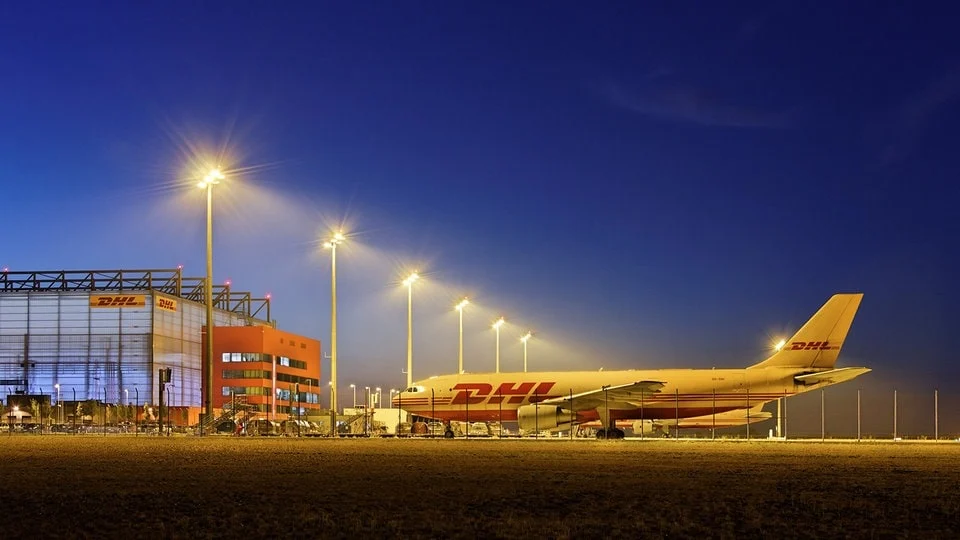
While passenger travel captures the majority of public attention, the cargo sector introduces a different, equally intense environmental profile. In Germany, the Leipzig-Halle Airport serves as a poignant example of how logistics networks shift the emission burden.
Leipzig-Halle plays a negligible role in the passenger aviation sector, yet it holds a position of immense global significance as a cargo hub. In the rankings for CO2 emissions generated specifically by air freight, Leipzig-Halle sits in the top eight globally. This ranking has brought the airport under intense scrutiny, particularly as operators look to expand its capacity to meet the growing demand for global e-commerce and supply chain logistics.
The proposed expansion of the Leipzig-Halle facility has triggered significant backlash. Beyond the carbon implications, local residents have organized sustained protests, citing the relentless noise pollution that accompanies a major international cargo hub. The tension between economic growth and regional quality of life is no longer just a local planning dispute; it is a microcosm of the global struggle to balance industrial utility with environmental and social responsibility.
Chronology: From Expansion to Scrutiny
The trajectory of the modern airport has evolved through several distinct phases:
- The Growth Era (1990–2010): Aviation policy focused almost exclusively on infrastructure expansion. Airports were viewed as engines of regional economic growth, and capacity was expanded with little regard for the long-term carbon trajectory.
- The Awareness Phase (2010–2018): As climate change moved to the center of global political discourse, the aviation sector began to face pressure to measure and report its Scope 3 emissions. This period saw the first comprehensive data sets linking specific flight types to carbon output.
- The Current Conflict (2019–Present): We are currently in a phase of friction. Airports are being repositioned not as passive infrastructure, but as active participants in the climate debate. The discourse has shifted from "How many passengers can we move?" to "How do we mitigate the environmental cost of our specific flight mix?"
Supporting Data: The Efficiency Gap
To understand the environmental impact of aviation, one must look at the "emissions per kilometer" metric. Short-haul flights are heavily impacted by the energy-intensive takeoff and climb phases, but long-haul flights require the combustion of significantly higher volumes of fuel to sustain altitude over thousands of miles.
Furthermore, the "non-CO2 effects" of aviation—including the formation of contrails and the release of nitrogen oxides at high altitudes—are amplified on long-haul routes. These atmospheric impacts can effectively double the climate forcing of a flight compared to CO2 emissions alone. Consequently, airports like Frankfurt and London Heathrow, which cater to global transit, are effectively acting as gateways to the most environmentally damaging segments of the aviation industry.
Official Responses and Strategic Shifts
In response to these findings, industry bodies and airport operators are beginning to adjust their long-term strategies. The consensus among policymakers is that airports are no longer just passive providers of landing strips; they are active managers of air traffic growth.
Many European airports have begun to implement "eco-modulated" landing fees. Under these systems, airlines operating older, noisier, or more carbon-intensive aircraft pay higher fees, while those utilizing modern, fuel-efficient fleets receive financial incentives. However, critics argue that these measures are merely cosmetic. They contend that as long as the market demands rapid intercontinental travel and overnight freight, the structural carbon footprint of these hubs will remain stubbornly high.
Government officials in regions like Saxony-Anhalt have had to navigate the difficult path between the economic necessity of the Leipzig-Halle cargo hub—which provides thousands of jobs—and the public mandate for climate action. The official stance often emphasizes the importance of "technological transition," pointing toward the potential for Sustainable Aviation Fuels (SAF) and future electric or hydrogen-powered aircraft. Yet, even the most optimistic industry forecasts admit that such technologies are decades away from widespread adoption in the long-haul sector.
Implications: The Future of Aviation Infrastructure
The findings presented here have profound implications for the future of aviation. First, the traditional method of ranking "best" airports by passenger throughput is becoming obsolete. A new, sustainability-focused hierarchy is emerging, which will inevitably influence future investment decisions and regulatory frameworks.
Second, the role of airports as regional economic engines is being questioned. If an airport’s primary contribution to the regional economy is cargo throughput, but its primary environmental contribution is high-altitude carbon forcing, is the trade-off sustainable?
Finally, the protest movements at airports like Leipzig-Halle are likely to spread. As the public becomes more educated about the specific carbon impacts of different types of air travel, the "social license to operate" for major hubs will become increasingly fragile.
"Airports are not just passive infrastructure," analysts conclude. "They determine the speed and scale at which air traffic grows." By facilitating specific types of flight profiles, airport authorities are making implicit policy decisions about their region’s contribution to global warming. As we look toward a net-zero future, the most critical decision an airport might make is not how many new runways to build, but how to evolve its business model to decouple economic utility from carbon destruction. The era of unchecked growth has passed; the era of carbon-conscious connectivity has begun.