Munich, Germany – May 13, 2026 – Joachim Wolbergs, the former Mayor of Regensburg and a prominent figure within the Social Democratic Party (SPD), has been sentenced to two years and six months in prison for "Vorteilsannahme" (acceptance of advantage). The verdict, delivered by the Munich Regional Court, found Wolbergs guilty on nine counts related to illicit party donations received during his 2014 municipal election campaign. The court concluded that Wolbergs was aware the funds, provided by a local entrepreneur, were intended to secure preferential treatment for future construction projects within the city of Regensburg. Wolbergs vehemently denies the allegations, and the judgment is not yet legally binding, paving the way for a potential appeal process.
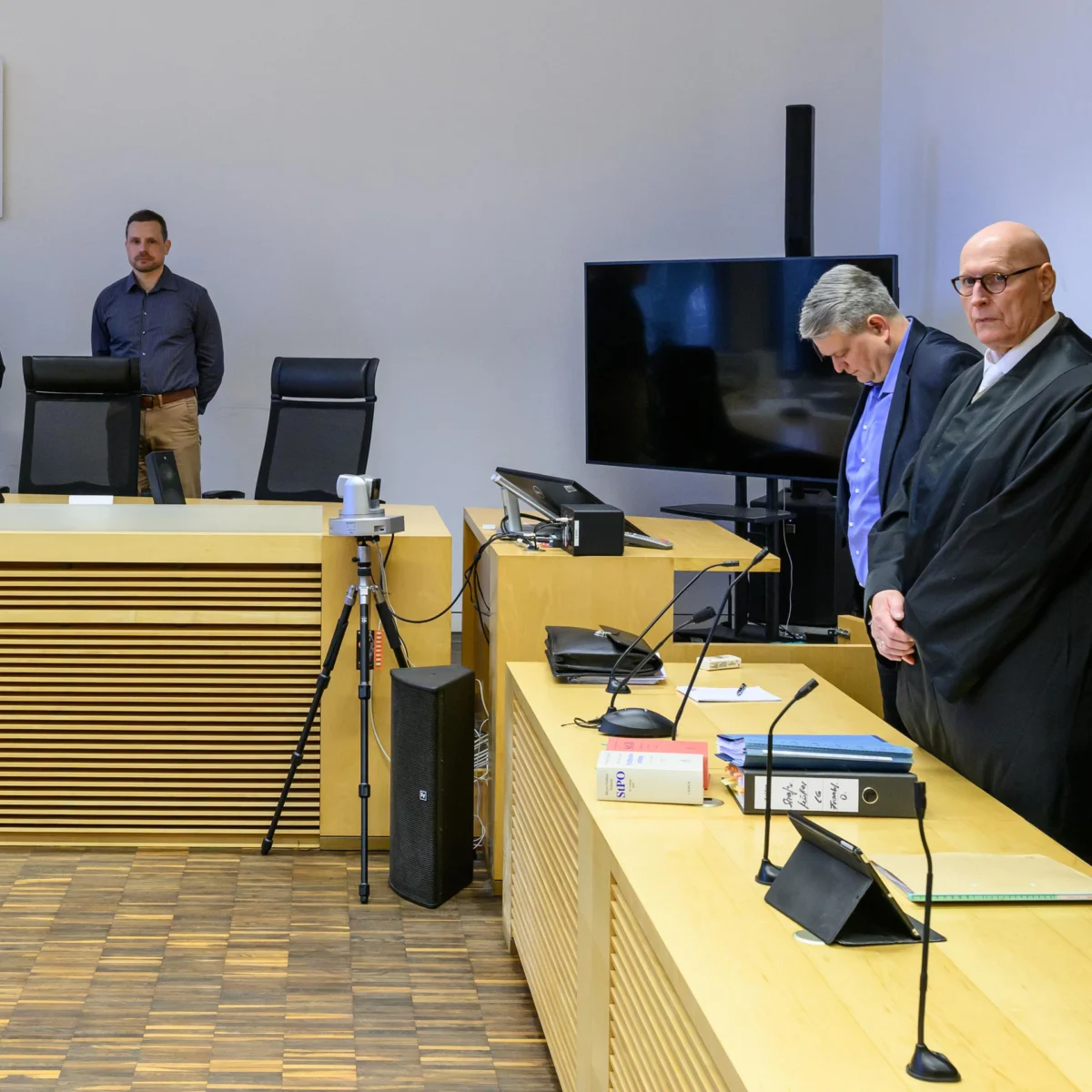
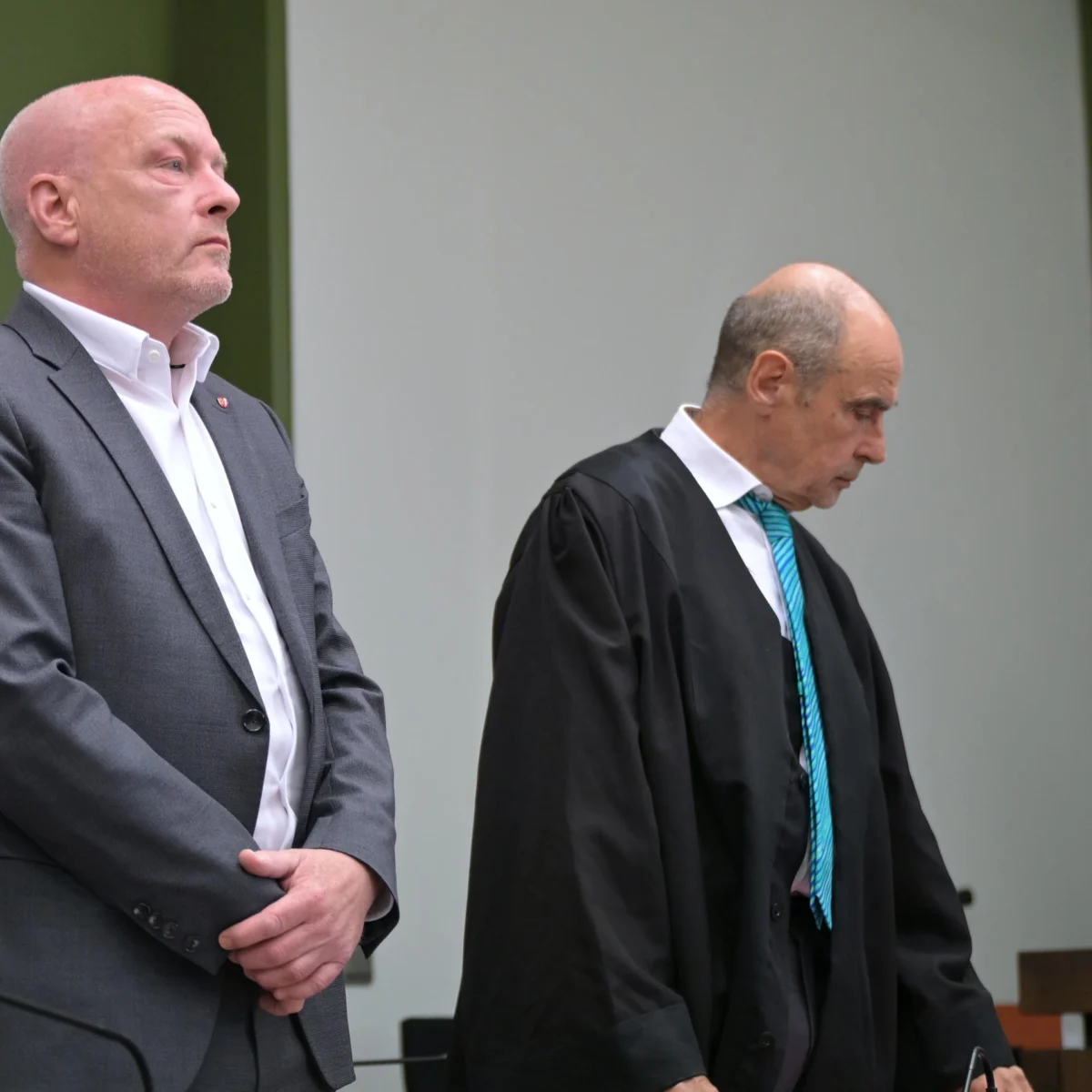
The high-profile case has cast a long shadow over Regensburg’s political landscape and reignited national debates concerning transparency in local governance and the intricate relationship between political campaigns and the business community. The image accompanying the initial report depicts Wolbergs in the courtroom, standing alongside his defense attorney, Peter Witting, underscoring the gravity of the proceedings.
Main Facts: A Landmark Conviction
The judgment handed down by the Munich Regional Court on May 13, 2026, marks a significant development in a corruption scandal that has gripped the Bavarian city of Regensburg for years. Joachim Wolbergs, once a rising star in the SPD and the city’s highest-ranking official, now faces a substantial prison sentence.
The Verdict and Sentence
The court’s decision concludes a lengthy and complex trial, which saw the prosecution present extensive evidence alleging systematic illicit financial dealings. Wolbergs was found guilty on nine distinct counts of "Vorteilsannahme," a specific offense under German criminal law related to public officials. The resulting sentence of two years and six months in prison reflects the court’s assessment of the severity and repeated nature of his transgressions. For offenses of this nature, prison sentences are common, particularly when involving high-ranking public officials and multiple instances of misconduct. The length of the sentence indicates that the court did not find sufficient mitigating circumstances to warrant a suspended sentence.
The Charges: Acceptance of Advantage
At the heart of the prosecution’s case were party donations made by a local entrepreneur during the 2014 municipal election campaign. While specific details of the entrepreneur’s identity remain undisclosed in the initial report, the court’s findings paint a clear picture of the alleged quid pro quo. According to the court, Wolbergs was fully aware that the financial contributions were not merely acts of civic engagement or political support. Instead, they were understood to be a means of "making him favorably disposed" (gewogen machen) towards the donor’s future construction projects in Regensburg. This subtle yet critical distinction lies at the core of "Vorteilsannahme." It does not require a direct, explicit agreement for a specific corrupt act but rather the acceptance of a benefit with the understanding that it will influence future decisions in a general sense, creating an unfair advantage for the donor. The nine counts suggest a pattern of such arrangements rather than an isolated incident.
Wolbergs’ Stance and Legal Status
Throughout the trial, Joachim Wolbergs steadfastly maintained his innocence, denying any knowledge of or intent to engage in corrupt practices. His defense team argued that the donations were legitimate political contributions, properly declared, and that any perceived influence was merely a consequence of standard political engagement and not a result of illegal agreements. The former mayor’s consistent denial highlights the contentious nature of the evidence and interpretations presented during the trial.
Crucially, the verdict is not yet legally binding ("noch nicht rechtskräftig"). This means that Wolbergs’ defense has the option to appeal the decision to a higher court, likely the Federal Court of Justice (Bundesgerichtshof). An appeal could challenge the legal interpretation of "Vorteilsannahme," the factual findings of the Munich Regional Court, or procedural errors during the trial. Until all avenues of appeal are exhausted, Wolbergs remains legally innocent, and the sentence will not be enforced. This legal limbo leaves the final outcome uncertain, prolonging the saga for all involved.
A Detailed Chronology of the Wolbergs Affair
The conviction of Joachim Wolbergs is the culmination of a political and legal drama that has unfolded over several years, marking a significant chapter in Regensburg’s recent history. Understanding the timeline provides crucial context to the current verdict.
The Rise of a Political Figure
Joachim Wolbergs began his political career within the SPD, steadily climbing the ranks of local politics in Regensburg. Known for his charisma and ambition, he served in various capacities before being elected Mayor of Regensburg in 2014. His election was seen as a fresh start for the city, and he quickly established himself as a dynamic leader, particularly focused on urban development and infrastructure projects. During his tenure, Regensburg, a UNESCO World Heritage site, experienced significant growth and faced numerous decisions regarding its future development, making the mayor’s office a powerful position with considerable influence over planning and construction.
The 2014 Municipal Election and Alleged Donations
The period leading up to and during the 2014 municipal election campaign is central to the charges against Wolbergs. It was during this time that the entrepreneur in question allegedly made a series of donations to the local SPD party chapter, specifically earmarked for Wolbergs’ campaign. These donations, while potentially declared as party contributions, are now viewed by the court as instruments of undue influence. The prosecution meticulously traced the flow of these funds and presented evidence suggesting a clear understanding between the donor and Wolbergs regarding the reciprocal nature of these contributions – an expectation of future favors in return for financial support. This period was characterized by intense political campaigning, and the influx of funds would have been crucial for Wolbergs’ electoral success.
Investigations Begin
Rumors and initial allegations of irregularities began to surface in the years following the 2014 election. Journalists and opposition politicians started scrutinizing the links between certain construction projects approved by the city administration and the financial contributions received by the SPD. These initial inquiries eventually led to official investigations by the public prosecutor’s office. The scope of the investigation broadened considerably, delving into financial records, communication logs, and witness testimonies. The complexity of unraveling such a network of alleged influence meant the investigation itself spanned several years, requiring significant resources and legal expertise.
The Long Road to Trial
By the mid-2010s, the investigation had gathered sufficient evidence to bring charges against Wolbergs and several other individuals, including the entrepreneur and other city officials. The initial charges were complex, involving not only "Vorteilsannahme" but also "Bestechlichkeit" (bribery) and violations of party financing laws. The legal proceedings were protracted, marked by pre-trial motions, extensive evidence collection, and numerous procedural delays. The public interest in the case remained high, with regular media coverage detailing the allegations and the progress of the investigation. The sheer volume of evidence and the high profile of the accused meant that the case took considerable time to prepare for trial.
Key Moments in the Courtroom
The trial itself, held at the Munich Regional Court, was a marathon event. It featured numerous witnesses, including city officials, business associates, and political figures. Prosecutors presented financial documents, emails, and phone records, attempting to establish a clear pattern of communication and financial transactions linking the donations to specific projects or an overall favorable disposition towards the donor. The defense, led by Peter Witting, countered these arguments, attempting to portray the donations as legitimate and Wolbergs’ actions as within the bounds of standard political practice. They questioned the interpretation of intent and the reliability of certain witness testimonies. The court had to navigate complex legal arguments concerning the definition of "Vorteilsannahme" and the standard of proof required to establish such an offense. The proceedings were often tense, with significant media attention focused on Wolbergs’ demeanor and the unfolding evidence.
The Verdict’s Delivery
After months of hearings, the Munich Regional Court delivered its verdict on May 13, 2026. The announcement of the two-year and six-month prison sentence for Joachim Wolbergs reverberated throughout Germany. The court’s detailed reasoning, while not fully public at the time of the initial report, would have laid out the factual and legal basis for the conviction on nine counts of acceptance of advantage, confirming the prosecution’s core arguments regarding the illicit nature of the party donations and Wolbergs’ awareness of their purpose.
Supporting Data and Context
To fully grasp the significance of Wolbergs’ conviction, it is essential to understand the legal framework, the local political environment, and the broader implications of such cases in Germany.
Understanding "Vorteilsannahme" in German Law
"Vorteilsannahme" (acceptance of advantage), codified in Section 331 of the German Criminal Code (Strafgesetzbuch – StGB), is a crucial anti-corruption statute. It criminalizes the act of a public official accepting a gift or other advantage for themselves or a third party in connection with their official duties. Unlike "Bestechlichkeit" (bribery, StGB § 332), which requires a direct, explicit agreement for a specific illegal act in exchange for a benefit, "Vorteilsannahme" is broader. It applies even when there is no concrete quid pro quo at the time of acceptance, but merely an understanding or expectation that the official will act favorably towards the donor in future official decisions. The intent to create a general "favorable disposition" is sufficient. This nuance makes it a powerful tool for prosecuting subtle forms of corruption where direct bribery might be hard to prove. The conviction on nine counts suggests a repeated pattern of Wolbergs accepting benefits under such circumstances, accumulating to a significant offense. The legal system views such acts as undermining the impartiality and integrity of public administration.
The Regensburg Political Landscape
Regensburg, a city with a rich history and a UNESCO World Heritage site, is also a dynamic economic hub. Its growth, particularly in areas like real estate and technology, has led to intense competition for development projects. The mayor’s office, therefore, holds considerable power in allocating land, granting building permits, and shaping the city’s future. The political landscape is typically a mix of established parties, with the SPD, CSU, and Greens often vying for influence. Against this backdrop, the temptation for developers and businesses to curry favor with decision-makers can be high. Wolbergs’ conviction highlights the vulnerabilities inherent in such a system, where large-scale urban development projects intersect with political campaign financing. The scandal has likely triggered intense scrutiny of how such decisions are made and financed within the Regensburg city administration.
The Role of Campaign Finance and Developers
Campaign finance regulations in Germany, while robust, still leave room for interpretation and potential abuse. Parties and individual politicians can accept donations from businesses and private citizens, but these must be declared. The ethical line between legitimate political support and undue influence becomes blurred when donations come from entities with a direct financial interest in political decisions, such as real estate developers. Developers often depend heavily on municipal approvals for zoning changes, building permits, and infrastructure connections. A mayor or city council member who is "favorably disposed" can significantly expedite or approve projects, leading to substantial financial gains for the developer. This creates a fertile ground for "Vorteilsannahme," where financial contributions are given with an implicit expectation of future consideration, even if no explicit deal is struck. The Wolbergs case serves as a stark reminder of these systemic risks.
Broader Implications for Public Trust
Corruption scandals, particularly those involving high-ranking public officials, have a corrosive effect on public trust in democratic institutions. When citizens perceive that political decisions are influenced by financial contributions rather than the public good, faith in government erodes. The Wolbergs affair is not an isolated incident in Germany; there have been other cases of alleged corruption in local and state politics, reinforcing public cynicism. Such incidents lead to demands for greater transparency, stricter ethics rules, and more rigorous oversight mechanisms to ensure that politicians act solely in the public interest. The outcome of this trial will undoubtedly contribute to ongoing discussions about the integrity of political processes and the need to protect democratic principles from the influence of money.
Official Responses and Reactions
The verdict against Joachim Wolbergs has elicited a range of reactions from various stakeholders, reflecting the profound impact of the case.
The Prosecution’s Perspective
The public prosecutor’s office in Munich, which meticulously built the case against Wolbergs, likely views the conviction as a vindication of their extensive investigation and legal arguments. While specific statements are not provided in the original brief, it is customary for prosecutors to express satisfaction when a court upholds their charges, particularly in complex white-collar crime cases involving public officials. This outcome sends a clear message that corruption, even in its more subtle forms like "Vorteilsannahme," will be pursued vigorously. The successful prosecution of a former mayor underscores the commitment of the German justice system to uphold the rule of law and ensure accountability, regardless of political status.
The Defense’s Rebuttal and Appeal Intentions
Peter Witting, Wolbergs’ defense attorney, is expected to be deeply disappointed by the verdict, given his client’s consistent denial of guilt. The fact that the verdict is not legally binding indicates that the defense team will almost certainly initiate an appeal. Their strategy on appeal could involve challenging the factual findings, arguing that the evidence presented did not sufficiently prove Wolbergs’ awareness or intent regarding the illicit nature of the donations. They might also challenge the legal interpretation of "Vorteilsannahme" as applied to the specific circumstances of the case, or allege procedural errors during the trial that could have prejudiced the outcome. The defense will undoubtedly maintain Wolbergs’ innocence, emphasizing that the donations were legitimate campaign contributions, and that no explicit or implicit agreement for preferential treatment ever existed.
The SPD’s Stance
Joachim Wolbergs was a member of the Social Democratic Party (SPD), and his conviction presents a significant challenge for the party, both locally in Regensburg and nationally. While the initial report does not contain an official statement from the SPD, the party is typically quick to distance itself from members involved in corruption scandals to protect its reputation. A common response involves expressing regret over the events, reiterating a commitment to transparency and ethical conduct, and initiating internal party procedures, such as suspension or expulsion, pending the final legal outcome. The Regensburg SPD chapter, in particular, will face immense pressure to address the scandal and reassure the electorate of its integrity. The party will likely emphasize that the actions were those of an individual and do not reflect the values of the broader party.
Reactions from the City and Public
The city of Regensburg is likely to be deeply affected by the conviction of its former mayor. The current city administration may issue statements reaffirming its commitment to good governance and transparency, perhaps outlining new ethical guidelines or oversight mechanisms to prevent similar incidents in the future. For the public, the reaction will likely be mixed, ranging from outrage and a demand for justice to disappointment and a sense of betrayal. The case has been a major topic of conversation for years, and the verdict will undoubtedly spark renewed debate about political ethics, campaign finance, and the integrity of local decision-making. Legal experts and commentators will also weigh in, analyzing the implications of the verdict for future anti-corruption efforts in Germany.
Far-Reaching Implications
The conviction of Joachim Wolbergs carries significant implications, not only for the former mayor personally but also for the political landscape of Regensburg and potentially for anti-corruption efforts across Germany.
The Future of Joachim Wolbergs
For Joachim Wolbergs, the verdict represents a devastating blow to his political career and personal life. A prison sentence, even if subject to appeal, effectively ends any aspirations of returning to public office. Beyond the immediate legal consequences, a conviction for "Vorteilsannahme" carries immense reputational damage, making it incredibly difficult to regain public trust or secure any prominent position. Should the conviction be upheld, he faces the reality of serving time in prison. Furthermore, public officials convicted of such offenses often face the loss of their pension rights and other privileges associated with their former office, adding to the severe personal and financial repercussions. His life, as he knew it, has been irrevocably altered.
Impact on Regensburg’s Governance and Transparency
The Wolbergs affair has undoubtedly left deep scars on Regensburg’s political system. The scandal has exposed vulnerabilities in the city’s governance, particularly concerning the processes of urban planning, project allocation, and the interaction between city officials and private developers. In the aftermath, there will likely be renewed calls for enhanced transparency measures. This could include stricter regulations on political donations, more rigorous public disclosure requirements for interactions between city officials and lobbyists or developers, and independent oversight bodies to monitor decision-making processes, especially for large-scale construction projects. The current city administration will be under pressure to demonstrate a clear commitment to ethical conduct and rebuild public confidence in its institutions. This could involve comprehensive internal reviews and the implementation of new integrity policies.
A Precedent for German Local Politics
While every corruption case has its unique features, the high-profile nature of Wolbergs’ conviction could set an important precedent for German local politics. It reinforces the judiciary’s willingness to prosecute and convict public officials for "Vorteilsannahme," even in cases where direct bribery might be difficult to prove. This serves as a strong deterrent, reminding politicians across the country that accepting benefits with even a general understanding of future preferential treatment can lead to severe legal consequences. It may also prompt a nationwide discussion on the adequacy of current campaign finance laws and ethical codes for municipal officeholders, potentially leading to reforms aimed at preventing similar scandals in other German cities. The case highlights the ongoing challenge of maintaining integrity at the local level, where personal relationships and business interests often converge.
The Path Ahead: Appeals and Beyond
The fact that the verdict is not yet legally binding means the saga is far from over. Wolbergs’ defense team is expected to appeal the decision to a higher court, likely the Federal Court of Justice (Bundesgerichtshof). This appellate process could take many months, if not longer. The higher court will review the lower court’s decision for legal errors and procedural irregularities, but typically does not re-examine factual evidence. Depending on the outcome of the appeal, the sentence could be upheld, modified, or even overturned, potentially leading to a retrial. Until a final, legally binding judgment is rendered, a cloud of uncertainty will continue to hang over the case. This prolonged legal battle underscores the complexities and meticulousness of the German justice system, ensuring that all avenues for legal recourse are thoroughly explored before a final judgment is enforced.
In conclusion, the conviction of Joachim Wolbergs is a watershed moment for Regensburg and a significant case study in German anti-corruption efforts. While the legal journey continues with the impending appeal, the initial verdict sends a powerful message about accountability in public office and the imperative of maintaining the integrity of democratic processes against the insidious influence of money and power. The ramifications of this case will resonate for years to come, shaping political discourse and potentially leading to concrete reforms aimed at fostering greater transparency and trust in Germany’s local governance.