

Introduction: The Silence that Preceded the Storm
In the annals of American professional sports, few moments possess the singular, seismic power of Jason Collins’ public revelation in 2013. For decades, the locker rooms of the "Big Four" leagues—the NBA, NFL, MLB, and NHL—had functioned as bastions of traditional masculinity where the topic of sexual orientation was shrouded in an unspoken, rigid silence. When the 2,13-meter center announced his truth, he did more than just acknowledge his identity; he dismantled a psychological barrier that had stood for generations.
NBA Commissioner Adam Silver, reflecting on Collins’ enduring legacy, noted that the athlete’s "impact and influence" extended far beyond the hardwood. By choosing to speak, Collins did not merely change his own life; he fundamentally altered the cultural trajectory of the NBA, the WNBA, and the broader global sporting community, ensuring a more inclusive environment for the generations of athletes who would follow in his footsteps.
The Main Facts: A Career of Quiet Distinction
Before he was a cultural icon, Jason Collins was a journeyman professional basketball player, a reliable interior defender known for his grit, basketball IQ, and physical presence. Standing 2,13 meters (7 feet) tall, Collins was a staple of the NBA’s defensive schemes for over a decade.
His career began after he was selected 18th overall in the 2001 NBA Draft. Over the course of his 13-season tenure, he suited up for several franchises, most notably the New Jersey Nets, where he became a crucial piece of the rotation that secured consecutive Eastern Conference championships in 2002 and 2003. While he never achieved the individual accolades of an All-Star, his longevity—spanning 735 regular-season games—is a testament to his professionalism and utility in a league defined by rapid turnover.
His journey took him through the ranks of the Memphis Grizzlies, the Minnesota Timberwolves, the Atlanta Hawks, the Boston Celtics, the Washington Wizards, and finally, a return to the Brooklyn Nets. Yet, it was the timing of his retirement and his 2013 declaration that cemented his place in history, transforming him from a role player into a catalyst for institutional change.
Chronology: The Path to "The First"
2001–2012: The Era of Anonymity
For the first 12 years of his professional career, Collins navigated the league as a closeted athlete. During this time, he was a key contributor to two NBA Finals runs with the New Jersey Nets. His identity remained private, shielded by the prevailing culture of sports, which demanded that an athlete’s personal life remain secondary to the pursuit of championships.
2013: The Sports Illustrated Moment
On April 29, 2013, the landscape shifted. In a landmark cover story for Sports Illustrated, Collins wrote: "I didn’t set out to be the first openly gay athlete playing in a major American team sport. But since I am, I’m happy to start the conversation."
This admission was not just a personal milestone; it was a media firestorm. It triggered a national debate, forcing owners, players, and fans to reconcile their fandom with the reality of LGBTQ+ inclusion.
2014: The Final Chapter
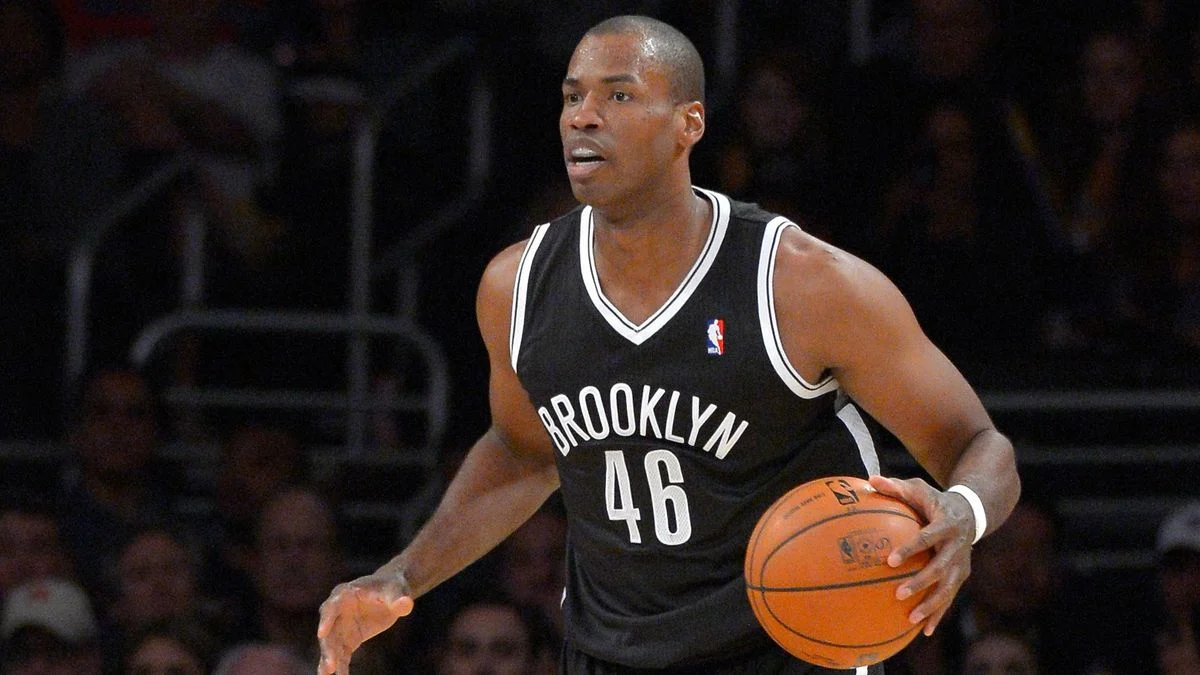
Following his announcement, Collins signed with the Brooklyn Nets in February 2014. By stepping onto the court in a professional game after his revelation, he became the first openly gay athlete to compete in any of the four major North American professional sports leagues. He played out the remainder of the 2013–2014 season before announcing his retirement, leaving the game on his own terms as a pioneer.
Supporting Data: The Rigor of a 13-Season Career
To understand the weight of Collins’ decision, one must look at the data of his career. Longevity in the NBA is rare; the average career length for an NBA player is significantly shorter than the 13 years Collins logged.
- Total Games Played: 735 (Regular Season)
- NBA Finals Appearances: 2 (2002, 2003)
- Primary Positions: Center / Power Forward
- Franchise History: New Jersey Nets, Memphis Grizzlies, Minnesota Timberwolves, Atlanta Hawks, Boston Celtics, Washington Wizards, Brooklyn Nets.
Collins was a "glue guy"—the type of player coaches value for setting screens, defending the post, and maintaining team discipline. This technical proficiency provided him with the credibility to speak on league matters; he was not a fringe player seeking attention, but a respected veteran who had earned the right to be heard.
Official Responses and the Cultural Shift
The reaction to Collins’ announcement was immediate and broad. Commissioner Adam Silver, who was deputy commissioner at the time, was a vocal supporter, recognizing early on that the league’s values were evolving.
"Jason’s announcement was a watershed moment," Silver stated in subsequent years. "He helped move the needle toward a culture of acceptance that was previously unimaginable."
The broader sports world responded with a mixture of surprise, support, and necessary scrutiny. Figures from President Barack Obama to fellow NBA legends like Kobe Bryant publicly praised Collins’ courage. The support from his peers—most notably those who had played alongside him for years without knowing his secret—demonstrated that the fear of a "divided locker room," a common excuse for institutional exclusion, was largely a phantom.
Implications: The Legacy of Inclusivity
The Normalization of LGBTQ+ Athletes
The primary implication of Collins’ bravery was the normalization of the LGBTQ+ athlete. By existing in the public eye, Collins provided a template. He proved that an athlete could be both gay and a productive, respected professional. This paved the way for other athletes in various sports to come out with less fear of career suicide.
Impact on the WNBA and Beyond
While the WNBA had long been a more inclusive space for LGBTQ+ players, Collins’ presence in the NBA created a reciprocal dialogue between the two leagues. It forced a conversation about the "masculinity" of sports and helped erode the toxic tropes that had plagued the NBA for decades.
The Institutional Change
Post-Collins, the NBA significantly ramped up its diversity and inclusion initiatives. The league’s public stance on LGBTQ+ rights—including the decision to pull the 2017 All-Star Game from Charlotte, North Carolina, due to discriminatory legislation—is, in many ways, an extension of the groundwork Collins laid. His act of individual courage became institutional policy.
Conclusion: The Conversation Continues
Jason Collins’ contribution to basketball cannot be measured in points, rebounds, or blocks. It is measured in the doors he unlocked and the conversations he forced into the light. When he stated in 2013 that he was "happy to start the conversation," he was perhaps understating the magnitude of his impact. He did not just start a conversation; he ended an era of silence.
Today, as the NBA continues to evolve, the memory of Collins’ 2013 announcement serves as a foundational pillar of the league’s modern identity. He showed that sport, at its best, is a reflection of society—and by being his authentic self, he forced that reflection to become a little more honest, a little more human, and significantly more inclusive for everyone who steps onto the court.
The 2,13-meter center from California remains a reminder that the greatest shots in basketball history are not always the ones that go through the hoop, but the ones that shatter the glass ceilings of prejudice, ensuring that the next generation of athletes can pursue their dreams without the burden of hiding who they are.








Leave a Reply