


The landscape of German women’s football is shifting beneath its feet. As the 46th DFB-Pokal final between perennial rivals VfL Wolfsburg and FC Bayern Munich approaches, the celebratory atmosphere is underscored by a sobering reality: the Frauen-Bundesliga is currently acting as an elite incubator for the rest of Europe. With a wave of high-profile departures and a sluggish transition toward structural independence, the German top flight faces an existential threat to its competitive standing on the global stage.
The Main Facts: A League Losing its Crown Jewels
The upcoming DFB-Pokal final in Cologne is more than just a clash of titans; it serves as a grand stage for several players who will be wearing their respective club jerseys for the final time. The departure of stars like Vivien Endemann (Wolfsburg) and Georgia Stanway (Bayern) highlights a growing trend: the exodus of top-tier talent toward leagues with superior financial muscle, professional infrastructure, and market reach—primarily England’s Women’s Super League (WSL).
The movement is not limited to bench players or fringe figures; it involves the league’s absolute elite. Selina Cerci, the prolific striker from TSG Hoffenheim, has reportedly finalized a move to Arsenal, following a season in which she netted 34 goals in 46 appearances. Her departure, confirmed just days before the DFB Women’s Week celebrations, serves as a grim reminder that even the most successful goalscorers in Germany see their long-term professional futures elsewhere.
A Chronology of Departure
The trend has been accelerating over the past two years, moving from a trickle to a steady stream.
- Mid-2024: The record transfer of Lena Oberdorf from Wolfsburg to Bayern for €450,000 set a new benchmark, yet it also signaled that internal German moves are often the only way to keep talent within the country.
- Early 2025: Following a standout performance at the European Championships in Switzerland, players like Geraldine Reuteler (Eintracht Frankfurt) became primary targets for English clubs. While Frankfurt initially resisted, the prospect of losing such talent on free transfers has become the new reality for German sporting directors.
- May 2026 (The Current Crisis): With the season drawing to a close, a flurry of transfer news dominates the headlines. Nicole Anyomi is linked with a move to Paris FC, Lisanne Gräwe is set for Union Berlin, and Elisa Senß, a key midfielder for the national team, is actively seeking opportunities abroad.
Supporting Data: The Economic Disparity
The primary driver behind this exodus is cold, hard economics. Sports consultant Jörg Neblung, a prominent voice in the industry, notes that the Bundesliga has slipped out of the top ten financially strongest leagues globally.
"Similar to the men’s game, the best female players are gravitating toward the leagues with the highest salaries and the most professional environments," Neblung explains. While the United States’ NWSL was once a destination of choice, the appeal of the WSL in England has eclipsed it due to shorter travel distances, a more stable political climate, and the absence of the restrictive salary caps that govern American sports.
The infrastructure in Germany remains a point of contention. Mandatory standards for stadium facilities—such as heated pitches—are still not universal in the Frauen-Bundesliga. When compared to the professionalization of the Italian league, which established a fully professional structure in a matter of months, Germany’s progress appears agonizingly slow.
The Structural Bottleneck: The DFB vs. The League
At the heart of the crisis lies a complicated, drawn-out divorce between the clubs and the German Football Association (DFB). The goal is the creation of a new, independent league structure, the Frauen-Bundesliga FBL e.V., which would operate as a limited liability company (GmbH).
However, the process is mired in bureaucratic stagnation. The transition requires a fundamental contract to be drafted, followed by an extraordinary Bundestag meeting to approve the separation. This process cannot be completed before the 2027/28 season. Critics argue that while the German system debates the semantics of corporate structure, European rivals are aggressively capitalizing on the delay.
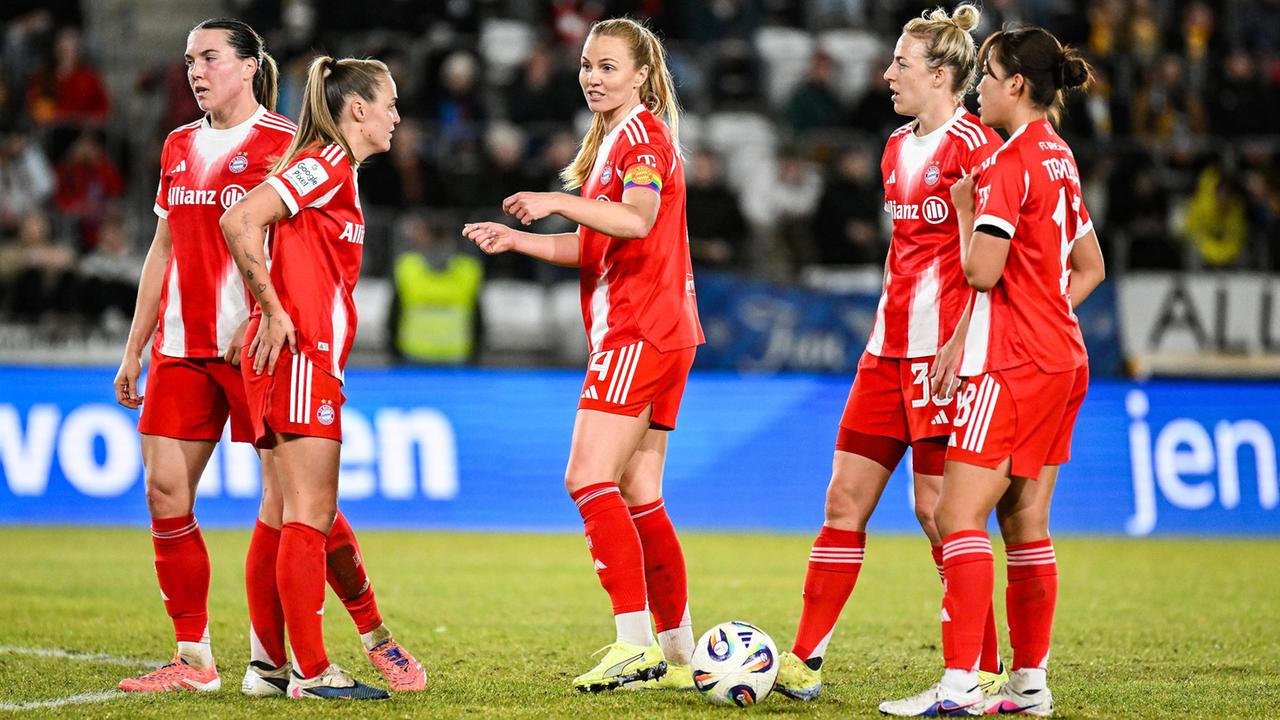
"We are still ahead of France, Spain, and Italy in many metrics," Neblung argues, "but we are effectively talking ourselves into the ground while others are taking action."
Official Responses and Voices of Concern
The concern is not limited to agents and pundits; the players themselves are becoming increasingly vocal. Alexandra Popp, the legendary VfL Wolfsburg captain, has used her platform to sound the alarm. As she prepares for her own departure after 14 years in Wolfsburg, her message to the stakeholders of German football is blunt.
"We don’t have the luxury of time," Popp stated during a recent media briefing. "If we want to remain a top-tier nation, we have to act. This isn’t something that can be put off for five or ten years. It has to happen now, or the international elite will simply leave us behind."
The sentiment is echoed by the management at FC Bayern. Despite being a Champions League semi-finalist, the club has made it clear through CEO Jan-Christian Dreesen that they will not engage in a bidding war that compromises the club’s financial stability. Even for the most successful club in the country, the salary budget is not currently equipped to compete with the likes of Chelsea, Arsenal, or Manchester City.
Implications for the Future: The 2029 Challenge
The timing of this exodus is particularly unfortunate. Germany is set to host the Women’s European Championship in 2029. The tournament is meant to be a showcase for the strength and growth of the German game, yet the current trajectory suggests a potential hollow-out of the league’s quality.
The Role of New Entrants
There is a glimmer of hope on the horizon. The arrival of major men’s professional clubs—most notably the VfB Stuttgart and FSV Mainz 05—into the women’s pyramid is viewed as a necessary injection of capital and expertise. The hope is that these clubs will bring the professional standards, scouting networks, and marketing power required to close the gap.
The "Klara Bühl" Benchmark
The case of Klara Bühl serves as a case study for the league’s survival. As one of Germany’s best players, her decision to remain at Bayern until 2027 is a minor victory for the Bundesliga. Her presence provides a pillar of quality around which the league can attempt to rebuild. However, reliance on individual loyalty is not a long-term strategy.
Conclusion: A Wake-Up Call
The Frauen-Bundesliga is at a crossroads. It possesses a rich history, a deeply passionate fanbase, and a technical foundation that is the envy of many. Yet, passion and history alone cannot compete with the aggressive financial expansion of foreign leagues.
The "DFB Women’s Week" and the upcoming transition to an independent league represent the last best chance for Germany to assert its relevance. For the league to retain its stars and remain competitive, it must move beyond internal power struggles and commit to a rapid, radical modernization of its financial and infrastructural standards. As Alexandra Popp aptly put it, the time for debate has passed; the time for action is now. Without significant intervention, the German league risks becoming a feeder system rather than a destination, a fate that would leave a permanent scar on the nation’s footballing legacy.











Leave a Reply