The quest to answer the age-old question, "Are we alone?" has moved from the realm of science fiction to concrete laboratory reality. New research from a collaborative team of scientists in Munich, Berlin, and Regensburg has provided the most compelling evidence yet that the icy moon of Saturn, Enceladus, may possess the essential building blocks—and the environmental stability—required to sustain extraterrestrial life.
For decades, Enceladus has been a primary target for astrobiologists. Now, a groundbreaking study published in the journal Science Advances suggests that the subsurface ocean hidden beneath the moon’s thick, frozen crust might be far more hospitable than previously imagined. By simulating the extreme conditions of the lunar seafloor, researchers have demonstrated that life, as we understand it on Earth, could not only survive but thrive in the depths of this distant world.
The Main Facts: Simulating a Subsurface Ocean
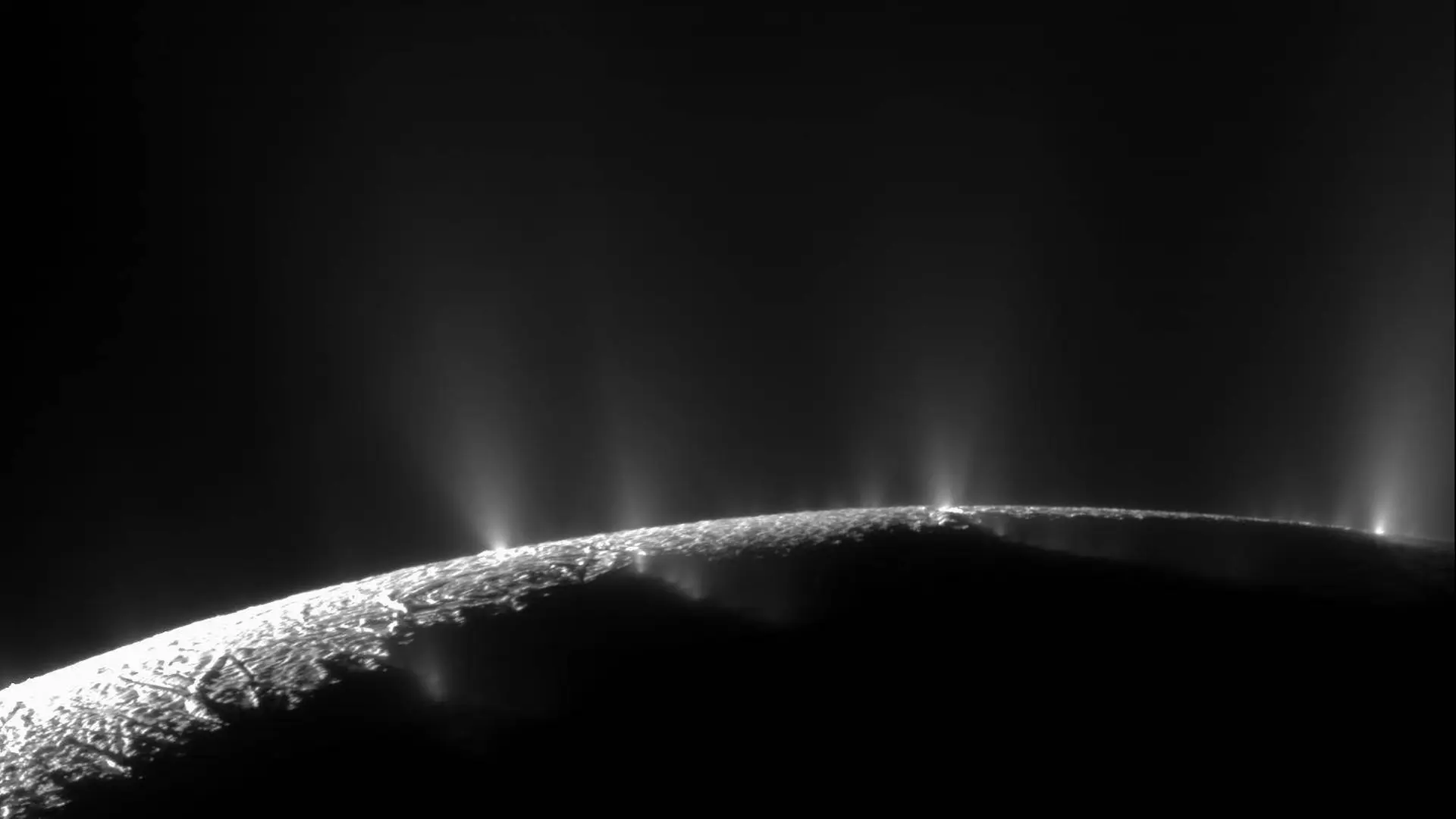
The research project, led by scientists from institutions in Munich, Berlin, and Regensburg, sought to replicate the unique geochemical environment of Enceladus. The moon is famous for the massive plumes of ice and water vapor that erupt from its southern pole—geysers that hint at a massive, liquid ocean sequestered beneath its icy shell.
To understand whether this environment could support life, the team recreated the conditions found at the interface of the moon’s rocky core and its saltwater ocean. They introduced Methanothermococcus okinawensis, a strain of single-celled, heat-loving "extremophile" bacteria found in Earth’s deep-sea hydrothermal vents.
The results were striking: the microorganisms did not merely survive the simulated Enceladus environment; they flourished. The bacteria successfully utilized hydrogen and carbon dioxide to drive their metabolism, reproducing efficiently despite the harsh, nutrient-poor conditions. This process, known as methanogenesis, is considered one of the most primitive forms of metabolism, suggesting that if life exists on Enceladus, it would likely resemble these resilient, ancient organisms.
Chronology of Discovery: From Cassini to the Lab
The journey toward this realization has been a multi-decade effort, spanning from the early reconnaissance of the Saturn system to the sophisticated laboratory modeling of today.
- 2005–2017 (The Cassini Era): The NASA-ESA Cassini-Huygens mission fundamentally altered our understanding of the outer solar system. By performing multiple "fly-throughs" of the plumes erupting from Enceladus, Cassini’s Cosmic Dust Analyzer (CDA) detected organic compounds and evidence of hydrothermal activity. This confirmed that Enceladus is geologically active and possesses the chemistry required for life.
- 2018–2023 (Data Analysis): Following the end of the Cassini mission, scientists spent years analyzing the massive datasets collected by the probe. Researchers at the Free University of Berlin (FU Berlin) made critical strides in understanding how the composition of Enceladus’s ice grains changes during the freezing process, helping scientists refine how future missions should sample these plumes.
- 2024–2026 (The Laboratory Breakthrough): The recent study published in Science Advances marks a new phase. Rather than observing from afar, scientists brought the "Enceladus experience" to the lab. By creating a high-pressure, low-temperature, and chemically controlled chamber that mimics the seafloor of the moon, the team proved the biological viability of the environment.
- Future Outlook (The 2040s): The European Space Agency (ESA) has already begun preliminary planning for the "L4" mission. This ambitious project aims to deploy a probe specifically designed to capture and analyze plume material, providing a direct test for the presence of biological signatures.
Supporting Data: Why Enceladus?
Enceladus is a mere 500 kilometers in diameter—a tiny speck compared to the giant moons of the solar system like Titan or Ganymede. Yet, it is arguably the most promising location for life due to three distinct factors:
1. The Energy Source
On Earth, life is largely dependent on photosynthesis, relying on the sun. However, in the deep ocean, life thrives via chemosynthesis—extracting energy from chemical reactions near hydrothermal vents. The evidence suggests that Enceladus has similar vents, fueled by tidal heating from Saturn’s gravity. The recent experiment confirms that these vents provide a consistent "battery" for life.
2. The Protective Shell
Enceladus is encased in a shell of ice ranging from 5 to 30 kilometers thick. While this makes physical access difficult, it provides a critical shield against cosmic radiation and the harsh vacuum of space. This creates a stable, temperature-controlled "incubator" for any potential organisms.
3. The Geyser "Delivery System"
Unlike other subsurface oceans (such as those on Europa), Enceladus does the work for us. The plumes at the south pole act as a natural conduit, ejecting material from the interior directly into space. A probe flying through these plumes does not need to land or drill; it can sample the ocean’s chemistry without ever touching the surface.
Official Responses and Scientific Consensus
The scientific community has reacted to these findings with cautious optimism. Dr. Elena Rossi, an astrobiologist not involved in the study, noted that while the results are "a monumental step forward," they do not constitute a direct discovery of alien life.
"What this study proves," Rossi stated, "is the habitability of the moon, not the inhabitation. We have moved the goalposts from ‘is it possible for life to exist’ to ‘we now know exactly what to look for.’ We have confirmed that the chemistry of the moon is not a deterrent to life, but rather a catalyst for it."
The team behind the research emphasized that their findings represent a "verblüffende" (astonishing) discovery in the field of geochemistry. They remain focused on the fact that the metabolic requirements of M. okinawensis are extremely low, making it a perfect model for life in an environment where resources might be limited by the slow diffusion of chemicals through the icy crust.
Implications: The Search for Life in the Next Two Decades
The realization that Enceladus could support life shifts the focus of space agencies worldwide. For years, the search for life centered on Mars. However, the geological and chemical evidence from Enceladus presents a much stronger case for a "living" environment.

The "L4" Mission
The upcoming ESA mission, currently slated for the early 2040s, is designed to be the definitive search. By focusing on the collection of organic molecules within the plume spray, the mission hopes to differentiate between "abiotic" (non-living) chemistry and "biotic" (life-derived) chemistry. If amino acids or specific lipid structures are found in a pattern that suggests biological organization, it would be the most significant scientific discovery in human history.
Philosophical and Scientific Impact
Beyond the data, the discovery has profound philosophical implications. If life can arise in the dark, cold depths of a moon orbiting a gas giant, it implies that life is not a miraculous accident confined to Earth-like planets, but perhaps a common phenomenon in the universe. It suggests that the "habitable zone" of a solar system—the region where liquid water can exist—is much larger than previously calculated.
The Road Ahead
As we look toward the 2040s, the international space community faces the challenge of engineering technology that can travel to Saturn, navigate its complex ring system, and perform delicate chemical analysis on ice particles moving at orbital speeds. The research from Munich, Berlin, and Regensburg provides the map for this journey.
In conclusion, while we have not yet shaken hands—or tentacles—with an extraterrestrial being, the distance between us and the potential for life has never been smaller. The icy, erupting geysers of Enceladus are no longer just a visual spectacle; they are a beacon, signaling that in the vast, silent dark of the solar system, there may be a warm, bubbling ocean waiting to tell us that we are not alone.
Data sources: The findings are detailed in the latest publication in Science Advances, titled "Enceladus-like geochemistry fuels methanogenesis under extreme CO2 limitation." For more on the technical methodology of plume sampling, see the related research on the compositional segregation of Enceladus’s ice grains, also published in Science Advances.