KYIV/MOSCOW – October 27, 2026 – A relentless wave of Russian missile and drone attacks swept across Ukraine today, resulting in multiple fatalities and widespread destruction in major cities, including the capital Kyiv and the eastern metropolis of Kharkiv. Simultaneously, Ukrainian forces launched retaliatory drone strikes deep into Russian territory, with reports of casualties and significant damage in the city of Voronezh and other regions, further underscoring the escalating and increasingly reciprocal nature of the conflict. The multi-front assaults mark one of the most intense days of cross-border violence in recent months, inflicting a heavy human toll and exacerbating the humanitarian crisis gripping the region.
The attacks unfolded throughout the early hours and morning, shattering the fragile peace in urban centers and reigniting fears among civilian populations on both sides of the contested border. Emergency services in Ukraine reported a scramble to rescue survivors from under rubble and extinguish fires ignited by explosions, while Russian authorities likewise mobilized resources to address the aftermath of drone impacts. The day’s events highlight a grim reality: the war, now in its third year, continues to escalate with devastating consequences for civilians caught in the crossfire.
Main Facts of a Day of Unrelenting Violence
Today, October 27, 2026, witnessed a brutal exchange of long-range strikes between Ukraine and Russia, resulting in a significant loss of life and extensive damage to civilian infrastructure. The attacks were characterized by their widespread nature and the targeting of populated areas, drawing immediate condemnation and raising alarms about the conflict’s trajectory.
In Ukraine, Russian forces unleashed a barrage of missiles and drones, focusing their destructive power on key urban centers. Kharkiv, Ukraine’s second-largest city, bore the brunt of these assaults, with local authorities confirming at least two fatalities and four injuries. Residential buildings were directly hit, transforming homes into scenes of devastation. In the capital, Kyiv, the attacks claimed at least one life, as reported by Mayor Vitali Klitschko. President Volodymyr Zelenskyy further elaborated, stating that a Russian strike on a university and surrounding residential areas in Kyiv had resulted in both dead and wounded. The coordinated nature of these strikes across multiple Ukrainian cities indicated a deliberate effort to overwhelm air defenses and inflict maximum damage.
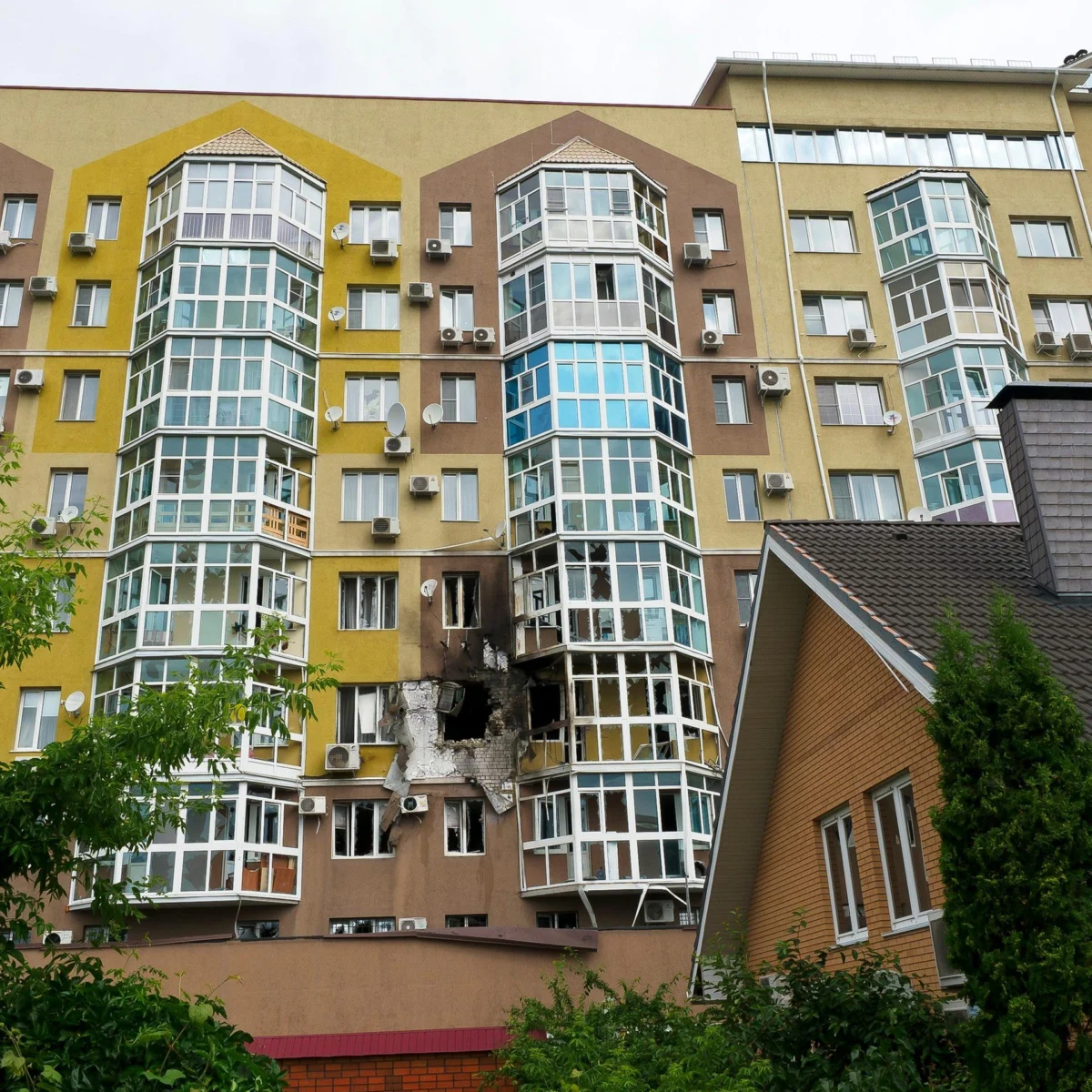
On the Russian side, Ukrainian forces launched their own series of drone attacks, targeting facilities within Russian territory. The city of Voronezh, located approximately 250 kilometers from the Ukrainian border, reported the most severe consequences. According to local authorities, three people were killed and 17 injured in these strikes. The impact was particularly devastating when debris from a downed drone reportedly struck a train, causing significant damage. Furthermore, an industrial area, a shopping center, and a residential building in Voronezh were engulfed in flames, indicating a broad range of targets. The Ukrainian armed forces, in a rare admission, confirmed an attack on a plastics factory, presumably within Russian territory, suggesting a strategic focus on industrial and potentially military-related facilities.
Adding another layer to the day’s grim events, Russia’s Federal Security Service (FSB) announced the arrest of two alleged saboteurs. The FSB claimed these individuals were operating under the direction of Ukraine’s Security Service (SBU) and were planning drone attacks on targets within Russia. This development points to the ongoing covert war and intelligence operations that run parallel to the conventional conflict, further complicating the already volatile situation.
A Chronology of Cross-Border Attacks
The 27th of October 2026 will be etched in the memory of many as a day of fear and destruction, with a continuous stream of alerts and impacts across a wide geographical area.
Russian Attacks on Ukraine
The day began with air raid sirens wailing across much of Ukraine in the pre-dawn hours, signaling the approach of Russian missiles and drones.
Kharkiv Under Siege:
Around 04:00 AM local time, Kharkiv, a city that has endured relentless shelling since the war’s outset, was struck by multiple projectiles. Residents reported hearing at least five powerful explosions that rocked various districts. The immediate aftermath saw plumes of smoke rising from residential neighborhoods, particularly in the city’s northern and eastern sectors. Emergency services, including the State Emergency Service of Ukraine (SESU), were immediately dispatched to scenes of devastation. Firefighters battled blazes consuming several multi-story apartment blocks where windows were shattered, and balconies were torn apart. Rescue workers, navigating through debris and rubble, recovered the bodies of two civilians, a man and a woman, from separate residential buildings. Four other individuals, including a child, sustained shrapnel wounds and concussions and were hospitalized. Mayor Ihor Terekhov condemned the "barbaric acts of terror," emphasizing that the strikes deliberately targeted civilian infrastructure with no discernible military value. The psychological toll on Kharkiv’s residents, who have grown accustomed to the threat of missile attacks, was palpable, with many seeking shelter in metro stations and basements.
Kyiv Hit Again:
Shortly after the Kharkiv strikes, the capital city of Kyiv found itself under attack. At approximately 06:30 AM, air defense systems engaged incoming targets, but not all were intercepted. Mayor Vitali Klitschko confirmed via his Telegram channel that a residential building in the city’s Holosiivskyi district had been hit by missile debris, causing a fire and leading to the death of one person. The impact left a gaping hole in the building’s facade and triggered a rapid response from emergency crews. President Volodymyr Zelenskyy, in a televised address later in the day, revealed that one of the primary targets in Kyiv was a prominent university campus, along with adjacent residential structures. While details on specific casualties at the university remained scarce amid ongoing assessments, Zelenskyy stated there were both fatalities and injuries among students and staff. The targeting of educational institutions and residential areas in the capital underscores Russia’s willingness to strike at the heart of Ukrainian civilian life, aiming to sow panic and erode morale. Power outages were reported in several Kyiv districts, indicative of potential damage to energy infrastructure or the broader impact of the explosions.
Ukrainian Attacks on Russia
In a clear demonstration of Ukraine’s growing capability to project force beyond its borders, drone attacks were reported in several Russian regions, with Voronezh experiencing the most severe consequences.
Voronezh Suffers Major Impacts:
The strikes on Voronezh began in the early morning, around 03:00 AM, catching many residents off guard. Russian air defense systems were reportedly active, attempting to intercept the incoming unmanned aerial vehicles (UAVs). However, several drones or their debris successfully impacted targets within the city and its surrounding areas. The Voronezh regional governor, Alexander Gusev, provided regular updates on the unfolding situation. He confirmed that a drone attack resulted in three fatalities and 17 injuries. One particularly harrowing incident involved the debris of a downed drone striking a moving train, causing its derailment and immediate cessation of service. While no fatalities were reported directly from the train incident, several passengers sustained minor injuries.
The economic and infrastructural damage in Voronezh was also significant. An industrial zone on the city’s outskirts was hit, igniting a large fire at a manufacturing facility. Simultaneously, a shopping center in a densely populated area suffered extensive damage and caught fire, prompting the evacuation of nearby residential buildings. A direct hit on a residential building also caused structural damage and localized fires, contributing to the casualty count. The Ukrainian Armed Forces later confirmed they had targeted a plastics factory, which they identified as a facility contributing to Russia’s military-industrial complex. While the specific location of this factory was not detailed, the confirmation suggested a deliberate effort to degrade Russia’s production capabilities, mirroring Russian tactics. The strikes on Voronezh, a city far from the immediate front lines, served as a stark reminder to Russian citizens of the war’s proximity and its escalating consequences.
Supporting Data and Context of Escalation
The events of October 27, 2026, are not isolated incidents but rather part of a discernible pattern of escalation in the Russia-Ukraine conflict, characterized by increasingly frequent and deep-reaching cross-border attacks.
Escalation of Cross-Border Attacks
Since mid-2024, there has been a significant uptick in both the frequency and sophistication of long-range strikes from both sides. Russia has continued to employ its arsenal of Kalibr cruise missiles, Kinzhal hypersonic missiles, and Shahed-type suicide drones, often launched in multi-layered waves designed to overwhelm Ukrainian air defenses. These attacks frequently target critical infrastructure, energy facilities, and, as today’s events demonstrate, residential areas, suggesting a strategy aimed at degrading Ukraine’s war-fighting capacity while simultaneously undermining civilian morale.
Ukraine, in turn, has demonstrably increased its capabilities to strike targets deep within Russian territory. Initially relying on modified commercial drones, Ukraine has progressively developed and deployed its own indigenous long-range attack drones, capable of traveling hundreds of kilometers. These drones have targeted military airfields, oil refineries, industrial complexes, and logistical hubs, aiming to disrupt Russia’s war effort and demonstrate a reciprocal capacity for retaliation. The confirmed attack on a plastics factory in Russia by Ukrainian forces is indicative of this evolving strategy, where industrial facilities perceived as supporting the Russian war machine become legitimate targets. This tit-for-tat escalation transforms the conflict from a front-line battle into a wider war of attrition, impacting the hinterlands of both nations.
Humanitarian Impact
The human cost of these escalating attacks is immense and continues to mount. Beyond the immediate fatalities and injuries, millions of Ukrainians have been displaced from their homes, seeking refuge within the country or across international borders. Cities like Kharkiv, constantly under threat, face a continuous cycle of destruction and partial rebuilding, with residents living under constant psychological stress. The targeting of residential buildings, universities, and shopping centers on both sides exacerbates this humanitarian crisis, forcing civilians to live in fear and uncertainty. Access to essential services, including healthcare, education, and shelter, is frequently disrupted, particularly during severe attack waves. International humanitarian organizations have repeatedly condemned the targeting of civilian infrastructure, emphasizing the urgent need for protection of non-combatants and adherence to international humanitarian law. However, as today’s events sadly illustrate, these calls often go unheeded amidst the brutal realities of war.
Economic Impact
The economic ramifications of these widespread attacks are profound for both Ukraine and Russia. In Ukraine, the destruction of energy infrastructure, industrial facilities, and residential areas imposes an enormous burden on the national economy. Reconstruction efforts, estimated to cost hundreds of billions of dollars, are hampered by the ongoing hostilities. Businesses struggle to operate under constant threat, supply chains are disrupted, and foreign investment remains minimal, severely impacting the country’s long-term economic prospects.
For Russia, while the economic impact of drone attacks has been less catastrophic than the destruction in Ukraine, the increasing frequency of strikes on industrial sites, oil refineries, and logistical networks creates significant disruptions. Damage to industrial facilities, as seen in Voronezh, can lead to production shortfalls and costly repairs. The psychological effect of domestic attacks also impacts consumer confidence and local economies. Furthermore, the diversion of resources towards enhanced air defense systems and security measures within Russia places additional strain on the national budget, contributing to the broader economic toll of the prolonged conflict.
Intelligence Operations and Sabotage
The FSB’s announcement of arresting two alleged SBU-linked saboteurs highlights the shadow war being waged behind the front lines. Both Ukraine and Russia engage in extensive intelligence operations, including espionage, sabotage, and information warfare. Ukraine’s Security Service (SBU) has been accused by Russia of orchestrating various acts of sabotage and drone attacks within Russian territory, often leveraging local collaborators or proxy networks. These operations aim to disrupt Russian logistics, damage critical infrastructure, and create internal instability.
Conversely, Russia’s FSB and GRU (Main Intelligence Directorate) have been active in Ukraine, conducting espionage, recruiting informants, and attempting to destabilize the country from within. The alleged plot to carry out drone attacks, as claimed by the FSB, underscores the high-stakes game of counter-intelligence and covert operations. These arrests, whether genuine or politically motivated, serve to reinforce the narrative of an existential struggle, where internal enemies and foreign agents are constantly at play, further fueling distrust and paranoia on both sides.
Official Responses and International Rhetoric
The day’s events immediately triggered strong reactions from official channels in both Kyiv and Moscow, each presenting a narrative designed to rally domestic support and influence international opinion.
Ukrainian Officials
President Volodymyr Zelenskyy condemned the Russian attacks in the strongest terms, labeling them "acts of pure terror" against civilian populations. In an impassioned address, he vowed that Ukraine would "never forgive, never forget" such atrocities and pledged that Russian aggression would be met with an "unwavering response." He reiterated his urgent calls to international partners for more advanced air defense systems, emphasizing that every intercepted missile saves lives. Zelenskyy stressed Ukraine’s right to self-defense and its right to strike military and industrial targets within Russia that contribute to the war effort, implicitly justifying the attacks on Voronezh and other Russian locations as retaliatory and strategic. His consistent message emphasized Ukrainian resilience and determination to prevail.
Kyiv Mayor Vitali Klitschko focused on the immediate aftermath in the capital, expressing solidarity with the victims and commending the swift response of emergency services. He urged Kyiv residents to remain vigilant, heed air raid warnings, and seek shelter, while also praising the city’s air defense units for their efforts. Klitschko’s statements underscored the constant threat faced by the capital and the ongoing need for both protective measures and international support.
Local authorities in Kharkiv, including Governor Oleh Syniehubov and Mayor Ihor Terekhov, provided detailed updates on casualties and damage, calling for increased humanitarian aid and international attention to the plight of their city. They highlighted the civilian nature of the targets, portraying the attacks as war crimes designed to terrorize.
Ukrainian military spokespersons, while often reserved about specific operations within Russia, confirmed the attack on a plastics factory. This confirmation was framed as a legitimate military target, disrupting Russia’s capacity to produce materials essential for its war machine. This official stance underscored Ukraine’s evolving strategy of taking the fight to Russian territory, not merely defensively, but as a proactive measure to degrade enemy capabilities.
Russian Officials
The Kremlin and the Russian Ministry of Defense issued statements condemning the Ukrainian drone attacks on Voronezh and other Russian regions, labeling them "terrorist acts" aimed at civilian infrastructure. They vowed a "proportionate and decisive response" to these "provocations," accusing Ukraine of deliberately escalating the conflict. Russian state media amplified this narrative, portraying Ukraine as a reckless aggressor targeting innocent Russian citizens.
Voronezh Governor Alexander Gusev provided regular updates on the ground, focusing on damage assessment, casualty figures, and the rapid deployment of emergency services. His statements aimed to reassure the local population while simultaneously condemning the Ukrainian actions and emphasizing the need for enhanced regional security.
The Federal Security Service (FSB) utilized the announcement of the alleged saboteur arrests to underscore its role in protecting national security. The FSB’s claims, widely disseminated through state media, served to reinforce the narrative of Ukraine employing clandestine methods and foreign agents to destabilize Russia, thereby justifying heightened security measures and portraying the conflict as a defense against external aggression and internal subversion. This narrative also seeks to discredit Ukraine’s intelligence services by framing their alleged operations as "terrorism."
International Reactions
The international community responded with a mix of condemnation and concern. United Nations Secretary-General António Guterres issued a statement reiterating his call for an immediate cessation of hostilities and stressing the imperative to protect civilians and civilian infrastructure, in line with international humanitarian law.
The European Union and the United States condemned the Russian attacks on Ukrainian cities, with several leaders reiterating their unwavering support for Ukraine’s sovereignty and territorial integrity. There were renewed calls for increased military aid to bolster Ukraine’s air defense capabilities. However, there was also an undertone of concern regarding the escalation of Ukrainian strikes into Russian territory, with some international actors subtly urging de-escalation from all sides to prevent a wider regional conflict. The day’s events are likely to be a central topic in upcoming diplomatic discussions and security council meetings, as the world grapples with the intensifying brutality of the war.
Implications and Outlook
The events of October 27, 2026, carry profound implications for the future trajectory of the Russia-Ukraine conflict, signaling a dangerous escalation and solidifying a grim outlook for peace in the near term.
Escalation Trajectory
Today’s widespread attacks on both Ukrainian and Russian cities unequivocally indicate a significant escalation in the conflict. The deliberate targeting of urban centers, residential buildings, and critical infrastructure on both sides moves the war further away from conventional front-line engagements and into a broader, more destructive campaign of long-range strikes. This "tit-for-tat" dynamic risks spiraling into deeper and more frequent retaliatory actions, with each side seeking to inflict greater damage on the other’s hinterland. The confirmed Ukrainian strike on a Russian plastics factory, viewed as a legitimate military-industrial target by Kyiv, suggests a strategic shift towards degrading Russia’s war-making capabilities directly, which Moscow will undoubtedly interpret as a severe provocation requiring further retaliation. This trajectory points towards a protracted conflict characterized by mutual destruction and heightened civilian casualties.
Impact on Civilian Populations
The most tragic implication of this escalation is the increasing toll on civilian populations. With residential areas, universities, and shopping centers becoming targets, the distinction between combatants and non-combatants becomes increasingly blurred, in violation of international humanitarian law. The psychological impact of living under constant threat of missile and drone attacks is immense, leading to widespread trauma, displacement, and a profound sense of insecurity. The destruction of homes and infrastructure further exacerbates the humanitarian crisis, making recovery and reconstruction an increasingly distant prospect. For millions, the grim reality of war will continue to define their daily lives, with the hope of lasting peace growing ever more elusive.
Strategic Stalemate and Future Prospects
Despite the escalating long-range strikes, the front lines of the conflict largely remain a strategic stalemate. Neither side has achieved a decisive breakthrough, leading to a focus on degrading the opponent’s capacity through strikes away from the immediate battlefields. This strategy, while impactful in terms of destruction and psychological warfare, does not necessarily translate into significant territorial gains. The enduring nature of this stalemate suggests that the conflict will continue for the foreseeable future, sustained by international military aid to Ukraine and Russia’s vast resources. The prospect of a negotiated peace settlement appears more distant than ever, as both sides remain entrenched in their positions, with the latest wave of attacks only hardening resolve and diminishing trust.
In conclusion, October 27, 2026, serves as a stark and tragic reminder of the brutal reality of the ongoing war between Russia and Ukraine. The widespread attacks, resulting in fatalities and devastation on both sides, underscore a dangerous escalation in the conflict. With no immediate end in sight, the human cost continues to mount, and the world watches anxiously as the cycle of violence threatens to intensify further, casting a long, dark shadow over the future of the region.