Karlsruhe, Germany – October 27, 2026 – In a significant legal defeat for the Alternative for Germany (AfD) party, the Federal Court of Justice (BGH) in Karlsruhe has upheld the conviction of Brandenburg state parliamentarian Wilko Möller. The ruling confirms an earlier verdict from the Regional Court of Frankfurt (Oder), finding Möller guilty of using symbols of unconstitutional organizations in connection with a campaign poster featuring a gesture strikingly similar to a "Hitler salute." This final decision means that Möller, a prominent figure within the AfD in Brandenburg, is now considered to have a criminal record, marking a notable judicial intervention into the conduct of a sitting politician.
The BGH’s rejection of Möller’s appeal (Revision) seals his fate in a case that has drawn considerable attention to the boundaries of political expression and the vigilance against extremist symbols in Germany. The court found no legal errors to the detriment of the accused in the lower court’s judgment, rendering the verdict legally binding. This outcome carries profound implications for Möller’s political future and further underscores the ongoing scrutiny faced by the AfD, particularly in Brandenburg, where the party is classified by the domestic intelligence agency (Verfassungsschutz) as "confirmed right-wing extremist."
Main Facts: A Landmark Legal Defeat
The core of the legal dispute revolved around a campaign poster used by Wilko Möller, an AfD member of the Brandenburg state parliament and chairman of the AfD in Frankfurt (Oder). The poster depicted an arm gesture that the courts deemed "strikingly similar" to the illegal "Hitler salute" (Hitlergruß). The use of such symbols is strictly prohibited under German law, specifically Paragraph 86a of the Criminal Code (StGB), which targets the propagation of symbols of unconstitutional organizations.
The initial conviction came in February 2026 from the Regional Court of Frankfurt (Oder), which sentenced Möller to a substantial fine of 11,600 Euros. The court concluded that the AfD politician had knowingly used the controversial poster. Möller subsequently filed an appeal (Revision) with the Federal Court of Justice, Germany’s highest court for criminal and civil matters, seeking to overturn the conviction. His defense argued, presumably, that the gesture was misinterpreted or that he lacked the necessary intent to convey a prohibited message.
However, the BGH, after reviewing the legal aspects of the case, found no grounds to overturn the lower court’s decision. Its ruling confirms the Regional Court’s assessment that the gesture constituted a prohibited symbol and that Möller was aware of its nature. With this decision, the verdict is now final and irrevocable. The most immediate and significant consequence for Möller is his official status as having a criminal record, a serious designation for any public official in Germany, potentially impacting his credibility and future political endeavors.
This case is not merely about a gesture; it is about the legal system’s interpretation of boundaries in a society deeply scarred by its past. The strict enforcement of laws against the use of Nazi symbols reflects Germany’s constitutional commitment to protecting its democratic order from extremist ideologies. The fact that a sitting state parliamentarian has been convicted and had that conviction upheld by the highest court sends a clear signal regarding the intolerance for such provocations, regardless of political affiliation.
Chronology of Events: From Poster to Criminal Record
The legal battle culminating in today’s BGH decision has unfolded over several months, tracing a path from a contentious election campaign to the highest echelons of the German judiciary.
- Pre-February 2026: The controversial campaign poster featuring Wilko Möller and the arm gesture in question was displayed publicly, presumably during an election period in Brandenburg. The exact timing of its initial appearance and the first public reactions or official complaints are not detailed in the provided information but would have preceded the formal legal proceedings. The poster quickly drew criticism for its perceived resemblance to the "Hitler salute."
- February 2026: The Regional Court of Frankfurt (Oder) delivers its verdict. Following a trial, Wilko Möller is found guilty of "using symbols of unconstitutional organizations" (§ 86a StGB). The court rules that Möller "knowingly used a campaign poster on which an arm posture strikingly similar to the ‘Hitler salute’ was visible." He is sentenced to a fine of 11,600 Euros. This initial conviction establishes the legal assessment of the gesture and Möller’s culpability.
- Post-February 2026: Wilko Möller, through his legal counsel, files an appeal (Revision) against the Regional Court’s judgment. This legal step initiates the process of review by the Federal Court of Justice. The Revision process does not involve a re-evaluation of the facts but rather a meticulous examination of whether the lower court applied the law correctly and followed proper legal procedures. Möller’s defense team would have argued that the Regional Court made legal errors in its interpretation or application of § 86a StGB.
- October 27, 2026: The Federal Court of Justice in Karlsruhe issues its decision. The BGH rejects Möller’s appeal, stating that it found "no legal error to the detriment of the accused." This ruling effectively confirms the judgment of the Regional Court of Frankfurt (Oder). With the BGH’s decision, the verdict becomes "rechtskräftig" (legally binding), making Möller officially a convicted individual with a criminal record. The news is subsequently reported by Deutschlandfunk, among other outlets.
This timeline illustrates the thoroughness of the German legal system, from initial accusation and trial at the regional level to a comprehensive review by the highest criminal court, ensuring that such significant judgments are robust and legally sound.
Supporting Data: The Legal and Political Framework
The conviction of Wilko Möller is rooted in specific aspects of German law and the broader political context in which the AfD operates. Understanding these elements is crucial for grasping the full weight of the BGH’s decision.
Paragraph 86a StGB: The Prohibition of Unconstitutional Symbols
At the heart of the case is Paragraph 86a of the German Criminal Code (Strafgesetzbuch – StGB), titled "Using symbols of unconstitutional organizations." This statute is a cornerstone of Germany’s post-World War II legal framework, designed to prevent the resurgence of totalitarian ideologies, particularly Nazism.
Paragraph 86a prohibits the public display, production, distribution, or storage of symbols of organizations deemed unconstitutional by the Federal Constitutional Court or which have been banned due to their unconstitutional aims. This explicitly includes symbols of the Nazi Party, such as the swastika, the SS runes, and the "Hitler salute." The law is broad in its scope, covering not only direct displays but also gestures or symbols that are "strikingly similar" or "easily mistaken for" the prohibited originals.
The intent behind § 86a StGB is not merely to punish historical revisionism but to actively protect the democratic constitutional order (freiheitliche demokratische Grundordnung) from those who would undermine it. The courts’ interpretation in Möller’s case confirms that even a gesture on a campaign poster, if it bears a sufficiently close resemblance to the "Hitler salute," falls under this prohibition. This underscores the zero-tolerance policy for any public display that could be interpreted as glorifying or propagating Nazi ideology. The fine of 11,600 Euros reflects the seriousness with which such offenses are treated.
The Federal Court of Justice (BGH): Upholding Legal Standards
The Federal Court of Justice (Bundesgerichtshof – BGH) plays a critical role in Germany’s legal system. As the highest court for ordinary jurisdiction (criminal and civil cases), its decisions are final and serve to ensure the uniform application of law across the country. When the BGH rejects an appeal (Revision), it means that it has meticulously reviewed the lower court’s judgment for legal errors and found none that would warrant overturning the verdict.
In Möller’s case, the BGH’s affirmation of the Regional Court’s ruling signifies that:
- The legal definition of "symbols of unconstitutional organizations" was correctly applied to the gesture on the poster.
- The factual findings of the Regional Court regarding Möller’s knowledge and intent were adequately supported and did not contain procedural flaws.
- The sentence (the fine) was within the legally permissible framework.
The BGH’s role is not to retry the case or re-evaluate the evidence from scratch but to ensure that legal principles were correctly observed. Its decision adds significant weight to the interpretation of § 86a StGB in the context of political campaigning and acts as a clear judicial statement on what constitutes an unacceptable symbolic expression.
The AfD in Brandenburg: "Confirmed Right-Wing Extremist"
Crucially, the news article highlights that the AfD in Brandenburg is classified by the domestic intelligence agency (Verfassungsschutz) as "gesichert rechtsextrem" (confirmed right-wing extremist). This designation is not merely a political label but a formal classification based on extensive analysis and evidence collected by a state intelligence agency tasked with protecting Germany’s constitutional order.
What does "confirmed right-wing extremist" mean?
- Intensified Surveillance: It allows the Verfassungsschutz to employ more intrusive surveillance methods, including monitoring communications and using informants, without facing the same legal hurdles as with non-classified political parties.
- Public Warning: It serves as an official public warning to citizens about the party’s anti-constitutional tendencies.
- Evidential Basis: The classification is based on a comprehensive assessment that the party’s goals or activities are directed against the free democratic basic order, including elements like contempt for human dignity, racial hatred, or the striving for an authoritarian state.
The timing of Möller’s conviction, coupled with this classification, reinforces concerns about the AfD’s constitutional loyalty. It suggests a pattern where individuals within the party engage in actions that, when legally challenged, are found to cross the line into the realm of extremism. For the AfD in Brandenburg, this judicial outcome further solidifies the perception that the party harbors elements willing to skirt or even breach the legal boundaries designed to protect Germany’s democracy from its historical demons. It complicates the party’s efforts to present itself as a mainstream conservative alternative and provides further ammunition for critics who accuse it of being a Trojan horse for extremist ideologies.
Official Responses: Silence and Legal Affirmation
The immediate official responses following the BGH’s decision are primarily characterized by the legal system’s affirmation of its own processes and, as is often the case with such sensitive rulings, a likely measured silence or deflection from the directly implicated party.
From the BGH’s perspective, its rejection of Möller’s appeal serves as its official response. The statement that "no legal error to the detriment of the accused" was found is a concise but powerful declaration. It signifies that the court, after rigorous review, found the Regional Court’s application of the law and its judgment to be sound and unassailable. This is the highest legal body in Germany affirming the lower court’s decision, lending it definitive authority. There would be no further public commentary from the BGH beyond the announcement of its decision, as its role is to interpret and apply the law, not to engage in political discourse.
As for Wilko Möller and the AfD, direct, immediate official responses are not detailed in the provided content. However, based on typical reactions from politicians and parties in similar situations, several scenarios are plausible:
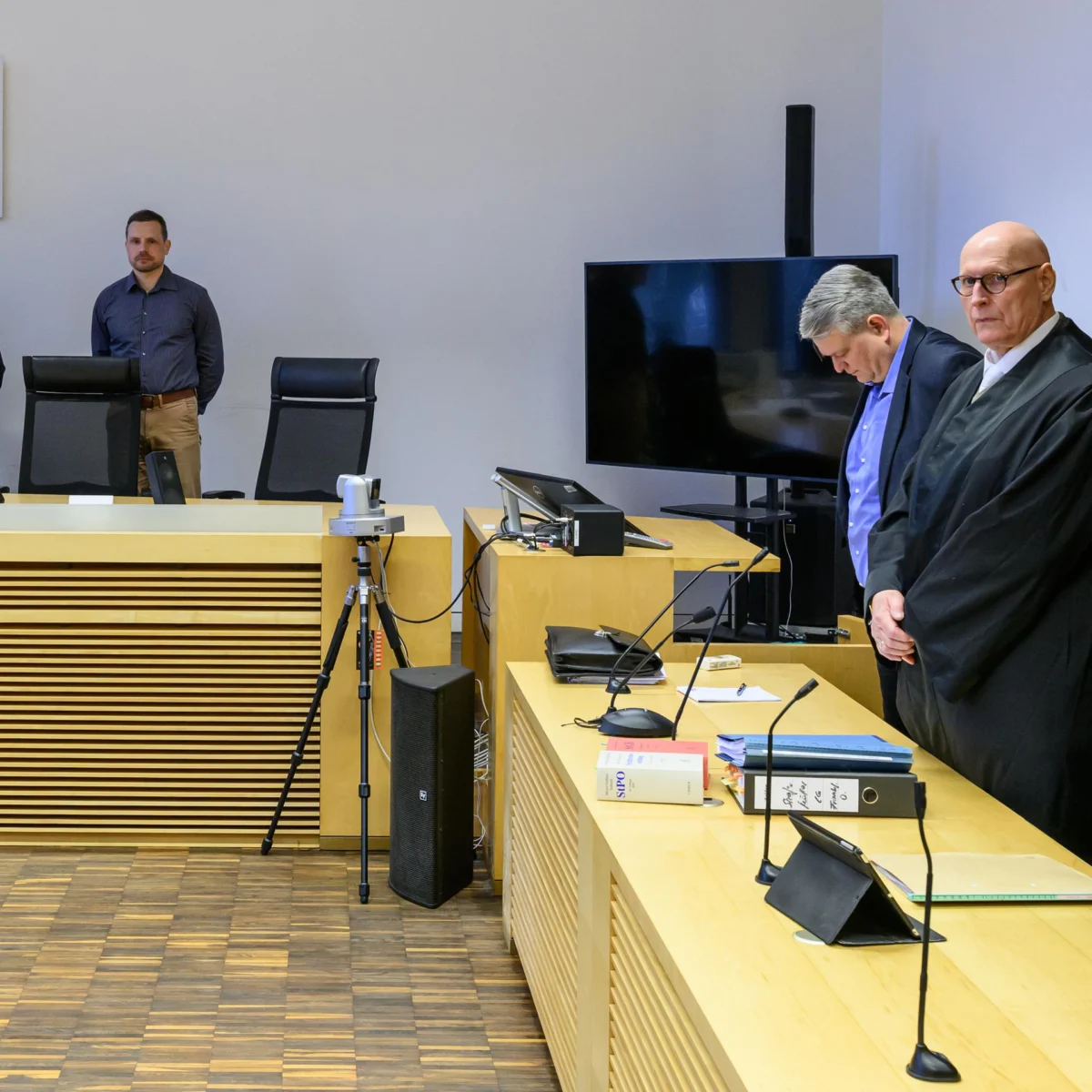
- Möller’s Defense: Möller’s defense attorney, Hans-Christoph Jahr, as seen in the accompanying image, would have represented him throughout the process. Their "official response" would have been the arguments presented during the appeal process, which the BGH ultimately rejected. Post-decision, a common strategy might involve expressing disappointment with the outcome while emphasizing that the legal options have been exhausted. They might reiterate their belief in Möller’s innocence regarding intent or the specific interpretation of the gesture, even if the court ruled otherwise.
- AfD Party Stance: The AfD as a party, especially in Brandenburg, often adopts a narrative of being unfairly targeted by the "establishment," the media, and even the judiciary when faced with such legal setbacks. While they might distance themselves from the specific action, they are also likely to frame the conviction as part of a broader political persecution or an attempt to silence dissenting voices. They might issue a statement expressing regret for the "misinterpretation" of the poster or emphasizing their commitment to the constitution, despite the Verfassungsschutz classification. It is less likely they would directly endorse the gesture but more probable they would criticize the "political nature" of the legal process.
- Broader Political Sphere: Other political parties, civil society organizations, and anti-extremism groups would likely welcome the BGH’s decision as a crucial affirmation of Germany’s legal protections against extremist symbols. They might issue statements emphasizing the importance of upholding constitutional values and the accountability of politicians, regardless of their party affiliation.
In essence, while direct quotes are absent, the BGH’s decision itself acts as a definitive official response from the judicial branch, reinforcing the legal boundaries against the propagation of extremist symbols. The silence from Möller or the AfD, if it occurs, would be a strategic choice in the face of an unassailable legal judgment.
Implications: A Conviction with Far-Reaching Consequences
The upholding of Wilko Möller’s conviction by the Federal Court of Justice carries significant implications, not only for the individual politician but also for the AfD, the broader German political landscape, and the ongoing struggle against right-wing extremism.
For Wilko Möller: A Stained Political Career
The most immediate and personal consequence for Wilko Möller is his new status as having a criminal record. For a public official, especially a state parliamentarian, this is a severe blow to credibility and reputation.
- Loss of Public Trust: A conviction for using symbols of unconstitutional organizations directly challenges a politician’s legitimacy and trustworthiness, particularly in a country with Germany’s historical burden. It suggests a disregard for fundamental constitutional principles.
- Political Future: While the conviction does not automatically disqualify him from holding office (unless the sentence was more severe, such as imprisonment beyond a certain threshold), it could severely hamper his ability to gain future electoral support or hold leadership positions. Voters may be less inclined to support a candidate with such a conviction.
- Internal Party Dynamics: Within the AfD, this conviction might become a point of contention. While some hardliners might view him as a martyr, others might see him as a liability, especially as the party tries to broaden its appeal.
- Financial Impact: Beyond the reputational damage, the 11,600 Euro fine represents a significant financial penalty.
For the AfD in Brandenburg: Reinforced Extremist Image
The BGH’s decision further compounds the challenges faced by the AfD, particularly its Brandenburg branch.
- Confirmation of Verfassungsschutz Classification: The conviction of a leading AfD figure for an offense directly related to extremist symbolism lends further credence to the Verfassungsschutz’s classification of the Brandenburg AfD as "confirmed right-wing extremist." This legal validation makes it harder for the party to dismiss the intelligence agency’s assessment as politically motivated.
- Public Perception: The ruling solidifies the public perception of the AfD as a party that tolerates or even actively promotes elements close to right-wing extremism. This can deter moderate voters and reinforce the arguments of those who advocate for stronger measures against the party.
- Internal Divisions: Such incidents can exacerbate internal ideological struggles within the AfD, between those who seek to moderate the party’s image and those who embrace a more radical stance.
- Legal Scrutiny: The conviction might encourage further legal challenges against other AfD members or party activities, especially concerning the use of provocative symbols or rhetoric.
For the German Political Landscape: Upholding Constitutional Values
The ruling sends a powerful message across the German political spectrum:
- Red Line Against Extremism: It reaffirms that there are clear legal red lines that cannot be crossed, especially concerning symbols of Nazism. The judiciary is resolute in upholding Germany’s constitutional commitment to fighting extremism.
- Accountability of Politicians: The decision underscores that politicians are not above the law and are held accountable for their actions, even in the context of political campaigning. This is vital for maintaining public trust in democratic institutions.
- Debate on Political Expression: While Germany protects freedom of speech, this case clarifies that such freedom is not absolute and does not extend to the propagation of unconstitutional ideologies. It contributes to the ongoing debate about the limits of political expression in a democratic society.
- Strengthening Democratic Resilience: In an era marked by rising populism and extremist tendencies in various parts of the world, Germany’s consistent legal stance against the glorification of its totalitarian past serves as a crucial example of democratic resilience and vigilance.
Broader Societal Impact: A Reminder of History
Beyond the immediate political and legal ramifications, the BGH’s decision serves as a stark reminder of Germany’s historical responsibility. The "Hitler salute" is not merely an offensive gesture; it is a symbol deeply intertwined with genocide, authoritarianism, and the systematic destruction of human rights. The unwavering legal response to its use, even in a subtly implied form on a poster, demonstrates a societal commitment to ensuring that the lessons of the past are not forgotten and that such ideologies find no public platform.
This judgment reinforces the idea that German society, through its legal framework, remains vigilant against any attempts to normalize or trivialize the symbols of its darkest chapter. It is a testament to the enduring importance of historical awareness and the continuous effort required to safeguard democratic values against the corrosive influence of extremism. The conviction of Wilko Möller is therefore more than just a legal outcome; it is a significant cultural and political statement in contemporary Germany.